
On This Page
Description
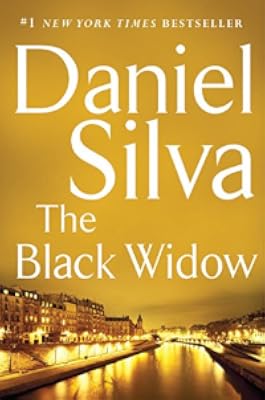
Gabriel Allon, the art restorer, spy, and assassin, is poised to become the chief of Israel secret intelligence service. But on the eve of his promotion, events conspire to lure him into the field for one final operation. ISIS has detonated a massive bomb in the Marais district of Paris, and a desperate French government wants Gabriel to eliminate the man responsible before he can strike again.Tags
Recommendations







Member Reviews
A very quick and exciting read. Reminiscent of Ian Fleming's Bond books...Gideon Allon is a Bondian superhero. He has more dimension, and thinks with more insight, and is not a womanizer. But he has the sadism of Bond and the win at all costs attitude. There is also a tad too much Israeli glorification. In the Allon books, the CIA, MI-6, the French...all are no match for the Mossad and come to Jerusalem with hats in hand desperate for the Jews to solve their intractable problems. However, with those quibbles out of the way, the book is a pleasure. Readers can only wonder whether spies are as brave and altruistic as they seem to be here. The Mossad succeeds in placing an agent at the highest levels of ISIS...again, something that the CIA show more et al are incapable of doing. The agent finds out information about an upcoming act of terrorism and must get the information back. How? As good as the Israelis are, so is ISIS this year's model of bloodthirsty Nazi. They know no bounds in their cruelty. So clearly this is a black vs. white confrontation, and guess who wins....As a series, Silva still invests his works with juice, and they are fun, full of serious detail and analysis, and somewhat addictive. show less
Academicians like to debate the difference between genre and literary fiction. The former is usually escapist and requires predictable elements. The latter is more equivocal and unpredictable. Literary fiction is not about escaping reality but, instead, explores it. Neil Gaiman probably has one of the best summaries of the debate: “I think that there’s a huge difference between, for example, a novel with spies in it and a spy novel; or a novel with cowboys in it and a cowboy novel.” With some well-constructed genre fiction, this distinction seems artificial, however, since these novels explore important themes and have nuanced characters while also providing a thrilling yarn. Daniel Silva’s THE BLACK WIDOW is such a novel.
One show more of Silva’s repeating themes is Israel as the champion of the Jews. His characters come to Israel from places where Jews are powerless and victimized. Silva’s Israeli characters are the antithesis of that image. Mikhail, one of the stronger characters in the novel represents this theme. “He was a new person, a new Jew. He was an Israeli.” Dr. Natalie Mizrahi is another. Born and educated as a doctor in France, she emigrated to Israel and displays exceptional courage and resourcefulness as a lead character in this novel. Posing as Leila Hadawi, a Palestinian refugee, she is tasked by Israeli intelligence to infiltrate an ISIS-like terrorist network to learn the identity of its mysterious leader, Saladin.
Of course, this is genre fiction, so many of the characters are one-dimensional. Saladin is the evil enemy mastermind; Safia Bourihane is the terrorist, who as the “black widow” of the book’s title, has a monomania: to revenge the death of her terrorist lover. Spy networks from Israel, France, Jordan and the US collaborate but, as characters, most lack nuance. In fact, they seem to be present mainly as foils for Gabriel Allon.
Natalie Mizrahi and Gabriel Allon are the notable exceptions. These characters are well developed, nuanced and interesting. Natalie is a skilled physician, but expresses doubts about her competence. She is close to her parents, also living in Israel. She is ambivalent about her assignment and doubts her ability to masquerade as a “black widow” in the caliphate. Remarkably, Silva shows moments when her Leila persona so completely takes over her consciousness that the reader wonders if her psyche may be permanently damaged.
Of course, Silva has been developing the Gabriel Allon character over multiple novels. Throughout, he resists presenting a superhero. Instead we see a complex man. He is passionate about his work and Israel, but fatalistic about it. Unlike Israel’s leadership, he senses that his cause is, in the final analysis, hopeless. He is both an action figure and an artist, restoring priceless artworks. He despises violence, but has been an assassin. He has lost one family, but found another and is extremely protective of the latter.
The writing is detailed and unrelenting leading to a satisfying, yet ambiguous ending. Silva’s many settings are all skillfully evoked. These include Israeli intelligence, which he calls “the Office,” Paris, Washington, Jerusalem and Syria. The locales are so meticulously described that one is tempted to look them up on Google Maps.
It is undeniable that Silva writes spy novels. But their literary value is also undeniable. They argue elegantly for less polarity in the literary vs. genre debate. show less
One show more of Silva’s repeating themes is Israel as the champion of the Jews. His characters come to Israel from places where Jews are powerless and victimized. Silva’s Israeli characters are the antithesis of that image. Mikhail, one of the stronger characters in the novel represents this theme. “He was a new person, a new Jew. He was an Israeli.” Dr. Natalie Mizrahi is another. Born and educated as a doctor in France, she emigrated to Israel and displays exceptional courage and resourcefulness as a lead character in this novel. Posing as Leila Hadawi, a Palestinian refugee, she is tasked by Israeli intelligence to infiltrate an ISIS-like terrorist network to learn the identity of its mysterious leader, Saladin.
Of course, this is genre fiction, so many of the characters are one-dimensional. Saladin is the evil enemy mastermind; Safia Bourihane is the terrorist, who as the “black widow” of the book’s title, has a monomania: to revenge the death of her terrorist lover. Spy networks from Israel, France, Jordan and the US collaborate but, as characters, most lack nuance. In fact, they seem to be present mainly as foils for Gabriel Allon.
Natalie Mizrahi and Gabriel Allon are the notable exceptions. These characters are well developed, nuanced and interesting. Natalie is a skilled physician, but expresses doubts about her competence. She is close to her parents, also living in Israel. She is ambivalent about her assignment and doubts her ability to masquerade as a “black widow” in the caliphate. Remarkably, Silva shows moments when her Leila persona so completely takes over her consciousness that the reader wonders if her psyche may be permanently damaged.
Of course, Silva has been developing the Gabriel Allon character over multiple novels. Throughout, he resists presenting a superhero. Instead we see a complex man. He is passionate about his work and Israel, but fatalistic about it. Unlike Israel’s leadership, he senses that his cause is, in the final analysis, hopeless. He is both an action figure and an artist, restoring priceless artworks. He despises violence, but has been an assassin. He has lost one family, but found another and is extremely protective of the latter.
The writing is detailed and unrelenting leading to a satisfying, yet ambiguous ending. Silva’s many settings are all skillfully evoked. These include Israeli intelligence, which he calls “the Office,” Paris, Washington, Jerusalem and Syria. The locales are so meticulously described that one is tempted to look them up on Google Maps.
It is undeniable that Silva writes spy novels. But their literary value is also undeniable. They argue elegantly for less polarity in the literary vs. genre debate. show less
This is the 16th book in Silva’s series featuring Gabriel Allon, the fictional legendary Israeli intelligence officer.
This thriller is indeed timely; as the author reports in his Foreword, he began work on this novel before the ISIS attacks in Paris and Brussels, stating that “[t]he similarities between the real and fictitious attacks, including the links to the Brussels district of Molenbeek, are entirely coincidental.” In fact, there is much in this book that mirrors “real life,” sad to say.
The story opens with a vicious attack in Paris by ISIS, in which four of the victims were Israeli citizens. The French internal security service convinces Allon to help them find the mastermind of the attack, who uses the nom de guerre show more Saladin, after the 12th Century Muslim leader who defeated the Christian crusaders in 1187, gaining control of Palestine. [Ironically, Saladin was a Kurd, but that fact has about as much effect on Muslims as the fact that Jesus was a Jew does among Christians.]
The bombing in Paris was accomplished on the ground with the help of a “black widow,” a woman who lost her boyfriend in a coalition air strike and now works for ISIS to exact vengeance on the West. Allon wants to penetrate Saladin’s network and decides to use a black widow of his own creation as bait. To that end, he recruits Natalie Mizrahi, a French doctor of Algerian-Jewish descent, who speaks Arabic well enough to pass as a Palestinian.
Allon takes a back seat in much of this story, perhaps in preparation for his fictional transition to head of the Israeli intelligence service. Most of the book describes the training of Natalie, which turns her into Dr. Leila Hadawi, a woman allegedly radicalized by the wars in Iraq and Syria, the occupation of Palestine by Jews, and death of her only love, “Ziad al-Masri.” In short, in her new identity, “she was a black widow, a ticking time bomb.”
She does indeed penetrate ISIS, and the action picks up considerably, as it is never clear if she will be discovered, if she will survive, if ISIS will be successful in planning another attack, and if Saladin can be identified and stopped. A thrilling denouement rounds out the story.
Discussion: As with previous books, Silva, a former journalist in the Middle East, demonstrates a good command of political affairs in the region. He offers an astute analysis of the development of ISIS, their goals, the ambiguous and touchy position of Middle East countries in both opposing ISIS and supporting them, and a definite critique of the U.S. role in the situation. (You can see an even more fleshed-out explanation in the non-fiction Black Flags: The Rise of ISIS by Joby Warwick, which won the 2016 Pulitzer Prize for General Nonfiction - see "The New York Times" review here.) Most interesting, however, are Silva's insights on how ISIS adherents think. As Gabriel reflects:
“It was an all-too-familiar story - a story of disillusion and dissatisfaction, of needs unmet, of economic and marital hopes dashed, of rage against the Americans and Jews over their perceived mistreatment of Muslims. Half the jihadists in the world could have told the same sad tale; it was, thought Gabriel, well-trod territory. Yes, there were a few bright minds and young men from good families in the upper ranks of the global jihadist movement, but the foot soldiers and the cannon fodder were, for the most part, radical losers. Political Islam was their salvation, and ISIS was their paradise. ISIS gave purpose to lost souls and promised an afterlife of eternal copulation to those who perished for the cause. It was a powerful message for which the West had no antidote.”
The author also provides many reasons why the popular view of the West that exposure to American culture will somehow entice Muslims to give up their beliefs in favor of what they consider to be obscene is just without merit.
Evaluation: This is an intelligent and gripping thriller, which I enjoyed even though I don't share the author's political views or analytical conclusions. I was actually glad to see Gabriel Allon take a role far in the background of this book, because all of the hero-worship of him and references to him as a “legend” get to be tiresome, and take away some of the illusion of realism of his books. show less
This thriller is indeed timely; as the author reports in his Foreword, he began work on this novel before the ISIS attacks in Paris and Brussels, stating that “[t]he similarities between the real and fictitious attacks, including the links to the Brussels district of Molenbeek, are entirely coincidental.” In fact, there is much in this book that mirrors “real life,” sad to say.
The story opens with a vicious attack in Paris by ISIS, in which four of the victims were Israeli citizens. The French internal security service convinces Allon to help them find the mastermind of the attack, who uses the nom de guerre show more Saladin, after the 12th Century Muslim leader who defeated the Christian crusaders in 1187, gaining control of Palestine. [Ironically, Saladin was a Kurd, but that fact has about as much effect on Muslims as the fact that Jesus was a Jew does among Christians.]
The bombing in Paris was accomplished on the ground with the help of a “black widow,” a woman who lost her boyfriend in a coalition air strike and now works for ISIS to exact vengeance on the West. Allon wants to penetrate Saladin’s network and decides to use a black widow of his own creation as bait. To that end, he recruits Natalie Mizrahi, a French doctor of Algerian-Jewish descent, who speaks Arabic well enough to pass as a Palestinian.
Allon takes a back seat in much of this story, perhaps in preparation for his fictional transition to head of the Israeli intelligence service. Most of the book describes the training of Natalie, which turns her into Dr. Leila Hadawi, a woman allegedly radicalized by the wars in Iraq and Syria, the occupation of Palestine by Jews, and death of her only love, “Ziad al-Masri.” In short, in her new identity, “she was a black widow, a ticking time bomb.”
She does indeed penetrate ISIS, and the action picks up considerably, as it is never clear if she will be discovered, if she will survive, if ISIS will be successful in planning another attack, and if Saladin can be identified and stopped. A thrilling denouement rounds out the story.
Discussion: As with previous books, Silva, a former journalist in the Middle East, demonstrates a good command of political affairs in the region. He offers an astute analysis of the development of ISIS, their goals, the ambiguous and touchy position of Middle East countries in both opposing ISIS and supporting them, and a definite critique of the U.S. role in the situation. (You can see an even more fleshed-out explanation in the non-fiction Black Flags: The Rise of ISIS by Joby Warwick, which won the 2016 Pulitzer Prize for General Nonfiction - see "The New York Times" review here.) Most interesting, however, are Silva's insights on how ISIS adherents think. As Gabriel reflects:
“It was an all-too-familiar story - a story of disillusion and dissatisfaction, of needs unmet, of economic and marital hopes dashed, of rage against the Americans and Jews over their perceived mistreatment of Muslims. Half the jihadists in the world could have told the same sad tale; it was, thought Gabriel, well-trod territory. Yes, there were a few bright minds and young men from good families in the upper ranks of the global jihadist movement, but the foot soldiers and the cannon fodder were, for the most part, radical losers. Political Islam was their salvation, and ISIS was their paradise. ISIS gave purpose to lost souls and promised an afterlife of eternal copulation to those who perished for the cause. It was a powerful message for which the West had no antidote.”
The author also provides many reasons why the popular view of the West that exposure to American culture will somehow entice Muslims to give up their beliefs in favor of what they consider to be obscene is just without merit.
Evaluation: This is an intelligent and gripping thriller, which I enjoyed even though I don't share the author's political views or analytical conclusions. I was actually glad to see Gabriel Allon take a role far in the background of this book, because all of the hero-worship of him and references to him as a “legend” get to be tiresome, and take away some of the illusion of realism of his books. show less
In his foreword, Silva talks about his decision to leave his plot the same as it was prescient about all of the violence that has occurred recently by terrorists. Starting with a horrific bombing of a Jewish Center in Paris, Gabriel Allon is compelled to find the mastermind by recruiting someone fresh to penetrate ISIS. He is almost too successful as the female doctor plays a central role is the subsequent mayhem perpetrated by the mastermind (code named Saladin.) The intelligence forces of France, Jordan, Israel, and the U.S. are unable to prevent a major disaster occurring on U.S. soil . Like his other books, this one is very hard to put down, although I found the female doctor's decision-making in consistent, which I suppose is to be show more expected given the enormous pressure of being undercover with a horrific death the result of being discovered. A little more Gabriel in the next one please... show less
The Black Widow, Daniel Silva's latest, is a great thriller starring one of my favorite characters in the genre, Gabriel Allon of Israel's secret intelligence service. It's a book I couldn't put down and can't stop thinking about. It also scared the crap out of me.
The story begins with an ISIS soft-target terrorist attack in Paris, followed by one in Amsterdam. Word is, America is next and it'll be big. One of the victims in Paris was a woman who Gabriel had encountered in a previous operation as well as several Jews, since the attack had taken place in a center devoted to the study of anti-Semitism. The head of Israel's secret service leveraged Gabriel's previous relationship to the woman to get him to return to active clandestine show more duty (his death had been 'staged' at the end of a prior operation, so as far as most of the world knew, he was dead).
A decision was made to identify a woman that could infiltrate the upper reaches of the ISIS organization to gain intelligence about upcoming attacks. I really don't want to spoil any of the additional action (and this book is chock full of action), but suffice to say that the remainder of the story revolves around the identification of a candidate, her training, her recruitment into ISIS, and the subsequent activities surrounding the attack on American soil.
The writing, plot development, tradecraft, and dialogue are all top notch. The pace is fast and there's a good bit of violence involved (which makes sense since, after all, it's ISIS). The last section of the book is the really scary part- suffice to say I hope we have several Gabriel Allons on our side in the 'war against terror'.
This is a dynamite book, one of Silva's best, and I highly recommend it. show less
The story begins with an ISIS soft-target terrorist attack in Paris, followed by one in Amsterdam. Word is, America is next and it'll be big. One of the victims in Paris was a woman who Gabriel had encountered in a previous operation as well as several Jews, since the attack had taken place in a center devoted to the study of anti-Semitism. The head of Israel's secret service leveraged Gabriel's previous relationship to the woman to get him to return to active clandestine show more duty (his death had been 'staged' at the end of a prior operation, so as far as most of the world knew, he was dead).
A decision was made to identify a woman that could infiltrate the upper reaches of the ISIS organization to gain intelligence about upcoming attacks. I really don't want to spoil any of the additional action (and this book is chock full of action), but suffice to say that the remainder of the story revolves around the identification of a candidate, her training, her recruitment into ISIS, and the subsequent activities surrounding the attack on American soil.
The writing, plot development, tradecraft, and dialogue are all top notch. The pace is fast and there's a good bit of violence involved (which makes sense since, after all, it's ISIS). The last section of the book is the really scary part- suffice to say I hope we have several Gabriel Allons on our side in the 'war against terror'.
This is a dynamite book, one of Silva's best, and I highly recommend it. show less
The setting is Paris. The time is now. The book and its theme are sadly very current. Before the book begins, the author explains that he began to write this novel prior to the actual terrorist attacks that took place in Paris in which Jews were targeted. His prescience is not a badge of honor he wished to wear.
In the book, three 12-year olds, two boys and a girl, were viciously attacked by Islamic extremists, in an apparent overt act of anti-Semitism. The attackers were heard to chant a statement in Arabic referring to the Caliphate. The rise of these attacks against Jews in recent months, which had been treated lightly by the French government in an attempt to maintain a politically correct environment, avoiding unnecessary incidents show more within the Muslim community, led to a gathering of prominent Jewish leaders who will attempt, together, to find a solution to the re-emergence of assaults reminiscent of the 1930’s and 40’s and the rise of Hitler.
As the meeting begins, there is an enormous explosion that takes the lives of most of the attendees. This bombing is followed by the cold-blooded murder of all those who managed to survive the attack, even those already gravely injured. Then the attackers disappeared into the street, seemingly without a trace. The Isis inspired assault was part of a plan for a series of more and more devastating attacks, some which would soon reach the shores of the United States. The Isis leader wanted to draw America more fully into the conflict between Radical Islam and the rest of the world, hoping that doing so would further the spread of the Caliphate throughout the modern world.
Stage left, enter Gabriel Allon, an Israeli who had been rumored to be dead and duly mourned, a master spy who is very much alive and planning to soon come out of his “retirement” to take over the leadership of the Mossad, commonly referred to as “The Office”. Israelis had attended the important meeting of Jewish leaders who fought for the cause of Judaism, and they had been assassinated along with all the others. Israel had been provoked into action by this mass murder and was anxious to find the perpetrators and prevent further violence.
At first, the search began quietly, with Israel, France and Jordan working together, but soon, America and England were drawn into the effort, as well, as attacks spread and continued. Would they find the assassins before there was another attack? How many would die in America and abroad before the assassins were brought to justice? How would they capture them when their trail was cold and the moving parts were not necessarily aware of each other? Even those involved within the corps of Isis were eliminated at the drop of a hat if they are thought to be compromised and a leak was possible. Isis is a brutal enemy that must be brought down, but will the forces attempting to defeat them be successful?
When it was discovered that a man called “Saladin”, whose true identity was unknown, was leading the current violent effort for radical Islam, all agreed that he must be stopped. An Undercover agent was planted within the organization, against all odds, and she faced grave danger. Would she survive? Will she alone be successful in bringing this Isis cell and Saladin down? The thriller twists and turns as the terror spreads and the investigation becomes more and more dangerous for all involved.
The book is narrated really well by George Guidall who always does a good job of keeping the listener engaged with his expressive presentation, however, the book often rambles and becomes confusing, as it travels from country to country and more and more characters enter each scene. Perhaps a print version would be beneficial. show less
In the book, three 12-year olds, two boys and a girl, were viciously attacked by Islamic extremists, in an apparent overt act of anti-Semitism. The attackers were heard to chant a statement in Arabic referring to the Caliphate. The rise of these attacks against Jews in recent months, which had been treated lightly by the French government in an attempt to maintain a politically correct environment, avoiding unnecessary incidents show more within the Muslim community, led to a gathering of prominent Jewish leaders who will attempt, together, to find a solution to the re-emergence of assaults reminiscent of the 1930’s and 40’s and the rise of Hitler.
As the meeting begins, there is an enormous explosion that takes the lives of most of the attendees. This bombing is followed by the cold-blooded murder of all those who managed to survive the attack, even those already gravely injured. Then the attackers disappeared into the street, seemingly without a trace. The Isis inspired assault was part of a plan for a series of more and more devastating attacks, some which would soon reach the shores of the United States. The Isis leader wanted to draw America more fully into the conflict between Radical Islam and the rest of the world, hoping that doing so would further the spread of the Caliphate throughout the modern world.
Stage left, enter Gabriel Allon, an Israeli who had been rumored to be dead and duly mourned, a master spy who is very much alive and planning to soon come out of his “retirement” to take over the leadership of the Mossad, commonly referred to as “The Office”. Israelis had attended the important meeting of Jewish leaders who fought for the cause of Judaism, and they had been assassinated along with all the others. Israel had been provoked into action by this mass murder and was anxious to find the perpetrators and prevent further violence.
At first, the search began quietly, with Israel, France and Jordan working together, but soon, America and England were drawn into the effort, as well, as attacks spread and continued. Would they find the assassins before there was another attack? How many would die in America and abroad before the assassins were brought to justice? How would they capture them when their trail was cold and the moving parts were not necessarily aware of each other? Even those involved within the corps of Isis were eliminated at the drop of a hat if they are thought to be compromised and a leak was possible. Isis is a brutal enemy that must be brought down, but will the forces attempting to defeat them be successful?
When it was discovered that a man called “Saladin”, whose true identity was unknown, was leading the current violent effort for radical Islam, all agreed that he must be stopped. An Undercover agent was planted within the organization, against all odds, and she faced grave danger. Would she survive? Will she alone be successful in bringing this Isis cell and Saladin down? The thriller twists and turns as the terror spreads and the investigation becomes more and more dangerous for all involved.
The book is narrated really well by George Guidall who always does a good job of keeping the listener engaged with his expressive presentation, however, the book often rambles and becomes confusing, as it travels from country to country and more and more characters enter each scene. Perhaps a print version would be beneficial. show less
For more reviews and bookish posts visit: https://www.ManOfLaBook.com
The Black Widow by Daniel Silva is the 16th book in the Gabriel Allon series, following the aging spy/art restorer as he gets ready to become a bureaucrat, leaving his dangerous life behind.
Gabriel Allon is happy to spend his days restoring masterpieces and spending time with his Italian wife, Chiara, and two one-year-old twins, Raphael and Irene. A few days before he is set to take his place as director of the “Office” from Uzi Navot, a huge terrorist attack takes place in a Jewish neighborhood in France.
Gabriel is pulled back to investigate the attack, where a friend of his was murdered. An ISIS terrorist who calls himself Saladin seems to be the mastermind show more behind the attack. Gabriel recruits a French-born Israeli, Dr. Natalie Mizrahi, to infiltrate ISIS at huge stakes to her, Israel, and Europe.
Reading The Black Widow by Daniel Silva in 2024 seems strange, almost surreal. Unfortunately, even when the book was published in 2016 it seemed almost prophetic. I know that governments around the world have meetings with authors who seem to almost know the future, I hope Mr. Silva is one of those.
I try to read this series in order. Even though the books are a bit formulaic, I find the slow evolution of the characters to be a major reason I’m enjoying the series so much. I just wish
One of the reasons Silva’s books work so well is the three-dimensional characters he creates, and this book is no different. I almost felt bad for Gabriel , who finally found some form of happiness, only to be pulled back into the field.
Mr. Silva also introduces a fantastic new villain, Saladin. Who matches the best the intelligence agencies have to offer in tactics, as well as ruthlessness. I hope to see him again, he is a worthy adversary and an interesting, complex character who can match wits with the best of Silva’s characters.
Once again, this book was difficult to put down, and I do think it is so far probably the best book in the series. The narrative moves at a good pace, not too fast, not too slow, but always makes me want to turn the page. The new characters are interesting and charming, and the reader has a vested interest in their well-being. show less
The Black Widow by Daniel Silva is the 16th book in the Gabriel Allon series, following the aging spy/art restorer as he gets ready to become a bureaucrat, leaving his dangerous life behind.
Gabriel Allon is happy to spend his days restoring masterpieces and spending time with his Italian wife, Chiara, and two one-year-old twins, Raphael and Irene. A few days before he is set to take his place as director of the “Office” from Uzi Navot, a huge terrorist attack takes place in a Jewish neighborhood in France.
Gabriel is pulled back to investigate the attack, where a friend of his was murdered. An ISIS terrorist who calls himself Saladin seems to be the mastermind show more behind the attack. Gabriel recruits a French-born Israeli, Dr. Natalie Mizrahi, to infiltrate ISIS at huge stakes to her, Israel, and Europe.
Reading The Black Widow by Daniel Silva in 2024 seems strange, almost surreal. Unfortunately, even when the book was published in 2016 it seemed almost prophetic. I know that governments around the world have meetings with authors who seem to almost know the future, I hope Mr. Silva is one of those.
I try to read this series in order. Even though the books are a bit formulaic, I find the slow evolution of the characters to be a major reason I’m enjoying the series so much. I just wish
One of the reasons Silva’s books work so well is the three-dimensional characters he creates, and this book is no different. I almost felt bad for Gabriel , who finally found some form of happiness, only to be pulled back into the field.
Mr. Silva also introduces a fantastic new villain, Saladin. Who matches the best the intelligence agencies have to offer in tactics, as well as ruthlessness. I hope to see him again, he is a worthy adversary and an interesting, complex character who can match wits with the best of Silva’s characters.
Once again, this book was difficult to put down, and I do think it is so far probably the best book in the series. The narrative moves at a good pace, not too fast, not too slow, but always makes me want to turn the page. The new characters are interesting and charming, and the reader has a vested interest in their well-being. show less
Members
- Recently Added By
Author Information

47+ Works 44,366 Members
Daniel Silva was born in Michigan in 1960. While pursuing a master's degree in international relations, he received a temporary job with United Press International to help cover the 1984 Democratic National Convention. Soon after, he left his graduate program to work full-time for United Press International. He worked in San Francisco and show more Washington, D. C. and as a Middle East correspondent in Cairo and the Persian Gulf. He was working at CNN when his first novel, The Unlikely Spy, was published. In 1997. He then left CNN to become a full-time author. His novels include The Fallen Angel, The English Girl, The Other Woman, and other titles in the Gabriel Allon series. He won the Barry Award for Best Thriller for The Messenger in 2006. In 2014 he made The New York Times Best Seller List with The Heist and The English Spy made the list in 2015. The Black Widow is his latest bestseller. (Bowker Author Biography) show less
Some Editions
Awards and Honors
Series

Common Knowledge
- Canonical title
- The Black Widow (Author Unknown) (Author Unknown); The Black Widow
- Original title
- The Black Widow
- Original publication date
- 2016
- People/Characters
- Gabriel Allon; Paul Rousseau; Natalie Mizrahi; Mikhail Abramov; Uzi Navot; Ari Shamron (show all 12); Eli Lavon; Dina Sarid; Jalal Nasser; Fareed Barakat; Safia Bourihane; Adrian Carter
- Important places
- Paris, France; Brussels, Belgium; Jerusalem, Israel; Washington, D.C., USA; Santorini, Greece; Iraq (show all 7); Amman, Jordan
- Epigraph
- The black flags will come from the East, led by mighty men, with long hair and beards, their surnames taken from their home towns. ---The Hadith
Give me a girl at an impressionable age, and she is mine for life. ---Muriel Spark, The Prime of Miss Jean Brodie - Dedication
- For Stephen L. Carter, for friendship and faith. And as always, for my wife, Jamie, and my children, Lily and Nicholas.
- First words
- It was Toulouse that would prove to be Hannah Weinberg's undoing.
- Last words
- (Click to show. Warning: May contain spoilers.)He climbed onto the back, and in a moment he was gone.
- Original language
- English US
Classifications
Statistics
- Members
- 1,503
- Popularity
- 15,338
- Reviews
- 50
- Rating
- (4.07)
- Languages
- 11 — Danish, Dutch, English, French, German, Hebrew, Hungarian, Italian, Polish, Portuguese, Spanish
- Media
- Paper, Audiobook, Ebook
- ISBNs
- 61
- ASINs
- 13