On This Page
Description
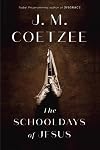
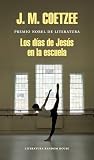
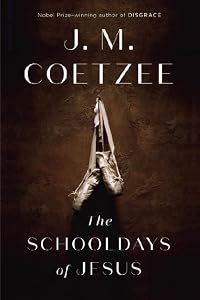
From the Nobel Prize-winning author J. M. Coetzee, the haunting sequel to The Childhood of Jesus, continuing the journey of David, Simon, and Ines. "When you travel across the ocean on a boat, all your memories are washed away and you start a completely new life. That is how it is. There is no before. There is no history. The boat docks at the harbour and we climb down the gangplank and we are plunged into the here and now. Time begins." David is the small boy who is always asking questions. show more Simon and Ines take care of him in their new town, Estrella. He is learning the language; he has begun to make friends. He has the big dog Bolivar to watch over him. But he'll be seven soon and he should be at school. And so, with the guidance of the three sisters who own the farm where Simon and Ines work, David is enrolled in the Academy of Dance. It's here, in his new golden dancing slippers, that he learns how to call down the numbers from the sky. But it is here, too, that he will make troubling discoveries about what grown-ups are capable of. In this mesmerizing allegorical tale, Coetzee deftly grapples with the big questions of growing up, of what it means to be a parent, the constant battle between intellect and emotion, and how we choose to live our lives. show lessTags
Recommendations














Member Reviews
J.M. Coetzee’s The Schooldays of Jesus is a perplexing, disturbing, well-written novel packed with extreme weaknesses and flaws, all of which are obviously intentional on the author’s part. Coetzee creates a peculiar, adjusted strange world as this work takes up where The Childhood of Jesus leaves off and the characters enter the world of Estrella. The reader overhears speculations about whether or not “kissing can raise one from the dead” (11); there are early and continuing biblical echoes regarding “trying to dodge the census” (25); and from the start, young David (still 6 years old, though soon to be 7) has exhausted his parents: “He is like a bulldozer. He has flattened us” (40).
Into this weary scenario, Coetzee show more inserts the Dance Academy and the “training of the soul” (43) under the direction of the “strikingly beautiful” young dance teacher Ana Magdalena (43). She is an elegant idealist, demanding of her students, and yet “the boy raises his face to her like a flower opening” (44). Ana says, “our Academy is dedicated to guiding the souls of our students toward . . . the dance of the universe” (68). Although Simon (the boy’s guardian) is cynical and judgmental towards the Dance Academy’s philosophy of numbers and Ana’s personality, nothing prepares the reader for the brutal shock of chapter 11, pages 127 and following.
Here I actually stopped reading for several days, thinking I would abandon the novel.
Coetzee uses a lazy plot trick to suddenly shift every element in the narrative in an unexpected vicious direction, and that direction is beyond the mysterious setting of forgetting past experiences and exploring philosophical themes. The reader is suddenly placed in a nightmarish soap opera where the characters speak to each other as if their setting is conceivable and normal when it is actually grotesque and filled with the shallow discourse of marionettes in a bad dream.
I was genuinely disturbed, but after some time I found myself coming back to the book and reading on, thinking that ‘Coetzee must have a higher purpose in creating this “[b]eauty and the beast” (220) scenario.’ And I think he does. Within the context of the world we actually live in, a world of horror and numbness, and yet a world of beauty and gentle kindness, the questions ultimately permeating the novel are: “[W]here is the soul?” And, “When will the soul emerge from its hiding place and open its wings?” (194).
The police in Estrella are hopelessly absent and equally impotent when they do appear. Right through to the end of the novel a homicidal maniac is essentially free to come and go as he pleases, begging forgiveness with pleas that show zero depth within a setting that resembles a hellish cartoon. As the narrator says, “the man is a fake” (250), and yet woven into this disturbing narrative fabric are edifying scenes describing the rope bridge to the new life (206-207), and ponderings on the hope of eliminating evil by transplanting “a bear’s heart” (228) into a man.
And then Simon has an epiphany as he watches David perform the Dance of Seven: “From some buried memory the words pillar of grace emerge . . . . [And] on the stage of the Institute, Ana Magdalena’s legacy reveals itself. As if the earth has lost its downward power, the boy seems to shed all bodily weight, to become pure light. . . . [And] Simon, whispers to himself: Remember this! If ever in the future you are tempted to doubt him, remember this!” (246).
As Coetzee’s strange novel comes to a close, Simon says to Mercedes—the elderly woman who will teach him his first dance movements in the final scene of the book—“I do not think. . . . In our family I am the stupid one, the blind one, the danceless one. Ines leads. David leads. The dog leads. I stumble along behind, hoping for the day to come when my eyes will be opened and I will behold the world as it really is, including the numbers in all their glory” (257-58).
This novel is very disturbing, but also very interesting, and the use of very three times in this sentence is justified, as you will see when you read The Schooldays of Jesus. show less
Into this weary scenario, Coetzee show more inserts the Dance Academy and the “training of the soul” (43) under the direction of the “strikingly beautiful” young dance teacher Ana Magdalena (43). She is an elegant idealist, demanding of her students, and yet “the boy raises his face to her like a flower opening” (44). Ana says, “our Academy is dedicated to guiding the souls of our students toward . . . the dance of the universe” (68). Although Simon (the boy’s guardian) is cynical and judgmental towards the Dance Academy’s philosophy of numbers and Ana’s personality, nothing prepares the reader for the brutal shock of chapter 11, pages 127 and following.
Here I actually stopped reading for several days, thinking I would abandon the novel.
Coetzee uses a lazy plot trick to suddenly shift every element in the narrative in an unexpected vicious direction, and that direction is beyond the mysterious setting of forgetting past experiences and exploring philosophical themes. The reader is suddenly placed in a nightmarish soap opera where the characters speak to each other as if their setting is conceivable and normal when it is actually grotesque and filled with the shallow discourse of marionettes in a bad dream.
I was genuinely disturbed, but after some time I found myself coming back to the book and reading on, thinking that ‘Coetzee must have a higher purpose in creating this “[b]eauty and the beast” (220) scenario.’ And I think he does. Within the context of the world we actually live in, a world of horror and numbness, and yet a world of beauty and gentle kindness, the questions ultimately permeating the novel are: “[W]here is the soul?” And, “When will the soul emerge from its hiding place and open its wings?” (194).
The police in Estrella are hopelessly absent and equally impotent when they do appear. Right through to the end of the novel a homicidal maniac is essentially free to come and go as he pleases, begging forgiveness with pleas that show zero depth within a setting that resembles a hellish cartoon. As the narrator says, “the man is a fake” (250), and yet woven into this disturbing narrative fabric are edifying scenes describing the rope bridge to the new life (206-207), and ponderings on the hope of eliminating evil by transplanting “a bear’s heart” (228) into a man.
And then Simon has an epiphany as he watches David perform the Dance of Seven: “From some buried memory the words pillar of grace emerge . . . . [And] on the stage of the Institute, Ana Magdalena’s legacy reveals itself. As if the earth has lost its downward power, the boy seems to shed all bodily weight, to become pure light. . . . [And] Simon, whispers to himself: Remember this! If ever in the future you are tempted to doubt him, remember this!” (246).
As Coetzee’s strange novel comes to a close, Simon says to Mercedes—the elderly woman who will teach him his first dance movements in the final scene of the book—“I do not think. . . . In our family I am the stupid one, the blind one, the danceless one. Ines leads. David leads. The dog leads. I stumble along behind, hoping for the day to come when my eyes will be opened and I will behold the world as it really is, including the numbers in all their glory” (257-58).
This novel is very disturbing, but also very interesting, and the use of very three times in this sentence is justified, as you will see when you read The Schooldays of Jesus. show less
J.M. Coetzee’s The Schooldays of Jesus is a perplexing, disturbing, well-written novel packed with extreme weaknesses and flaws, all of which are obviously intentional on the author’s part. Coetzee creates a peculiar, adjusted strange world as this work takes up where The Childhood of Jesus leaves off and the characters enter the world of Estrella. The reader overhears speculations about whether or not “kissing can raise one from the dead” (11); there are early and continuing biblical echoes regarding “trying to dodge the census” (25); and from the start, young David (still 6 years old, though soon to be 7) has exhausted his parents: “He is like a bulldozer. He has flattened us” (40).
Into this weary scenario, Coetzee show more inserts the Dance Academy and the “training of the soul” (43) under the direction of the “strikingly beautiful” young dance teacher Ana Magdalena (43). She is an elegant idealist, demanding of her students, and yet “the boy raises his face to her like a flower opening” (44). Ana says, “our Academy is dedicated to guiding the souls of our students toward . . . the dance of the universe” (68). Although Simon (the boy’s guardian) is cynical and judgmental towards the Dance Academy’s philosophy of numbers and Ana’s personality, nothing prepares the reader for the brutal shock of chapter 11, pages 127 and following.
Here I actually stopped reading for several days, thinking I would abandon the novel.
Coetzee uses a lazy plot trick to suddenly shift every element in the narrative in an unexpected vicious direction, and that direction is beyond the mysterious setting of forgetting past experiences and exploring philosophical themes. The reader is suddenly placed in a nightmarish soap opera where the characters speak to each other as if their setting is conceivable and normal when it is actually grotesque and filled with the shallow discourse of marionettes in a bad dream.
I was genuinely disturbed, but after some time I found myself coming back to the book and reading on, thinking that ‘Coetzee must have a higher purpose in creating this “[b]eauty and the beast” (220) scenario.’ And I think he does. Within the context of the world we actually live in, a world of horror and numbness, and yet a world of beauty and gentle kindness, the questions ultimately permeating the novel are: “[W]here is the soul?” And, “When will the soul emerge from its hiding place and open its wings?” (194).
The police in Estrella are hopelessly absent and equally impotent when they do appear. Right through to the end of the novel a homicidal maniac is essentially free to come and go as he pleases, begging forgiveness with pleas that show zero depth within a setting that resembles a hellish cartoon. As the narrator says, “the man is a fake” (250), and yet woven into this disturbing narrative fabric are edifying scenes describing the rope bridge to the new life (206-207), and ponderings on the hope of eliminating evil by transplanting “a bear’s heart” (228) into a man.
And then Simon has an epiphany as he watches David perform the Dance of Seven: “From some buried memory the words pillar of grace emerge . . . . [And] on the stage of the Institute, Ana Magdalena’s legacy reveals itself. As if the earth has lost its downward power, the boy seems to shed all bodily weight, to become pure light. . . . [And] Simon, whispers to himself: Remember this! If ever in the future you are tempted to doubt him, remember this!” (246).
As Coetzee’s strange novel comes to a close, Simon says to Mercedes—the elderly woman who will teach him his first dance movements in the final scene of the book—“I do not think. . . . In our family I am the stupid one, the blind one, the danceless one. Ines leads. David leads. The dog leads. I stumble along behind, hoping for the day to come when my eyes will be opened and I will behold the world as it really is, including the numbers in all their glory” (257-58).
This novel is very disturbing, but also very interesting, and the use of very three times in this sentence is justified, as you will see when you read The Schooldays of Jesus. show less
Into this weary scenario, Coetzee show more inserts the Dance Academy and the “training of the soul” (43) under the direction of the “strikingly beautiful” young dance teacher Ana Magdalena (43). She is an elegant idealist, demanding of her students, and yet “the boy raises his face to her like a flower opening” (44). Ana says, “our Academy is dedicated to guiding the souls of our students toward . . . the dance of the universe” (68). Although Simon (the boy’s guardian) is cynical and judgmental towards the Dance Academy’s philosophy of numbers and Ana’s personality, nothing prepares the reader for the brutal shock of chapter 11, pages 127 and following.
Here I actually stopped reading for several days, thinking I would abandon the novel.
Coetzee uses a lazy plot trick to suddenly shift every element in the narrative in an unexpected vicious direction, and that direction is beyond the mysterious setting of forgetting past experiences and exploring philosophical themes. The reader is suddenly placed in a nightmarish soap opera where the characters speak to each other as if their setting is conceivable and normal when it is actually grotesque and filled with the shallow discourse of marionettes in a bad dream.
I was genuinely disturbed, but after some time I found myself coming back to the book and reading on, thinking that ‘Coetzee must have a higher purpose in creating this “[b]eauty and the beast” (220) scenario.’ And I think he does. Within the context of the world we actually live in, a world of horror and numbness, and yet a world of beauty and gentle kindness, the questions ultimately permeating the novel are: “[W]here is the soul?” And, “When will the soul emerge from its hiding place and open its wings?” (194).
The police in Estrella are hopelessly absent and equally impotent when they do appear. Right through to the end of the novel a homicidal maniac is essentially free to come and go as he pleases, begging forgiveness with pleas that show zero depth within a setting that resembles a hellish cartoon. As the narrator says, “the man is a fake” (250), and yet woven into this disturbing narrative fabric are edifying scenes describing the rope bridge to the new life (206-207), and ponderings on the hope of eliminating evil by transplanting “a bear’s heart” (228) into a man.
And then Simon has an epiphany as he watches David perform the Dance of Seven: “From some buried memory the words pillar of grace emerge . . . . [And] on the stage of the Institute, Ana Magdalena’s legacy reveals itself. As if the earth has lost its downward power, the boy seems to shed all bodily weight, to become pure light. . . . [And] Simon, whispers to himself: Remember this! If ever in the future you are tempted to doubt him, remember this!” (246).
As Coetzee’s strange novel comes to a close, Simon says to Mercedes—the elderly woman who will teach him his first dance movements in the final scene of the book—“I do not think. . . . In our family I am the stupid one, the blind one, the danceless one. Ines leads. David leads. The dog leads. I stumble along behind, hoping for the day to come when my eyes will be opened and I will behold the world as it really is, including the numbers in all their glory” (257-58).
This novel is very disturbing, but also very interesting, and the use of very three times in this sentence is justified, as you will see when you read The Schooldays of Jesus. show less
In this trilogy Coetzee reaches his former heights, returns to the territory where he moves with ease - the territory between the lines. The books leave the reader wondering, some messages certainly make it through, yet what if there is another meaning, hidden, felt but not trapped, not nailed to the page by a catchy precise phrase?
The books of the trilogy are influenced by Dostoyevsky's The Brothers Karamazov. The idea of Jesus coming at a different time and place is clearly borrowed from the main chapter of Dostoyevsky's sad masterpiece. If the analogy is not convincing enough for you, just look at the names of some key characters - obviously Alyosha and Dmitry are not mere coincidences.
Jesus as a child provides Coetzee with some show more interesting lines of conflict. Parents vs children, our social institutes vs parents and children, our education systems vs Don Quixote. The current set of values and requirements are no match for the gifted child. There is a price to pay as always there must be a price. Even if the memory of the entire land fails, what you don't remember does not allow you to ignore the bill. show less
The books of the trilogy are influenced by Dostoyevsky's The Brothers Karamazov. The idea of Jesus coming at a different time and place is clearly borrowed from the main chapter of Dostoyevsky's sad masterpiece. If the analogy is not convincing enough for you, just look at the names of some key characters - obviously Alyosha and Dmitry are not mere coincidences.
Jesus as a child provides Coetzee with some show more interesting lines of conflict. Parents vs children, our social institutes vs parents and children, our education systems vs Don Quixote. The current set of values and requirements are no match for the gifted child. There is a price to pay as always there must be a price. Even if the memory of the entire land fails, what you don't remember does not allow you to ignore the bill. show less
Why do people dislike these books so much? I don't understand. They're not hard; you're not missing something. It's exactly what it says it is: people have died, they're in a new world, they're trying to work out how to live there. Yes, there are biblical references. Yes, there are thoughts about migration. But it's not like you need a guidebook to it all.
In the past, I've disliked Coetzee's more Kafkan efforts, but in the Jesus novels he's getting it precisely right. As with Kafka, people reading them will always understand either too much, or too little.
In the past, I've disliked Coetzee's more Kafkan efforts, but in the Jesus novels he's getting it precisely right. As with Kafka, people reading them will always understand either too much, or too little.
Exceptional writing as always from Coetzee. This book, the second in a trilogy, brings forward the story of Simón and the boy Davíd who is in his care. The book is more philosophy than story, bringing points of view on art and numbers that are told from rational, academic and theoretical standpoints by the characters. Different philosophical theories are wrapped together through the acts and actions of the dance teacher Ana Magdalena and the uncouth museum attendant Dmitri who is infatuated with her, and how they bring their influence into the life of the child Davíd.
Continuing on from the previous book in the series, the world is constructed around migration to a new place, and the forgetting of the old. Gripping and stark, and very show more strange, this book (and its predecessor) feel like a culmination of the author's ideas from his career. show less
Continuing on from the previous book in the series, the world is constructed around migration to a new place, and the forgetting of the old. Gripping and stark, and very show more strange, this book (and its predecessor) feel like a culmination of the author's ideas from his career. show less
I am way behind with my reviewing again so will keep this one short. 2016 was the last year when I didn't aim to read the whole Booker longlist, and it was published very late in that year's Booker season, but I saw it in the library and thought I should read it, having read the first part of the trilogy a few years ago.
This is a rather odd, cryptic fable, and not one I can wholeheartedly recommend - I like Coetzee's early novels much more, and it is a book that probably needs to be read after reading the first part, which in my view makes it a strange choice for the Booker. One for Coetzee devotees only.
This is a rather odd, cryptic fable, and not one I can wholeheartedly recommend - I like Coetzee's early novels much more, and it is a book that probably needs to be read after reading the first part, which in my view makes it a strange choice for the Booker. One for Coetzee devotees only.
The second in the trilogy by Coetzee. David, 6 years old now is enrolled in school, an academy of dance, where children are taught to dance numbers (1, 2, 3 etc). Their dancing, they are taught will call down the numbers from the sky where they live. (Yeah, it struck me as a little weird too.)
I enjoyed the first book in the series, this book was very different and I had a hard time trying to see Coetzee was going with it. I will read the final instalment, but I am a bit wary.
I enjoyed the first book in the series, this book was very different and I had a hard time trying to see Coetzee was going with it. I will read the final instalment, but I am a bit wary.
Members
- Recently Added By
Lists

Top Five Books of 2020
982 works; 350 members

Man Booker Prize Longlist 2016
13 works; 2 members

Five star books
1,755 works; 108 members

Books Read in 2018
4,360 works; 110 members
Author Information

111+ Works 42,136 Members
J.M. Coetzee's full name is John Michael Coetzee. Born in Cape Town, South Africa, in 1940, Coetzee is a writer and critic who uses the political situation in his homeland as a backdrop for many of his novels. Coetzee published his first work of fiction, Dusklands, in 1974. Another book, Boyhood, loosely chronicles an unhappy time in Coetzee's show more childhood when his family moved from Cape Town to the more remote and unenlightened city of Worcester. Other Coetzee novels are In the Heart of the Country and Waiting for the Barbarians. Coetzee's critical works include White Writing and Giving Offense: Essays on Censorship. Coetzee is a two-time recipient of the Booker Prize and in 2003, he won the Nobel Literature Award. (Bowker Author Biography) J. M. Coetzee's books include "Boyhood", "Dusklands", "In the Heart of the Country", "Waiting for the Barbarians", "Life & Times of Michael K", "Foe", & "The Master of Petersburg". A professor of general literature at the University of Cape Town, Coetzee has won many literary awards, including the CNA Prize (South Africa's premier literary award), the Booker Prize (twice), the Prix Etranger Femina, the Jerusalem Prize, the Lannan Literary Award, & The Irish Times International Fiction Prize. (Publisher Provided) show less
Awards and Honors
Awards
Distinctions
Notable Lists
Series

Common Knowledge
- Canonical title*
- De schooldagen van Jezus
- Original title
- The Schooldays of Jesus
- Original publication date
- 2016
*Some information comes from Common Knowledge in other languages. Click "Edit" for more information.
Classifications
Statistics
- Members
- 396
- Popularity
- 78,406
- Reviews
- 15
- Rating
- (3.49)
- Languages
- 9 — Dutch, English, French, German, Italian, Norwegian, Portuguese (Portugal), Spanish, Turkish
- Media
- Paper, Audiobook, Ebook
- ISBNs
- 39
- ASINs
- 7