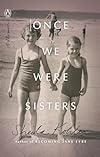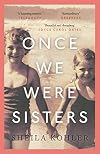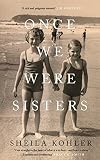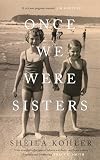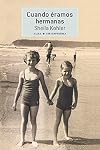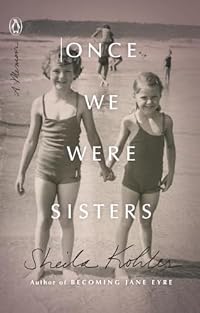
Once we were sisters
by Sheila Kohler
On This Page
Description
A beautiful, heartrending literary memoir about the tragic death of the author's beloved older sister and a tribute to their bond. When Sheila Kohler was thirty-seven, she received the heart-stopping news that her sister Maxine, only two years older, was killed when her husband drove them off a deserted road in Johannesburg. Stunned by the news, she immediately flew back to the country where she was born, determined to find answers and forced to reckon with his history of violence and the show more lingering effects of their most unusual childhood-one marked by death and the misguided love of their mother. In her signature spare and incisive prose, Sheila Kohler recounts the lives she and her sister led. Flashing back to their storybook childhood at the family estate, Crossways, Kohler tells of the death of her father when she and Maxine were girls, which led to the family abandoning their house and the girls being raised by their mother, at turns distant and suffocating. We follow them to the cloistered Anglican boarding school where they first learn of separation and later their studies in Rome and Paris where they plan grand lives for themselves-lives that are interrupted when both marry young and discover they have made poor choices. Kohler evokes the bond between sisters and shows how that bond changes but never breaks, even after death. show lessTags
Recommendations












Member Reviews
Late last year, I joined My Book Box, a subscription box service that send you two books each month along with a couple other things (book marks, tea, soap, butterbeer candle, a poster). I signed up for the Mystery and Non-Fiction selections. The mystery selections have been good. Not outstanding, but not bad. The Non-Fiction selection have been outstanding. With the exception of two books, the non-fiction books have been books that I would not have otherwise picked up. (One exception is that I was going to buy the book anyway, and the other is that self help books and I do not get along. I filled out the response survey and said that the same. I got a percentage off a renewal).
I can honesty say that I would not have picked up this show more book. And that would have been my lost.
Kohler's memoir is so much a memoir as a memoir mediation. She is trying, has been trying, to come to terms with her sister's death, possible murder, for years. Kohler and her sister were born into South Africa in the 40s/50s. In on sense, the book is, as Roxanne Gay would correctly note, a memoir about women in unhappy marriages. Yet, the book manages to transcend that. Perhaps it is because of the world we currently inhabit, perhaps it is because Kohler and her sister would been one of the last generations (if not the last) to be educated to be wives (or who went to college to get a husband), yet both sisters eventually fight against that. Instead of making the breaking/challenging of tradition the moral of story, Kohler allows read to make his or her own conclusions. In some ways, the book seems to be about Kohler's coming to terms with her guilt, over what happened to her sister, over apartheid, over not staying in fight apartheid. Whether or not the guilt is deserved is left up to ready and isn't really the question. Kohler like all of us is plagued by what if and should of.
And she is honest about it. show less
I can honesty say that I would not have picked up this show more book. And that would have been my lost.
Kohler's memoir is so much a memoir as a memoir mediation. She is trying, has been trying, to come to terms with her sister's death, possible murder, for years. Kohler and her sister were born into South Africa in the 40s/50s. In on sense, the book is, as Roxanne Gay would correctly note, a memoir about women in unhappy marriages. Yet, the book manages to transcend that. Perhaps it is because of the world we currently inhabit, perhaps it is because Kohler and her sister would been one of the last generations (if not the last) to be educated to be wives (or who went to college to get a husband), yet both sisters eventually fight against that. Instead of making the breaking/challenging of tradition the moral of story, Kohler allows read to make his or her own conclusions. In some ways, the book seems to be about Kohler's coming to terms with her guilt, over what happened to her sister, over apartheid, over not staying in fight apartheid. Whether or not the guilt is deserved is left up to ready and isn't really the question. Kohler like all of us is plagued by what if and should of.
And she is honest about it. show less
This compelling memoir is like a love letter to a sister who died too young, in a suspicious car accident. I couldn't put it down. Heart-rending, beautifully written.
Once We Were Sisters is a terrific book. Kohler is an excellent writer and in this moving and insightful book, she raises all sorts of interesting questions about why we stay in situations that aren't healthy for us, and how we cope or become acclimatized to things that are going on around us. This book also beautifully demonstrates how literature can help us see things more clearly, clarify questions we need to ask about our own lives, and come to understand that we aren’t alone.
As the daughters of a wealthy timber merchant, author Sheila Kohler and her sister Maxine grow up as the most privileged of the privileged in apartheid-era South Africa. They are expected to make suitable matches and be perfect wives to successful men. But as adults the sisters share a terrible secret--their seemingly idyllic marriages have become living hells. Sheila's husband cheats on her, and, what's worse, Maxine's spouse, a prominent physician, beats her on a regular basis. When Maxine dies a suspicious death, Sheila is left trying to make sense of it all.
With its short chapters, generous margins and leading, and full-page photographs, this brief memoir is very quick read. It serves as a good reminder that domestic abuse knows no show more class boundaries. show less
With its short chapters, generous margins and leading, and full-page photographs, this brief memoir is very quick read. It serves as a good reminder that domestic abuse knows no show more class boundaries. show less
I've heard of Sheila Kohler but haven't read any of her fictional work yet. Whilst it probably would have been interesting to have had that context (she talks in this memoir about how she has weaved her family stories into her fictional work), this book works perfectly well on its own without any prior knowledge of her or her work.
Set in the 1950s to 1970s, Once we Where Sisters is a memoir with Kohler's sister at its heart, whom we learn right at the beginning was killed in a car crash with Kohler blaming her sister's husband of deliberately causing her death. Whilst the book is a legacy to her sister's memory and wrongful death - and to a large extent is an exercise in using the written word and free speech to appoint blame - mostly show more it's simply a very enjoyable memoir of the life of two very privileged South African sisters, from their childhood growing up with household staff in a luxurious house in Johannesburg, to their married lives and visits to each other across the capitals of Europe.
This book is a great insight into how the other half lives, and how money doesn't buy happiness (although it definitely seemed to make misery a lot easier to bear). The sisters have lives akin to something out of a classic novel, with finishing schools, education at numerous universities across Europe, South Africa and America, and multiple homes. Their married lives are ultimately lacking in fidelity as many of these wealthy unions often seem to be, and although they doubtlessly love their children they seem happy to disappear off for long holidays without it breaking their hearts too much.
All in all hugely enjoyable.
4 stars - a definite page-turner. I will be looking out for some of Sheila Kohler's fictional work after this. show less
Set in the 1950s to 1970s, Once we Where Sisters is a memoir with Kohler's sister at its heart, whom we learn right at the beginning was killed in a car crash with Kohler blaming her sister's husband of deliberately causing her death. Whilst the book is a legacy to her sister's memory and wrongful death - and to a large extent is an exercise in using the written word and free speech to appoint blame - mostly show more it's simply a very enjoyable memoir of the life of two very privileged South African sisters, from their childhood growing up with household staff in a luxurious house in Johannesburg, to their married lives and visits to each other across the capitals of Europe.
This book is a great insight into how the other half lives, and how money doesn't buy happiness (although it definitely seemed to make misery a lot easier to bear). The sisters have lives akin to something out of a classic novel, with finishing schools, education at numerous universities across Europe, South Africa and America, and multiple homes. Their married lives are ultimately lacking in fidelity as many of these wealthy unions often seem to be, and although they doubtlessly love their children they seem happy to disappear off for long holidays without it breaking their hearts too much.
All in all hugely enjoyable.
4 stars - a definite page-turner. I will be looking out for some of Sheila Kohler's fictional work after this. show less
It began very promisingly. I could feel how much author Sheila Kohler loved her sister. Kohler did a wonderful job right up front, too, setting out the strangeness of her childhood as the backdrop for her memoir. Soon the story derailed.
The memoir lacks, to me, a coherent thematic point of view--anything that might have given the story a spine. While the memoir promises to be a story of two sisters, it instead roams freely from chapter to chapter, touching upon many other autobiographical subjects in a way that began to feel haphazard and superficial. The bits and memories, shared here in brief chapters, never really added up to be something whole. The story begins with Kohler going to id her sister Maxine's body at the morgue after an show more accident; Kohler introduces the idea that it wasn't an accident but was murder. It's quite a setup. But then the story of Maxine's death gets dropped, except for small scenic hints, until very near the end of the book.
So on the whole, a little aggravating. show less
The memoir lacks, to me, a coherent thematic point of view--anything that might have given the story a spine. While the memoir promises to be a story of two sisters, it instead roams freely from chapter to chapter, touching upon many other autobiographical subjects in a way that began to feel haphazard and superficial. The bits and memories, shared here in brief chapters, never really added up to be something whole. The story begins with Kohler going to id her sister Maxine's body at the morgue after an show more accident; Kohler introduces the idea that it wasn't an accident but was murder. It's quite a setup. But then the story of Maxine's death gets dropped, except for small scenic hints, until very near the end of the book.
So on the whole, a little aggravating. show less
This is a memoir by a prolific writer I've never heard of. Born into a fabulously wealthy South African family, she and her sister Maxine were raised during the 1950's in the lap of luxury. Both married young, and Sheila and her American husband lived in Paris. Maxine married a South African cardiac surgeon who was a protégé of heart transplant pioneer Christian Barnard. Although they lived continents apart, the sisters got together frequently, with and without their children and/or spouses. There were hints that Maxine and her husband were not getting along. The family ultimately became aware that Maxine's husband was abusing her and their children. Just when it seemed that Maxine was going to leave her husband, she died in a show more terrible car accident in a car her husband was driving. He survived.
From the beginning Sheila suspected that the car crash was not an accident and that Maxine was deliberately murdered by her husband. She and her family also suffered feelings of guilt over what they saw as their failure to help Maxine extract herself from her abusive marriage.
Sheila became a novelist, and most of her novels relate in one way or another to the death of her sister, with themes about the relationship between sisters and survivor guilt. (She also writes historical fiction.) 35 years later, she has written this memoir to help her answer the questions that have eaten at her over the years, "How could we have failed to protect her from him? What was wrong with our family?"
I didn't find the memoir to be particularly compelling. It seems to have been promoted as some sort of true crime memoir, but any criminal aspects are really peripheral, and consist mostly of suspicions. I did enjoy the glimpse I got into the lifestyle of the rich. In addition I enjoyed the parts discussing how a writer takes things from their real live experiences and turns them into fiction. So overall, my experience of the book is "Meh."
2 1/2 stars show less
From the beginning Sheila suspected that the car crash was not an accident and that Maxine was deliberately murdered by her husband. She and her family also suffered feelings of guilt over what they saw as their failure to help Maxine extract herself from her abusive marriage.
Sheila became a novelist, and most of her novels relate in one way or another to the death of her sister, with themes about the relationship between sisters and survivor guilt. (She also writes historical fiction.) 35 years later, she has written this memoir to help her answer the questions that have eaten at her over the years, "How could we have failed to protect her from him? What was wrong with our family?"
I didn't find the memoir to be particularly compelling. It seems to have been promoted as some sort of true crime memoir, but any criminal aspects are really peripheral, and consist mostly of suspicions. I did enjoy the glimpse I got into the lifestyle of the rich. In addition I enjoyed the parts discussing how a writer takes things from their real live experiences and turns them into fiction. So overall, my experience of the book is "Meh."
2 1/2 stars show less
Members
- Recently Added By
Author Information

Series
Belongs to Publisher Series
Contemporánea [Alba] (30)
Common Knowledge
- Canonical title
- Once we were sisters
- Original title
- Once we were sisters
- Original publication date
- 2017 (Canongate) (Canongate); 2016 (Penguin, USA) (Penguin, USA)
- People/Characters
- Maxine Kohler; Sheila Kohler
- Important places
- South Africa
- Blurbers
- Smith, Tracy K.; Coetzee, J.M.; Oates, Joyce Carol; White, Edmund; Lopate, Phillip; Spinney, Lu
Classifications
- Genres
- Biography & Memoir, Fiction and Literature, Literature Studies and Criticism
- DDC/MDS
- 828.91403 — Literature & rhetoric English & Old English literatures English miscellaneous writings English miscellaneous writings 1900- English miscellaneous writings 1900-1999 English miscellaneous writings 1945-1999 Diaries, journals, notebooks, reminiscences
- LCC
- PR9369.3 .K64 .Z46 — Language and Literature English English Literature English literature: Provincial, local, etc.
- BISAC
Statistics
- Members
- 125
- Popularity
- 258,098
- Reviews
- 7
- Rating
- (3.63)
- Languages
- English, Korean, Spanish
- Media
- Paper, Audiobook, Ebook
- ISBNs
- 23
- ASINs
- 4