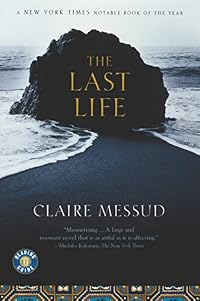
The Last Life
by Claire Messud
On This Page
Description
A novel about French colonists in Algeria and their difficult adjustment to France after Algerian independence. It is narrated by a girl whose grandfather buys a hotel on the Riviera and forgetting he is no longer in the colonies goes to jail for shooting at rowdy teenagers by a pool.Tags
Recommendations






Member Reviews
Just a terrific novel. I have no idea if "The Last Life" is in any way autobiographical, but it feels too real and is too perceptive not to be. The author gets so much exactly right here that I'm really sort of shocked that this one isn't better known. It is, in a sense, a study of various ways you can be an outsider: the book's half-American half-French main character is the granddaughter of French Algerians who fled to the south of France when everything fell apart in the sixties. She's got a younger brother who's severely brain-damaged and must receive constant care. After her grandfather commits a shocking criminal act, she's more on her plate than the average teenager does. I can't say I know a lot about the French experience in show more North Africa, but Messud carefully traces contemporary French attitudes about it while describing the way that their flight from Algiers continues to influence her characters' stifling, if materially comfortable, family life. The book prose is note-perfect and flows easily over the page, but at the same time there's something oppressive about this: the author clearly wants to demonstrate just how heavily an increasingly distant past can weigh on the present present and the ways that identities that we don't really get to choose can make us feel trapped. In other words, it's also a book about the gradations of irretrievable loss.
Of course, I admit that the book might work for me because I'm a grown-up third-culture kid with my share of warm memories for a couple of places with complicated histories that were and are beset by unjust social conditions. Like this book's protagonist, I felt I lost an irretrievable bit of myself when I left them, and like her, I know that you can't really go back. A lot of people will argue the sort of thorough examination of cultural identity that Messud performs here is really not much more than navel-gazing, and well, they might not be entirely wrong. But Sagasse's intense, complicated relationships with her parents, their disintegrating marriage, and her mother's ultimately unsuccessful bid to become fully integrated into a French family that already carries more than its share of shame and secrets are also dealt with beautifully in "The Last Life." So are the main character's first, tentative forays into sexuality and her all-too-real distress she feels about the set of increasingly difficult choices facing her. So are her description of the United States and American identity as seen from the outsides. So is the author's poignant, lovingly imagined vision of a culturally hybrid French-speaking, intercontinental Mediterranean, which, now that so much blood has been shed and so much time has past, seem unworkable, but not entirely impossible. So is everything, really. I'm a total mark for books that deal with these themes, so perhaps you should take this rave with a grain of Mediterranean sea salt. But even if I weren't, I think that there's just so much to recommend here. This one is just great. Go and get it now. show less
Of course, I admit that the book might work for me because I'm a grown-up third-culture kid with my share of warm memories for a couple of places with complicated histories that were and are beset by unjust social conditions. Like this book's protagonist, I felt I lost an irretrievable bit of myself when I left them, and like her, I know that you can't really go back. A lot of people will argue the sort of thorough examination of cultural identity that Messud performs here is really not much more than navel-gazing, and well, they might not be entirely wrong. But Sagasse's intense, complicated relationships with her parents, their disintegrating marriage, and her mother's ultimately unsuccessful bid to become fully integrated into a French family that already carries more than its share of shame and secrets are also dealt with beautifully in "The Last Life." So are the main character's first, tentative forays into sexuality and her all-too-real distress she feels about the set of increasingly difficult choices facing her. So are her description of the United States and American identity as seen from the outsides. So is the author's poignant, lovingly imagined vision of a culturally hybrid French-speaking, intercontinental Mediterranean, which, now that so much blood has been shed and so much time has past, seem unworkable, but not entirely impossible. So is everything, really. I'm a total mark for books that deal with these themes, so perhaps you should take this rave with a grain of Mediterranean sea salt. But even if I weren't, I think that there's just so much to recommend here. This one is just great. Go and get it now. show less
Our French Algerian main character describes the events in her teen years growing up alongside her family’s hotel on the French Riviera. Sagesse (a beautiful first name) is a devil-may-care teenager, who along with her loud annoying friends, trigger the hotel’s owner—her grandfather—to confront them with his rifle. While describing the aftermath of that event, Sagesse recounts the history of each family member. The most poignant story involves Sagesse’s father caring for his dying grandmother when all of his family and friends have escaped as the French are losing the Civil War and Algerians are gaining their independence. He’s young and has no idea what he’s facing, but sheer stubbornness to the end sees him through. I show more struggled otherwise with the book, not finding many redeemable qualities in any of the characters. While the adult Sagesse is sincere and honest about herself, her teenager years just turned me against her. This isn’t the sort of book that will stay with me, except maybe the father taking care of his ailing grandmother amidst a world of violence, which is enough to make this a pick for me. show less
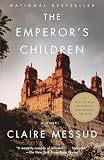
This was a much better book in many ways than The Emperor's Children but still revolves around the legacy of a wealthy family. Most of the book is set in France and Algiers but some of it is set in the United States on the East Coast. At its core, this book is an exploration of identity centered around a protagonist female who is "coming of age." At the same time, growing up with a brother who has a serious disability (from the sounds of the description, severe profound cognition and physical disabilities), changes any sibling and her/his own experience of life. In many ways, what we also see is the tremendous effect that leaving Algiers had on the family. The protagonist learns about the traumatic exit of her own father.
This book is show more political and, in my opinion, deals with a plethora of issues that many books don't ever explore. For example: racism and sexism, classism, adolescence, family, disability, national identity vs. personal identity, infidelity, and history. It has already encouraged me to read more about The Battle of Algiers and I expect to continue that. The 4/5 rating basically means I think this book is well worth reading. I don't give books a 5/5 rating unless I think every word is pretty much brilliant and you should stop whatever you're doing right this second and read something that is profoundly life changing. That said, this one is still a keeper. Messud also has a way of language...it's poetic without knocking you over the head with it most of the time.
Memorable quotes:
pg. 47 "It would have been so easy not to go: the plunge into the sleeping night seemed like an enormous effort, a question mark."
pg. 113 "I laughed. I lay back too, and could hear the tiny tickings of the grass blades. The earth smelled like pennies. "The sky is incredible." I agreed. There was no breeze, but high above clouds were chasing across the ether, their shapes erratic and amusing."
pg. 120 They had been examining men's bones for years but it occurred to them that the peculiar afflictions of women required special attention, that their secrets lay in the osteal geography of the fairer sets. Their conclusions revolutionized not only medical but social understanding. Woman, the scientists explained to scores of German medical students, all eyes on the female skeleton dangling cheerily at the lectern, Woman has a smaller brain, and wider hips. Her constitution is lower to the ground and that great gaping cavern in her abdomen is the center of her soul. Woman is mother, a separate creature from man, with a distinct and scientifically proven role. She is the Angel in the House , they said, or others said after them: it's bred in the bone.
What the scientists did not mention, perhaps forgot themselves, was that the woman on whom this analysis of Woman was based wasn't one. Her hands and head and hips and ribs were not born together. They were all bones of different women, wired together. The scientists threw the pieces into the air, and this is what came down. And there were no more tosses, mo more chances. Women were stuck with Her, even though she didn't really exist. It made me wonder, how much is pretending.
pg. 317 "My father chuckled, 'Good, very good. Why did the man beat his head against the wall?'"
It was an old joke in our house. 'Because it felt so good when he stopped.' I kept my tone flat." show less
This book is show more political and, in my opinion, deals with a plethora of issues that many books don't ever explore. For example: racism and sexism, classism, adolescence, family, disability, national identity vs. personal identity, infidelity, and history. It has already encouraged me to read more about The Battle of Algiers and I expect to continue that. The 4/5 rating basically means I think this book is well worth reading. I don't give books a 5/5 rating unless I think every word is pretty much brilliant and you should stop whatever you're doing right this second and read something that is profoundly life changing. That said, this one is still a keeper. Messud also has a way of language...it's poetic without knocking you over the head with it most of the time.
Memorable quotes:
pg. 47 "It would have been so easy not to go: the plunge into the sleeping night seemed like an enormous effort, a question mark."
pg. 113 "I laughed. I lay back too, and could hear the tiny tickings of the grass blades. The earth smelled like pennies. "The sky is incredible." I agreed. There was no breeze, but high above clouds were chasing across the ether, their shapes erratic and amusing."
pg. 120 They had been examining men's bones for years but it occurred to them that the peculiar afflictions of women required special attention, that their secrets lay in the osteal geography of the fairer sets. Their conclusions revolutionized not only medical but social understanding. Woman, the scientists explained to scores of German medical students, all eyes on the female skeleton dangling cheerily at the lectern, Woman has a smaller brain, and wider hips. Her constitution is lower to the ground and that great gaping cavern in her abdomen is the center of her soul. Woman is mother, a separate creature from man, with a distinct and scientifically proven role. She is the Angel in the House , they said, or others said after them: it's bred in the bone.
What the scientists did not mention, perhaps forgot themselves, was that the woman on whom this analysis of Woman was based wasn't one. Her hands and head and hips and ribs were not born together. They were all bones of different women, wired together. The scientists threw the pieces into the air, and this is what came down. And there were no more tosses, mo more chances. Women were stuck with Her, even though she didn't really exist. It made me wonder, how much is pretending.
pg. 317 "My father chuckled, 'Good, very good. Why did the man beat his head against the wall?'"
It was an old joke in our house. 'Because it felt so good when he stopped.' I kept my tone flat." show less
012-10-23 22:12
En jätte fin roman om att växa upp , hur svårt det är att passa in och hur en händelse inom familjen plötsligt förändrar allt. En bok som när man väl börjar läsa glömmer man tid och rum. :
En jätte fin roman om att växa upp , hur svårt det är att passa in och hur en händelse inom familjen plötsligt förändrar allt. En bok som när man väl börjar läsa glömmer man tid och rum. :
A layered knowing story of a family falling apart, a family already adrift from the French Riviera bourgeoisie they cling to, still living with the legacy of France's abortive colonial adventure in Algeria. The weight of the past is heavy and Messud teases it apart gently, without judgement. A great book.
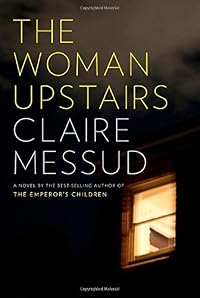
This is very much my favorite of the three books by Claire Messud that I've read (The Woman Upstairs, The Emperor's Children). It is a coming of age story, in which I found much that seemed familiar--which is saying something, since it takes place in the South of France, is about the complicated history of France and Algeria, includes a handicapped brother and a suicide. Messud has a great ear for dialogue, family tension, and just how fraught it is to be an adolescent.
Teenage daughter of a mixed marriage narrates her journey from Provence to New York and her family's voyage from colonial era Algeria to bourgeois provincial respectability. The precocious narrator in retrospect documents the dynamics of a fractured family and the geopolitics of france and its colonial odyssey. The book has its longeurs throughout - perhaps influenced by the leisurely detail of proust? - and for me never felt authentic in its Frenchness, falling into an easy orientalist exoticism. For me it was most powerful in addressing adolescent desire and in the portrayal of the mysteriously and profoundly handicapped Etienne. For me, an interesting fail
Members
- Recently Added By
Author Information

18+ Works 7,751 Members
Claire Messud is the author of six works of fiction. A recipient of Guggenheim and Radcliffe Fellowships and the Strauss Living Award from the American Academy of Arts and Letters, she lives in Cambridge, Massachusetts, with her family.
Awards and Honors
Awards
Common Knowledge
- Canonical title
- The Last Life
- Important places
- Algeria; France; French Riviera
- Dedication
- For J.W.
- First words
- I am American now, but this wasn't always so.
Classifications
Statistics
- Members
- 588
- Popularity
- 49,604
- Reviews
- 9
- Rating
- (3.73)
- Languages
- 5 — Dutch, English, French, German, Swedish
- Media
- Paper, Audiobook, Ebook
- ISBNs
- 20
- ASINs
- 8