On This Page
Description
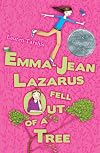
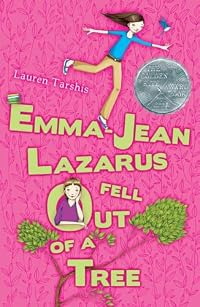
A quirky and utterly logical seventh-grade girl named Emma-Jean Lazarus discovers some interesting results when she gets involved in the messy everyday problems of her peers.Tags
Recommendations








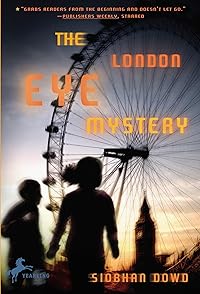

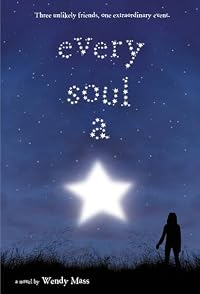
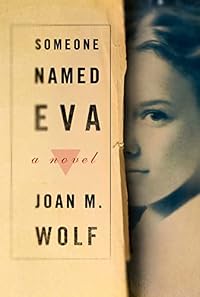
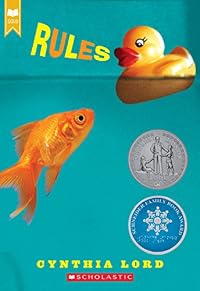
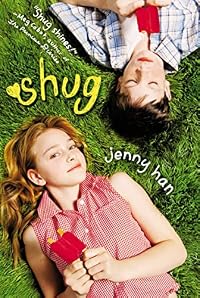

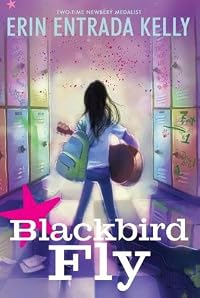






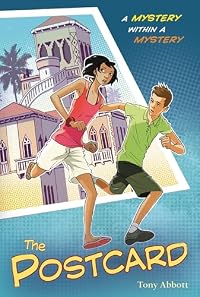


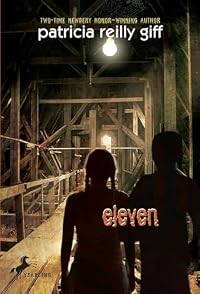





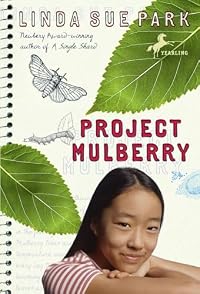
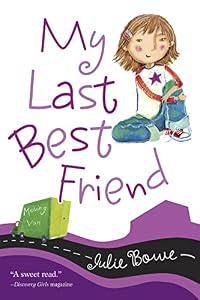
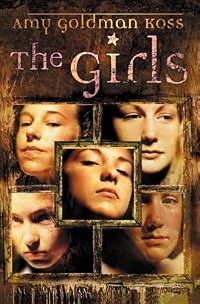
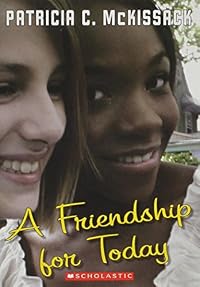
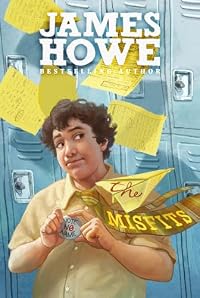
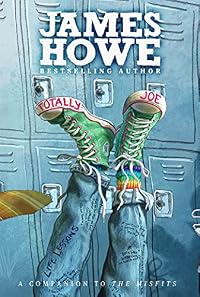
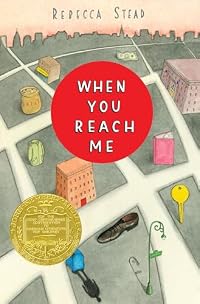
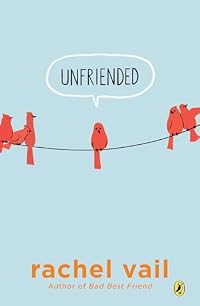

Member Recommendations
caroljeanr intelligent female character
Member Reviews
Sweet and charming book about a girl who is governed by logic, and her interactions with the messy and irrational classmates with whom she shares her life. I was able to strongly relate to the protagonist, Emma-Jean; she's never specifically labeled as anything other than "strange," but I could easily see her occupying a place on the autism continuum (and I like the way that Emma-Jean's being "strange" is framed as a positive trait). Altogether, a compelling storyline, difficult to put down -- as, with good intentions, Emma-Jean resorts to various forgeries. I kept waiting with apprehension for her ruses to be discovered.
Emma-Jean Lazarus is strange–strange as in extraordinary, remarkable, and singular. Much like her father before her, Emma-Jean finds people to be too complicated and illogical and relationships to be too messy. Yet, when she encounters a crying classmate, she makes a decision to walk through the invisible door that separates her from her fellow seventh graders.
Emma-Jean’s heroes are her deceased father Eugene and her father’s hero French mathematician Jules Henri Poincare. Emma-Jean embraces Poincare’s maxim that “even the most complex problems could be solved through a process of creative thinking.” She takes this advice to heart, and, with a mixture of logic and creativity (and some graphic design and forgery know-how), show more she solves her crying classmate’s problem–Problem: nice girl wants to go on a ski trip with her best friend, but her best friend has invited mean girl; Solution: forge a letter to mean girl so that she thinks she has been invited to perform center stage and will forfeit the ski trip she never cared about anyway.
No sooner has she “fixed” this situation than another classmate’s messy problem intertwines with her life. Again, she finds herself involved. Again, she uses logic to “fix” the problem (and at this point, she’s becoming quite skilled at forging documents). Unfortunately, at this point, her solution to the first problem is unraveling, and Emma-Jean both literally and metaphorically winds up falling out of a tree. Along with all of this other mess and complication, Emma-Jean’s also dealing with her feelings regarding her mother’s burgeoning relationship with their upstairs boarder.
Post-tree plunging episode, Emma-Jean’s mother tells her, “Things don’t always work out the way we want them to. We try, and sometimes we get hurt, and sometimes we cry. I guess you could say we even fall out of a tree, in a manner of speaking. But we get up. And the next time we don’t go up the same tree, or maybe we go up, but hold on tighter.”
Emma-Jean ponders what her mother tells her and at the same time she couples her mother’s sagacity with another of Poincare’s sayings, “It is by logic that we prove, but it is in our hearts that we discover life’s possibilities.” Logic-employing, observation-making, research-gathering, Emma-Jean Lazarus discovers that despite the world’s oft-times unfairness and people’s oft-times irrationality, new friendships and deepening relationships are worth the complications.
It is tempting to label Emma-Jean because of her peculiarities and detached reasoning (she has been compared to Mark Haddon’s logical, autistic protagonist Christopher Boone in The Curious Incident of the Dog in the Nighttime). But Emma-Jean is not labeled inside the book, so why should we take the liberty to do so? She’s just complicated–like every other middle schooler in her class.
It’s true that connecting with people does not come naturally for Emma-Jean (it did not come naturally to her father either), but she chooses to participate and to “fall out of the tree.” She’s not the first eccentric protagonist in children’s literature, but she is wholly original, uniquely wise, and completely endearing. My hope is that Tarshis brings Emma-Jean back for more involvement with life and all its messy complications in the near future.
Notable Quotes from the Book:
Hurt feelings, bruised egos, broken promises, betrayed confidences—the list of emotional injuries her fellow seventh graders inflicted on one another was dismayingly long.
Emma Jean liked her peers, “But their behavior was irrational. And as a result, their lives were messy. Emma-Jean disliked disorder of any kind, and had thus made it her habit to keep herself separate, to observe from afar”
When she was much younger, spending time with other children often left her feeling confused, as though she were visiting with creatures of a different species.
Emma-Jean had observed her peers closely over the years. Her painstaking research had given her a much clearer understanding of their complex emotional lives and surprising sensitivities. show less
Emma-Jean’s heroes are her deceased father Eugene and her father’s hero French mathematician Jules Henri Poincare. Emma-Jean embraces Poincare’s maxim that “even the most complex problems could be solved through a process of creative thinking.” She takes this advice to heart, and, with a mixture of logic and creativity (and some graphic design and forgery know-how), show more she solves her crying classmate’s problem–Problem: nice girl wants to go on a ski trip with her best friend, but her best friend has invited mean girl; Solution: forge a letter to mean girl so that she thinks she has been invited to perform center stage and will forfeit the ski trip she never cared about anyway.
No sooner has she “fixed” this situation than another classmate’s messy problem intertwines with her life. Again, she finds herself involved. Again, she uses logic to “fix” the problem (and at this point, she’s becoming quite skilled at forging documents). Unfortunately, at this point, her solution to the first problem is unraveling, and Emma-Jean both literally and metaphorically winds up falling out of a tree. Along with all of this other mess and complication, Emma-Jean’s also dealing with her feelings regarding her mother’s burgeoning relationship with their upstairs boarder.
Post-tree plunging episode, Emma-Jean’s mother tells her, “Things don’t always work out the way we want them to. We try, and sometimes we get hurt, and sometimes we cry. I guess you could say we even fall out of a tree, in a manner of speaking. But we get up. And the next time we don’t go up the same tree, or maybe we go up, but hold on tighter.”
Emma-Jean ponders what her mother tells her and at the same time she couples her mother’s sagacity with another of Poincare’s sayings, “It is by logic that we prove, but it is in our hearts that we discover life’s possibilities.” Logic-employing, observation-making, research-gathering, Emma-Jean Lazarus discovers that despite the world’s oft-times unfairness and people’s oft-times irrationality, new friendships and deepening relationships are worth the complications.
It is tempting to label Emma-Jean because of her peculiarities and detached reasoning (she has been compared to Mark Haddon’s logical, autistic protagonist Christopher Boone in The Curious Incident of the Dog in the Nighttime). But Emma-Jean is not labeled inside the book, so why should we take the liberty to do so? She’s just complicated–like every other middle schooler in her class.
It’s true that connecting with people does not come naturally for Emma-Jean (it did not come naturally to her father either), but she chooses to participate and to “fall out of the tree.” She’s not the first eccentric protagonist in children’s literature, but she is wholly original, uniquely wise, and completely endearing. My hope is that Tarshis brings Emma-Jean back for more involvement with life and all its messy complications in the near future.
Notable Quotes from the Book:
Hurt feelings, bruised egos, broken promises, betrayed confidences—the list of emotional injuries her fellow seventh graders inflicted on one another was dismayingly long.
Emma Jean liked her peers, “But their behavior was irrational. And as a result, their lives were messy. Emma-Jean disliked disorder of any kind, and had thus made it her habit to keep herself separate, to observe from afar”
When she was much younger, spending time with other children often left her feeling confused, as though she were visiting with creatures of a different species.
Emma-Jean had observed her peers closely over the years. Her painstaking research had given her a much clearer understanding of their complex emotional lives and surprising sensitivities. show less
This book was recommended to me at a Science Fiction Convention (ConFusion 2008) at a discussion panel on the "new" world of YA fiction. I think Scott Westerfeld in particular recommended it (he wrote the Midnighters series and the Uglies/Pretties series). Anyway, I LOVED this book! I couldn't put it down last night, I think I read it in 2 hours or less. It's meant for middle school readers, and the characters are in the 7th grade. Emma Jean Lazarus is not quite like her peers (she almost has an Asperger's type of temperament) - she likes good hygiene, math, nature, order and doesn't really get all the emotional chaos, illogical behaviors and general rambunctiousness of her peers. But somehow she begins to get involved in their lives, show more helping them with problems - often with unintentional results. This is a wonderful book about a difficult time in a young persons life, and the author portrays the cliqueishness of that age group particularly well. Emma Jean is a very sympathetic protagonist, despite her sort of separateness from her peers - as a secret introvert, it was refreshing to see from her point of view. I cried during parts of the book towards the end, and I'm not sure it was just an emotional day or what, but in any case this is a great story about connections between others and what we risk when we dare to be involved. show less
Charming. Although, frustratingly (and typically), I don't remember where I read about this or why, whatever the recommendation was served me well. It's a little like Cynthia Voigt's Bad Girls, with the school setting and the age range; a very little like Lois Lowry's Anastasia books (Victorian house and Cantabrigian setting); and with more than a dash of Curious Incident of a Dog in the Night-Time, because if Emma-Jean isn't clinically Asperger's, she does a damn fine imitation. I liked it a lot, plus there was a parrot.
I really, really liked this one. Emma-Jean's logical approach to life is a little hard to get to grips with, but her delight in moments, such as her parrot's head chucking her chin, is easy to identify with. Emma-Jean has always stood as an observer outside the strange social world of her seventh grade classmates. But when someone asks her for help, she realised that she can use her reasoning skills to affect the world. The wiritng is understated and just lovely. I'd give this to tween readers looking for a school story, and maybe even a mystery story. I greatly look forward to the sequel.
Children's Books Too Cool For School
Emma-Jean Lazarus (what a delicious name!) is not quite like her seventh grade peers. While a keen observer of their behaviors and social interactions, she nonetheless remains a little aloof from them all. Highly literal, and almost painfully logical, Emma-Jean doesn't really attract the friendship of her peers either -- they think her just a tad weird and mostly remain indifferent to her. However, one day, Emma-Jean finds a fellow classmate crying in the bathroom, and Emma-Jean perceives (in the classmate’s various wailings about a best friend's betrayal) a plea for help. Ever the logical problem-solver, Emma jean applies her analytical mind to the issue and soon comes up with a, frankly, morally show more dubious solution. However, to Emma-Jean, it seems she's done just the right thing -- solved her new friend's problem.
Emma-Jean soon finds other problems to solve for her classmates, but doesn't realize the ripple-effects her various unusual-if-logical solutions are creating. It seems that there is one problem Emma-Jean hasn't been able to puzzle out quite yet -- the mysteries of the human heart and mind.
This book is charming and chuckle-worthy (with the occasional laugh-out-loud moment), but without stooping to humor at the expense of others -- especially the rather obvious target of Emma-Jean. Emma-Jean, while not formerly diagnosed, would be familiar to most reader's who know someone diagnosed with some of the milder forms of Autism or Asperger's syndrome. While the humor often derives from the disconnect between how Emma-Jean perceives her world and how the world is really structured (a sort of dramatic irony), the subtle jabs are more often aimed at the rather silly ins and outs of "normal" human behavior, rather that Emma-Jeans clearly logical analysis.
Emma-Jean is a very short read, but manages to pack lots of action, humor, and even several very touching moments into a small little package. The pacing is great (and I don't often concern myself with pacing), but Emma-Jean's larger-than-average vocabulary will rule out reluctant readers, and some portion of its target audience who doesn't want to read with a dictionary handy. Frankly, it may be one of those children’s books that has more appeal for its adult readers... but then again, that’s what I am! Best for girls, of course, and I'm going to go against the ideas of most reviewers and recommend it for 11-13. Think of it as a younger kid’s Curious Incident of the Dog in the Nighttime. show less
Emma-Jean Lazarus (what a delicious name!) is not quite like her seventh grade peers. While a keen observer of their behaviors and social interactions, she nonetheless remains a little aloof from them all. Highly literal, and almost painfully logical, Emma-Jean doesn't really attract the friendship of her peers either -- they think her just a tad weird and mostly remain indifferent to her. However, one day, Emma-Jean finds a fellow classmate crying in the bathroom, and Emma-Jean perceives (in the classmate’s various wailings about a best friend's betrayal) a plea for help. Ever the logical problem-solver, Emma jean applies her analytical mind to the issue and soon comes up with a, frankly, morally show more dubious solution. However, to Emma-Jean, it seems she's done just the right thing -- solved her new friend's problem.
Emma-Jean soon finds other problems to solve for her classmates, but doesn't realize the ripple-effects her various unusual-if-logical solutions are creating. It seems that there is one problem Emma-Jean hasn't been able to puzzle out quite yet -- the mysteries of the human heart and mind.
This book is charming and chuckle-worthy (with the occasional laugh-out-loud moment), but without stooping to humor at the expense of others -- especially the rather obvious target of Emma-Jean. Emma-Jean, while not formerly diagnosed, would be familiar to most reader's who know someone diagnosed with some of the milder forms of Autism or Asperger's syndrome. While the humor often derives from the disconnect between how Emma-Jean perceives her world and how the world is really structured (a sort of dramatic irony), the subtle jabs are more often aimed at the rather silly ins and outs of "normal" human behavior, rather that Emma-Jeans clearly logical analysis.
Emma-Jean is a very short read, but manages to pack lots of action, humor, and even several very touching moments into a small little package. The pacing is great (and I don't often concern myself with pacing), but Emma-Jean's larger-than-average vocabulary will rule out reluctant readers, and some portion of its target audience who doesn't want to read with a dictionary handy. Frankly, it may be one of those children’s books that has more appeal for its adult readers... but then again, that’s what I am! Best for girls, of course, and I'm going to go against the ideas of most reviewers and recommend it for 11-13. Think of it as a younger kid’s Curious Incident of the Dog in the Nighttime. show less
Emma-Jean is quite a character. An observer of other seventh graders, she decides to try to help a couple people with their problems after talking with Colleen in the bathroom. There's the queen bee and a host of other recognizable middle school stock characters. But Emma-Jean is unique and likeable with all her quirkiness. A sweet, quick read.
Members
- Recently Added By
Author Information

69 Works 91,796 Members
Lauren Tarshis was born in Albuquerque, New Mexico. She is the author of Emma-Jean Lazarus Fell Out of a Tree, Emma-Jean Lazarus Fell in Love, and the I Survived series. She is also an editorial director for language arts at Scholastic, the editor of Storyworks magazine, and oversees Scope magazine. Her title, I Survived the Destruction of Pompeii show more 79 A. D. made The New York Times Best Seller List in 2014. (Bowker Author Biography) show less
Awards and Honors
Awards
Series

Common Knowledge
- People/Characters
- Emma-Jean Lazarus; Colleen Pomerantz; Will Keeler; Laura Gilroy; Vikram Adwani; Elizabeth Lazarus
- Publisher's editor
- Nancy Mercado; Jessica Dandino
Classifications
- Genres
- Tween, Kids, Fiction and Literature, Children's Books
- DDC/MDS
- 813.6 — Literature & rhetoric American literature in English American fiction in English 2000-
- LCC
- PZ7 .T211115 .E — Language and Literature Fiction and juvenile belles lettres Fiction and juvenile belles lettres Juvenile belles lettres
- BISAC
Statistics
- Members
- 710
- Popularity
- 39,865
- Reviews
- 42
- Rating
- (3.91)
- Languages
- English, German, Italian, Japanese
- Media
- Paper, Audiobook, Ebook
- ISBNs
- 24
- ASINs
- 10