On This Page
Description
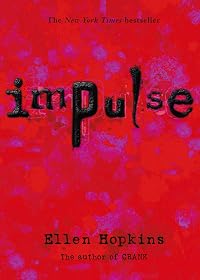
Three teens who meet at Reno, Nevada's Aspen Springs mental hospital after each has attempted suicide connect with each other in a way they never have with their parents or anyone else in their lives.Tags
Recommendations

























Member Recommendations

Member Reviews
THIS REVIEW CONTAINS SPOILERS!!! you have been warned...
tw/cw: mentions of csa, rape, homophobic rhetoric, narcissistic parents, emotional neglect, abortion, and suicide
this is quite possibly the worst book i have ever had the displeasure of reading. i take major issue with the way these characters' stories are written and with the way certain topics are handled. i'll be going through character by character in chapter order: connor, tony, vanessa.
part i: connor is failed by... well, everyone
connor is probably my favorite character out of the three main characters. which isn't saying much because i disliked everyone in this book. but, he was done very dirty and i have a soft spot for characters like that. connor has a very rocky show more relationship with his parents. his mom and dad put a ton of pressure on him to get good grades, to look presentable, and to just, in general, be perfect. he has a twin sister, cara, who his parents clearly display favoritism towards as they repeatedly compare connor to her. it's evident that there is nothing he can do that will ever be good enough for them. which is what leads to his suicide attempt that lands him in aspen springs.
the therapists at aspens springs are just... terrible. they are always undermining the way connor feels about his parents to the point that it almost seems like they're "siding" with his parents. often they act confused as to why connor has an issue with his parents' behavior. like they're oblivious. despite the fact that they've seen up close and personal the way his mother is less concerned about his well-being after attempting suicide and more concerned about how this is going to affect his GPA. and his father shares similar sentiments. a complete disregard of his emotional state. yet, connor is the one who's the problem here. he's ungrateful for everything his parents have done for him. he needs to be more understanding of his parents' perspective. nobody is perfect and they've done the best that they can. "you cannot allow everyday stress to make you put a gun to your chest and pull the trigger," this is an actual sentence from one of the therapists. at no point do these therapists attempt to validate connor's feelings. it's not like his feelings are unreasonable. his parents are absolutely emotionally abusive. at one point, one of the therapists is baffled when connor is reluctant to go home for easter because "there's no history of abuse." huh? what credible therapist doesn't consider years of emotional neglect as a form of abuse?
i bring this up because at no point in the story is this disbelief in connor's pain challenged. connor challenges it but nobody backs him up. not even his so called "friends." after connor's successful suicide attempt (who's bright idea was it to bring a bunch of suicidal teenagers camping next to a cliff?) tony can't fathom why connor would've done it because he's rich and has everything. what? have you not been paying attention when connor vents to you about his parents? it's like nobody believes him and i don't understand what the moral of the story is supposed to be there.
part ii: tony is conversion therapied
this is a hot mess of a character... tony is introduced to us as being gay. the more we get to know him we discover that before he came to aspen springs he was doing drugs and living on the streets. there's a point where he mentions that when he gets out of there he's going to change his lifestyle because it's caused him a lot of pain. which doesn't sound crazy until you realize... he's talking about being gay. it gets even worse when it becomes heavily implied that being raped by a man when he was eight years old is what caused him to be gay in the first place. eventually, he ends up in a co-dependent relationship with vanessa and it's described as him finding true love, finally. that his love for her, a girl, comes more naturally then his love for guys did. that this just feels "right." it's written how you'd expect a story about a gay guy coming to terms with his feelings for other guys to be written, except in this case it's in reverse. tony was never really gay and he just needed to find the right girl to "fix" him. it's gross. and i can't help but question the author's intentions by depicting queerness in this way.
part iii: vanessa has an abortion?
toward the end of the book there's a scene where connor asks tony and vanessa if they have any secrets. vanessa mentions killing someone she loved but never met. she's referring to an abortion. thing is, this is news to me??? if it was mentioned earlier in the story it must've been mentioned very briefly because the vast majority of her story is her thinking about her mom. actually, it was straight up said earlier in the book that her "secret" was finding her mom overdosing on the kitchen floor and instead of getting help, she just walked away. she feels responsible for her mother's death and struggles with the guilt of that. she mentiones how everytime she thinks of her mom she drops into "the blue" which is how she describes her depressive lows. this abortion plays no role in the story until this one scene. it's written like it's been tearing her up inside but she never thinks about this throughout the book. it's so out of place that i almost wonder if this was a plot point for vanessa that got scrapped in favor of the mom suicide storyline. especially, when she describes dropping into the blue everytime she thinks of the baby which is exactly what she says about her mom.
also, i struggle with the fact that no one pushes back against her equating abortion to murder. i don't have a problem with her character thinking that, i have a problem with it going unchallenged. she never has to confront that belief. and, again, it makes me question the intentions of the author.
there's another scene/plot point i want to talk about that involves vanessa so, i'm adding it to her section. there's a couple of moments involving paul, one of the "caretakers" at aspen springs, which showcase him being an absolute creep. one scene he walks in on vanessa while she's in the middle of changing her clothes and tells her she has to take her meds before she can put any more clothes on. all while he's staring at her exposed lower half. then, in a later scene, vanessa pops her head out of her room to ask for permission to use the restroom but, no one replies. she makes the decision to go anyways without permission. when she enters the girls bathroom she hears two people shushing each from one of the stalls. she pretends to leave and that's when she hears paul talking to one of the girls. mind you, the patients here are all teenagers. so, vanessa has walked in on paul raping one of girls here and this is NEVER brought up again. vanessa never thinks about how paul being creepy with her has affected her. the girl in question never brings up paul being sexual with her. it's like it never happened. like it had no affect on any of the characters involved. i don't know why this was written into the story.
part iv: conclusion
i feel like this book doesn't know what it's trying to say or what it even wants to say. i'm sat here wondering what lesson i'm supposed to be taking away from this. i've walked away from this experience being a little hurt by what was written. tony's queerness being "cured" is in such poor taste. it bothered me so much, in fact, that i knew i needed to write this review. queerness is NEVER a choice. queer people can have trauma and still be queer. it would have been so much more impactful to have him meet a guy who liked him for who he is and didn't just want him for sex. he could've had this beautiful character arc where he goes from feeling like being gay is nothing but pain and misery to realizing that being gay can be joyous, and exciting, and loving. instead he feels like being gay is nothing but pain and misery which is why he has to leave it behind if he wants to heal. and the book just treats this as a good thing. it's bizarre.
little side note here at the end: this is very clearly written by someone who has never had to deal with mental health issues a day in their life because what do you mean vanessa is "getting high" on prozac after being on it less than a week... girl, that's not how antidepressants work... show less
tw/cw: mentions of csa, rape, homophobic rhetoric, narcissistic parents, emotional neglect, abortion, and suicide
this is quite possibly the worst book i have ever had the displeasure of reading. i take major issue with the way these characters' stories are written and with the way certain topics are handled. i'll be going through character by character in chapter order: connor, tony, vanessa.
part i: connor is failed by... well, everyone
connor is probably my favorite character out of the three main characters. which isn't saying much because i disliked everyone in this book. but, he was done very dirty and i have a soft spot for characters like that. connor has a very rocky show more relationship with his parents. his mom and dad put a ton of pressure on him to get good grades, to look presentable, and to just, in general, be perfect. he has a twin sister, cara, who his parents clearly display favoritism towards as they repeatedly compare connor to her. it's evident that there is nothing he can do that will ever be good enough for them. which is what leads to his suicide attempt that lands him in aspen springs.
the therapists at aspens springs are just... terrible. they are always undermining the way connor feels about his parents to the point that it almost seems like they're "siding" with his parents. often they act confused as to why connor has an issue with his parents' behavior. like they're oblivious. despite the fact that they've seen up close and personal the way his mother is less concerned about his well-being after attempting suicide and more concerned about how this is going to affect his GPA. and his father shares similar sentiments. a complete disregard of his emotional state. yet, connor is the one who's the problem here. he's ungrateful for everything his parents have done for him. he needs to be more understanding of his parents' perspective. nobody is perfect and they've done the best that they can. "you cannot allow everyday stress to make you put a gun to your chest and pull the trigger," this is an actual sentence from one of the therapists. at no point do these therapists attempt to validate connor's feelings. it's not like his feelings are unreasonable. his parents are absolutely emotionally abusive. at one point, one of the therapists is baffled when connor is reluctant to go home for easter because "there's no history of abuse." huh? what credible therapist doesn't consider years of emotional neglect as a form of abuse?
i bring this up because at no point in the story is this disbelief in connor's pain challenged. connor challenges it but nobody backs him up. not even his so called "friends." after connor's successful suicide attempt (who's bright idea was it to bring a bunch of suicidal teenagers camping next to a cliff?) tony can't fathom why connor would've done it because he's rich and has everything. what? have you not been paying attention when connor vents to you about his parents? it's like nobody believes him and i don't understand what the moral of the story is supposed to be there.
part ii: tony is conversion therapied
this is a hot mess of a character... tony is introduced to us as being gay. the more we get to know him we discover that before he came to aspen springs he was doing drugs and living on the streets. there's a point where he mentions that when he gets out of there he's going to change his lifestyle because it's caused him a lot of pain. which doesn't sound crazy until you realize... he's talking about being gay. it gets even worse when it becomes heavily implied that being raped by a man when he was eight years old is what caused him to be gay in the first place. eventually, he ends up in a co-dependent relationship with vanessa and it's described as him finding true love, finally. that his love for her, a girl, comes more naturally then his love for guys did. that this just feels "right." it's written how you'd expect a story about a gay guy coming to terms with his feelings for other guys to be written, except in this case it's in reverse. tony was never really gay and he just needed to find the right girl to "fix" him. it's gross. and i can't help but question the author's intentions by depicting queerness in this way.
part iii: vanessa has an abortion?
toward the end of the book there's a scene where connor asks tony and vanessa if they have any secrets. vanessa mentions killing someone she loved but never met. she's referring to an abortion. thing is, this is news to me??? if it was mentioned earlier in the story it must've been mentioned very briefly because the vast majority of her story is her thinking about her mom. actually, it was straight up said earlier in the book that her "secret" was finding her mom overdosing on the kitchen floor and instead of getting help, she just walked away. she feels responsible for her mother's death and struggles with the guilt of that. she mentiones how everytime she thinks of her mom she drops into "the blue" which is how she describes her depressive lows. this abortion plays no role in the story until this one scene. it's written like it's been tearing her up inside but she never thinks about this throughout the book. it's so out of place that i almost wonder if this was a plot point for vanessa that got scrapped in favor of the mom suicide storyline. especially, when she describes dropping into the blue everytime she thinks of the baby which is exactly what she says about her mom.
also, i struggle with the fact that no one pushes back against her equating abortion to murder. i don't have a problem with her character thinking that, i have a problem with it going unchallenged. she never has to confront that belief. and, again, it makes me question the intentions of the author.
there's another scene/plot point i want to talk about that involves vanessa so, i'm adding it to her section. there's a couple of moments involving paul, one of the "caretakers" at aspen springs, which showcase him being an absolute creep. one scene he walks in on vanessa while she's in the middle of changing her clothes and tells her she has to take her meds before she can put any more clothes on. all while he's staring at her exposed lower half. then, in a later scene, vanessa pops her head out of her room to ask for permission to use the restroom but, no one replies. she makes the decision to go anyways without permission. when she enters the girls bathroom she hears two people shushing each from one of the stalls. she pretends to leave and that's when she hears paul talking to one of the girls. mind you, the patients here are all teenagers. so, vanessa has walked in on paul raping one of girls here and this is NEVER brought up again. vanessa never thinks about how paul being creepy with her has affected her. the girl in question never brings up paul being sexual with her. it's like it never happened. like it had no affect on any of the characters involved. i don't know why this was written into the story.
part iv: conclusion
i feel like this book doesn't know what it's trying to say or what it even wants to say. i'm sat here wondering what lesson i'm supposed to be taking away from this. i've walked away from this experience being a little hurt by what was written. tony's queerness being "cured" is in such poor taste. it bothered me so much, in fact, that i knew i needed to write this review. queerness is NEVER a choice. queer people can have trauma and still be queer. it would have been so much more impactful to have him meet a guy who liked him for who he is and didn't just want him for sex. he could've had this beautiful character arc where he goes from feeling like being gay is nothing but pain and misery to realizing that being gay can be joyous, and exciting, and loving. instead he feels like being gay is nothing but pain and misery which is why he has to leave it behind if he wants to heal. and the book just treats this as a good thing. it's bizarre.
little side note here at the end: this is very clearly written by someone who has never had to deal with mental health issues a day in their life because what do you mean vanessa is "getting high" on prozac after being on it less than a week... girl, that's not how antidepressants work... show less
Impulse by Ellen Hopkins follows three teenagers who are patients at a mental institution for troubled teens. Tony is a gay, charming young teenager who has done time in juvie and has abusive secrets in his past. Vanessa has inherited her mother's mental instability and does her best to forget her deepest secrets. Conner is an outgoing, popular, wealthy boy with a penchant for older women and a secret he tries to deny. All of them are in their current position after failed suicide attempts.
The first problem with this book should be fairly obvious from the summary. Each of the characters has a Tragic Past (TM) that must be unlocked throughout the novel, and it gets tiresome. It feels like the best hits of a series of teenage after-school show more specials. Abortions, HIV, molestation, abuse... Now That's What I Call Trauma Vol. 30!
While it's a good thing to talk about these, and there are people who may have all of this in their past, the sheer preponderance of Tragic Pasts (TM) is a little too much of a strain on reality. Vanessa had an abortion, her mother was bipolar (or schizophrenic?), and her father is away all the time in the military. Tony is gay (or not?), was homeless, was in juvie, was abused and raped by his mother's boyfriend, his mother is an addict of some kind, and he lost his mentor and friend to HIV. (Wow). Conner is the closest to a realistic portrait: wealthy, popular, and smart, but pushed by his over-achieving parents. He has an affair with his teacher, Emily. Aaaand of course we find out it's because he was secretly molested by his nanny when he was 12.
It strains credibility, to put it lightly.
I would be more interested if Hopkins had explored a perfectly normal teenager, without a Tragic Past (TM), who is suffering from depression and tries to commit suicide. If even one of the characters had been like that, it would have allowed a deeper look into what it feels like to be suicidally depressed and getting constant reminders that But you don't have it that bad! Instead, we get ... this.
Additionally, I found my lip curling when I opened the novel and found it to be free-verse poetry. I'm not normally a fan, but I did read a decent novel written in that form before, and figured I'd give it a shot. The problem is that I have not so far read an example that satisfactorily justifies the form. Instead, I just kept thinking, "This could have been prose." There was never a moment, or a line, that struck me as, "Of course this would need to be told in free-verse!". You end up just reading the entire thing like a novel, except with excessive spacing, and as someone who frequently skips chapter titles, I had to scan back again to understand the first line because the real first line was the title of the poem. I say this as someone who frequently enjoys poetry; Hopkins simply isn't talented enough for me to feel that this needed to be told in poem-form.
Finally, the length. 666 pages of teenage drama - and I use this term because, as I mentioned, the Tragic Pasts (TM) feel more soap operatic than real - is excessive, at best. By page 350, I had the sneaking suspicion I disliked the book. By 550, I was more than ready to be done, and Tony and Vanessa staring deeply into one another's eyes and discussing love in that trite way that teenagers do was enough to have me desperately paging on for more.
The only actually surprising part of this book was the end. This is HEAVY spoilers: Conner commits suicide. (And even that, I had to suspend my belief, because who would release a psychiatric suicidal patient to an outdoors camping trip that has a strong possibility of danger and death?). It was a bold move, and one that I appreciated for its delicate look at the bleakness of the situation the characters were in.
That said, it wasn't enough to save this book. The only good thing to come out of it is that I now know to get rid of the other books by this author on my to-read list. show less
The first problem with this book should be fairly obvious from the summary. Each of the characters has a Tragic Past (TM) that must be unlocked throughout the novel, and it gets tiresome. It feels like the best hits of a series of teenage after-school show more specials. Abortions, HIV, molestation, abuse... Now That's What I Call Trauma Vol. 30!
While it's a good thing to talk about these, and there are people who may have all of this in their past, the sheer preponderance of Tragic Pasts (TM) is a little too much of a strain on reality. Vanessa had an abortion, her mother was bipolar (or schizophrenic?), and her father is away all the time in the military. Tony is gay (or not?), was homeless, was in juvie, was abused and raped by his mother's boyfriend, his mother is an addict of some kind, and he lost his mentor and friend to HIV. (Wow). Conner is the closest to a realistic portrait: wealthy, popular, and smart, but pushed by his over-achieving parents. He has an affair with his teacher, Emily. Aaaand of course we find out it's because he was secretly molested by his nanny when he was 12.
It strains credibility, to put it lightly.
I would be more interested if Hopkins had explored a perfectly normal teenager, without a Tragic Past (TM), who is suffering from depression and tries to commit suicide. If even one of the characters had been like that, it would have allowed a deeper look into what it feels like to be suicidally depressed and getting constant reminders that But you don't have it that bad! Instead, we get ... this.
Additionally, I found my lip curling when I opened the novel and found it to be free-verse poetry. I'm not normally a fan, but I did read a decent novel written in that form before, and figured I'd give it a shot. The problem is that I have not so far read an example that satisfactorily justifies the form. Instead, I just kept thinking, "This could have been prose." There was never a moment, or a line, that struck me as, "Of course this would need to be told in free-verse!". You end up just reading the entire thing like a novel, except with excessive spacing, and as someone who frequently skips chapter titles, I had to scan back again to understand the first line because the real first line was the title of the poem. I say this as someone who frequently enjoys poetry; Hopkins simply isn't talented enough for me to feel that this needed to be told in poem-form.
Finally, the length. 666 pages of teenage drama - and I use this term because, as I mentioned, the Tragic Pasts (TM) feel more soap operatic than real - is excessive, at best. By page 350, I had the sneaking suspicion I disliked the book. By 550, I was more than ready to be done, and Tony and Vanessa staring deeply into one another's eyes and discussing love in that trite way that teenagers do was enough to have me desperately paging on for more.
The only actually surprising part of this book was the end. This is HEAVY spoilers: Conner commits suicide. (And even that, I had to suspend my belief, because who would release a psychiatric suicidal patient to an outdoors camping trip that has a strong possibility of danger and death?). It was a bold move, and one that I appreciated for its delicate look at the bleakness of the situation the characters were in.
That said, it wasn't enough to save this book. The only good thing to come out of it is that I now know to get rid of the other books by this author on my to-read list. show less
I didn't like this. I was expecting to really enjoy this, and I really wanted to enjoy it, but that did not happen at all.
A couple notes...
-There are couple MINOR unmarked spoilers
-If you were a fan of this book, I would recommend scrolling past this review -- you won't like what I have to say
It's no surprise that Hopkins is pretty much known for tackling a lot of hard, serious topics in her books, but she went overboard with the number of them in Impulse. The main ones being suicide, but not just one or two kinds of suicide, but three -- pills, blades, guns -- along with mental health facilities. In addition, there are a lot of others such as schizophrenia, bipolar disorder, parental abuse, parental suicide, molestation, any drug you show more can name is probably mentioned somewhere in this book, cutting, abortion, and those are just some of the main ones. I could give you my longest Goodreads review listing the issues she attempted to tackle, but I want to make this at least somewhat entertaining, so I'm stopping there. Nobody who tries to tackle THAT many issues in one single novel is going to do it well.
All of Hopkins' books, for the most part, revolve around teenagers, which I find ironic considering she had literally NO idea how teenagers actually talk in Impulse. On what world would a teenager who was not even one page before talking about his girlfriend having an orgasm describe his own mother as, ...an ice princess mom who raised me with glass kisses.
Not to mention, while we were on the topic of how Hopkins failed to represent teens well in Impulse, there is so much talk about love and sex to the point where it all feels way too oversexualized. Apparently, to Hopkins, all teenagers want is sex, which, while true for some, is not accurate for all teenagers.
Hopkins used love basically as a cure for mental illness. I'll never stop cutting, lithium or no lithium. Only love can make me stop. I'm not a genius or anything, but I'm pretty damn sure love can't magically cure depression and stop a person from cutting.
In the end, Conner's suicide is used essentially just so Vanessa and Tony can get together. I know the whole idea of the book is that three teenagers become teens who tried to commit suicide, but suicide is more or less just used a plot device. The whole sh*tty love triangle theme throughout nonetheless just made me angry and annoyed the entire time I was reading. I couldn't ignore it, either, as the entire story, for the most part, revolves around the love triangle, which, in the long run, leads Conner to suicide.
Probably the most problematic thing I have EVER read was regarding Tony's sexuality throughout this book. Tony essentially realizes that is only gay due to him previously being sexually abused so then he "turns straight".
Listen. I don't like this AT ALL because it nonetheless implies that all gays are gay because something has happened to them and something is wrong with them. That is NOT the case whatsoever! It also insinuates that Tony has to be straight or else he won't recover and leave Aspen Springs.
I don't know if there is anything I hate more than when I am reading a book where the main setting is a mental health facility and the mental health facility is represented in an inaccurate way. A lot of teens who read books such as Impulse are going through something similar and that is why they choose to read it. Because of that, it is important for the book to accurately represent mental health facilities. Hopkins sets up a bad relationship between the teens and their therapists by implying they are bad people. I think there was maybe one adult in this novel who wasn't portrayed as evil, horrible people.
I liked the idea of having the levels that they advance to until they thought it would be a good idea to take FORMAL SUICIDAL TEENAGERS on the side of a f**king cliff. Yeah, because basically gifting teens who had once attempted to commit suicide an opportunity to kill themselves by taking them hiking on the side of a cliff where they could jump any second is a good idea when the whole idea of the levels is to advance them until they prove themselves as "healthy". It just doesn't make any sense to me??
I thought all three of the characters were nonetheless underdeveloped and kind of bland. There were several times where I had to flip back a couple pages to refresh whos perspective I was reading because they all blended together to me even though, after the first 50 pages, I figured out every six pages was a new perspective and they always went in the same order.
I also didn't understand the whole secret revelation of Vanessa's abortion. It felt so out of place as it didn't flow or mesh with anything else in the story, not to mention, that it was brought up within the last like 60 pages or so and never mentioned again. It seemed unnecessary to me, to be honest.
All in all, I went in expecting a lot and got close to nothing out of it. I'm disappointed with how this set with me. They can't all be good, though. show less
A couple notes...
-There are couple MINOR unmarked spoilers
-If you were a fan of this book, I would recommend scrolling past this review -- you won't like what I have to say
It's no surprise that Hopkins is pretty much known for tackling a lot of hard, serious topics in her books, but she went overboard with the number of them in Impulse. The main ones being suicide, but not just one or two kinds of suicide, but three -- pills, blades, guns -- along with mental health facilities. In addition, there are a lot of others such as schizophrenia, bipolar disorder, parental abuse, parental suicide, molestation, any drug you show more can name is probably mentioned somewhere in this book, cutting, abortion, and those are just some of the main ones. I could give you my longest Goodreads review listing the issues she attempted to tackle, but I want to make this at least somewhat entertaining, so I'm stopping there. Nobody who tries to tackle THAT many issues in one single novel is going to do it well.
All of Hopkins' books, for the most part, revolve around teenagers, which I find ironic considering she had literally NO idea how teenagers actually talk in Impulse. On what world would a teenager who was not even one page before talking about his girlfriend having an orgasm describe his own mother as, ...an ice princess mom who raised me with glass kisses.
Not to mention, while we were on the topic of how Hopkins failed to represent teens well in Impulse, there is so much talk about love and sex to the point where it all feels way too oversexualized. Apparently, to Hopkins, all teenagers want is sex, which, while true for some, is not accurate for all teenagers.
Hopkins used love basically as a cure for mental illness. I'll never stop cutting, lithium or no lithium. Only love can make me stop. I'm not a genius or anything, but I'm pretty damn sure love can't magically cure depression and stop a person from cutting.
In the end, Conner's suicide is used essentially just so Vanessa and Tony can get together. I know the whole idea of the book is that three teenagers become teens who tried to commit suicide, but suicide is more or less just used a plot device. The whole sh*tty love triangle theme throughout nonetheless just made me angry and annoyed the entire time I was reading. I couldn't ignore it, either, as the entire story, for the most part, revolves around the love triangle, which, in the long run, leads Conner to suicide.
Probably the most problematic thing I have EVER read was regarding Tony's sexuality throughout this book. Tony essentially realizes that is only gay due to him previously being sexually abused so then he "turns straight".
Listen. I don't like this AT ALL because it nonetheless implies that all gays are gay because something has happened to them and something is wrong with them. That is NOT the case whatsoever! It also insinuates that Tony has to be straight or else he won't recover and leave Aspen Springs.
I don't know if there is anything I hate more than when I am reading a book where the main setting is a mental health facility and the mental health facility is represented in an inaccurate way. A lot of teens who read books such as Impulse are going through something similar and that is why they choose to read it. Because of that, it is important for the book to accurately represent mental health facilities. Hopkins sets up a bad relationship between the teens and their therapists by implying they are bad people. I think there was maybe one adult in this novel who wasn't portrayed as evil, horrible people.
I liked the idea of having the levels that they advance to until they thought it would be a good idea to take FORMAL SUICIDAL TEENAGERS on the side of a f**king cliff. Yeah, because basically gifting teens who had once attempted to commit suicide an opportunity to kill themselves by taking them hiking on the side of a cliff where they could jump any second is a good idea when the whole idea of the levels is to advance them until they prove themselves as "healthy". It just doesn't make any sense to me??
I thought all three of the characters were nonetheless underdeveloped and kind of bland. There were several times where I had to flip back a couple pages to refresh whos perspective I was reading because they all blended together to me even though, after the first 50 pages, I figured out every six pages was a new perspective and they always went in the same order.
I also didn't understand the whole secret revelation of Vanessa's abortion. It felt so out of place as it didn't flow or mesh with anything else in the story, not to mention, that it was brought up within the last like 60 pages or so and never mentioned again. It seemed unnecessary to me, to be honest.
All in all, I went in expecting a lot and got close to nothing out of it. I'm disappointed with how this set with me. They can't all be good, though. show less
Goodreads Synopsis:
Three lives, three different paths to the same destination: Aspen Springs, a psychiatric hospital for those who have attempted the ultimate act -- suicide.
Vanessa is beautiful and smart, but her secrets keep her answering the call of the blade.
Tony, after suffering a painful childhood, can only find peace through pills.
And Conner, outwardly, has the perfect life. But dig a little deeper and find a boy who is in constant battle with his parents, his life, himself.
In one instant each of these young people decided enough was enough. They grabbed the blade, the bottle, the gun -- and tried to end it all. Now they have a second chance, and just maybe, with each other's help, they can find their way to a better life -- show more but only if they're strong and can fight the demons that brought them here in the first place.
My Review:
I loved this book from the moment I started it. I loved the only other series I've read by this author, Crank and it's series. I found it so real and so different than anything I've read, and I feel that way with this book too. This book is about three teenagers who through various suicide attempts for various reasons, find themselves in the same mental hospital. This is a very real subject that I'm glad is being discussed, and I'm glad I picked it to read next. The characters, Vanessa, Connor and Tony, are all very realistic with their problems and though habits and personalities. They seem like people you very well could know in your life. Usually I don't like viewpoint changes, but I welcomed them in this book, I really liked getting to see three different sides of things, whether it was events happening around the hospital, or even just what they thought about their dinners. I was a little confused at the beginning but soon grasped the concept. One teen was homeless, addicted to blaming himself for the challenges of his life. Another slit her wrist because of her constant battle against bipolar disorder, the switch between manic (white) and depression (dark blue) but never anything in between. The third shot himself over lost love. These are all very real things that could happen to anyone. They go through the fazes of working on themselves and elevating through the various levels in their care center, from being checked on every fifteen minutes to full blown camping trips. I absolutely loved everything about this book and didn't want to put it down for a second. Although I predicted the ending about three quarters of the way through the book, it still took me by surprise. I definitely recommend this if you haven't already read it, and I'll definitely be checking out the next in the series.
Thanks for reading! Check out this review and more at my blog.
(Radioactivebookreviews.wordpress.com) show less
Three lives, three different paths to the same destination: Aspen Springs, a psychiatric hospital for those who have attempted the ultimate act -- suicide.
Vanessa is beautiful and smart, but her secrets keep her answering the call of the blade.
Tony, after suffering a painful childhood, can only find peace through pills.
And Conner, outwardly, has the perfect life. But dig a little deeper and find a boy who is in constant battle with his parents, his life, himself.
In one instant each of these young people decided enough was enough. They grabbed the blade, the bottle, the gun -- and tried to end it all. Now they have a second chance, and just maybe, with each other's help, they can find their way to a better life -- show more but only if they're strong and can fight the demons that brought them here in the first place.
My Review:
I loved this book from the moment I started it. I loved the only other series I've read by this author, Crank and it's series. I found it so real and so different than anything I've read, and I feel that way with this book too. This book is about three teenagers who through various suicide attempts for various reasons, find themselves in the same mental hospital. This is a very real subject that I'm glad is being discussed, and I'm glad I picked it to read next. The characters, Vanessa, Connor and Tony, are all very realistic with their problems and though habits and personalities. They seem like people you very well could know in your life. Usually I don't like viewpoint changes, but I welcomed them in this book, I really liked getting to see three different sides of things, whether it was events happening around the hospital, or even just what they thought about their dinners. I was a little confused at the beginning but soon grasped the concept. One teen was homeless, addicted to blaming himself for the challenges of his life. Another slit her wrist because of her constant battle against bipolar disorder, the switch between manic (white) and depression (dark blue) but never anything in between. The third shot himself over lost love. These are all very real things that could happen to anyone. They go through the fazes of working on themselves and elevating through the various levels in their care center, from being checked on every fifteen minutes to full blown camping trips. I absolutely loved everything about this book and didn't want to put it down for a second. Although I predicted the ending about three quarters of the way through the book, it still took me by surprise. I definitely recommend this if you haven't already read it, and I'll definitely be checking out the next in the series.
Thanks for reading! Check out this review and more at my blog.
(Radioactivebookreviews.wordpress.com) show less
Three troubled teens cross paths at Aspen Springs, a psychiatric hospital, after attempting suicide. Connor, Tony, and Vanessa all have demons that try to pull them under and get them to succumb to the temptation to try it again; this time making sure they succeed. Connor's overbearing family, only concerned about his GPA, or his making the varsity football team, or getting into an Ivy League college, offer no solace during his time of need. Feeling suicide is the only answer after a deeply emotional love affair ends; he takes a gun and points it to his chest before pulling the trigger. Tony, after many years in a juvenile home for a crime that still haunts him, decides to ease his feelings of despair and loneliness by swallowing a show more handful of pills, only to vomit them up and be found by the police lying on the sidewalk unconscious. Vanessa is a cutter. In order to ease her mind in any time of stress she slices her skin with anything sharp enough to do the job. One day, when she was drowning in her blue ocean of sadness, she cuts too deep. She feels herself slipping into the abyss until her younger brother Bryan walks in and finds her. When he calls for their ex-nurse Grandma, she is able to hold off death. After arriving at Aspen Springs, Connor, Tony, and Vanessa are introduced to a life under constant surveillance, strict routines, and hours and hours or counseling. Immediately the three form a bond, feeling drawn to one another as if they might be able to save each other from death. Together they navigate the regulations of the hospital and make progress toward healing as they tell each other their deepest, darkest secrets; things they won't even tell their counselors. Ellen Hopkins uses her wonderful free verse style to weave together the story of three troubled teens as they attempt to heal the terrible scars left by their lives. The consistency the author uses when alternating the points of view makes the story easy to follow. Hopkins gives away just enough information that the reader feels a part of the story while still saving a big bang for the end. IMPULSE is a great story that reveals the importance of family during the healing process and is a must read for anyone who knows a teen. show less
** spoiler alert ** Impulse by Ellen Hopkins follows three teenagers who are patients at a mental institution for troubled teens. Tony is a gay, charming young teenager who has done time in juvie and has abusive secrets in his past. Vanessa has inherited her mother's mental instability and does her best to forget her deepest secrets. Conner is an outgoing, popular, wealthy boy with a penchant for older women and a secret he tries to deny. All of them are in their current position after failed suicide attempts.
The first problem with this book should be fairly obvious from the summary. Each of the characters has a Tragic Past (TM) that must be unlocked throughout the novel, and it gets tiresome. It feels like the best hits of a series of show more teenage after-school specials. Abortions, HIV, molestation, abuse... Now That's What I Call Trauma Vol. 30!
While it's a good thing to talk about these, and there are people who may have all of this in their past, the sheer preponderance of Tragic Pasts (TM) is a little too much of a strain on reality. Vanessa had an abortion, her mother was bipolar (or schizophrenic?), and her father is away all the time in the military. Tony is gay (or not?), was homeless, was in juvie, was abused and raped by his mother's boyfriend, his mother is an addict of some kind, and he lost his mentor and friend to HIV. (Wow). Conner is the closest to a realistic portrait: wealthy, popular, and smart, but pushed by his over-achieving parents. He has an affair with his teacher, Emily. Aaaand of course we find out it's because he was secretly molested by his nanny when he was 12.
It strains credibility, to put it lightly.
I would be more interested if Hopkins had explored a perfectly normal teenager, without a Tragic Past (TM), who is suffering from depression and tries to commit suicide. If even one of the characters had been like that, it would have allowed a deeper look into what it feels like to be suicidally depressed and getting constant reminders that But you don't have it that bad! Instead, we get ... this.
Additionally, I found my lip curling when I opened the novel and found it to be free-verse poetry. I'm not normally a fan, but I did read a decent novel written in that form before, and figured I'd give it a shot. The problem is that I have not so far read an example that satisfactorily justifies the form. Instead, I just kept thinking, "This could have been prose." There was never a moment, or a line, that struck me as, "Of course this would need to be told in free-verse!". You end up just reading the entire thing like a novel, except with excessive spacing, and as someone who frequently skips chapter titles, I had to scan back again to understand the first line because the real first line was the title of the poem. I say this as someone who frequently enjoys poetry; Hopkins simply isn't talented enough for me to feel that this needed to be told in poem-form.
Finally, the length. 666 pages of teenage drama - and I use this term because, as I mentioned, the Tragic Pasts (TM) feel more soap operatic than real - is excessive, at best. By page 350, I had the sneaking suspicion I disliked the book. By 550, I was more than ready to be done, and Tony and Vanessa staring deeply into one another's eyes and discussing love in that trite way that teenagers do was enough to have me desperately paging on for more.
The only actually surprising part of this book was the end. This is HEAVY spoilers: Conner commits suicide. (And even that, I had to suspend my belief, because who would release a psychiatric suicidal patient to an outdoors camping trip that has a strong possibility of danger and death?). It was a bold move, and one that I appreciated for its delicate look at the bleakness of the situation the characters were in.
That said, it wasn't enough to save this book. The only good thing to come out of it is that I now know to get rid of the other books by this author on my to-read list. show less
The first problem with this book should be fairly obvious from the summary. Each of the characters has a Tragic Past (TM) that must be unlocked throughout the novel, and it gets tiresome. It feels like the best hits of a series of show more teenage after-school specials. Abortions, HIV, molestation, abuse... Now That's What I Call Trauma Vol. 30!
While it's a good thing to talk about these, and there are people who may have all of this in their past, the sheer preponderance of Tragic Pasts (TM) is a little too much of a strain on reality. Vanessa had an abortion, her mother was bipolar (or schizophrenic?), and her father is away all the time in the military. Tony is gay (or not?), was homeless, was in juvie, was abused and raped by his mother's boyfriend, his mother is an addict of some kind, and he lost his mentor and friend to HIV. (Wow). Conner is the closest to a realistic portrait: wealthy, popular, and smart, but pushed by his over-achieving parents. He has an affair with his teacher, Emily. Aaaand of course we find out it's because he was secretly molested by his nanny when he was 12.
It strains credibility, to put it lightly.
I would be more interested if Hopkins had explored a perfectly normal teenager, without a Tragic Past (TM), who is suffering from depression and tries to commit suicide. If even one of the characters had been like that, it would have allowed a deeper look into what it feels like to be suicidally depressed and getting constant reminders that But you don't have it that bad! Instead, we get ... this.
Additionally, I found my lip curling when I opened the novel and found it to be free-verse poetry. I'm not normally a fan, but I did read a decent novel written in that form before, and figured I'd give it a shot. The problem is that I have not so far read an example that satisfactorily justifies the form. Instead, I just kept thinking, "This could have been prose." There was never a moment, or a line, that struck me as, "Of course this would need to be told in free-verse!". You end up just reading the entire thing like a novel, except with excessive spacing, and as someone who frequently skips chapter titles, I had to scan back again to understand the first line because the real first line was the title of the poem. I say this as someone who frequently enjoys poetry; Hopkins simply isn't talented enough for me to feel that this needed to be told in poem-form.
Finally, the length. 666 pages of teenage drama - and I use this term because, as I mentioned, the Tragic Pasts (TM) feel more soap operatic than real - is excessive, at best. By page 350, I had the sneaking suspicion I disliked the book. By 550, I was more than ready to be done, and Tony and Vanessa staring deeply into one another's eyes and discussing love in that trite way that teenagers do was enough to have me desperately paging on for more.
The only actually surprising part of this book was the end. This is HEAVY spoilers: Conner commits suicide. (And even that, I had to suspend my belief, because who would release a psychiatric suicidal patient to an outdoors camping trip that has a strong possibility of danger and death?). It was a bold move, and one that I appreciated for its delicate look at the bleakness of the situation the characters were in.
That said, it wasn't enough to save this book. The only good thing to come out of it is that I now know to get rid of the other books by this author on my to-read list. show less
This novel written in verse tells the story of three young adults in a mental hospital following their attempted suicides. Though Tony, Conner, and Vanessa live very different lives when they are admitted to Aspen Springs, they come to find that they have much in common while they attempt to overcome their inner demons together. The narrative sticks with the reader long after putting the book down, especially with its emotional gut-punch of an ending.
A lot of the novel’s readability comes from the poetic style Hopkins uses in all of her young adult books; it makes the nearly-700-page book that much easier to consume. It might appeal to readers who are below grade level because it is quicker to get through than most novels but it is show more still mature enough for high schoolers. The tone is dark, but the characters show that mental illness is treatable and survivable with determination and the help of others. Teens with similar struggles might be craving a book like this that shows them that they aren’t alone. Hopkins gives insight into depression and bipolar disorder and will be powerful both the people coping with mental illness and those who want to learn more. show less
A lot of the novel’s readability comes from the poetic style Hopkins uses in all of her young adult books; it makes the nearly-700-page book that much easier to consume. It might appeal to readers who are below grade level because it is quicker to get through than most novels but it is show more still mature enough for high schoolers. The tone is dark, but the characters show that mental illness is treatable and survivable with determination and the help of others. Teens with similar struggles might be craving a book like this that shows them that they aren’t alone. Hopkins gives insight into depression and bipolar disorder and will be powerful both the people coping with mental illness and those who want to learn more. show less
Members
- Recently Added By
Lists

Novels in Verse
15 works; 1 member

Florida
366 works; 3 members
Author Information

55+ Works 27,177 Members
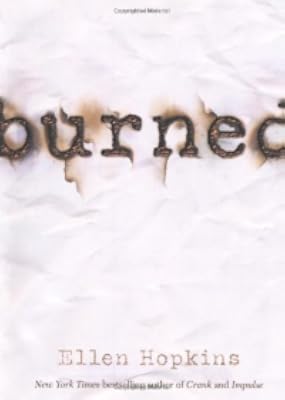
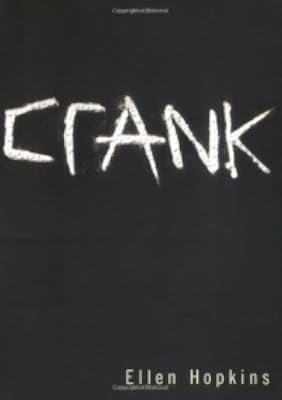
Ellen Hopkins was born in Long Beach, California on March 26, 1955. She started her writing career with a number of nonfiction books for children, including Air Devils and Orcas: High Seas Supermen. She has written about 20 non-fiction books. Her first novel, Crank, was written in verse and met with critical acclaim. Her other fiction works show more include Burned, Impulse, Glass, Identical, Tricks, Fallout, Perfect, Tilt, Collateral, Smoke and Traffick, which made the New York Times Best-Seller list in 2015. (Bowker Author Biography) show less
Awards and Honors
Awards
Series

Work Relationships
Common Knowledge
- Original publication date
- 2007
- Dedication
- "This book is dedicated to my daughter, Kelly, who helps young people like these, and to my friend Cheryl, who always puts others first."
- First words
- "Sometimes you're traveling a highway, the only road you've ever known, and wham!"
- Last words
- (Click to show. Warning: May contain spoilers.)"We move closer, and when I reach for it, I find... ...a perfect paper airplane."
Classifications
Statistics
- Members
- 3,120
- Popularity
- 5,667
- Reviews
- 80
- Rating
- (4.14)
- Languages
- English
- Media
- Paper, Audiobook, Ebook
- ISBNs
- 14
- ASINs
- 5
