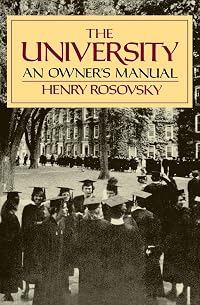
The University: An Owner's Manual
by Henry Rosovsky
On This Page
Description
Covers such topics as the purposes of liberal education, core curriculums, graduate students, academic life, tenure, being a college/university dean, university gorvernance.Tags
Recommendations




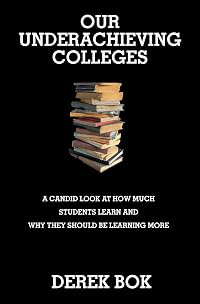
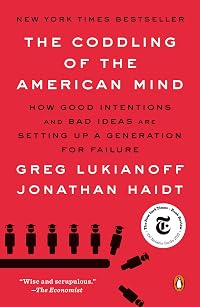

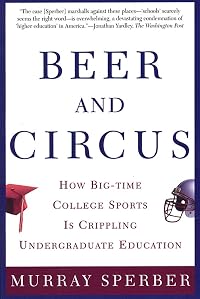
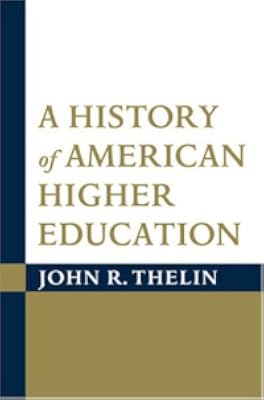




Member Recommendations
by anonymous user
by anonymous user
Member Reviews
Henry Rosovsky should be read by everyone interested in higher education, but particularly by students. It will provide them with a very practical introduction to the American university. Rosovsky discusses the value of the research university compared to the independent college, graduate students as teachers, and the relative responsibilities of the administrators compared to those of the faculty.
Rosovsky, former Dean of the Faculty of Arts and Sciences at Harvard, makes an excellent case for the advantage to students of attending a research oriented university as opposed to the more pedagogioally oriented independent colleges. He defines research as "studíous inquiry, usually critical and exhaustive investigation of experimentation show more having for its aim the revision of accepted conclusions in the light of newly discovered facts." Emphasis on research implies a love of learning and abiding faith in the notion of progress, i.e. a basic optimism about the human condition. He infers from this that research oriented professors will be less likely to be cynical or reactionary and less likely to suffer burnout from basically repetitions teaching. He also proposes that research quality is much easier to measure and define than teaching quality, and therefore one is more likely to find quality in a research oriented institution. (A risky proposition at best.)
Rosovsky delivers an impassioned plea for a liberal education as opposed to merely training for a task. "General education means the whole development of the individual, apart from his occupational training. It includes the civilizing of his life purposes, the refining of his emotional reactions, and the maturing of his understanding about the nature of things according to the best knowledge of our time." This liberal education should be enable the student to:
1. Think and write clearly; to communicate with precision and force.
2. Develop a critical appreciation for the manner in which we gain knowledge. This means teaching historical and quantitative techniques of analysis.
3. View personal experience within a wider, multicultural context.
4. Gain experience ín thinking about ethical and moral dilemmas.
5. Achieve some depth of knowledge in a particular field (i.e. the "major".)
He addresses Bloom’s nostalgic concern for a common body of knowledge and argues that this sentiment for a "better time" does not reflect reality as it existed 30 years ago. Instead it expresses an inadvertent realization of and yearning for the homogeneity of the past, which Rosovsky implies was "a consequence of narrow class privilege." At entry to college the race is uneven, not everyone starts with equal handicaps. Our concern should be for how the race ends. A liberal education can help. Training may be too restrictive. ”Up-to-date information can always be acquired without too much difficulty, human understanding cannot be reduced to asking the computer a few questions." show less
Rosovsky, former Dean of the Faculty of Arts and Sciences at Harvard, makes an excellent case for the advantage to students of attending a research oriented university as opposed to the more pedagogioally oriented independent colleges. He defines research as "studíous inquiry, usually critical and exhaustive investigation of experimentation show more having for its aim the revision of accepted conclusions in the light of newly discovered facts." Emphasis on research implies a love of learning and abiding faith in the notion of progress, i.e. a basic optimism about the human condition. He infers from this that research oriented professors will be less likely to be cynical or reactionary and less likely to suffer burnout from basically repetitions teaching. He also proposes that research quality is much easier to measure and define than teaching quality, and therefore one is more likely to find quality in a research oriented institution. (A risky proposition at best.)
Rosovsky delivers an impassioned plea for a liberal education as opposed to merely training for a task. "General education means the whole development of the individual, apart from his occupational training. It includes the civilizing of his life purposes, the refining of his emotional reactions, and the maturing of his understanding about the nature of things according to the best knowledge of our time." This liberal education should be enable the student to:
1. Think and write clearly; to communicate with precision and force.
2. Develop a critical appreciation for the manner in which we gain knowledge. This means teaching historical and quantitative techniques of analysis.
3. View personal experience within a wider, multicultural context.
4. Gain experience ín thinking about ethical and moral dilemmas.
5. Achieve some depth of knowledge in a particular field (i.e. the "major".)
He addresses Bloom’s nostalgic concern for a common body of knowledge and argues that this sentiment for a "better time" does not reflect reality as it existed 30 years ago. Instead it expresses an inadvertent realization of and yearning for the homogeneity of the past, which Rosovsky implies was "a consequence of narrow class privilege." At entry to college the race is uneven, not everyone starts with equal handicaps. Our concern should be for how the race ends. A liberal education can help. Training may be too restrictive. ”Up-to-date information can always be acquired without too much difficulty, human understanding cannot be reduced to asking the computer a few questions." show less
Ratings
Members
- Recently Added By
Author Information
9+ Works 170 Members
Classifications
- Genres
- Nonfiction, General Nonfiction
- DDC/MDS
- 378.73 — Society, government, & culture Education Higher education (Tertiary education) North America United States
- LCC
- LB2341 .R59 — Education Theory and practice of education Theory and practice of education Higher education Supervision and administration. Business
- BISAC
Statistics
- Members
- 151
- Popularity
- 217,451
- Reviews
- 1
- Rating
- (4.50)
- Languages
- English, Turkish
- Media
- Paper, Ebook
- ISBNs
- 4
- ASINs
- 3