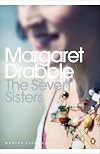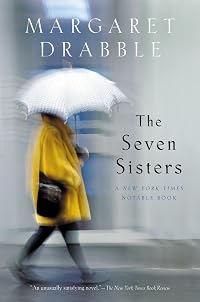
The Seven Sisters
by Margaret Drabble
On This Page
Description
Candida Wilton-a woman recently betrayed, rejected, divorced, and alienated from her three grown daughters-moves from a beautiful Georgian house in lovely Suffolk to a two-room walk-up flat in a run-down building in central London. Candida is not exactly destitute. So, is the move perversity, she wonders, a survival test, or is she punishing herself? How will she adjust to this shabby, menacing, but curiously appealing city? What can happen, at her age, to change her life? And yet, as she show more climbs the dingy communal staircase with her suitcases, she feels both nervous and exhilarated. There is a relationship with a computer to which she now confides her past and her present. And friendships of sorts with other women-widows, divorced, never married, women straddled between generations. And then Candida's surprise inheritance ... show lessTags
Recommendations



















Member Reviews
Candida is newly divorced as the story opens, her husband of many years having proved faithless. She is aging and alone and has chosen to start a new life in London in an area which, by turns, terrifies and pleases her. The first-person voice used in the first part of the book rings very true. There is self-pity here, puzzlement, and a certain protective detachment. Candida is very much alone. As time goes on, she forms friendships, renews old ties and, having come into a windfall, determines that she will invite her friends to travel with her to Greece, on a pilgrimage of sorts for students of Virgil. It would be easy to tell too much in a synopsis of this little novel and spoil the enjoyment of other readers but Drabble has done some show more clever things with shift in voice and has thrown in some surprises along the way. She explores a subject not much addressed in modern fiction--the crushing loneliness of women who must live out their lives alone and the ways they find to cope. show less
Reading this reminded me of reading Anthony Bourdain’s book Kitchen Confidential in 2021. Until then I’d thought of Bourdain’s shows and books as contemporary media. But reading the book while pandemic restrictions were still in place, before the vaccine but after his death, made me realize just how long ago the year 2000 had been. Same with this 21-year-old book, an impulse buy from the used shelf about a woman who moves to London from Suffolk after her divorce, makes some friends, and goes on an adventure. I was expecting a cozy, bittersweet, introspective break from more intense reads, but at first I was disoriented. The literary gentility of this book, with a tasteful bit of unreliable narration but none of the high-stakes show more speculative plot, historical atrocities, or stylized romance that has been standard lately, felt a lot longer than twenty years ago. Once I settled in I enjoyed it all right. show less
It's tempting to categorise this as "chick-lit for the over-50s" - the use of diary format, with its coy Victorian-novelish chapter summaries, gives it a certain Bridget Jones flavour which may be deliberate - but there's a different agenda here. Drabble is using the novel to analyse the importance of friendship for middle-aged women. Candida, recently-divorced, has decided to uproot herself from rural Suffolk and start a new life in a tiny flat in the not-quite-trendy London neighbourhood of Ladbroke Grove. She's not especially looking for a new partner, her relationships with her three daughters range from cool to non-existent, but what gives form to her new life are her friendships with various women - school friends, former show more neighbours, fellow students from an evening class on Virgil.
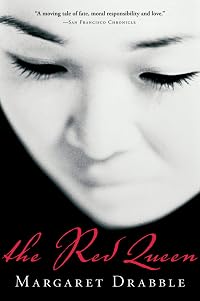
As in The red queen, Drabble deliberately foregrounds the question of narrative authority by building contradictions and role-reversals into the text. This is fun, and it's the sort of thing we expect from writers of postmodern fiction, but it's hard to say whether it really deepens our understanding of the characters. show less
As in The red queen, Drabble deliberately foregrounds the question of narrative authority by building contradictions and role-reversals into the text. This is fun, and it's the sort of thing we expect from writers of postmodern fiction, but it's hard to say whether it really deepens our understanding of the characters. show less
The first, and longest section, of Seven Sisters is a computer diary written by an almost-60 year old woman who has been discarded by her family--her husband has divorced her for a more youthful woman, her grown daughters all have their own lives, and her own mother is fading away in a care home. Candida leaves small town Suffolk and moves to a liminal area of London. This section has some interesting bits about loneliness, frugality, and friendship. Candida runs into some money, everything looks brighter, and she's off with a group of friends to take an educational vacation retracing the steps of the Aeneid. The second section of the book covers the vacation, and interestingly the narrative now switches to the third person. There are a show more third and fourth section too, but this is where the novel goes off in an odd direction and I can't even begin to explain what the author is doing.
Yes, in the end the Seven Sisters leaves me with a few big questions. However, there is something about Margaret Drabble's writing that I just adore--the has a subtle cleverness that I think rewards the reader who is paying attention. Throughout reading this, I really did like it very much, even when it got sort of strange. This is the third Drabble I've read, and none of them have been the favourite of critics. I've liked them all and just look forward to reading more by her. show less
Yes, in the end the Seven Sisters leaves me with a few big questions. However, there is something about Margaret Drabble's writing that I just adore--the has a subtle cleverness that I think rewards the reader who is paying attention. Throughout reading this, I really did like it very much, even when it got sort of strange. This is the third Drabble I've read, and none of them have been the favourite of critics. I've liked them all and just look forward to reading more by her. show less
Candida Wilton is a woman of a certain age who finds herself divorced, distant from her three daughters, living alone in a small London flat, and somewhat at loose ends. She swims at a health club, picks up with acquaintances whom she met while taking a seminar on Dante's Inferno, and convinces them to take a trip to Sicily to visit the places mentioned by Dante.
The book is divided into four sections, each with a different viewpoint. The first and longest is Candida's diary that she has written to examine her life and situation -- it ends as she is about to embark on her Sicilian adventure:
I have just reread the whole of this diary. I am not proud of it. What a mean, self-righteous, self-pitying voice is mine. Shall I learn to speak in show more other tones and other tongues when I leave these shores? Do I still have it in me to find some happiness? Health, wealth, and the pursuit of happiness. The new declaration of our human rights.
Let me write this down. I am happy now. I am full of happy anticipation.
The Seven Sisters is a novel full of literary allusions and sly nods to such classics as Doris Lessing's The Golden Notebook and Elizabeth von Arnim's The Enchanted April. While it's not my favorite of Drabble's later novels, it was an entirely satisfying summer read. show less
The book is divided into four sections, each with a different viewpoint. The first and longest is Candida's diary that she has written to examine her life and situation -- it ends as she is about to embark on her Sicilian adventure:
I have just reread the whole of this diary. I am not proud of it. What a mean, self-righteous, self-pitying voice is mine. Shall I learn to speak in show more other tones and other tongues when I leave these shores? Do I still have it in me to find some happiness? Health, wealth, and the pursuit of happiness. The new declaration of our human rights.
Let me write this down. I am happy now. I am full of happy anticipation.
The Seven Sisters is a novel full of literary allusions and sly nods to such classics as Doris Lessing's The Golden Notebook and Elizabeth von Arnim's The Enchanted April. While it's not my favorite of Drabble's later novels, it was an entirely satisfying summer read. show less
There were times that the protagonist Candida interested me, but mostly I found her a shallow person, incapable of any introspection nor an ability to forge meaningful relationships. She really never changes and from the first page to the last, Candida drones on in a whining fashion . . . forever blaming or criticizing friends and strangers alike. It became very tedious and banal.
It did seem odd when the author switched from first to third person but the real kicker came when someone else takes over writing her diary! (I won't spoil it for you!) This is the only time the novel seems to have any depth of character - in fact, the writer in this part has proufound acumen in questioning life and what is reality and what is make believe! show more This part deserved 5 stars but it was short lived.
The author returns to her former style of Candida's bellyaching about life and it absolutely makes no sense. Several reviewers thought they were at fault for not understanding what Drabble was trying to achieve, but truly, the author simply gives so little insight into Candida's psyche that you cannot fathom the point of the book. Candida is a self deprecating woman who seems to never find acceptance or joy in her life, other's lives or her circumstances. A depressing read!! show less
It did seem odd when the author switched from first to third person but the real kicker came when someone else takes over writing her diary! (I won't spoil it for you!) This is the only time the novel seems to have any depth of character - in fact, the writer in this part has proufound acumen in questioning life and what is reality and what is make believe! show more This part deserved 5 stars but it was short lived.
The author returns to her former style of Candida's bellyaching about life and it absolutely makes no sense. Several reviewers thought they were at fault for not understanding what Drabble was trying to achieve, but truly, the author simply gives so little insight into Candida's psyche that you cannot fathom the point of the book. Candida is a self deprecating woman who seems to never find acceptance or joy in her life, other's lives or her circumstances. A depressing read!! show less
An interesting book - mostly, but not entirely diary-style. I find it a little puzzling (probably because I'm not smart enough to really understand the book as a whole) that the main part of the book is about a woman and her friends, and yet it finishes with a rather unexpected focus on the woman's relationship with her daughter. I guess that's a point that Drabble is making...a woman is looking for latter-life fulfillment and begins by turning away from her ex-husband and daughters. She later finds that she has to (or wants to) come to terms with her relationship with at least one of her daughters. The book involves consideration of the question of how the meaning of life and relationships might change as you get closer to death. I show more found this more engaging than the focus on the friendships arising from a classics class. Having said that though, Drabble's characters are *all* interesting in their own way, reflecting her skills of observation of the human condition in its many variants.
I returned this book to the library and immediately borrowed another Drabble book. show less
I returned this book to the library and immediately borrowed another Drabble book. show less
Members
- Recently Added By
Published Reviews
ThingScore 75
How successful would Margaret Drabble's publishing career be if she started out today? The doyenne of the "Hampstead dinner party" novel has become unfashionable, and this 2002 novel does not suggest that she was interested in reinventing herself.
Which is possibly why it works so beautifully. . . . Drabble possesses the rare and wonderful gift of making her characters seem utterly real.
Which is possibly why it works so beautifully. . . . Drabble possesses the rare and wonderful gift of making her characters seem utterly real.
added by Nickelini
The narrative takes several surprising turns, throwing the reader as off-center as Candida has become and proving that Candida herself has not been candid. But Drabble has: Candida's evasive account accurately charts the psychological territory of one who is suddenly cast adrift.
added by Nickelini
Lists

Best Books Set in London
157 works; 42 members

Books Read in 2025
4,091 works; 97 members
Author Information

68+ Works 13,776 Members
Margaret Drabble was born on June 5, 1939 in Sheffield, England. She attended The Mount School in York and Newnham College, Cambridge University. After graduation, she joined the Royal Shakespeare Company at Stratford during which time she understudied for Vanessa Redgrave. She is a novelist, critic, and the editor of the fifth edition of The show more Oxford Companion to English Literature. Her works include A Summer Bird Cage; The Millstone, which won the John Llewelyn Rhys Prize in 1966; Jerusalem the Golden, which won James Tait Black Prize in 1967; and The Witch of Exmoor. She also received the E. M. Forster award and was awarded a Society of Authors Travelling Fellowship in the 1960s and the Commander of the Order of the British Empire in 1980. (Bowker Author Biography) show less
Common Knowledge
- Canonical title*
- De sju systrarna
- Original title
- The Seven Sisters
- Original publication date
- 2002
- Important places
- Ladbroke Grove, London, England, UK; London, England, UK; Tunisia; Naples, Campania, Italy; Pozzuoli, Campania, Italy
- First words*
- I have just got back from my Health Club.
- Last words*
- (Click to show. Warning: May contain spoilers.)Stretch forth your hand, I say, stretch forth your hand.
*Some information comes from Common Knowledge in other languages. Click "Edit" for more information.
Classifications
Statistics
- Members
- 740
- Popularity
- 38,068
- Reviews
- 23
- Rating
- (3.58)
- Languages
- English, Croatian, Swedish
- Media
- Paper, Audiobook, Ebook
- ISBNs
- 20
- ASINs
- 5