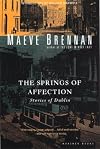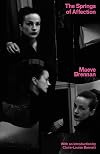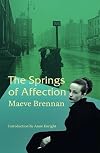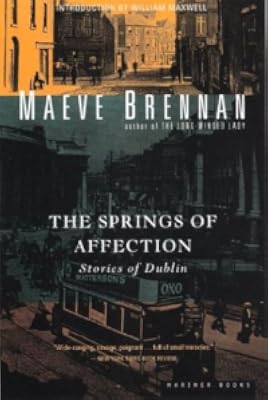
The Springs of Affection: Stories of Dublin
by Maeve Brennan
On This Page
Description
The twenty-one stories collected here--the very best stories of one ofThe New Yorker's most celebrated writers--trace the patterns of love within three Dublin families. Love between husband and wife, which begins in courtship and laughter, loses all power of expression and then vanishes forever. The natural love of sister for brother and of mother for son is twisted into the rage to possess. And love that gives rise to the rituals of family life--those "ordinary customs that are the only show more true realities most of us ever know"--grows solid as rockthat will never give way. In his introduction, William Maxwell, who was for twenty years Maeve Brennan's editor, writes of the special quality of her work, and especially of the title story, which he places among the great short fiction of the twentieth century. show lessTags
Recommendations











Member Reviews
While reading this, I kept encountering Maeve Brennan in other people’s stories. She came up as one of Phillip Larkins’ lovers, while he was in a long-term relationship with Monica Jones. But it sounds like gossip, so I take no further interest. It feels like it will diminish my reading experience. Though it does tell me Brennan was deeply part of mid 20thC literary life. Yet she doesn’t seem widely read now. She’s too good to forget, though. And I have a soft spot for writers who fall away. She was "The Long-Winded Lady" in The New Yorker for some time. Success did come to her.
The collection is grouped into the following three families – the early shorter works, revolve around the life and perceptions of a young girl living show more in suburban Dublin. The second, longer stories are about Rose, her family, husband, absent father. The third, also longer about Mrs Bagot, her family, husband, children. All suburban Dublin, probably the same street. But each story tells itself as though it has no connection to the one before. They exist on their own, yet form a whole. Perhaps life stages are like that, there are plenty of those here. We suddenly become a different person, same reference points, new story, like the past, but not exactly so.
I tried to describe these stories to someone and ended up using the author’s biography to explain them. I shouldn’t but it fits. They are exceptional despite the author’s biography, just a little more poignant, that’s all. Brennan moved to the USA with her family aged seventeen. Her father, a militant republican was always chased by the authorities, he was always absent either in hiding or prison. The absent father theme recurs. As does the life left behind. Most of the stories are like the recreation of the life the author might have lived if she had stayed. Perhaps exiles, immigrants are always bound to repeat the same stories about an imaginative territory.
The word 'appetite' embarrassed him, and the knowledge he had of her appetite, which was so much greater than his own, made her mysterious to him, but not in a way that aroused his interest or affection.
There’s a wonderful metaphor of the disorienting effect of time in Rose’s life. Her father died two days before her tenth birthday. The effect of this never leaves her, forty-three years on she relives it, it is as powerful as the first time, that her birthday is always wound around the death of her father. None of these stories are mawkish. They are deeply modern in styling, spare in telling, rich in narrative and language effects.
But it was no the loss of the present or the loss of the birthday, or even the loss of her father that afflicted Rose so much as the knowledge, which she alone possessed, of that lost fragment of time between the moment of his death and the moment that marked her birth. A big piece of time had been broken off and it had gone down, and maybe it had taken others besides him with it, but if it had, she did not know of them. The terrible thing was that no one besides herself seemed to notice that a piece of time, a fragment, had been shattered off their lives, and that nothing had happened during that time – no minutes or hours or anything like that.
Maeve Brennan’s writing is often a kind of third person stream of consciousness. It loops around, repeating, revisiting the exact locations or subjects - a room, floor lino, the window, the back room half way up the staircase, the laburnum tree. Places fill with the intensity of how we experience what we know – we fixate on things. The writing is wonderfully mesmerising at times as you’d expect. The narrator is never distant, but voices an intimacy.
Maeve’s life ended badly. That is worth reading up about, too. Reading about her later life makes for a destabilising after effect. show less
The collection is grouped into the following three families – the early shorter works, revolve around the life and perceptions of a young girl living show more in suburban Dublin. The second, longer stories are about Rose, her family, husband, absent father. The third, also longer about Mrs Bagot, her family, husband, children. All suburban Dublin, probably the same street. But each story tells itself as though it has no connection to the one before. They exist on their own, yet form a whole. Perhaps life stages are like that, there are plenty of those here. We suddenly become a different person, same reference points, new story, like the past, but not exactly so.
I tried to describe these stories to someone and ended up using the author’s biography to explain them. I shouldn’t but it fits. They are exceptional despite the author’s biography, just a little more poignant, that’s all. Brennan moved to the USA with her family aged seventeen. Her father, a militant republican was always chased by the authorities, he was always absent either in hiding or prison. The absent father theme recurs. As does the life left behind. Most of the stories are like the recreation of the life the author might have lived if she had stayed. Perhaps exiles, immigrants are always bound to repeat the same stories about an imaginative territory.
The word 'appetite' embarrassed him, and the knowledge he had of her appetite, which was so much greater than his own, made her mysterious to him, but not in a way that aroused his interest or affection.
There’s a wonderful metaphor of the disorienting effect of time in Rose’s life. Her father died two days before her tenth birthday. The effect of this never leaves her, forty-three years on she relives it, it is as powerful as the first time, that her birthday is always wound around the death of her father. None of these stories are mawkish. They are deeply modern in styling, spare in telling, rich in narrative and language effects.
But it was no the loss of the present or the loss of the birthday, or even the loss of her father that afflicted Rose so much as the knowledge, which she alone possessed, of that lost fragment of time between the moment of his death and the moment that marked her birth. A big piece of time had been broken off and it had gone down, and maybe it had taken others besides him with it, but if it had, she did not know of them. The terrible thing was that no one besides herself seemed to notice that a piece of time, a fragment, had been shattered off their lives, and that nothing had happened during that time – no minutes or hours or anything like that.
Maeve Brennan’s writing is often a kind of third person stream of consciousness. It loops around, repeating, revisiting the exact locations or subjects - a room, floor lino, the window, the back room half way up the staircase, the laburnum tree. Places fill with the intensity of how we experience what we know – we fixate on things. The writing is wonderfully mesmerising at times as you’d expect. The narrator is never distant, but voices an intimacy.
Maeve’s life ended badly. That is worth reading up about, too. Reading about her later life makes for a destabilising after effect. show less
Early real life short stories are well crafted, yet not compelling reading, enlivened by visits from Uncle Matt.
Until Hubert and the holy picture, the redeeming Christmas Eve and some of the other Bagot (NOT the title one) stories, there is a major descent
into endless self-recriminating, overly self-conscious delineation of seemingly every observable physical and emotional detail and fear,
over and over, as people are absorbed into the unbearableness of close family contact. The worst were the creepy and deceptive manipulations of a mother to exclude her husband from the stifling intimacy she created around her son.
Until Hubert and the holy picture, the redeeming Christmas Eve and some of the other Bagot (NOT the title one) stories, there is a major descent
into endless self-recriminating, overly self-conscious delineation of seemingly every observable physical and emotional detail and fear,
over and over, as people are absorbed into the unbearableness of close family contact. The worst were the creepy and deceptive manipulations of a mother to exclude her husband from the stifling intimacy she created around her son.
I can't say I felt at ease with all of these stories, but they are magnificent in their way. I hope to read the Bagot stories especially over and over to see just how she does it. Tremendous work.
Ratings
Members
- Recently Added By
Lists

Top Five Books of 2024
795 works; 264 members
Author Information

38+ Works 967 Members
Work Relationships
Common Knowledge
- Original publication date
- 1997
Classifications
Statistics
- Members
- 276
- Popularity
- 117,413
- Reviews
- 3
- Rating
- (4.11)
- Languages
- 5 — English, French, German, Italian, Spanish
- Media
- Paper, Ebook
- ISBNs
- 14
- UPCs
- 2
- ASINs
- 5