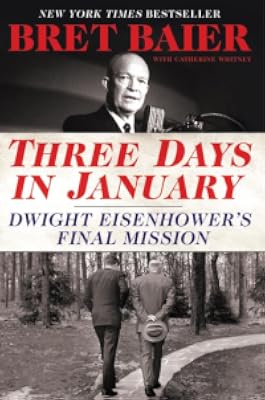
Three Days in January: Dwight Eisenhower's Final Mission (Three Days Series)
by Bret Baier, Catherine Whitney
Three Days (1)
On This Page
Description
The blockbuster #1 national bestsellerBret Baier, the Chief Political Anchor for Fox News Channel and the Anchor and Executive Editor of Special Report with Bret Baier, illuminates the extraordinary yet underappreciated presidency of Dwight Eisenhower by taking readers into Ike's last days in power.
"Magnificently rendered. ... Destined to take its place as not only one of the masterworks on Eisenhower, but as one of the classics of presidential history. ... Impeccably researched, the book show more is nothing short of extraordinary. What a triumph!"—JAY WINIK, New York Times bestselling author of April 1865 and 1944
In Three Days in January, Bret Baier masterfully casts the period between Eisenhower's now-prophetic farewell address on the evening of January 17, 1961, and Kennedy's inauguration on the afternoon of January 20 as the closing act of one of modern America's greatest leaders—during which Eisenhower urgently sought to prepare both the country and the next president for the challenges ahead.
Those three days in January 1961, Baier shows, were the culmination of a lifetime of service that took Ike from rural Kansas to West Point, to the battlefields of World War II, and finally to the Oval Office. When he left the White House, Dwight Eisenhower had done more than perhaps any other modern American to set the nation, in his words, "on our charted course toward permanent peace and human betterment."
On January 17, Eisenhower spoke to the nation in one of the most remarkable farewell speeches in U.S. history. Ike looked to the future, warning Americans against the dangers of elevating partisanship above national interest, excessive government budgets (particularly deficit spending), the expansion of the military-industrial complex, and the creeping political power of special interests. Seeking to ready a new generation for power, Eisenhower intensely advised the forty-three-year-old Kennedy before the inauguration.
Baier also reveals how Eisenhower's two terms changed America forever for the better, and demonstrates how today Ike offers us the model of principled leadership that polls say is so missing in politics. Three Days in January forever makes clear that Eisenhower, an often forgotten giant of U.S. history, still offers vital lessons for our own time and stands as a lasting example of political leadership at its most effective and honorable.
. show less
Tags
Recommendations





Member Reviews
For the final three days of Dwight Eisenhower's administration, he hosted president-elect John Kennedy at what was to be called Camp David (at the time, Shangri-La). The president was trying to prepare the president-elect for the road ahead.
Kennedy didn't really listen.
What followed was a rash of Cold War mistakes including an unsuccessful meeting with Khrushchev and the standoff that led to the Cuban Missile Crisis.
Kennedy, fresh off a razor-thin victory over Eisenhower's VP, Nixon, felt he could handle whatever came his way, and was brash and young enough to believe it. He would fill his administration with pointy heads from Ivy League schools, and many were unprepared to meet the Soviets across the table.
This book also touches on show more the reality that had Eisenhower backed Nixon only a little, Nixon would have won, and the Cold War (and probably the Cuban Missile Crisis) would have gone differently.
Read more of my reviews on Ralphsbooks. show less
Kennedy didn't really listen.
What followed was a rash of Cold War mistakes including an unsuccessful meeting with Khrushchev and the standoff that led to the Cuban Missile Crisis.
Kennedy, fresh off a razor-thin victory over Eisenhower's VP, Nixon, felt he could handle whatever came his way, and was brash and young enough to believe it. He would fill his administration with pointy heads from Ivy League schools, and many were unprepared to meet the Soviets across the table.
This book also touches on show more the reality that had Eisenhower backed Nixon only a little, Nixon would have won, and the Cold War (and probably the Cuban Missile Crisis) would have gone differently.
Read more of my reviews on Ralphsbooks. show less
Summary: An account of the final three days of the Eisenhower presidency, focused around his farewell speech, highlighting Eisenhower’s principled leadership and contribution to the nation.
Dwight Eisenhower is the first president I remember. My recollections seem to be mostly of Eisenhower on the golf course. He didn’t hold the attention of this five-year old when he spoke. He faded quickly into the background when the dashing Jack Kennedy took office. His successors were much in the news in my growing up and adult years from the Vietnam war to Watergate and the pardon to the Iranian hostage crisis to “morning in America” to “shock and awe.” I didn’t think much about Ike as a president, probably more as the general who led show more us to victory in Europe in World War Two.
Bret Baier suggests that a re-assessment might be worth it. Behind the bland exterior was a president who ended the Korean War and presided over eight years free of war (if not the threat of nuclear war, which he skillfully addressed). He launched the Interstate Highway System revolutionizing travel and transport in America. He signed some of the earliest civil rights legislation (though many will criticize him for not going further) and balanced budgets. He argues he gave the right kind of presidential leadership to a nation weary of Depression and war.
Baier explores the life and contribution of this president through the window of his last three days in office beginning with his Farewell Speech, most known for his prescient warnings against the “military-industrial complex.” But first he goes back. He begins with narrating the meeting he had with recently victorious Jack Kennedy in early December, and Eisenhower’s determination to make a much better transition than Truman had in handing the presidency over to him, briefing the incoming president on everything from the policy apparatus he had put in place (which Kennedy dismantled) to world and domestic situations. Significantly, he briefed him on a covert operation in the planning stages against Castro’s Cuba involving a landing in the Bay of Pigs. He warned against moving forward unless adequate leadership was in place. Kennedy mistook this for an endorsement of the operation.
Baier then recaps Eisenhower’s life from boyhood, to military service to his rise to the Allied command, post war activities, and his entry into politics as a very apolitical Republican (much to Truman’s disappointment, perhaps accounting for the frosty reception he gave Eisenhower).
He recounts the Farewell Speech itself, which he sees as modeled after Washington’s. He explores the writing of the speech and Eisenhower’s interactions with his speechwriters. He describes a relationship with Congress that was “interdependent,” striking because Democrats were in the majority for six of the eight years of his presidency. Eisenhower regularly hosted bipartisan meetings of Congressional leadership and fostering warm personal relations with Sam Rayburn and Lyndon Johnson.
He describes the hostile global situation, particularly significant because of the chill in relations with the Soviets despite Ike’s efforts to pursue peace, recognizing the necessity of a strong deterrence. He had fought along with the Soviets against Germany, forging personal ties with General Zhukov, and hoped it could eventuate in a more durable peace, which was not to be. He goes on to discuss Ike’s frustration both with the false accusations of a “gap” in the arms race when the U.S. enjoyed superiority, and with his inability to find a way out of that race, which he recognized an exercise in futility.
Finally, he turned to the “military-industrial” complex in which peace-time defense industries and their survival threatened to co-opt American foreign policy for its own perpetuation. He warned:
“In the councils of government, we must guard against the acquisition of unwarranted influence, whether sought or unsought, by the military-industrial complex. The potential for the disastrous rise of misplaced power exists and will persist. We must never let the weight of this combination endanger our liberties or democratic processes. We should take nothing for granted. Only an alert and knowledgeable citizenry can compel the proper meshing of the huge industrial and military machinery of defense with our peaceful methods and goals, so that security and liberty may prosper together.”
The concluding section of Baier’s book covers the last three days. He discusses the thorough work Eisenhower did in planning the transition from his end to provide continuity and to allow the new president to be able to lead well from day one. He held a good-bye press conference. On his last day, he dealt with the huge snowfall that blanketed D.C. and prepared to greet the incoming president and for the handing off of power. He said goodbyes to the White House staff, met the Kennedys, heard Kennedy’s magnificent address, and then departed for Gettysburg.
He would meet again with Kennedy a few months later at Camp David, where he discussed the failed Bay of Pigs mission with Kennedy and helped him debrief that experience and consider how he would handle future instances of proposed actions. Eisenhower unfailingly offered his advice when sought, wrote his memoirs and enjoyed a resurgence of popularity until his health failed in 1968 and he passed in 1969.
Baier’s account seemed to me more adulatory than a balanced history. Yet he underscored several important points about Eisenhower worth consideration by our present political leaders. One was his willingness to work with the whole Congress and not just his own party. There was clarity about the common task they shared to serve the whole country, even while they differed at times how to do so. Country was always ahead of personal ambition. A second was the soldier committed to pursuing peace, perhaps truer to his Quaker roots than many thought him. He got the country out of Korea and kept it out of war, while never sacrificing a clear-eyed strong defense. And finally, he was a man of principle, not perfect but honorable. Baier’s point is that these are qualities that we should look for in all of our presidents, something I cannot dispute. The tougher question to my mind is, why don’t we? show less
Dwight Eisenhower is the first president I remember. My recollections seem to be mostly of Eisenhower on the golf course. He didn’t hold the attention of this five-year old when he spoke. He faded quickly into the background when the dashing Jack Kennedy took office. His successors were much in the news in my growing up and adult years from the Vietnam war to Watergate and the pardon to the Iranian hostage crisis to “morning in America” to “shock and awe.” I didn’t think much about Ike as a president, probably more as the general who led show more us to victory in Europe in World War Two.
Bret Baier suggests that a re-assessment might be worth it. Behind the bland exterior was a president who ended the Korean War and presided over eight years free of war (if not the threat of nuclear war, which he skillfully addressed). He launched the Interstate Highway System revolutionizing travel and transport in America. He signed some of the earliest civil rights legislation (though many will criticize him for not going further) and balanced budgets. He argues he gave the right kind of presidential leadership to a nation weary of Depression and war.
Baier explores the life and contribution of this president through the window of his last three days in office beginning with his Farewell Speech, most known for his prescient warnings against the “military-industrial complex.” But first he goes back. He begins with narrating the meeting he had with recently victorious Jack Kennedy in early December, and Eisenhower’s determination to make a much better transition than Truman had in handing the presidency over to him, briefing the incoming president on everything from the policy apparatus he had put in place (which Kennedy dismantled) to world and domestic situations. Significantly, he briefed him on a covert operation in the planning stages against Castro’s Cuba involving a landing in the Bay of Pigs. He warned against moving forward unless adequate leadership was in place. Kennedy mistook this for an endorsement of the operation.
Baier then recaps Eisenhower’s life from boyhood, to military service to his rise to the Allied command, post war activities, and his entry into politics as a very apolitical Republican (much to Truman’s disappointment, perhaps accounting for the frosty reception he gave Eisenhower).
He recounts the Farewell Speech itself, which he sees as modeled after Washington’s. He explores the writing of the speech and Eisenhower’s interactions with his speechwriters. He describes a relationship with Congress that was “interdependent,” striking because Democrats were in the majority for six of the eight years of his presidency. Eisenhower regularly hosted bipartisan meetings of Congressional leadership and fostering warm personal relations with Sam Rayburn and Lyndon Johnson.
He describes the hostile global situation, particularly significant because of the chill in relations with the Soviets despite Ike’s efforts to pursue peace, recognizing the necessity of a strong deterrence. He had fought along with the Soviets against Germany, forging personal ties with General Zhukov, and hoped it could eventuate in a more durable peace, which was not to be. He goes on to discuss Ike’s frustration both with the false accusations of a “gap” in the arms race when the U.S. enjoyed superiority, and with his inability to find a way out of that race, which he recognized an exercise in futility.
Finally, he turned to the “military-industrial” complex in which peace-time defense industries and their survival threatened to co-opt American foreign policy for its own perpetuation. He warned:
“In the councils of government, we must guard against the acquisition of unwarranted influence, whether sought or unsought, by the military-industrial complex. The potential for the disastrous rise of misplaced power exists and will persist. We must never let the weight of this combination endanger our liberties or democratic processes. We should take nothing for granted. Only an alert and knowledgeable citizenry can compel the proper meshing of the huge industrial and military machinery of defense with our peaceful methods and goals, so that security and liberty may prosper together.”
The concluding section of Baier’s book covers the last three days. He discusses the thorough work Eisenhower did in planning the transition from his end to provide continuity and to allow the new president to be able to lead well from day one. He held a good-bye press conference. On his last day, he dealt with the huge snowfall that blanketed D.C. and prepared to greet the incoming president and for the handing off of power. He said goodbyes to the White House staff, met the Kennedys, heard Kennedy’s magnificent address, and then departed for Gettysburg.
He would meet again with Kennedy a few months later at Camp David, where he discussed the failed Bay of Pigs mission with Kennedy and helped him debrief that experience and consider how he would handle future instances of proposed actions. Eisenhower unfailingly offered his advice when sought, wrote his memoirs and enjoyed a resurgence of popularity until his health failed in 1968 and he passed in 1969.
Baier’s account seemed to me more adulatory than a balanced history. Yet he underscored several important points about Eisenhower worth consideration by our present political leaders. One was his willingness to work with the whole Congress and not just his own party. There was clarity about the common task they shared to serve the whole country, even while they differed at times how to do so. Country was always ahead of personal ambition. A second was the soldier committed to pursuing peace, perhaps truer to his Quaker roots than many thought him. He got the country out of Korea and kept it out of war, while never sacrificing a clear-eyed strong defense. And finally, he was a man of principle, not perfect but honorable. Baier’s point is that these are qualities that we should look for in all of our presidents, something I cannot dispute. The tougher question to my mind is, why don’t we? show less
The book seemed very shallow and simplistic for about the first half and the authors only really seemed to get to the "meat" in the latter half. Unfortunately, a lot from the first half was repeated. Also, I did not trust Baier to be a reliable narrator. I felt that he really wanted to pump up the Republican and trash the Democrats. Whether or not that was the case, I don't know, but I just didn't trust his Fox News background and I wouldn't have finished the book had it not been for a book club. (Nobody in the club liked it or trusted it either.)
Basically a review of Eisenhower's life and presidency through the lens of the three days surrounding Ike's farewell address to the nation (the famous "Military-Industrial Complex" speech). It's easy to read and understand, and provides a good overview of Ike and the time period. Some of the more detailed explanations of the speech and Eisenhower's inner workings was neat.
4.3 Nostalgic look at Ike, his presidency and lasting legacy. Particularly cool how Baier based the entire book around his farewell address. Well done!
Ratings
Members
- Recently Added By
Author Information
10 Works 1,695 Members
Bret Baier is the chief political anchor for Fox News Channel and the anchor and executive editor of Special Report with Bret Baier. He received the National Press Foundation's Sol Taishoff Award for Excellence in Broadcast Journalism. Baier lives with his family in Washington, DC.

Series

Common Knowledge
- Original publication date
- 2017
Classifications
- Genres
- History, Nonfiction, Biography & Memoir
- DDC/MDS
- 973.921092 — History & geography History of North America United States 1901- Cold War, Vietnam War, Digital Age (1953-2001) Dwight D. Eisenhower,1st Term (1953-1961) Brown V. Board of Education, Interstate Highway System, Geneva Summit Biography
- LCC
- E836 .B35 — History of the United States United States Twentieth century Eisenhower's administrations, 1953-1961
- BISAC
Statistics
- Members
- 398
- Popularity
- 77,946
- Reviews
- 5
- Rating
- (3.71)
- Languages
- English
- Media
- Paper, Audiobook, Ebook
- ISBNs
- 14
- ASINs
- 5