On This Page
Description
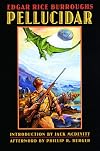
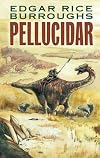
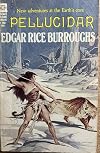
Pellucidar is the second novel set in Burroughs' fictional land of the same name, beneath the earth's crust. David Innes returns to Pellucidar from the surface, in search of his friend and colleague Abner, as well as his love, Dian the Beautiful. He must deal with the conflicts following their initial discovery of Pellucidar, and fight for the new, human civilization being built there. In later novels, various other protagonists enter Pellucidar, including Burroughs' most famous character, show more Tarzan.. show less
Tags
Recommendations




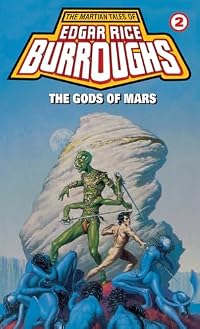




Member Recommendations


Member Reviews
ERB's sequel to AT THE EARTH'S CORE closes out the initial story that the first book left with a cliffhanger. David Innes returns to Pellucidar with early 20th-century weaponry, and, more importantly, a library possessing not only the knowledge of modern warfare to defeat the reptile masters, the Mahars, who enslave and, occasionally, eat the humans of the hollow earth, but also the knowledge of agriculture, animal husbandry, city development, and roads/rail/shipping to create a more prosperous human civilization -- one that thrives rather than, hopefully, survives. However, he discovers the Federation of native tribes that formed the Empire of Pellucidar -- and acknowledged him as Emperor -- that he'd established at the end of AT THE show more EARTH'S CORE has dissolved in his absence, reverting to old mistrusts and internicine fighting in his absence. He need unite them again.
However, first and foremost, David seeks to find his beloved Dian the Beautiful who was abducted by Hoojah the Sly at the conclusion to the initial novel, and then find his close friend, the elderly scientist Abner Perry.
The latter occurs before the former, but both in manners so great in coincidence that, for me, violates the reader's necessary suspension of belief. [Note: ln the very recent ERB UNIVERSE "Sword of Eternity" story arc where Victory Harben and Jason Gridley are propelled separately and uncontrollably through an Einstein-Rosen Bridge (i.e., wormhole through both space and time), they often appear in the same worlds close to the same times. Even though they never appear together, the coincidences that they come so close to one another throughout all space and time is explained as a result of their close relationship to one another, as is true of Victory and Jason's son Jaren as well. Thus, under the stewardship of ERB UNIVERSE Creative Director Christopher Paul Carey, over one hundred years after ERB wrote PELLUCIDAR, an explanation--of sorts-- is provided to explain coincidences such as occur in this novel. I admire the thought put into this in the ERB UNIVERSE series of works. However, on its own, PELLUCIDAR, lacking any acknowledgement that these coincidences are quite unusual detracts somewhat from the story.
ERB does address a similar challenge to the suspension of belief in the final chapters of the novel by the surprising appearance of a large Empire navy and well-trained, organized army with cannon, firearms, and metal swords (instead of stone knives), etc. As established in the first novel, Time is absent or merely relative in the Hollow Earth with its eternally shining central sun. David and Abner never know if a second has passed or a year. At the end of the tale, they set up a telegraph from an observatory that monitors the frequency of rotation of Pellucidar's stationary moon as a means of measuring time, and one need wonder if this will eliminate the seening blessing of timelessness singular eternal Present that is Pellucidar. [Note:
ERB addresses this in the "Introduction" to the next novel, TANAR OF PELLUCIDAR, by simply stating the citizens of the Empire, quite reasonably, disliked the marking of time. Thus, this practice was stopped.]
Also, Abner states the native human nations are composed of many thousands of people all dedicated to the goals of David's Empire and all working non-stop, in this timeless world, to learn the new knowledge and apply it to producing all the ships, armaments, etc. that the Empire requires.
Again, ERB thrills the reader with the beauty and wonder of Pellucidar and provides plenty of action. However, this sequel does not rise to the excellence of AT THE EARTH'S CORE. In minor part, this is due to the too-good-to-be true coincidences mentioned. Although for me, there major deficiency lies in (1) the novel is too short, summarizing the great campaign against the Mahars rather than depicting it, (2) the demise of the main villain is abrupt and too sparingly depicted, and (3) the romantic tension between David and Dian so beautifully, masterfully, and amusingly written by ERB in AT THE EARTH'S CORE is absent in this sequel in which Dian barely appears, or, when present, is rather two-dimensional.
All in all, a good adventure yarn, but I feel it had the potential to be truly epic. show less
However, first and foremost, David seeks to find his beloved Dian the Beautiful who was abducted by Hoojah the Sly at the conclusion to the initial novel, and then find his close friend, the elderly scientist Abner Perry.
The latter occurs before the former, but both in manners so great in coincidence that, for me, violates the reader's necessary suspension of belief. [Note: ln the very recent ERB UNIVERSE "Sword of Eternity" story arc where Victory Harben and Jason Gridley are propelled separately and uncontrollably through an Einstein-Rosen Bridge (i.e., wormhole through both space and time), they often appear in the same worlds close to the same times. Even though they never appear together, the coincidences that they come so close to one another throughout all space and time is explained as a result of their close relationship to one another, as is true of Victory and Jason's son Jaren as well. Thus, under the stewardship of ERB UNIVERSE Creative Director Christopher Paul Carey, over one hundred years after ERB wrote PELLUCIDAR, an explanation--of sorts-- is provided to explain coincidences such as occur in this novel. I admire the thought put into this in the ERB UNIVERSE series of works. However, on its own, PELLUCIDAR, lacking any acknowledgement that these coincidences are quite unusual detracts somewhat from the story.
ERB does address a similar challenge to the suspension of belief in the final chapters of the novel by the surprising appearance of a large Empire navy and well-trained, organized army with cannon, firearms, and metal swords (instead of stone knives), etc. As established in the first novel, Time is absent or merely relative in the Hollow Earth with its eternally shining central sun. David and Abner never know if a second has passed or a year. At the end of the tale, they set up a telegraph from an observatory that monitors the frequency of rotation of Pellucidar's stationary moon as a means of measuring time, and one need wonder if this will eliminate the seening blessing of timelessness singular eternal Present that is Pellucidar. [Note:
ERB addresses this in the "Introduction" to the next novel, TANAR OF PELLUCIDAR, by simply stating the citizens of the Empire, quite reasonably, disliked the marking of time. Thus, this practice was stopped.]
Also, Abner states the native human nations are composed of many thousands of people all dedicated to the goals of David's Empire and all working non-stop, in this timeless world, to learn the new knowledge and apply it to producing all the ships, armaments, etc. that the Empire requires.
Again, ERB thrills the reader with the beauty and wonder of Pellucidar and provides plenty of action. However, this sequel does not rise to the excellence of AT THE EARTH'S CORE. In minor part, this is due to the too-good-to-be true coincidences mentioned. Although for me, there major deficiency lies in (1) the novel is too short, summarizing the great campaign against the Mahars rather than depicting it, (2) the demise of the main villain is abrupt and too sparingly depicted, and (3) the romantic tension between David and Dian so beautifully, masterfully, and amusingly written by ERB in AT THE EARTH'S CORE is absent in this sequel in which Dian barely appears, or, when present, is rather two-dimensional.
All in all, a good adventure yarn, but I feel it had the potential to be truly epic. show less
ERB's sequel to AT THE EARTH'S CORE closes out the initial story that the first book left with a cliffhanger. David Innes returns to Pellucidar with early 20th-century weaponry, and, more importantly, a library possessing not only the knowledge of modern warfare to defeat the reptile masters, the Mahars, who enslave and, occasionally, eat the humans of the hollow earth, but also the knowledge of agriculture, animal husbandry, city development, and roads/rail/shipping to create a more prosperous human civilization -- one that thrives rather than, hopefully, survives. However, he discovers the Federation of native tribes that formed the Empire of Pellucidar -- and acknowledged him as Emperor -- that he'd established at the end of AT THE show more EARTH'S CORE has dissolved in his absence, reverting to old mistrusts and internicine fighting in his absence. He need unite them again.
However, first and foremost, David seeks to find his beloved Dian the Beautiful who was abducted by Hoojah the Sly at the conclusion to the initial novel, and then find his close friend, the elderly scientist Abner Perry.
The latter occurs before the former, but both in manners so great in coincidence that, for me, violates the reader's necessary suspension of belief. [Note: ln the very recent ERB UNIVERSE "Sword of Eternity" story arc where Victory Harben and Jason Gridley are propelled separately and uncontrollably through an Einstein-Rosen Bridge (i.e., wormhole through both space and time), they often appear in the same worlds close to the same times. Even though they never appear together, the coincidences that they come so close to one another throughout all space and time is explained as a result of their close relationship to one another, as is true of Victory and Jason's son Jaren as well. Thus, under the stewardship of ERB UNIVERSE Creative Director Christopher Paul Carey, over one hundred years after ERB wrote PELLUCIDAR, an explanation--of sorts-- is provided to explain coincidences such as occur in this novel. I admire the thought put into this in the ERB UNIVERSE series of works. However, on its own, PELLUCIDAR, lacking any acknowledgement that these coincidences are quite unusual detracts somewhat from the story.
ERB does address a similar challenge to the suspension of belief in the final chapters of the novel by the surprising appearance of a large Empire navy and well-trained, organized army with cannon, firearms, and metal swords (instead of stone knives), etc. As established in the first novel, Time is absent or merely relative in the Hollow Earth with its eternally shining central sun. David and Abner never know if a second has passed or a year. At the end of the tale, they set up a telegraph from an observatory that monitors the frequency of rotation of Pellucidar's stationary moon as a means of measuring time, and one need wonder if this will eliminate the seening blessing of timelessness singular eternal Present that is Pellucidar. [Note:
ERB addresses this in the "Introduction" to the next novel, TANAR OF PELLUCIDAR, by simply stating the citizens of the Empire, quite reasonably, disliked the marking of time. Thus, this practice was stopped.]
Also, Abner states the native human nations are composed of many thousands of people all dedicated to the goals of David's Empire and all working non-stop, in this timeless world, to learn the new knowledge and apply it to producing all the ships, armaments, etc. that the Empire requires.
Again, ERB thrills the reader with the beauty and wonder of Pellucidar and provides plenty of action. However, this sequel does not rise to the excellence of AT THE EARTH'S CORE. In minor part, this is due to the too-good-to-be true coincidences mentioned. Although for me, there major deficiency lies in (1) the novel is too short, summarizing the great campaign against the Mahars rather than depicting it, (2) the demise of the main villain is abrupt and too sparingly depicted, and (3) the romantic tension between David and Dian so beautifully, masterfully, and amusingly written by ERB in AT THE EARTH'S CORE is absent in this sequel in which Dian barely appears, or, when present, is rather two-dimensional.
All in all, a good adventure yarn, but I feel it had the potential to be truly epic. show less
However, first and foremost, David seeks to find his beloved Dian the Beautiful who was abducted by Hoojah the Sly at the conclusion to the initial novel, and then find his close friend, the elderly scientist Abner Perry.
The latter occurs before the former, but both in manners so great in coincidence that, for me, violates the reader's necessary suspension of belief. [Note: ln the very recent ERB UNIVERSE "Sword of Eternity" story arc where Victory Harben and Jason Gridley are propelled separately and uncontrollably through an Einstein-Rosen Bridge (i.e., wormhole through both space and time), they often appear in the same worlds close to the same times. Even though they never appear together, the coincidences that they come so close to one another throughout all space and time is explained as a result of their close relationship to one another, as is true of Victory and Jason's son Jaren as well. Thus, under the stewardship of ERB UNIVERSE Creative Director Christopher Paul Carey, over one hundred years after ERB wrote PELLUCIDAR, an explanation--of sorts-- is provided to explain coincidences such as occur in this novel. I admire the thought put into this in the ERB UNIVERSE series of works. However, on its own, PELLUCIDAR, lacking any acknowledgement that these coincidences are quite unusual detracts somewhat from the story.
ERB does address a similar challenge to the suspension of belief in the final chapters of the novel by the surprising appearance of a large Empire navy and well-trained, organized army with cannon, firearms, and metal swords (instead of stone knives), etc. As established in the first novel, Time is absent or merely relative in the Hollow Earth with its eternally shining central sun. David and Abner never know if a second has passed or a year. At the end of the tale, they set up a telegraph from an observatory that monitors the frequency of rotation of Pellucidar's stationary moon as a means of measuring time, and one need wonder if this will eliminate the seening blessing of timelessness singular eternal Present that is Pellucidar. [Note:
ERB addresses this in the "Introduction" to the next novel, TANAR OF PELLUCIDAR, by simply stating the citizens of the Empire, quite reasonably, disliked the marking of time. Thus, this practice was stopped.]
Also, Abner states the native human nations are composed of many thousands of people all dedicated to the goals of David's Empire and all working non-stop, in this timeless world, to learn the new knowledge and apply it to producing all the ships, armaments, etc. that the Empire requires.
Again, ERB thrills the reader with the beauty and wonder of Pellucidar and provides plenty of action. However, this sequel does not rise to the excellence of AT THE EARTH'S CORE. In minor part, this is due to the too-good-to-be true coincidences mentioned. Although for me, there major deficiency lies in (1) the novel is too short, summarizing the great campaign against the Mahars rather than depicting it, (2) the demise of the main villain is abrupt and too sparingly depicted, and (3) the romantic tension between David and Dian so beautifully, masterfully, and amusingly written by ERB in AT THE EARTH'S CORE is absent in this sequel in which Dian barely appears, or, when present, is rather two-dimensional.
All in all, a good adventure yarn, but I feel it had the potential to be truly epic. show less
One of the marks of a great writer is that he can take an unbelievable situation and make it sound true and accurate and believable. “Pellucidar”is book two of the seven-volume Pellucidar series by Burroughs, which tells the story of the adventures in a hollow-earth world where intelligent reptiles were the dominant species and humans were stuck in stone age civilization. One of the remarkable things Burroughs created in this hollow-world are the fact that, without sunrise or sunset, there is simply an eternal mid-day sun and thus no real conception of time. Although he was not the first one to ever postulate the existence of an inner-earth world, no one either before or since has done it half as well. Above all, this book, like the show more others in this terrific series, is a wonderful adventure story of fighting and chivalry.
In the first book in the series (“At the Earth’s Core”), Innes and Perry tunneled into this inner-world in a mighty metal prospector, not having any idea that it ever existed. At the end of the first book, Innes returns to the outer crust to gather arms, tools, and books so that he and Perry can advance human civilization in the inner world and take on the Mahar (reptile) empire. This second book of the series details Innes return to the inner world and his adventures there and how with his tools, weapons, and technological know-how brought back from the outer world, he leads a federation of stone age kingdoms in battle against the Mahars, bringing to bear weapons that no one in the inner world could ever have dreamed of.
It is truly a great story and, once you expect the conceit that there is an inner world with an inner sun and intelligent creatures there of many kinds, you will enjoy this book immensely. It is simply a great adventure story and quite enjoyable to read. show less
In the first book in the series (“At the Earth’s Core”), Innes and Perry tunneled into this inner-world in a mighty metal prospector, not having any idea that it ever existed. At the end of the first book, Innes returns to the outer crust to gather arms, tools, and books so that he and Perry can advance human civilization in the inner world and take on the Mahar (reptile) empire. This second book of the series details Innes return to the inner world and his adventures there and how with his tools, weapons, and technological know-how brought back from the outer world, he leads a federation of stone age kingdoms in battle against the Mahars, bringing to bear weapons that no one in the inner world could ever have dreamed of.
It is truly a great story and, once you expect the conceit that there is an inner world with an inner sun and intelligent creatures there of many kinds, you will enjoy this book immensely. It is simply a great adventure story and quite enjoyable to read. show less
This is the sequel to the author's better known At the Earth's Core. This tells of the narrator's further adventures in the land inside the hollow Earth, battling against various races of hostile people, allying with others and forging his own subterranean empire along with his wife Dian the Beautiful whom he had rescued in the previous novel. Obviously of its time, but I wouldn't mind as long as there was a better plot, but this lacks the freshness of its predecessor. I did, though, download to my phone a map of Pellucidar from Wikipedia, which helped in following his perambulations.
Pellucidar is the second in Burrough's hollow earth series that started with At the Earth's Core. I haven't read the first book in the series, but like many adventure novels, the action is pretty self-contained and references to happenings in the first book are explained.
Pellucidar begins with David's return to the earth's core and follows him as he rescues his woman, fights the evil lizards, reunites the cave people, and teaches everyone about building boats, firing cannons, reading, and not enslaving captured prisoners.
The book is a fun read, as all Burroughs is, and the geography and people of Pellucidar allow for some pretty creative adventures. There are occasional slips into early 20th century racism, but only slightly show more cringeworthy and nothing too blatant. I would gladly return to the world of Pellucidar -- and I am particularly excited to see what happens when Tarzan goes there...
Full review here: http://spacebeer.blogspot.com/2007/12/pellucidar-1915.html show less
Pellucidar begins with David's return to the earth's core and follows him as he rescues his woman, fights the evil lizards, reunites the cave people, and teaches everyone about building boats, firing cannons, reading, and not enslaving captured prisoners.
The book is a fun read, as all Burroughs is, and the geography and people of Pellucidar allow for some pretty creative adventures. There are occasional slips into early 20th century racism, but only slightly show more cringeworthy and nothing too blatant. I would gladly return to the world of Pellucidar -- and I am particularly excited to see what happens when Tarzan goes there...
Full review here: http://spacebeer.blogspot.com/2007/12/pellucidar-1915.html show less
A sequel to Burroughs' "At the Earth's Core", in which explorer David Innes discovered and temporarily conquered Pellucidar, a fantastic land within the hollow Earth. Here his continuing story is transmitted by telegraph to the surface. Innes has returned to the surface to obtain weapons and tools for his return to Pellucidar, with the intent to find and rescue his lost mate Dian the Beautiful, and finish the conquest and civilization of this savage land. He eventually succeeds, after a series of thrilling and unbelievable adventures. The one glaring fault here is Burroughs' reliance on the incredible coincidence, as when an African explorer accidentally discovers Innes' telegraph, buried in the ground, by sleeping with his head over it show more and hearing the clicks - in the midst of an arid desert. If one can suspend enough disbelief, it's an enjoyable summer read. show less
Not quite as good as the first in the series but still a highly enjoyable hollow earth romp. Great fun.
Members
- Recently Added By
Lists

Books Read in 2019
4,052 works; 110 members
Author Information

768+ Works 65,008 Members
Edgar Rice Burroughs was born on September 1, 1875, in Chicago. His father, George Tyler was a distiller and a battery manufacturer. Early in life Burroughs attempted to support his family in a variety of occupations, including railroad policeman, business partner, and miner. None of these proved successful. However, Burroughs had always enjoyed show more reading adventure fiction and decided to try his hand at writing. His first attempt, written under the pseudonym Normal Bean, sold very quickly and Burroughs' career took off. Although critics and educators have not always been supportive of Burroughs' writing, the characters in his stories have entertained readers for many years. Tarzan was the most popular, earning Burroughs enough money to start his own publishing house and a motion picture company. Another character, John Carter, is the hero of Burroughs' Mars adventure series. The continuing popularity of these characters has led some critics to reconsider the value of Burroughs' writing and to acknowledge significant themes in his stories. Burroughs died on March 19, 1950. (Bowker Author Biography) show less
Some Editions
Series

Belongs to Publisher Series
Work Relationships
Common Knowledge
- Canonical title
- Pellucidar
- Original title
- Pellucidar
- Original publication date
- 1923; 1915
- People/Characters
- David Innes; Abner Perry; Dian the Beautiful; Ghak the Hairy One; Hooja the Sly One; Dacor the Strong One
- Important places
- Pellucidar; Anoroc
- First words
- (Prologue) Several years had elapsed since I had found the opportunity to do any big-game hunting; for at last I had my plans almost perfected for a return to my old stamping grounds in northern Africa, where in other days I ... (show all)had had excellent sport in pursuit of the king of beasts.
(Ch 1) The Arabs, of whom I wrote you at the end of my last letter (Innes began), and whom I thought to be enemies intent only upon murdering me, proved to be exceedingly friendly - Last words
- (Click to show. Warning: May contain spoilers.)Even without my imperial powers and honors I should be content, for have I not that greatest of all treasures, the love of a good woman - my wondrous empress, Dian the Beautiful?
- Disambiguation notice
- Pellucidar is the second book of the Pellucidar series which began with At the Earth's Core.. It should not be combined with any other book from the ... (show all)series or with any omnibus edition.
Classifications
Statistics
- Members
- 750
- Popularity
- 37,218
- Reviews
- 13
- Rating
- (3.49)
- Languages
- English, Finnish, French, Spanish
- Media
- Paper, Audiobook, Ebook
- ISBNs
- 95
- UPCs
- 1
- ASINs
- 51