On This Page
Description
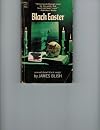
Theron Ware is a renowned scholar and Doctor of Divinity. He is also secretly one of the world's great Black magicians. And when a rich megalomaniac industrialist, Baines, enlists his aid in summoning a demon from Hell to assassinate the governor of California (in an "excess of horror"), Ware has no scruples about accepting the assignment. But this terrible and devilish deed is only a warm-up, a test from Baines to see whether Ware can help him to accomplish his ultimate purpose: opening the show more gates of Hell and allowing the legions of infernal demons to overrun the world ...Best known as a science fiction writer, James Blish (1921-1975) shows a darker side in his classic Black Easter (1968), a harrowing tale that blends horror, science fiction, fantasy, and a generous dose of black humor. The sequel, The Day After Judgment (1971), is coming soon from Valancourt. show lessTags
Recommendations























Member Reviews
A powerful novella which delves deeply into various degrees of mythology; including classical, Jewish, Catholic and even Dante - blending them into the ritualistic art of black magic, as an arms dealer hires an accomplished occult magician to unleash the hordes of Hell for a night across the world.
Most of the book is conversational between the various agents - including a white monk who stands ready to stop it - but there's a lot of intricate description of rituals, biblical references and hundreds of demonic/angelic Names in between to give an extremely thorough feel of authenticity. The research is clearly a strength of the book, but also somewhat of a weakness since it's quite easy to get lost down a rabbit hole of trying to show more understand the diverse references.
But, as the story unfolds, it is clear that there is something else going on, just on the edge of reason, leading to a blistering finale to set up one of the most powerful and bleak climactic final lines I've come across.
A powerful book and one I enjoyed a great deal, but it's intricacies will either dilute or enhance the story depending on the reader. show less
Most of the book is conversational between the various agents - including a white monk who stands ready to stop it - but there's a lot of intricate description of rituals, biblical references and hundreds of demonic/angelic Names in between to give an extremely thorough feel of authenticity. The research is clearly a strength of the book, but also somewhat of a weakness since it's quite easy to get lost down a rabbit hole of trying to show more understand the diverse references.
But, as the story unfolds, it is clear that there is something else going on, just on the edge of reason, leading to a blistering finale to set up one of the most powerful and bleak climactic final lines I've come across.
A powerful book and one I enjoyed a great deal, but it's intricacies will either dilute or enhance the story depending on the reader. show less
What Dracula and King's Salem's Lot is to vampires, Black Easter is to demons. These days, vampires, witches and wizards are lovable creatures in fiction. There are even neo-Pagans today who embrace a belief in ceremonial magic as benign. Blish says in his Author's Note that every one of the "novels, poems and plays about magic and witchcraft" he's read treat it as "romantic or playful." He sought to write a treatment that "neither romanticizes magic nor treats it as a game." His book is dedicated to C.S. Lewis and even includes an extensive quotation from his Screwtape Letters heading one of the chapters.
So although I'm not sure I'd classify this as out and out Christian fiction, this does come out of that world view and takes the show more demonic seriously--that's what does make it unusual and at times fascinating. It's obvious not just from his note but the vividness of his details and even the quotes heading chapters Blish did extensive research--actually reading grimoires and manuscripts on ceremonial magic. Blish is best known as a science fiction author, and he gives his magicians a grounding that really makes if feel as rigorous as any science--and it's obviously an allegory for amoral science and its destructive power. The world building in that regard is first class, which is why I'm not rating it lower.
The characters not so much--and the plot feels a bit thin. I never found it scary, nor was scared for the characters, and the ending, which I thought predictable, didn't have much impact upon me. Also, I had read this before--albeit over a decade ago--but it didn't make enough of an impression to really be memorable--thus why I'm not rating it higher. show less
So although I'm not sure I'd classify this as out and out Christian fiction, this does come out of that world view and takes the show more demonic seriously--that's what does make it unusual and at times fascinating. It's obvious not just from his note but the vividness of his details and even the quotes heading chapters Blish did extensive research--actually reading grimoires and manuscripts on ceremonial magic. Blish is best known as a science fiction author, and he gives his magicians a grounding that really makes if feel as rigorous as any science--and it's obviously an allegory for amoral science and its destructive power. The world building in that regard is first class, which is why I'm not rating it lower.
The characters not so much--and the plot feels a bit thin. I never found it scary, nor was scared for the characters, and the ending, which I thought predictable, didn't have much impact upon me. Also, I had read this before--albeit over a decade ago--but it didn't make enough of an impression to really be memorable--thus why I'm not rating it higher. show less
I actually really liked this and couldn't put it down. Very fast read. The research into magic was great and well-deployed. I feel the ending was a little thin, although I'm off to read the sequel next. Oh also it's incredibly fucking sexist.
Having been a long-time fan of science fiction with religious themes, I inevitably got around to this one. I found it...well, a strange book. It's of the era when writers packed their ideas into modestly sized novels instead of exhausting themselves (or the reader) in 700-page "worlds." That said, there were chapters here that begged for some follow-up. It had a strangely disjointed feel that, in retrospect, may well have added to its impact. What if magic were a "real science?" What if there were ground rules and boundaries which both sides honored in the ongoing conflict between the sacred and the satanic? Armageddon precipitated by a straightforward business deal? Hmmm, maybe this isn't science fiction after all...
Great occult and demon-raising fun, but far too brief. Although I am glad it is not a bloated King or Barker tome, another 200 pages would have been appreciated.
A rather bizarre story. The theme of the story does not appeal to me since angels and demons appear to be the imaginations of the mind, which some people actually believe in. The conjuring of non-existent beings is fantasy of a different nature since too many naive people give credence to such concepts. The possibility of a third world war is credible.
The ending is interesting and the author is capable. Regarding the ending, it does not seem logical that the invocation of the third world war equates to a victory for Satan. There is no discussion of a battle between angels and demons. There is only a statement that "God is dead." This seems illogical, if one assumes that God, angels, and demons exist.
And the point of the story is what?
The ending is interesting and the author is capable. Regarding the ending, it does not seem logical that the invocation of the third world war equates to a victory for Satan. There is no discussion of a battle between angels and demons. There is only a statement that "God is dead." This seems illogical, if one assumes that God, angels, and demons exist.
And the point of the story is what?
A disturbing tale of black magic against a background of impending nuclear war, with an extremely downbeat ending. Blish shows his research into mediaeval grimoires perhaps a little too protractedly in the scene where lots of demons are summoned, one after another.
Read as part of the After Such Knowledge omnibus and posted as an individual review as all the other GR reviews are under the individual books.
Read as part of the After Such Knowledge omnibus and posted as an individual review as all the other GR reviews are under the individual books.
Members
- Recently Added By
Lists

Cawthorn and Moorcock's Fantasy: The 100 Best Books
110 works; 7 members

David Pringle's Modern Fantasy: The 100 Best Novels
100 works; 5 members

Best Sellers / Popular 1968
237 works; 5 members
Talk Discussions
Past Discussions
Mood: Horny, fiery, also blasphemous in Good Show Sir! — bad science fiction and fantasy covers (April 2025)
Black Easter from Centipede Press in Fine Press Forum (February 2022)
Author Information

268+ Works 24,525 Members
James Benjamin Blish was born on May 23, 1921 in East Orange, N.J. Blish trained as a biologist at Rutgers and Columbia University, and spent 1942 - 1944 as a medical technician in the United States Army. After the war he became the science editor for the Pfizer pharmaceutical company. His first published story appeared in 1940, and his writing show more career progressed until he gave up his job to become a professional writer. From 1962 to 1968, he worked for the Tobacco Institute. Between 1967 and his death from lung cancer in 1975, Blish wrote authorized short story collections based upon the 1960s TV series Star Trek. He wrote 11 volumes adapting episodes of the series. He died midway through writing Star Trek 12. Perhaps Blish's most famous works were the "Okies" stories, known collectively as Cities in Flight, published in the science-fiction digest magazine Astounding Science Fiction. Some of James Blish's other works include The Vanished Jet, And All the Stars a Stage, The Quincunx of Time, and Flight of Eagles. (Bowker Author Biography) show less
Awards and Honors
Awards
Notable Lists
Series


Belongs to Publisher Series
Work Relationships
Is contained in
Has as a commentary on the text
Common Knowledge
- Original title
- Faust Aleph-Null
- Alternate titles
- Black Easter; Black Easter, or Faust Aleph-Null
- Original publication date
- 1968 (serialized in IF) (serialized in IF)
- People/Characters
- Theron Ware; Baines; Father Domenico Garelli; Jack Ginsberg; Adolph Hess; Baphomet
- Epigraph
- Why, this is Hell; nor am I out of it. - Christopher Marlowe
- Dedication
- In memoriam C. S. Lewis
- First words
- The room stank of demons.
- Quotations
- "It is written that in that war you will at last be conquered and chained!"
OF COURSE, BUT WHAT DOES THAT PROVE? EACH OF THE OPPOSING SIDES IN ANY WAR ALWAYS PREDICTS VICTORY. THEY CANNOT BOTH BE RIGHT. - Last words
- (Click to show. Warning: May contain spoilers.)God is dead.
- Original language*
- English US
- Disambiguation notice
- Copies of Black Easter which also include The Day After Judgement belong with The Devil's Day: A name given to other editions of this Omnibus.
*Some information comes from Common Knowledge in other languages. Click "Edit" for more information.
Classifications
- Genres
- Fiction and Literature, Science Fiction, Horror
- DDC/MDS
- 813.54 — Literature & rhetoric American literature in English American fiction in English 1900-1999 1945-1999
- LCC
- PZ3 .B61987 — Language and Literature Fiction and juvenile belles lettres Fiction and juvenile belles lettres Fiction in English
- BISAC
Statistics
- Members
- 436
- Popularity
- 70,458
- Reviews
- 13
- Rating
- (3.70)
- Languages
- 6 — Danish, English, French, German, Portuguese, Swedish
- Media
- Paper, Ebook
- ISBNs
- 15
- ASINs
- 18