
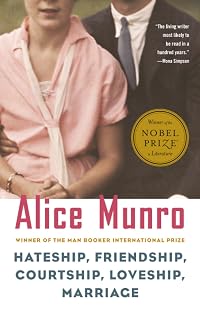
Hateship, Friendship, Courtship, Loveship, Marriage
by Alice Munro
On This Page
Description
WINNER OF THE NOBEL PRIZE® IN LITERATURE 2013Alice Munro has long been heralded for her penetrating, lyrical prose, and in “The Bear Came Over the Mountain” – the basis for Sarah Polley’s film Away From Her — her prodigious talents are once again on display. As she follows Grant, a retired professor whose wife Fiona begins gradually to lose her memory and drift away from him, we slowly see how a lifetime of intimate details can create a marriage, and how mysterious the bonds of show more love really are.
. show less
Tags
Recommendations

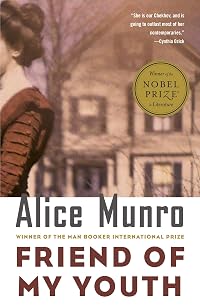
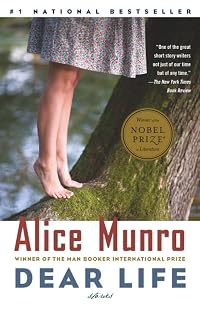
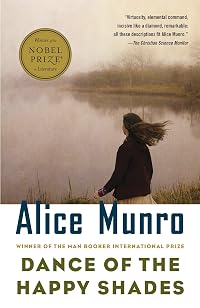
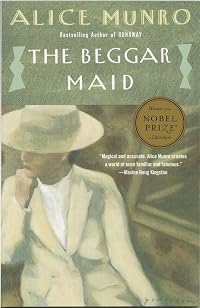



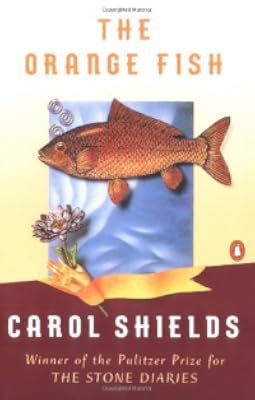
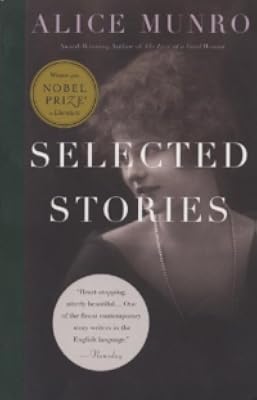
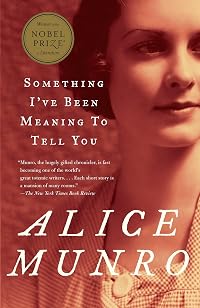
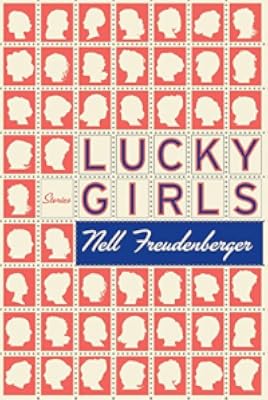
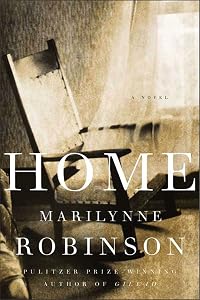
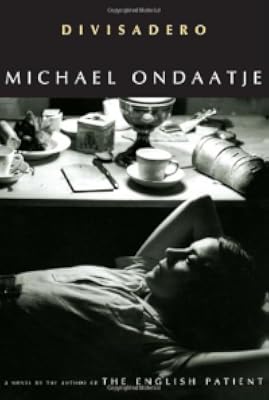

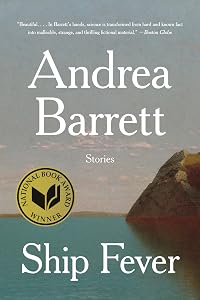
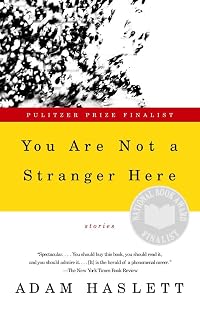
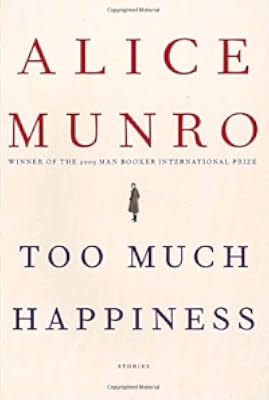
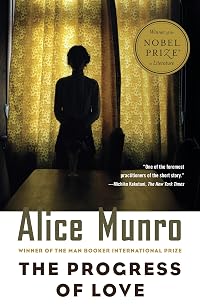
Member Recommendations

TheLittlePhrase away from her is based on alice munro's story " the bear went over the mountain"
Member Reviews
Munro just won the 2013 Nobel Prize for Literature, so it stands to reason that a number of people will, like me, pick one of her books almost at random to see what the fuss is about. I'm happy to report that this is a wonderful collection of short stories that shows Munro as being in the first rank of fiction writers and makes for a great introduction to her work. Fully discussing each of the nine stories in here would take as long or longer than just reading the stories themselves, but they are all basically flawless - full of well-drawn characters, realistic yet compelling drama, and acute psychological insight. Her writing style is also notable, being so naturalistic, subtle, and skillful that her presence is barely even show more perceptible, yet I frequently found myself reading for a while, pausing to think, and then going back a page or two to marvel at how much she was able to pack into her sentences without the Heavy Hand of the Author showing.
In terms of the substance of the stories, Munro typically concentrates on older people going through emotionally turbulent periods in their lives. That sounds vague enough to be nearly meaningless, but it's very rare to find a writer who's able to take the average and everyday and bring out the drama and meaning in it without sounding overly portentous or trite - time and again her characters will get into situations involving love, loyalty, betrayal, growth, or some other strongly personal emotion where most writers would simply pull out an obvious or facile Hollywood plot twist to neatly wrap up the story. Not her. She's able to portray people's complex and confused reactions to what life throws at them without ever seeming like she's doing anything but straightforwardly recounting real people and real events. I read an essay that compared her to Chekhov in that way, and another good comparison might be David Simon, who has remarked that a big part of his technique in fiction was "stealing life" by using actual quotes and stories. Truth is often stranger and more powerful than fiction, and Munro's stories have the unmistakable signature of someone with a keen eye and a good ear for what's going on around her.
The stories also usually have an air of sadness or melancholy to them without being oppressive or gloomy, instead leaving the reader with a thoughtful, almost wistful feeling. In between when I was physically reading the stories in the book I found myself listening to the people around me in a new way, trying to pick up on some of the details that Munro was able to render and wondering to what extent others were d doing the same. How often do I take a minute to think about the role that I play in the lives of the people close to me, or what about me will be remembered years in the future? Not often enough.
It may sound silly to recommend this book to anyone who likes reading about life, but that's exactly what it's about, and any fan of good writing should pick this, or probably any of her other works, up as soon as they can. show less
In terms of the substance of the stories, Munro typically concentrates on older people going through emotionally turbulent periods in their lives. That sounds vague enough to be nearly meaningless, but it's very rare to find a writer who's able to take the average and everyday and bring out the drama and meaning in it without sounding overly portentous or trite - time and again her characters will get into situations involving love, loyalty, betrayal, growth, or some other strongly personal emotion where most writers would simply pull out an obvious or facile Hollywood plot twist to neatly wrap up the story. Not her. She's able to portray people's complex and confused reactions to what life throws at them without ever seeming like she's doing anything but straightforwardly recounting real people and real events. I read an essay that compared her to Chekhov in that way, and another good comparison might be David Simon, who has remarked that a big part of his technique in fiction was "stealing life" by using actual quotes and stories. Truth is often stranger and more powerful than fiction, and Munro's stories have the unmistakable signature of someone with a keen eye and a good ear for what's going on around her.
The stories also usually have an air of sadness or melancholy to them without being oppressive or gloomy, instead leaving the reader with a thoughtful, almost wistful feeling. In between when I was physically reading the stories in the book I found myself listening to the people around me in a new way, trying to pick up on some of the details that Munro was able to render and wondering to what extent others were d doing the same. How often do I take a minute to think about the role that I play in the lives of the people close to me, or what about me will be remembered years in the future? Not often enough.
It may sound silly to recommend this book to anyone who likes reading about life, but that's exactly what it's about, and any fan of good writing should pick this, or probably any of her other works, up as soon as they can. show less
The title of this collection is that of the first story, where it refers to a daisy-pulling game two adolescent girls play. But it also serves as a description of the topics of all the stories, in which Alice Munro explores the interior life of women. Most are located in rural or small-town Ontario, one in Vancouver.
Munro unfolds her stories carefully and develops her characters well in detailed yet economical prose. One recurring motif in the stories is the loss, after a long illness, most of it spent bed-ridden at home, of a mother or neighbor. Many of her figures come from straightened circumstances, but their intelligence leads to a broader experience of the world.
One technique struck me: in some of the stories, a figure who seemed show more peripheral or was newly introduced toward the end initiates the plot twist on which the story turns.
All of the stories are good, but the best one comes last. I’d recommend reading them in order so that the final story, “The Bear Came Over the Mountain,” has its full impact and is the last taste of the book. show less
Munro unfolds her stories carefully and develops her characters well in detailed yet economical prose. One recurring motif in the stories is the loss, after a long illness, most of it spent bed-ridden at home, of a mother or neighbor. Many of her figures come from straightened circumstances, but their intelligence leads to a broader experience of the world.
One technique struck me: in some of the stories, a figure who seemed show more peripheral or was newly introduced toward the end initiates the plot twist on which the story turns.
All of the stories are good, but the best one comes last. I’d recommend reading them in order so that the final story, “The Bear Came Over the Mountain,” has its full impact and is the last taste of the book. show less
I have come to really enjoy reading short stories. I have always liked them, but in recent years have developed a new appreciation for the skill that goes into creating them, a skill that appears distinctly different from writing a novel. My wife, Jenn, doesn't especially care for short stories. She feels she just starts to enjoy the story and it is over. I can understand that, but there is something about the intensity of a short story that is for me unique.
Much to my dismay, since I like to acquire hardbacks of whatever I read, I began reading Alice Munro shortly before she was awarded the Nobel Prize. Hardbacks of her short story collections apparently became much more difficult to find around then. It probably worked to my show more advantage, though, since it has caused me to space out the reading of her collections more than I might have done otherwise. I get to enjoy her work at a slower pace.
This set of stories was a joy to read. Somehow Alice Munro can pack more into a 35-page short story than many authors can fit into a novel that runs several hundreds of pages. Her characters are rich in depth and yet seem like people I might encnounter in my life or pass on the street tomorrow. Their problems are fascinating, and yet not that different from mine. And she handles time so well, shifting seamlessly from event to event. I never find myself going back a paragraph or a page to find that time shift I missed or felt jolted, jerked from one time and place to another. Sometimes I do flip back a page, though, to catch how she made the shift without my hardly noticing. A magician at work.
My favorites: Comfort; Queenie and The Bear Came Over The Mountain. All three were near the end of the collection, and I was already thoroughly enjoying the experience before getting to them. Imagine how lucky I felt to learn that the true gems, for me, were there at the end. show less
Much to my dismay, since I like to acquire hardbacks of whatever I read, I began reading Alice Munro shortly before she was awarded the Nobel Prize. Hardbacks of her short story collections apparently became much more difficult to find around then. It probably worked to my show more advantage, though, since it has caused me to space out the reading of her collections more than I might have done otherwise. I get to enjoy her work at a slower pace.
This set of stories was a joy to read. Somehow Alice Munro can pack more into a 35-page short story than many authors can fit into a novel that runs several hundreds of pages. Her characters are rich in depth and yet seem like people I might encnounter in my life or pass on the street tomorrow. Their problems are fascinating, and yet not that different from mine. And she handles time so well, shifting seamlessly from event to event. I never find myself going back a paragraph or a page to find that time shift I missed or felt jolted, jerked from one time and place to another. Sometimes I do flip back a page, though, to catch how she made the shift without my hardly noticing. A magician at work.
My favorites: Comfort; Queenie and The Bear Came Over The Mountain. All three were near the end of the collection, and I was already thoroughly enjoying the experience before getting to them. Imagine how lucky I felt to learn that the true gems, for me, were there at the end. show less
I sometimes get into conversations with people who have a hard time connecting with the short-story format; they say that they hardly have time to muster an emotional involvement in the characters and events, before the story is over. To those readers I might recommend Alice Munro. True, I have only experienced one of her collections, but the stories in Hateship, Friendship, Courtship, Loveship, Marriage are nothing if not emotionally affecting—or "crushingly tragic," I suppose, if you want to get specific about the thing. Indeed, the understated yet unrelenting tragedy of small unkindnesses built up over decades and lifetimes; of the inevitable disappointments and compromises that result when people do their best and their best is show more not very good; of the human tendency to feel pride in one's flaws and shame in one's strengths: all this is the lifeblood of Munro's collection, and there's no denying that it's more bitter than sweet. At times, the bitterness becomes overpowering. At other times, Munro strikes a compelling balance between the deep sadness in all her characters (particularly her female characters) and the moments of true connection they manage to glean from the world around them, often at unexpected moments.
Munro, it should be stressed, is a magnificent craftsman. One of the reasons these stories, at 20 or 30 pages, feel like whole super-condensed novels, is their author's extreme economy of language, her ability to establish whole histories with one or two well-chosen words, which often occur in a paragraph seemingly devoted to another task entirely. In the story "Post and Beam," for example, the graduate student Lionel contemplates the married life of his professor and the professor's wife, a couple he has come to socialize with on occasion:
Not only do we get a portrait of a summer evening here, the ambient twilight stimuli as the adults have a drink together, but we also get Lionel's aversion to the everyday accouterments of married life (he comes after the children are in bed, shivers at Lorna and Brendan's everyday interactions). We also get a solid idea of the dynamic between Lorna and Brendan: their marriage follows traditional gender roles in that she is the one expected to take responsibility for cleaning up the children's toys and doing the shopping; if she slips up, Brendan not just allowed but obliged ("had to") to give her a scolding about it. That "had to" might indicate, since we are in his head at the moment, Lionel's point of view, his acceptance of the standard husband/wife hierarchy—although the rest of the story gives the impression that none of these characters would object to the phrase, even as the lack of equality and human understanding in her marriage is making Lorna actively unhappy. Even the addition of "remembered" ("the call from the kitchen asking if she had remembered to buy limes for the gin and tonic") adds to multiple aspects of the marital portrait. On the one hand, it speaks to the familiarity of husband and wife: probably everyone who has shared a household has yelled this type of question at one time or another. On the other hand, combined with Brendan's disconnection from his children and scolding of his wife, his phrasing adds to the picture of his domineering nature. This is not a man who goes to the store to buy limes himself, but tasks his wife with buying them, and then calls from the kitchen to ask if she remembered his request, rather than walking into the other room to ask her or (heaven forbid) looking for the limes himself. One can understand why Lionel might not be jumping on board with the whole marriage proposition, if Lorna and Brendan are his role models.
And in fact, Brendan is largely representative of the male characters in Munro's book. If I have a complaint about the collection, it's this uniformity of male callousness: although we occasionally see a long-married couple who are genuinely caring toward one another (if mutually deeply flawed), or a pair of total strangers who manage to achieve a moment of unfettered connection, for the most part Munro's men are controlling, unfaithful jerks, taking the women around them for granted and generally acting like petulant toddlers. And I don't mean to suggest that Munro does not evoke this character type with great skill and sensitivity, because she absolutely does—and in fact, many of these male characters, in her hands, end up eliciting some degree of sympathy in the reader's mind: quite a feat considering their collective behavior. Munro's analysis of the gender roles in these stories acknowledges that the mainstream culture of the 1950s and 60s set up young men to be the assholes they sometimes turned out, just as those same decades socialized women to be submissive and self-denigrating, simultaneously responsible for raising children and reduced to a child-like state themselves. In the excellent story "What is Remembered," one of the highlights of the collection for me, the narrator writes:
So the men don't have a roadmap for how to live, any more than the women do. They, too, are working to conform to certain societal expectations. Yes.
Even so, I've known a good number of men from this generation (or slightly older: my grandparents' generation), and most of them were not domineering, not unkind to their wives or dismissive of their wives' opinions. True, I didn't know them when they were young men. Munro's older characters are significantly gentler with each other than her younger ones, albeit sometimes oddly so. To some degree even the younger characters are not being unkind given their social context: they assume it's the simple truth that a husband's role is to dictate and a wife's is to obey. This is a systemic problem more than a fault of individuals. Still. Munro's bone of contention got a bit monotonous at times, as much as I agree with her insights. The sameness of male/female relationships in the collection dulled the impact of stories which, individually or in more varied company, would have all packed the same kind of punch as the first few did.
In addition to said bones, though, this collection offers lots of meat. It will be rewarding to return to individual stories in the future, which I think will be a more palatable way of appreciating Munro than reading a collection of hers cover to cover. And there is plenty here to appreciate: the role of memory throughout these stories, for example, and how we mold our recollections to fill the functions we need them to, forgetting or imagining where it is convenient. Or how Munro so cleanly and expertly handles shifts in time, quietly moving the reader forward and backward in a given history with no unnecessary apparatus and hardly a hiccup in the narrative flow. It's not a Woolfian vision of simultaneity; while the characters often recollect their pasts, the past is not present to them as it is to Clarissa Dalloway or Peter Walsh—but the narrative engine is so weightless and nimble that it can position the reader neatly at any desired perspective point vis-à-vis the action, and whisk them to a different one with no fuss at all, with absolute clarity. (The opening paragraphs of "Family Furnishings" are excellent at this, and the titular story shows a similar character-based flexibility in its use of a roving limited third-person narrator.)
Munro is not comfort reading, in other words, but in small doses I will definitely be returning to her hard, occasionally tender, lying world. show less
Munro, it should be stressed, is a magnificent craftsman. One of the reasons these stories, at 20 or 30 pages, feel like whole super-condensed novels, is their author's extreme economy of language, her ability to establish whole histories with one or two well-chosen words, which often occur in a paragraph seemingly devoted to another task entirely. In the story "Post and Beam," for example, the graduate student Lionel contemplates the married life of his professor and the professor's wife, a couple he has come to socialize with on occasion:
He came to see them in the evenings, when the children were in bed. The slight intrusions of domestic life—the cry of the baby reaching them through an open window, the scolding Brendan sometimes had to give Lorna about toys left lying on the grass, instead of being put back in the sandbox, the call from the kitchen asking if she had remembered to buy limes for the gin and tonic—all seemed to cause a shiver, a tightening of Lionel's tall, narrow body and intent, distrustful face.
Not only do we get a portrait of a summer evening here, the ambient twilight stimuli as the adults have a drink together, but we also get Lionel's aversion to the everyday accouterments of married life (he comes after the children are in bed, shivers at Lorna and Brendan's everyday interactions). We also get a solid idea of the dynamic between Lorna and Brendan: their marriage follows traditional gender roles in that she is the one expected to take responsibility for cleaning up the children's toys and doing the shopping; if she slips up, Brendan not just allowed but obliged ("had to") to give her a scolding about it. That "had to" might indicate, since we are in his head at the moment, Lionel's point of view, his acceptance of the standard husband/wife hierarchy—although the rest of the story gives the impression that none of these characters would object to the phrase, even as the lack of equality and human understanding in her marriage is making Lorna actively unhappy. Even the addition of "remembered" ("the call from the kitchen asking if she had remembered to buy limes for the gin and tonic") adds to multiple aspects of the marital portrait. On the one hand, it speaks to the familiarity of husband and wife: probably everyone who has shared a household has yelled this type of question at one time or another. On the other hand, combined with Brendan's disconnection from his children and scolding of his wife, his phrasing adds to the picture of his domineering nature. This is not a man who goes to the store to buy limes himself, but tasks his wife with buying them, and then calls from the kitchen to ask if she remembered his request, rather than walking into the other room to ask her or (heaven forbid) looking for the limes himself. One can understand why Lionel might not be jumping on board with the whole marriage proposition, if Lorna and Brendan are his role models.
And in fact, Brendan is largely representative of the male characters in Munro's book. If I have a complaint about the collection, it's this uniformity of male callousness: although we occasionally see a long-married couple who are genuinely caring toward one another (if mutually deeply flawed), or a pair of total strangers who manage to achieve a moment of unfettered connection, for the most part Munro's men are controlling, unfaithful jerks, taking the women around them for granted and generally acting like petulant toddlers. And I don't mean to suggest that Munro does not evoke this character type with great skill and sensitivity, because she absolutely does—and in fact, many of these male characters, in her hands, end up eliciting some degree of sympathy in the reader's mind: quite a feat considering their collective behavior. Munro's analysis of the gender roles in these stories acknowledges that the mainstream culture of the 1950s and 60s set up young men to be the assholes they sometimes turned out, just as those same decades socialized women to be submissive and self-denigrating, simultaneously responsible for raising children and reduced to a child-like state themselves. In the excellent story "What is Remembered," one of the highlights of the collection for me, the narrator writes:
Young husbands were stern, in those days. Just a short time before, they had been suitors, almost figures of fun, knock-kneed and desperate in their sexual agonies. Now, bedded down, they turned resolute and disapproving. Off to work every morning, clean-shaven, youthful necks in knotted ties, days spent in unknown labors, home again at suppertime to take a critical glance at the evening meal and to shake out the newspaper, hold it up between themselves and the muddle of the kitchen, the ailments and emotions, the babies. What a lot they had to learn. How to kowtow to bosses and how to manage wives.
So the men don't have a roadmap for how to live, any more than the women do. They, too, are working to conform to certain societal expectations. Yes.
Even so, I've known a good number of men from this generation (or slightly older: my grandparents' generation), and most of them were not domineering, not unkind to their wives or dismissive of their wives' opinions. True, I didn't know them when they were young men. Munro's older characters are significantly gentler with each other than her younger ones, albeit sometimes oddly so. To some degree even the younger characters are not being unkind given their social context: they assume it's the simple truth that a husband's role is to dictate and a wife's is to obey. This is a systemic problem more than a fault of individuals. Still. Munro's bone of contention got a bit monotonous at times, as much as I agree with her insights. The sameness of male/female relationships in the collection dulled the impact of stories which, individually or in more varied company, would have all packed the same kind of punch as the first few did.
In addition to said bones, though, this collection offers lots of meat. It will be rewarding to return to individual stories in the future, which I think will be a more palatable way of appreciating Munro than reading a collection of hers cover to cover. And there is plenty here to appreciate: the role of memory throughout these stories, for example, and how we mold our recollections to fill the functions we need them to, forgetting or imagining where it is convenient. Or how Munro so cleanly and expertly handles shifts in time, quietly moving the reader forward and backward in a given history with no unnecessary apparatus and hardly a hiccup in the narrative flow. It's not a Woolfian vision of simultaneity; while the characters often recollect their pasts, the past is not present to them as it is to Clarissa Dalloway or Peter Walsh—but the narrative engine is so weightless and nimble that it can position the reader neatly at any desired perspective point vis-à-vis the action, and whisk them to a different one with no fuss at all, with absolute clarity. (The opening paragraphs of "Family Furnishings" are excellent at this, and the titular story shows a similar character-based flexibility in its use of a roving limited third-person narrator.)
Munro is not comfort reading, in other words, but in small doses I will definitely be returning to her hard, occasionally tender, lying world. show less
This was my first collection of Alice Munro's short stories. She'd been on my "to read" list for a long time, and after she won the Nobel Prize in Literature this year, I picked up this collection of short stories at Prairie Lights. Munro is a master of her craft. Her short stories contain more depth, more feeling, more real life than most novels. Her stories often begin in the middle of a situation and allow us to stumble around for a bit, making sense of the landscape. For example, the first story begins:
"Years ago, before the trains stopped running on so many of the branch lines, a woman with a high, freckled forehead and a frizz of reddish hair came into the railway station and inquired about shipping furniture."
As we figure out show more who this woman is, why she is shipping furniture, and what might become of her, Munro zooms in on a day or a moment, and then back out to cover a life. The stories themselves were often a bit dark, as real life can be, but the gift that she gives is a careful consideration of each moment, each life. show less
"Years ago, before the trains stopped running on so many of the branch lines, a woman with a high, freckled forehead and a frizz of reddish hair came into the railway station and inquired about shipping furniture."
As we figure out show more who this woman is, why she is shipping furniture, and what might become of her, Munro zooms in on a day or a moment, and then back out to cover a life. The stories themselves were often a bit dark, as real life can be, but the gift that she gives is a careful consideration of each moment, each life. show less
Don't know how she does it, but Munro captures complex and conflicting emotions in such an understated and subtle way. What does love look like in the face of circumstances that necessarily separate us...and yet still tie us together? Masterful. Glad I have many more Munro stories to read.
I've never been one to read short stories, but decided to get this collection from the library so I could read 'The Bear Came Over the Mountain,' before watching 'Away From Her.' I must say that I really enjoyed both the story and Sarah Polley's movie fondly. As for the rest of the book, I am reminded why I don't favour short stories, but I did grow a strong appreciation for Alice Munro. Her candid understanding and depiction of the hopelessly flawed human condition was refreshing, and her ability to represent love and its fragile complexities, was staggering. A favourite description I will take with me being, a feeling of "emotional vertigo." All in all, lyrical, unfettered and consuming.
Check out more of my reviews at BookSnakeReviews
Check out more of my reviews at BookSnakeReviews
Members
- Recently Added By
Lists

Best Contemporary Literary Fiction (Around the Last 30 Years)
388 works; 124 members

Best 21st Century Books (So Far)
670 works; 86 members

Female Author
1,235 works; 67 members
The Best of Canadian Literature
235 works; 32 members

Short Story Collections and Anthologies
260 works; 42 members

The Guardian's 100 best books of the 21st century
100 works; 21 members

2000s (the decade, not the century)
184 works; 11 members

Nobel Price Winners
222 works; 20 members

Books Set in Canada
80 works; 16 members

Literature About Women and Girls
394 works; 39 members

Top Five Books of 2016
795 works; 229 members

Books Featured on Readers' Review of the Diane Rehm Show
161 works; 8 members

le donne raccontano
116 works; 1 member

Books With the Most Memorable Titles
478 works; 158 members
NYT 100 best books of 21st C
100 works; 31 members

.
184 works; 1 member
Author Information

126+ Works 30,378 Members
Alice Munro was born Alice Laidlaw in Wingham, Ontario on July 10, 1931. She published her first story, The Dimensions of a Shadow, while a student at the University of Western Ontario in 1950. She left the university in 1951 to get married and start a family. In 1972 she became Writer in Residence at the University of Western Ontario. Her first show more collection, Dance of the Happy Shades, was published in 1968 and won the Governor General's Award, Canada's highest literary prize. Her other works include Lives of Girls and Women, The View from Castle Rock, Something I've Been Meaning to Tell You, Too Much Happiness, and Dear Life. She has received several awards including the Governor General's Award for fiction for Who Do You Think You Are? and The Progress of Love, the Giller Prize for Runaway in 2004, the Man Booker International Prize in 2009 for her lifetime body of work, and the 2013 Nobel Prize in Literature. Her stories have appeared in numerous publications including The New Yorker, The Paris Review, and The Atlantic Monthly. Also, in 2013, her title Dear Life: Stories made The New York Times Best Seller List. (Bowker Author Biography) show less
Some Editions
Awards and Honors
Awards
Distinctions
Series
Belongs to Publisher Series
Work Relationships
Common Knowledge
- Canonical title
- Hateship, Friendship, Courtship, Loveship, Marriage
- Original title
- Hateship, Friendship, Courtship, Loveship, Marriage : Stories
- Alternate titles
- Away From Her
- Original publication date
- 2001
- Related movies
- Away from Her (2006 | IMDb); Hateship Loveship (2013 | IMDb)
- Dedication*
- Sarah Skinnerille
kiitollisuudella - First words*
- Vuosia sitten, ennen kuin junaliikenne lakkautettiin monilla sivuradoilla, muuan nainen, jolla oli korkea, pisamainen otsa ja säkkärä punertava tukka, tuli rautatieasemalle tiedustelemaan, mitä maksaisi lähettää huonek... (show all)aluja rahtina.
- Last words*
- (Click to show. Warning: May contain spoilers.)Hän sanoi: Mahdotonta.
- Original language
- English
- Disambiguation notice
- Hateship , friendship, courtship, loveship, marriage : stories was reissued with the title Away from her in 2007. (The collection contains Alice Munro's short story The bear came over the mountain which w... (show all)as later made into the motion picture Away From Her).
*Some information comes from Common Knowledge in other languages. Click "Edit" for more information.
Classifications
Statistics
- Members
- 3,394
- Popularity
- 4,932
- Reviews
- 76
- Rating
- (4.10)
- Languages
- 22 — Catalan, Chinese, Czech, Danish, Dutch, English, Finnish, French, German, Hungarian, Italian, Japanese, Korean, Norwegian (Bokmål), Norwegian, Farsi/Persian, Polish, Portuguese, Romanian, Spanish, Swedish, Turkish
- Media
- Paper, Audiobook, Ebook
- ISBNs
- 78
- UPCs
- 1
- ASINs
- 19