On This Page
Description
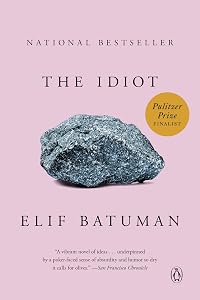
A New York Times Book Review Notable Book • Finalist for the Pulitzer Prize for Fiction • Longlisted for the Women's Prize for Fiction“Easily the funniest book I’ve read this year.” —GQ
“Masterly funny debut novel . . . Erudite but never pretentious, The Idiot will make you crave more books by Batuman.” —Sloane Crosley, Vanity Fair
A portrait of the artist as a young woman. A novel about not just discovering but inventing oneself.
The year is 1995, and email is show more new. Selin, the daughter of Turkish immigrants, arrives for her freshman year at Harvard. She signs up for classes in subjects she has never heard of, befriends her charismatic and worldly Serbian classmate, Svetlana, and, almost by accident, begins corresponding with Ivan, an older mathematics student from Hungary. Selin may have barely spoken to Ivan, but with each email they exchange, the act of writing seems to take on new and increasingly mysterious meanings.
At the end of the school year, Ivan goes to Budapest for the summer, and Selin heads to the Hungarian countryside, to teach English in a program run by one of Ivan's friends. On the way, she spends two weeks visiting Paris with Svetlana. Selin's summer in Europe does not resonate with anything she has previously heard about the typical experiences of American college students, or indeed of any other kinds of people. For Selin, this is a journey further inside herself: a coming to grips with the ineffable and exhilarating confusion of first love, and with the growing consciousness that she is doomed to become a writer.
With superlative emotional and intellectual sensitivity, mordant wit, and pitch-perfect style, Batuman dramatizes the uncertainty of life on the cusp of adulthood. Her prose is a rare and inimitable combination of tenderness and wisdom; its logic as natural and inscrutable as that of memory itself. The Idiot is a heroic yet self-effacing reckoning with the terror and joy of becoming a person in a world that is as intoxicating as it is disquieting. Batuman's fiction is unguarded against both life's affronts and its beauty—and has at its command the complete range of thinking and feeling which they entail.
Named one the best books of the year by Refinery29 • Mashable One • Elle Magazine • The New York Times • Bookpage • Vogue • NPR • Buzzfeed •The Millions. show less
Tags
Recommendations


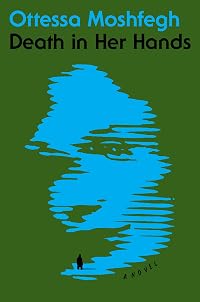
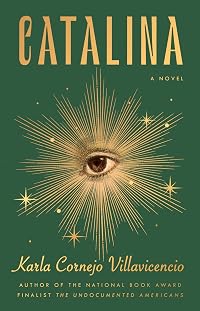
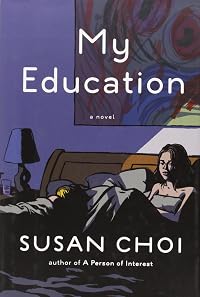
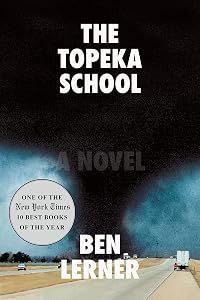


Member Recommendations

beyondthefourthwall Children-of-immigrants growing up in the United States and figuring out where they belong.
sparemethecensor Stream of consciousness semi autobiographical novels at Harvard
Member Reviews
I don't think there's any way for me to write a lengthy review of this book without digressing rapidly into navel-gazing introspection, so I'll keep it short.
The Idiot was wholly refreshing, not just for its rebellion against plot twists and romantic excitement, but for its honest-to-goodness, real-life, whole human female protagonist. Selin is not defined by the sum of her parts, her physical appearance, her life experiences, or anything else. Instead, she is defining the world and seeking understanding through passive and totally unconscious resistance. (I read one review in which the reader described the main character as devoid of personality and I felt personally attacked.) I LOVED this book unequivocally. I mean, I already want to show more read it again and I'm not the rereading type. show less
The Idiot was wholly refreshing, not just for its rebellion against plot twists and romantic excitement, but for its honest-to-goodness, real-life, whole human female protagonist. Selin is not defined by the sum of her parts, her physical appearance, her life experiences, or anything else. Instead, she is defining the world and seeking understanding through passive and totally unconscious resistance. (I read one review in which the reader described the main character as devoid of personality and I felt personally attacked.) I LOVED this book unequivocally. I mean, I already want to show more read it again and I'm not the rereading type. show less
Probably the best evocation I've read of what it's like to be entirely too smart for your own good, and so compulsively introspective that you're unable to get out of your own head long enough to get a grip on different points of view. In other words, college students at Harvard. Fun.
Selin is a Turkish-American in her first year at Harvard. She is privileged (though perhaps not as privileged as some of her peers), brilliant in her way (very much like most of her peers), curious, naive, and open to possibility. Her eclectic course selections, including math, philosophy of language, linguistics, and introductory Russian provide lots of opportunity for her to feel lost but also plenty of fodder for learning about life, or at least what passes for life at Harvard. The one subject for which she is least well equipped is, not surprisingly perhaps, herself. She will constantly be confounded, anxious, and emotionally in turmoil as she lives and learns and grows over the course of the following year.
Selin’s enthusiasm for show more life is infectious but can at times be tiring. Fortunately she is surrounded by equally quirky and compelling friends. There is Ivan, with whom she forms an oblique relationship. But most interesting to me was her friend Svetlana. She is irrepressible. And you can’t help feeling as you read that Selin would be much better suited directing her romantic energies towards Svetlana, whether reciprocated or not. By comparison, Ivan comes across as a bit creepy.
The writing here is episodic and lively, full of observation and humour. Despite the potential for catastrophe that Selin seems to court, she wanders through her own life and across half the globe in an almost charmed air. Which of course marks this as the romance that it is. And will keep you reading even if you don’t fully identify with any of the characters or their situations. You’ll want to keep on with Selin past the end of her first year at Harvard and will no doubt be delighted to learn that Batuman’s second novel picks up where this one leaves off. As I am.
Recommended. show less
Selin’s enthusiasm for show more life is infectious but can at times be tiring. Fortunately she is surrounded by equally quirky and compelling friends. There is Ivan, with whom she forms an oblique relationship. But most interesting to me was her friend Svetlana. She is irrepressible. And you can’t help feeling as you read that Selin would be much better suited directing her romantic energies towards Svetlana, whether reciprocated or not. By comparison, Ivan comes across as a bit creepy.
The writing here is episodic and lively, full of observation and humour. Despite the potential for catastrophe that Selin seems to court, she wanders through her own life and across half the globe in an almost charmed air. Which of course marks this as the romance that it is. And will keep you reading even if you don’t fully identify with any of the characters or their situations. You’ll want to keep on with Selin past the end of her first year at Harvard and will no doubt be delighted to learn that Batuman’s second novel picks up where this one leaves off. As I am.
Recommended. show less
A book that meanders. The writing is precise, which makes the lack of obvious message feel intentional if the reader doesn't mind wandering. Consistent focus lands only on different ways of communication and connection: language structure vs constructs of understanding, roommates vs friendships, epistolary (email) vs conversation. Can the way someone communicates change the way they see the world? Do relationships only thrive in one environment and not the next? Does the way one presents herself to the world determine what paths she is offered? We, as readers, expect books to give us some answers - a conclusion with a veritable message about the world - this book does not. Instead, I wonder if Batuman's point is simply to live and show more experience life. The main character, a writer, muses that perhaps writing "wasn't just to record something past, but to prolong the present... to stretch out time until the next thing happened." What's next isn't important; how we interpret and spend the present is key. show less
Üzerine yazmak istediğim atmosfer, birkaç yıl önce annemle gittiğimiz Meksika seyahatinde ortaya çıkmıştı. Bizi havaalanına götürmek için kiralanmış olan otobüsle ilgili bir karışıklık olmuştu ve otobüs bizi tuhaf bir otelin pembe karolu avlusuna bırakmıştı. Hoparlörlerden Albinoni’nin Adagio’su duyuluyor ve üzerimize bir şeyler yağıyordu, havaya baktığımızda kül olduğunu anlamıştık. Elif Batuman’ın Budala’sı ergenlik ile yetişkinlik, aşk ile cinsellik ve konuşmak ile yazmak arasında duran bir güneş saati adeta; gölgenin ne yana düşeceği ise muazzam bir muamma. Harvard’daki ilk senesinde genç bir kadın, adı Selin, aylak aylak dolaşıyor kampüste. İlk kez gördüğü show more e-posta, içemediği birkaç şişe bira, klasik edebiyatıyla Rusça, arkadaşları Ivan ve Svetlana… Nasıl duruyor hepsi bir arada? Selin binbir kültür arasında dolaşıp farklılıkları ve aynılıkları, saçmalıkları ve akla yatkınlıkları anlatıyor. İmgelerle dolu masalsı diliyle, derin bir duygusallıkla, entelektüel mizahıyla… Anı ile kurmacanın arasına gerilmiş ince bir ip Budala ve Elif Batuman bu ipin üzerinde ustalıkla yürüyor. show less
i wish this book didn’t make me feel so naked and seen, but that is why i hated/loved it, devoured it. i haven’t read a book like this in a long time.
i love the long discussions on language, linguistics, and all that is lost in translation. they might not be for everyone, but they’re exactly my thing. i love the settings—first on a university campus, and then hitchhiking across europe and tiny hungarian villages. i love the humour; it’s done well, and there are plenty of laugh-out-loud moments in here.
as for the characters: i started off hating ivan—like demi lovato in that meme going “get a job! get away from her!”—and despising selin for being such a pushover (i fancied i’d have pushed him off the plane or show more something, if i were in her place). but honestly, selin had her fair share of autonomy. i get her. ivan was an asshole but so what? assholes can be attractive (understatement), and can have their sincere moments. and sometimes you can want to be a pushover for some asshole from the other side of the world, and there’s your female autonomy, i guess.
i was unable to put this book down for long enough to grab a pencil and underline bits that stood out to me, or to write notes to myself, so i have no point of reference right now for choice excerpts to include in this review, but: read this book. thank me later.
p.s. looking forward to reading the sequel! show less
i love the long discussions on language, linguistics, and all that is lost in translation. they might not be for everyone, but they’re exactly my thing. i love the settings—first on a university campus, and then hitchhiking across europe and tiny hungarian villages. i love the humour; it’s done well, and there are plenty of laugh-out-loud moments in here.
as for the characters: i started off hating ivan—like demi lovato in that meme going “get a job! get away from her!”—and despising selin for being such a pushover (i fancied i’d have pushed him off the plane or show more something, if i were in her place). but honestly, selin had her fair share of autonomy. i get her. ivan was an asshole but so what? assholes can be attractive (understatement), and can have their sincere moments. and sometimes you can want to be a pushover for some asshole from the other side of the world, and there’s your female autonomy, i guess.
i was unable to put this book down for long enough to grab a pencil and underline bits that stood out to me, or to write notes to myself, so i have no point of reference right now for choice excerpts to include in this review, but: read this book. thank me later.
p.s. looking forward to reading the sequel! show less
It's 1995, Selin is a freshman at Harvard and she's chosen an odd mix of classes for herself as she explores how languages work, interact with each other and influence how their speakers think. She has roommates, which is an adjustment, and she meets two people in a beginning Russian class; the enigmatic Hungarian math major, Ivan, and a charismatic Serbian girl named Svetlana. Svetlana forces Selin out into the world of Harvard as she lives her life more colorfully than the careful scholars around her. Selin and Ivan begin a charged email correspondence but Selin is unsure about where their relationship is going, or even if they have a relationship. In the second part of the novel, Selin travels, first to Paris with Svetlana, then to show more Hungary, where she has signed up to teach English in a rural village at the suggestion of Ivan, and then to visit family in Turkey.
This novel hit my reading sweet spot. I do love a well-told story about a person discovering themselves and the wider world when they go off to university. And Selin is an intelligent, curious person to follow as she explores both her new environment and her intellectual world. She is simultaneously cautious and prone to rushing headlong into new situations. She refuses to cede her agency, even when she has no idea what she should do. And the language stuff is fascinating. Selin's an observer and she notices how different languages approach the same object or concept, and how words travel across languages.
All of The Idiot was brilliant fun. There were some small bumps in the pacing, but the novel soared as Selin set off on her summer travels. She's a fish out of water, but an intelligent fish who is willing to see what life on land is like. Elif Batuman is a fierce, intelligent writer. I suspect that readers who don't have an interest in language might be less delighted than I was by this wonderful book. show less
This novel hit my reading sweet spot. I do love a well-told story about a person discovering themselves and the wider world when they go off to university. And Selin is an intelligent, curious person to follow as she explores both her new environment and her intellectual world. She is simultaneously cautious and prone to rushing headlong into new situations. She refuses to cede her agency, even when she has no idea what she should do. And the language stuff is fascinating. Selin's an observer and she notices how different languages approach the same object or concept, and how words travel across languages.
All of The Idiot was brilliant fun. There were some small bumps in the pacing, but the novel soared as Selin set off on her summer travels. She's a fish out of water, but an intelligent fish who is willing to see what life on land is like. Elif Batuman is a fierce, intelligent writer. I suspect that readers who don't have an interest in language might be less delighted than I was by this wonderful book. show less
Members
- Recently Added By
Published Reviews
ThingScore 31
The sermonic version of The Idiot might conclude with this: if power compromises love, and sex involves power, then sex always compromises love. To be intoxicated by someone’s power is to allow your love for them to be compromised. True love will not save you: the truer the love the deeper the compromise.
I don’t think Selin sees a way out of this predicament.
I don’t think Selin sees a way out of this predicament.
added by elenchus
In one respect, The Idiot, a debut novel by Elif Batuman, staff writer at the New Yorker, is an expansion of the Hungary-based segment of her nonfiction The Possessed: Adventures with Russian Books and the People Who Read Them. Ironically, however, it strikes you as throwaway material that didn’t merit inclusion in that well-received work. It’s mostly bland and boring. At over 400 pages, show more it also feels interminable...Ultimately, you cannot but wonder why Batuman wrote such a meandering and listless novel. Because it reflects her real-life experiences? If so, the author would do well to emulate a minor character in The Idiot, who, unlike Selin and a friend of hers, “doesn’t compulsively rehash everything that happens to her in the form of a story. show less
added by vancouverdeb
Elif Batuman’s first novel, “The Idiot,” is in part about the unlikely and consuming crush that Selin, the daughter of Turkish immigrants, develops on an older mathematics student from Hungary during her freshman year at Harvard.
It is unclear, for hundreds of pages, whether this crush is requited. Meanwhile the reader, palm crushed into forehead, thinks, “Poor Selin, what are you doing show more to yourself?”..Small pleasures will have to sustain you over the long haul of this novel. “The Idiot” builds little narrative or emotional force. It is like a beautiful neon sign made without a plug. No glow is cast... After 100 pages, I was done with Ivan and wanted Selin to be done, too....There are two things I admire about this novel. One is the touching sense, here as in everything Batuman writes, that books are life. Selin is, convincingly and only slightly pretentiously, the sort of person who buys an overcoat because it reminds her of Gogol’s...this wry but distant novel, never becomes an enveloping one. Fiction, like love, is strange. show less
It is unclear, for hundreds of pages, whether this crush is requited. Meanwhile the reader, palm crushed into forehead, thinks, “Poor Selin, what are you doing show more to yourself?”..Small pleasures will have to sustain you over the long haul of this novel. “The Idiot” builds little narrative or emotional force. It is like a beautiful neon sign made without a plug. No glow is cast... After 100 pages, I was done with Ivan and wanted Selin to be done, too....There are two things I admire about this novel. One is the touching sense, here as in everything Batuman writes, that books are life. Selin is, convincingly and only slightly pretentiously, the sort of person who buys an overcoat because it reminds her of Gogol’s...this wry but distant novel, never becomes an enveloping one. Fiction, like love, is strange. show less
added by vancouverdeb
Lists

2018 Women's Prize for Fiction Longlist
16 works; 11 members

2018 Tournament of Books
18 works; 12 members

Baileys Women's Prize for Fiction Winners and Shortlisted Books
61 works; 11 members

Novels featuring language professionals
98 works; 12 members

Pulitzer Prize for Fiction - Finalists
88 works; 9 members

Global Reads: Books Set in Eastern Europe
45 works; 10 members

Top Five Books of 2018
802 works; 264 members
Top Five Books of 2017
757 works; 231 members

Kirkus Starred Fiction Reviews of Books Published in 2017
412 works; 7 members

Books Read in 2017
4,249 works; 129 members

Academia in Fiction
158 works; 23 members

Books Read in 2020
4,379 works; 124 members

2025
42 works; 1 member

BBC World Book Club
265 works; 5 members

Reading Glasses Podcast
410 works; 3 members

LitHub's Best Novels of the Decade 2010-2019
39 works; 1 member

Top Five Books of 2023
767 works; 317 members

Books Read in 2018
4,360 works; 110 members
sad girl books
51 works; 3 members

Phoebe Bridgers
29 works; 1 member

sad girl books
41 works; 2 members

Caroline Calloway Reading Challenge (Adapted from Reddit)
27 works; 1 member

Books Read in 2021
5,361 works; 114 members

To Read
617 works; 7 members
el
1,139 works; 1 member
Author Information

7+ Works 4,333 Members
Some Editions
Awards and Honors
Awards
Distinctions
Notable Lists
Series

Common Knowledge
- Canonical title
- The Idiot
- Original title
- The Idiot
- Original publication date
- 2017-03-14
- People/Characters
- Selin Karadag; Ivan Varga; Svetlana; Ralph
- Important places
- Harvard University, Cambridge, Massachusetts, USA; Budapest, Hungary; Turkey
- Epigraph
- But the characteristic feature of the ridiculous age I was going through---awkward indeed but by no means infertile---is that we do not consult our intelligence and that the most trivial attributes of other people seem to us ... (show all)to form an inseparable part of their personality. In a world thronged with monsters and with gods, we know little peace of mind. There is hardly a single action we perform in that phase which we would not give anything, in later life, to be able to annul. Whereas what we ought to regret is that we no longer possess the spontaneity which made us perform them. In later life we look at things in a more practical way, in full conformity with the rest of society, but adolescence is the only period in which we learn anything.
Marcel Proust, In Search of Lost Time, Volume II: Within a Budding Grave - First words
- I didn't know what email was until I got to college.
- Last words
- (Click to show. Warning: May contain spoilers.)I hadn't learned anything at all.
- Blurbers
- July, Miranda; Heti, Sheila; O'Neill, Joseph; Karr, Mary
Classifications
Statistics
- Members
- 2,394
- Popularity
- 8,228
- Reviews
- 85
- Rating
- (3.66)
- Languages
- 13 — Danish, Dutch, English, French, German, Hungarian, Italian, Korean, Romanian, Spanish, Swedish, Turkish, Portuguese (Portugal)
- Media
- Paper, Audiobook, Ebook
- ISBNs
- 29
- UPCs
- 1
- ASINs
- 7