On This Page
Description
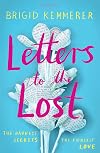
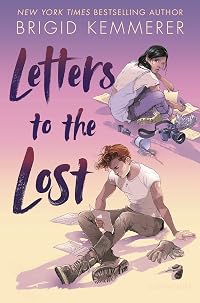
"Juliet Young has always written letters to her mother, a world famous photojournalist--even after her mother's death, she leaves letters at her grave. When Declan finds a haunting letter left beside a grave, he can't resist the urge to write back. Soon, he is sharing his pain with a perfect stranger. When real life interferes with their secret life of letters, Juliet and Declan discover truths that might tear them apart"--Tags
Recommendations







Member Recommendations
Member Reviews
I was looking through a list that I’d made on Libby for a book that might hold my attention. Way way down in the list was this one. It was available and I finished it within a few hours.
This is about an anonymous correspondence between two grieving teenagers. Juliet leaves letters on her mother’s grave, not expecting anyone to actually read them. Declan, who does grounds maintenance at the cemetery as his court-mandated community service, adds a comment of his own to one of Juliet’s letters, not expecting anyone to read it.
This is shades of You’ve Got Mail, which is one of my favourite films. Juliet and Declan both attend the same high school and keep crossing paths in person, and I briefly wondered if it was going to become show more frustrating, or even unbelievable, that they don’t draw the dots. However, I actually really liked how the story handled it – in context, their reactions to their suspicions and revelations were understandable. Possibly even more so than You’ve Got Mail, given the protagonists’ youth and everything else’ they’re dealing with – Juliet is still very much in the throes of grief, and while Declan’s had more time to process his own loss, his father is in prison, he has an antagonistic relationship with his new step-dad and he’s struggling with feelings of guilt about, well, some traumatic things that have happened.
Declan and Rev’s very close, very supportive friendship is one of the most interesting relationships in this book – Kemmerer definitely has a knack for writing relationships that I feel very invested in – so I liked getting to see more of their interactions, and I liked how the sequel provides some insight into how things are progressing for Declan (albeit just from Rev’s perspective). There’s also small glimpses of Juliet too.
Reading this book set me to thinking about the appeal that contemporary young adult fiction still has for me, despite the ever increasing years since I was a teenager in high school. Part of it is that it’s an inherently hopeful genre – protagonists’ circumstances are often guaranteed to change, and moreover, change in ways that grant them greater autonomy and independence, because that’s what happens when one grows up.
Part of it is that there are often lots of big emotions in YA. And contemporary YA can focus quickly in on the emotional heart of the story because it doesn’t have to use a lot of words to establish worldbuilding – it can assume that the readers are familiar with the concept of high school and go from there. Sometimes I like worldbuilding, obviously, but sometimes I don’t have the headspace for it. show less
This is about an anonymous correspondence between two grieving teenagers. Juliet leaves letters on her mother’s grave, not expecting anyone to actually read them. Declan, who does grounds maintenance at the cemetery as his court-mandated community service, adds a comment of his own to one of Juliet’s letters, not expecting anyone to read it.
This is shades of You’ve Got Mail, which is one of my favourite films. Juliet and Declan both attend the same high school and keep crossing paths in person, and I briefly wondered if it was going to become show more frustrating, or even unbelievable, that they don’t draw the dots. However, I actually really liked how the story handled it – in context, their reactions to their suspicions and revelations were understandable. Possibly even more so than You’ve Got Mail, given the protagonists’ youth and everything else’ they’re dealing with – Juliet is still very much in the throes of grief, and while Declan’s had more time to process his own loss, his father is in prison, he has an antagonistic relationship with his new step-dad and he’s struggling with feelings of guilt about, well, some traumatic things that have happened.
I’d say you’re kind of dark, but I’m writing to a girl who leaves letters in a cemetery, so I guess that’s a given.This was a perfect cure for a reading slump. I had no trouble focusing on the story and, as I said, I finished this in a few hours. The ending felt a bit too abrupt and that might have been unsatisfying except that I realised that there’s a sequel about Declan’s best friend, so I dived into that pretty much straightaway.
You said you were wondering if my pain was anything like yours.
I don’t know. I don’t know how to answer that.
You lost your mother. I haven’t lost mine.
Don’t you think it’s funny how people say “lost” as if they were just misplaced. But maybe it’s a different meaning of “lost”, in that you don’t know where they went. My best friend believes in God and heaven and eternal life, but I’m not sure how I feel about all that [...] My best friend would die if he knew I was talking to you about this, because this is the kind of thing I won’t discuss with him.
Declan and Rev’s very close, very supportive friendship is one of the most interesting relationships in this book – Kemmerer definitely has a knack for writing relationships that I feel very invested in – so I liked getting to see more of their interactions, and I liked how the sequel provides some insight into how things are progressing for Declan (albeit just from Rev’s perspective). There’s also small glimpses of Juliet too.
Reading this book set me to thinking about the appeal that contemporary young adult fiction still has for me, despite the ever increasing years since I was a teenager in high school. Part of it is that it’s an inherently hopeful genre – protagonists’ circumstances are often guaranteed to change, and moreover, change in ways that grant them greater autonomy and independence, because that’s what happens when one grows up.
Part of it is that there are often lots of big emotions in YA. And contemporary YA can focus quickly in on the emotional heart of the story because it doesn’t have to use a lot of words to establish worldbuilding – it can assume that the readers are familiar with the concept of high school and go from there. Sometimes I like worldbuilding, obviously, but sometimes I don’t have the headspace for it. show less
As usual, Brigid Kemmerer pulls you in with her dark, touching writing. Juliet has just lost her mother. She’s writing letters to her at her grave when someone begins writing back. Enter Declan, the school outcast, who doesn’t fit in at home or at school. These two hate each other in real life, but connect through their personal tragedies. And slowly, begin to hate each other a little less. But as the letters/emails go on and on and each doesn’t know who the other is, how does this end? As a warning, this is a dark, dark book without many rainbows. Both characters are dealing with a heavy burden of grief, and there’s no easy way to wade through it except forward. It is however, beautifully done. As we near the end and plot show more twists are revealed, this had me on the edge of my seat.
Trigger Warnings: drunk driving, grief, neglect, death of parent, infidelity
Please excuse typos/name misspellings. Entered on screen reader. show less
Trigger Warnings:
Please excuse typos/name misspellings. Entered on screen reader. show less
Juliet's mother recently died in a car accident and she's having trouble moving on. She's been writing letters to her everyday, leaving them in the cemetery at her gravestone. One day, someone writes back, stoking her ire for having invaded her privacy and prompting her to write back to let them know just how much she doesn't appreciate it. Declan got drunk and plowed his dad's truck into the side of a building a month ago. His punishment is cleaning up the cemetery twice a week. He reads a letter left on one of the gravestones and is moved to reply. Soon, the two of them have an ongoing anonymous conversation where they both feel comfortable opening up in a way they never have before through the safety of anonymity.
This book is about show more the struggle in moving past grief, about the ways that the labels other people force on us limit our choices, and about the powerful catharsis that comes from being completely honest with another person. Juliet's grief is raw and unattractive to everyone who just wants her to move on and act normally. She spends too much time in the cemetery, the letters she writes to her mother are weird and unhealthy. She just needs to get over it already. But grief isn't pretty and everyone heals in their own way. Juliet has her own reasons for wanting to write to her mother postmortem and it's not until she gets another avenue of expression in her letters to Declan that her need to write her mother lessens. But that first step of writing to her mother was necessary to get to that second step of writing to Declan. Sometimes you need that illogical response to move towards something better for you. Opening up completely was so healing for Juliet and Declan both. Having the opportunity to actually tell their own story, in their own way, without the cloud of prejudices and assumptions between them helped them both so much. Everyone needs a space like that to be honest without judgment.
And speaking of prejudice, I LOVED the way that assumptions and labels were used and pushed back against throughout the book. Declan has a reputation, one that he hasn't necessarily earned, that he has to deal with during every interaction. While he certainly doesn't have the most engaging manner, he nonetheless doesn't deserve all the negative rumors that circle about him. Honestly, the way everyone talks about him, the way Alan especially talks about him, had me reading Declan as black or Latino. The instant suspicion of him, the over-inflated sense of his "criminality" scans better with the way that boys of color routinely get treated, rather than the way white boys get treated. And this is especially true given that he's more victim than perpetrator in a lot of situations, from something as small as Juliet running into him in the hallway to the way his parents abused his trust vis a vis the driving situation. I loved that both Juliet and Mr. Melendez immediately let him know that what he was asked to do was wrong. He was a kid, he shouldn't have been responsible for covering up his father's drinking. His mother should have been the one responsible, not him. Even better was when Alan told him so as well. That conversation between Declan and Alan was so powerful and so important to his growth. I definitely teared up reading it because that is exactly what Declan needed. But it's also a conversation that couldn't have happened without all the previous conversations that helped Declan be more willing to try with his mom and Alan. Both Declan and Alan needed a new impetus to restart their relationship and try to get along better. show less
This book is about show more the struggle in moving past grief, about the ways that the labels other people force on us limit our choices, and about the powerful catharsis that comes from being completely honest with another person. Juliet's grief is raw and unattractive to everyone who just wants her to move on and act normally. She spends too much time in the cemetery, the letters she writes to her mother are weird and unhealthy. She just needs to get over it already. But grief isn't pretty and everyone heals in their own way. Juliet has her own reasons for wanting to write to her mother postmortem and it's not until she gets another avenue of expression in her letters to Declan that her need to write her mother lessens. But that first step of writing to her mother was necessary to get to that second step of writing to Declan. Sometimes you need that illogical response to move towards something better for you. Opening up completely was so healing for Juliet and Declan both. Having the opportunity to actually tell their own story, in their own way, without the cloud of prejudices and assumptions between them helped them both so much. Everyone needs a space like that to be honest without judgment.
And speaking of prejudice, I LOVED the way that assumptions and labels were used and pushed back against throughout the book. Declan has a reputation, one that he hasn't necessarily earned, that he has to deal with during every interaction. While he certainly doesn't have the most engaging manner, he nonetheless doesn't deserve all the negative rumors that circle about him. Honestly, the way everyone talks about him, the way Alan especially talks about him, had me reading Declan as black or Latino. The instant suspicion of him, the over-inflated sense of his "criminality" scans better with the way that boys of color routinely get treated, rather than the way white boys get treated. And this is especially true given that he's more victim than perpetrator in a lot of situations, from something as small as Juliet running into him in the hallway to the way his parents abused his trust vis a vis the driving situation. I loved that both Juliet and Mr. Melendez immediately let him know that what he was asked to do was wrong. He was a kid, he shouldn't have been responsible for covering up his father's drinking. His mother should have been the one responsible, not him. Even better was when Alan told him so as well. That conversation between Declan and Alan was so powerful and so important to his growth. I definitely teared up reading it because that is exactly what Declan needed. But it's also a conversation that couldn't have happened without all the previous conversations that helped Declan be more willing to try with his mom and Alan. Both Declan and Alan needed a new impetus to restart their relationship and try to get along better. show less
THAT’S IT??
THAT’S ALL I GET? WHY CAN’T I HAVE ANOTHER CHAPTER? ANOTHER PAGE? ANOTHER SENTENCE?
Wow, that was so good. I mean, I remember people saying it was, but I wasn’t expecting THAT.
This was the best romance I’ve read in a long time. I don’t usually like romances in Y/A but this one was SO CUTE!
Also, Rev, Rowan, and Frank were AWESOME. But I think Declan was my favorite character overall. By far.
I think the balance between the heavy stuff and the romance and the comic-relief was PERFECT.
I’m definitely, without-a-doubt gonna read more of Brigid Kemmerer’s works. Her characters are really good too: I love ‘em! I wanna know what happens after regarding Juliet and Declan. I know she has a novel that focuses on show more Rev...maybe I’ll read that.
I guess the biggest problem I have with this book is that I don’t know what the heck to read now. (I know that’s cheesy to say but it’s true.)
5 stars. You blew me away, Kemmerer. Let’s see if you can do it again. show less
THAT’S ALL I GET? WHY CAN’T I HAVE ANOTHER CHAPTER? ANOTHER PAGE? ANOTHER SENTENCE?
Wow, that was so good. I mean, I remember people saying it was, but I wasn’t expecting THAT.
This was the best romance I’ve read in a long time. I don’t usually like romances in Y/A but this one was SO CUTE!
Also, Rev, Rowan, and Frank were AWESOME. But I think Declan was my favorite character overall. By far.
I think the balance between the heavy stuff and the romance and the comic-relief was PERFECT.
I’m definitely, without-a-doubt gonna read more of Brigid Kemmerer’s works. Her characters are really good too: I love ‘em! I wanna know what happens after regarding Juliet and Declan. I know she has a novel that focuses on show more Rev...maybe I’ll read that.
I guess the biggest problem I have with this book is that I don’t know what the heck to read now. (I know that’s cheesy to say but it’s true.)
5 stars. You blew me away, Kemmerer. Let’s see if you can do it again. show less
I didn't want to love this book because ROMANCE, but it was really really good. My robot-heart felt feelings. So many feelings.
I don't want to be misleading, this was a story about grief more than it was about falling in love, but the love was definitely there. Things worked out a little too perfectly for me to call this a forever favorite, but I am SO excited to read MORE THAN WE CAN TELL now!!
I'm not going to lie, I didn't really want to like this book. I know that sounds weird, but romance is such a hard genre for me to get down with. And also, the misunderstood bad boy trope really doesn't gel with me. But try as I might, I couldn't NOT like this book. It's so well-written and the characters are so real-- it was impossible for me to show more keep it at arm's length like I expected to.
This was sort of a sadder version of You've Got Mail. Juliet and Declan communicate anonymously and fall in love along the way. But this book is more about grief and family than it is about love. Both Declan and Juliet are struggling emotionally and when they find each other, it's like a lifeline. It gave each of them someone to talk to anonymously, which gave them a level of safety in opening-up.
One thing I really can't stand in books is the idea that falling for a guy or a girl is going to fix you. I was concerned that this is where the book was headed, but thankfully it wasn't like that at all. It was more having someone to confide in helped them move through their grief process, and neither one was completely healed by any means.
The only thing that felt off to me was the final conclusion with the families. Both Juliet and Declan had major issues with their parents, and I felt like it all wrapped up a little too happily to feel realistic.
A major highlight in this book was Declan's bestie, Rev, and his adoptive family. I loved their friendship dynamic and how much of a role Rev played in Juliet's development as well. I'm now super excited to read MORE THAN WE CAN TELL because it's Rev's story!!
OVERALL: I went into it thinking it was a romance, and I came out of it seeing that it was so much more. I love a good You've Got Mail story, and this may be the best one I've read so far!! I so highly recommend this book whether you read Contemporary or not. The writing, the characters, and the flow of the story all add up to something that will appeal to most readers.
My Blog:
Pink Polka Dot Books
show less
I don't want to be misleading, this was a story about grief more than it was about falling in love, but the love was definitely there. Things worked out a little too perfectly for me to call this a forever favorite, but I am SO excited to read MORE THAN WE CAN TELL now!!
I'm not going to lie, I didn't really want to like this book. I know that sounds weird, but romance is such a hard genre for me to get down with. And also, the misunderstood bad boy trope really doesn't gel with me. But try as I might, I couldn't NOT like this book. It's so well-written and the characters are so real-- it was impossible for me to show more keep it at arm's length like I expected to.
This was sort of a sadder version of You've Got Mail. Juliet and Declan communicate anonymously and fall in love along the way. But this book is more about grief and family than it is about love. Both Declan and Juliet are struggling emotionally and when they find each other, it's like a lifeline. It gave each of them someone to talk to anonymously, which gave them a level of safety in opening-up.
One thing I really can't stand in books is the idea that falling for a guy or a girl is going to fix you. I was concerned that this is where the book was headed, but thankfully it wasn't like that at all. It was more having someone to confide in helped them move through their grief process, and neither one was completely healed by any means.
The only thing that felt off to me was the final conclusion with the families. Both Juliet and Declan had major issues with their parents, and I felt like it all wrapped up a little too happily to feel realistic.
A major highlight in this book was Declan's bestie, Rev, and his adoptive family. I loved their friendship dynamic and how much of a role Rev played in Juliet's development as well. I'm now super excited to read MORE THAN WE CAN TELL because it's Rev's story!!
OVERALL: I went into it thinking it was a romance, and I came out of it seeing that it was so much more. I love a good You've Got Mail story, and this may be the best one I've read so far!! I so highly recommend this book whether you read Contemporary or not. The writing, the characters, and the flow of the story all add up to something that will appeal to most readers.
My Blog:
Pink Polka Dot Books
show less
There’s not a joy the world can give like that it takes away, when the glow of early thought declines in feeling’s dull decay.
It was heartbreaking. There were some parts which brought tears of joy and others of sadness. I loved how the author kept proving that the characters are not what they seem to be at first, be it 'Melonhead' or Declan's parents. The storyline was impeccable and even paced. It was gripping and intense in emotions.
All I can say is that I am glad I read this book..
It was heartbreaking. There were some parts which brought tears of joy and others of sadness. I loved how the author kept proving that the characters are not what they seem to be at first, be it 'Melonhead' or Declan's parents. The storyline was impeccable and even paced. It was gripping and intense in emotions.
All I can say is that I am glad I read this book..
This novel is on the 2019 Lone Star list; it is realistic fiction.
Declan finds a letter at the cemetery about a girl with blood everywhere:
“At first you see the horror because it’s so perfectly etched in the girl’s expression.
Then you see the blood. The flowers. The gun. The boots.
Some of your photographs are equally gripping. I should probably be thinking of your work. It seems wrong to be leaning against your headstone and thinking about someone else’s talent.
I can’t help it.
You can see it on her face. Her reality if being ripped away, and she knows it.
There is agony in that picture.
Every time I look at it, I think, “I know exactly how she feels.”
Declan responds on the paper with “Me too.” This begins a show more writing dialogue between Declan and Juliet.
This is a novel where information is revealed over time. It’s not something I can write much about because you’ll miss out on the discovery of each person’s truths. Juliet is lonely because her mom is gone. Her father isn’t coping well either so she feels alone. She’s given up photography because she can no longer hold a camera--it’s too painful. Her mother was a famous news photographer who traveled the world going to hotspots to show people what is happening around the globe. Juliet knows that people expect her to “get over it,” but she can’t get past the trauma.
Declan is doing community service--you’ll learn why as the book progresses. Because he doesn’t really know how to talk without “barking,” people think he’s a difficult kid and don’t give him any chances. No one listens to him. His responses to the letter writer give him a chance to tell his truth--to be heard. They don’t know who the other person is, but they do wonder if they know each other from school. Because each person feels a connection, they are afraid to learn each other’s identity because it might spoil this feeling of connection that they don’t have anywhere else.
I loved this book. I read it straight through and found the pacing and writing believable, moving, and honest. It’s a great selection for Lone Star. show less
Declan finds a letter at the cemetery about a girl with blood everywhere:
“At first you see the horror because it’s so perfectly etched in the girl’s expression.
Then you see the blood. The flowers. The gun. The boots.
Some of your photographs are equally gripping. I should probably be thinking of your work. It seems wrong to be leaning against your headstone and thinking about someone else’s talent.
I can’t help it.
You can see it on her face. Her reality if being ripped away, and she knows it.
There is agony in that picture.
Every time I look at it, I think, “I know exactly how she feels.”
Declan responds on the paper with “Me too.” This begins a show more writing dialogue between Declan and Juliet.
This is a novel where information is revealed over time. It’s not something I can write much about because you’ll miss out on the discovery of each person’s truths. Juliet is lonely because her mom is gone. Her father isn’t coping well either so she feels alone. She’s given up photography because she can no longer hold a camera--it’s too painful. Her mother was a famous news photographer who traveled the world going to hotspots to show people what is happening around the globe. Juliet knows that people expect her to “get over it,” but she can’t get past the trauma.
Declan is doing community service--you’ll learn why as the book progresses. Because he doesn’t really know how to talk without “barking,” people think he’s a difficult kid and don’t give him any chances. No one listens to him. His responses to the letter writer give him a chance to tell his truth--to be heard. They don’t know who the other person is, but they do wonder if they know each other from school. Because each person feels a connection, they are afraid to learn each other’s identity because it might spoil this feeling of connection that they don’t have anywhere else.
I loved this book. I read it straight through and found the pacing and writing believable, moving, and honest. It’s a great selection for Lone Star. show less
Members
- Recently Added By
Lists

FAB 2020
15 works; 1 member

Top Five Books of 2018
802 works; 265 members

Books Read in 2020
4,379 works; 124 members

READ IN 2020
172 works; 1 member
Author Information

27 Works 14,808 Members
Awards and Honors
Awards
Distinctions
Notable Lists
Series

Common Knowledge
- Canonical title
- Letters to the Lost
- Original publication date
- 2017-04-04
Classifications
Statistics
- Members
- 731
- Popularity
- 38,759
- Reviews
- 30
- Rating
- (4.22)
- Languages
- 7 — Dutch, English, French, German, Japanese, Portuguese (Portugal), Spanish
- Media
- Paper, Audiobook, Ebook
- ISBNs
- 21
- ASINs
- 6