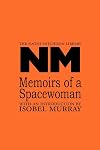
Memoirs of a spacewoman
by Naomi Mitchison
On This Page
Description
Naomi Mitchison, daughter of a distinguished scientist, sister of geneticist J B S Haldane, was always interested in the sciences, especially genetics. Her novels did not tend to demonstrate this, and she did not publish a Science Fiction novel until almost forty years into her fiction-writing career. Isobel Murray's Introduction here argues that it is by no means 'pure' Science Fiction: the success of the novel depends not only on the extraordinarily variety of life forms its heroine show more encounters and attempts to communicate with on different worlds: she is also a very credible human, or Terran, with recognisibly human emotions and a dramatic emotional life. This novel works effectively for readers who usually eschew the genre and prefer more traditional narratives. Explorers like Mary are an elite class who consider curiosity to be Terrans' supreme gift, and in the novel she more than once takes risks that may destroy her life. Her voice, as she records her adventures and experiments, is individual, attractive and memorable. Isobel Murray is Emeritus Professor of Modern Scottish Literature at the University of Aberdeen. show lessTags
Recommendations





















Member Recommendations

Member Reviews
I won't say this book is totally crisp and new (it was after all written in 1962). That said, I love it for its unabashed feminist nature and its attempt to be open-minded and not racist, even though there is this one super-awkward moment near the beginning where the narrator (white, I think), is kind of fetishizing a black colleague and his hair :/. I mean, these women of the future choose when and when not to have babies and with whom, no bones about it. Committed relationships are not normal, although certainly people choose to have them.
The best part of this book is that it is a classic anthro-sci-fi memoir, and I found myself quite fascinated by Mitchinson's nuanced discussion of the interactions between observer and observed, show more colonists and colonized. Do you like Ursula le Guin, Eleanor Arnason, Kate Elliott? Read this one. show less
The best part of this book is that it is a classic anthro-sci-fi memoir, and I found myself quite fascinated by Mitchinson's nuanced discussion of the interactions between observer and observed, show more colonists and colonized. Do you like Ursula le Guin, Eleanor Arnason, Kate Elliott? Read this one. show less
Naomi Mitchison read "Voyage of the Space Beagle" and recognised that book's fundamental flaw: nothing but conflict. "Memoirs..." is her reply, and her Spacewoman a professional communicator. This is one of my all time favourites, and the more I like something, the harder it is for me to talk about it. If I had a million dollars, the house I'd buy would be that of a publisher so I could keep this book in print.
What an imagination! No wrinkled-forehead aliens here - even the humans are quite a bit different, in many ways, than us. I especially enjoyed the idea of time-blackout, which prevents the characters from feeling committed to long-lasting relationships. And the semi-sentient lab animals, who cooperated with the experiments because the scientists were able to communicate with them, were beguiling.
Labeling this book a 'feminist landmark' is accurate, but puts a stigma on it that some people will be turned off by. It's actually quite entertaining, and def. not anti-male.
My slim mm pb is avl. gratis to any US member. It's almost falling apart, so I can't bookcross it to wild release. Just send me a PM.
Labeling this book a 'feminist landmark' is accurate, but puts a stigma on it that some people will be turned off by. It's actually quite entertaining, and def. not anti-male.
My slim mm pb is avl. gratis to any US member. It's almost falling apart, so I can't bookcross it to wild release. Just send me a PM.
(...)
The fact that part of this book is satire seems hardly noticed by reviewers. Maybe my reading was influenced the review of Sirius on Gaping Blackbird. That review highlighted the comic significance of a scene I didn’t perceive as comedy at all, so that may have sharpened my senses a bit. Still, this next quote more or less puts all the deep thoughts about empathic communication in a different light.
We used to take our rations and eat them where the creatures could observe us. This roused their sympathy, though they wanted to see the results of the digestive process. I believe Françoise obliged, but they found the result aesthetically disappointing, and tried to express to her their pity and even some thoughts on how a better show more results could be achieved. This was a first important point of higher communication between our groups.
For those who missed it: they are talking about the aesthetics of shit, as the alien creatures’ main occupation is shitting in patterns. The book is worth the price of acquisition for this passage alone, and with it Mitchison brilliantly subverts her own set up.
(...)
Please read the full review on Weighing A Pig show less
The fact that part of this book is satire seems hardly noticed by reviewers. Maybe my reading was influenced the review of Sirius on Gaping Blackbird. That review highlighted the comic significance of a scene I didn’t perceive as comedy at all, so that may have sharpened my senses a bit. Still, this next quote more or less puts all the deep thoughts about empathic communication in a different light.
We used to take our rations and eat them where the creatures could observe us. This roused their sympathy, though they wanted to see the results of the digestive process. I believe Françoise obliged, but they found the result aesthetically disappointing, and tried to express to her their pity and even some thoughts on how a better show more results could be achieved. This was a first important point of higher communication between our groups.
For those who missed it: they are talking about the aesthetics of shit, as the alien creatures’ main occupation is shitting in patterns. The book is worth the price of acquisition for this passage alone, and with it Mitchison brilliantly subverts her own set up.
(...)
Please read the full review on Weighing A Pig show less
Mitchison had a long prolific writing career, but not in science fiction. This is very much a novel of ideas, rather than an adventure, and quite pulpish in its SF tropes for something written in 1962. Mars has canals and Martians, and we don't explore other solar systems but other galaxies! But still there's an interesting mind at work here. The central character is an interspecies communicator -- a mix of empath, telepath and anthropologist -- whose goal is to constantly learn how to communicate with practically any kind of intelligence, even small alien insects. Already on this future Earth such people communicate with dolphins and canines and so on. Contact here is taken quite literally and often sexually, while still being show more considered communication. Like a criminal profiler, she often loses her identity as she strives to become one with another species. With such a career, combined with skipping of decades of time that interstellar travel leads to, not surprisingly communication with other humans on Earth is hit or miss.
Note: It will reduce frustration to take the "Memoirs" part to heart. The early chapters jump from one expedition to the next with little connection, just as autobiographies of famous explorers often. I never did cotton to the constant use of "one" as in "one must often do this if one is to ..." but that became less apparent as the novel wore on. File this under "interesting" and "unto its own." show less
Note: It will reduce frustration to take the "Memoirs" part to heart. The early chapters jump from one expedition to the next with little connection, just as autobiographies of famous explorers often. I never did cotton to the constant use of "one" as in "one must often do this if one is to ..." but that became less apparent as the novel wore on. File this under "interesting" and "unto its own." show less
Told in vignettes of her adventures on different worlds, linked by her interactions with certain people as they age and the science experiment that defines her life and changes her body, the plot is a bit choppy and some parts seem unconnected with the story as a whole. However, it is not intended to be the story of a single event, but the story of her life as a Spacewoman, so it is told as a Memoir. Intriguing world-building and complex moral dilemmas make up for the choppy plot and create an interesting read. Worth the time if you enjoy vintage science fiction set in strange worlds with complex characters.
One from my Women’s Press SF collection and read for review on SF Mistressworks – see https://sfmistressworks.wordpress.com/2017/02/01/memoirs-of-a-spacewoman-naomi-m.... It felt more fabulist than science-fictional, with a chatty narrator and an almost childish approach to genre trope, although the book is anything but childish. The prose is a good deal sharper than is typical of the genre, but not, it must admitted, of the novels published under the Women’s Press SF imprint. I’d like to read more Mitchison, I think, and her The Corn King and the Spring Queen (1931) is, according to Wikipedia, “regarded by some as the best historical novel of the 20th century”.
Members
- Recently Added By
Lists

Best Science Fiction Novels
816 works; 426 members

Favorite Science Fiction by Women Authors
737 works; 202 members

Best Feminist Science Fiction
188 works; 35 members

Best First Contact Stories
33 works; 16 members
Science fiction novels with a female protagonist
105 works; 30 members

Novels featuring language professionals
98 works; 12 members

Diversity in Fantasy and Science Fiction
219 works; 33 members
Recommended Speculative Fiction by Women and People of Color
298 works; 45 members

Books Read in 2013
1,630 works; 51 members

Best of Scottish Literature
35 works; 6 members

Literature About Women and Girls
394 works; 39 members

Classics you know you should have read but probably haven't
421 works; 409 members
Author Information

92+ Works 2,240 Members
Some Editions
Awards and Honors
Awards
Series
Belongs to Publisher Series
Work Relationships
Contains
Common Knowledge
- Canonical title
- Memoirs of a Spacewoman; Memoirs of a spacewoman
- Original title
- Memoirs of a Spacewoman
- Original publication date
- 1962
- Dedication
- To Anne McLaren
Classifications
Statistics
- Members
- 345
- Popularity
- 91,803
- Reviews
- 12
- Rating
- (3.38)
- Languages
- 5 — Dutch, English, German, Italian, Spanish
- Media
- Paper
- ISBNs
- 10
- UPCs
- 1
- ASINs
- 12