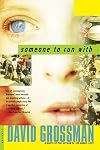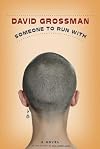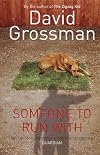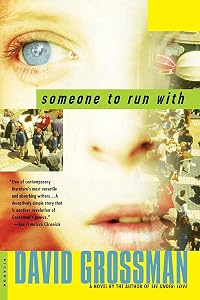
Someone to Run With
by David Grossman
On This Page
Description
Earnest, awkward, and painfully shy, sixteen-year-old Assaf is having the worst summer of his life. With his big sister gone to America and his best friend suddenly the most popular kid in their class, Assaf worries away his days at a lowly summer job in Jerusalem city hall and spends his evenings alone, watching television and playing games on the Internet.One morning, Assaf's routine is interrupted by an absurd assignment: to find the owner of a stray yellow lab. Meanwhile, on the other show more side of the city, Tamar, a talented young singer with a lonely, tempestuous soul, undertakes an equally unpromising mission: to rescue a teenage drug addict from the Jerusalem underworld . . . and, eventually, to find her dog.Someone to Run With is the most popular work to date from "a writer who has been, for nearly two decades, one of the most original and talented . . . anywhere" (The New York Times Book Review), a bestseller hailed by the Israeli press (and reform politicians such as Shimon Peres) for its mixture of fairy-tale magic, emotional sensitivity, and gritty realism. The novel explores the life of Israeli street kids-whom Grossman interviewed extensively for the novel-and the anxieties of family life in a society racked by self-doubt. Most of all, it evokes the adventure of adolescence and the discovery of love, as Tamar and Assaf, pushed beyond the limits of childhood by their quests, find themselves, and each other. show lessTags
Recommendations























Member Recommendations

Member Reviews
An amazing book. Three phenomenal characters who are pushed out of their comfort zones each by different but arduous challenges. They are motivated by love and selflessness in stark contrast to the manipulative and threatening environment around them.
Grossman doesn't stop with a main plot. He embellishes it by adding more depth and realism to these heroes by constructing worlds of their pasts, thoughts and feelings. Its as though his imagination can't stop with just one unique story but needs to pour out in multiple stories. This wonderful imagination combined with strong writing make for captivating, exciting and moving reading.
Grossman doesn't stop with a main plot. He embellishes it by adding more depth and realism to these heroes by constructing worlds of their pasts, thoughts and feelings. Its as though his imagination can't stop with just one unique story but needs to pour out in multiple stories. This wonderful imagination combined with strong writing make for captivating, exciting and moving reading.
It was as if all those lonely people scattered throughout the world, in some mysterious way, created a secret net, transferring strength to one another in times of need.
There are many lonely people in the world. This is not unreasonable to generalize about. And some of these people need each other before they even know it. There is a longing, an ache, an emptiness, an awkwardness in the face of the world. And one lives with it so long that one begins to believe it as an unchangeable truth. It is the "missing Lego piece" that Tamar thinks she lacks, the piece that allows a connection to be made with another person, that specific interlocking with another Lego piece that we seek. It's not as if she likes it. "What do you think, that I show more don't want to connect with other people? I can't truly connect with anyone; it's how I was made. It's a fact." But her core has been shattered at a young age, by those closest to her, by her family, the ones who do often fail us, despite what they may believe to be their best intentions.
Assaf is a teenager working a boring summer job at City Hall. His best friend Roi is annoying, and has basically turned against him now that they are older and he no longer needs Assaf to prop him up. Roi wants Assaf to date Dafi, his girlfriend Maytal's friend, so that they can all go out together and Assaf and Dafi can make Roi and Maytal look even better. Assaf isn't interested in this. He doesn't like Dafi. He also doesn't talk much. He tends to wilt in the face of adversity:
It always happened that way to him: when someone spoke so rudely to him, or anyone else, his will to live would evaporate for a moment. It was as if he would run out of himself, losing any passion for existence, when people spoke like that.
One day Assaf's boss gives him a job to do: find the owner of a dog that was picked up running around the streets of Jerusalem. The dog is wild with sorrow in the kennels. Yet this seemingly inconsolable animal responds to Assaf. They connect like Lego pieces. The dog's name is Dinka and she plays a starring role in the novel. However, this is no shaggy dog story (sorry, I couldn't help that...). It's David Grossman, so of course there is a point!
Everyone in this book is lonely in some way. Everyone is looking to connect or reconnect their Lego pieces, whether they think they have them or not. Assaf is a "lonely human snowflake, desperate for assurance that somewhere in that empty space hovered another like it." Theodora wants to connect, she has a thirst, but she is a Greek nun trapped forever in a convent in Jerusalem, waiting for the pilgrims of Lyxos who will never come. Shai has a Lego piece but it is buried underneath addiction and other clouds of darkness. Rhino is lonely; he pines for Assaf's sister Reli, who has fled to America. Leah wants someone with whom to share her reclaimed life. Even Pesach wants to be accepted, to be liked, though his methods for attempting to garner that acceptance are horrifically flawed and exploitative.
As with To the End of the Land, however, for me, the other characters began to fade away, as the focus sharpened on just two. In this book, Tamar and Assaf. What seems like an endless gulf separates the two, both emotionally and physically. Like Yair in Be My Knife, Tamar compartmentalizes her life. She keeps her friends separate. Assaf wonders if "maybe this way she has more freedom," which he comes to understand is the most important thing to her. But this compartmentalizing makes it harder for Assaf to find her. For it becomes his mission to do so. And Dinka is there to lead him. She will help him discover "the pleasure of running toward the unknown." She will free him from his boring summer job and take him on the adventure he doesn't even know he needed to experience.
Tamar knows sadness, "she touched the wire with both hands, and her sadness wasn't an ordinary sadness." She can also describe it well. Assaf knows this before he even meets her, because he sees it in her diary. But Tamar also sings. And her singing saves her.
Again, her singing was her only absolute., the only thing that was completely her. A thousand classes hadn't given her this concrete insight: her voice was her place in the world, the home she leaves in the morning and returns to at night, in which she can be herself in her entirety and hope to be loved for all she is and in spite of all she is.
Home does not have to be a place, after all. Home can be carried with you, inside yourself. For what we often want in the idea of "home" is a place to feel ourselves in our entirety. And we can only truly feel that inside our own skin. Outside, there are too many other factors at play, a constantly shifting mosaic of surroundings outside of our control. But a voice, be it sung, spoken, or written, can function like a home. It can be a place we go to feel like ourselves, our true selves, and that in turn opens us up to others. Not everyone will be receptive, but like Shai playing the opening bars of "Imagine" on his guitar for Tamar, it can be the opening of a door. And someone who was needed may walk through it.
Dinka knows the places to go and Assaf follows her, though not always to his advantage. He takes some beatings in this book. Not a violent boy, by any means, he is thrust into a hostile underworld with little in the way of defenses. He is tall and wide, but does not know how to use his size to his advantage. As a result, he suffers at the hands of those who speak fluent the language of violence. But he gets other people talking, ones who at first are unsure. He wins them over with his quiet, attentive listening: "You're a magician. Look how you can make people talk to you. What a gift." One could say he is disarming in his silence, as I heard someone described on the radio recently. Walls are dismantled by the chisel of Assaf's silence.
If this is all starting to swirl together, good. I don't want to give too much away. As with other Grossman novels, the magic lies taut with tension, embroidered with foreshadowing and maddening details that may or may not lead the reader to what they see as foregone conclusions. I have tried to take care not to even hint at those. But I will say that Grossman always believes in the power of telling stories and this book is no different when it comes to that belief. What is important is the telling, the power of sharing details with each other. That is what pulls people together, that is what snaps the Lego pieces tight. As Theodora tells Assaf:
You still do not understand, agori mou? How shall I come to know you without the small details? How, then, will I tell you a story from my own heart?
This is a story from David Grossman's heart. I don't know how one man's heart can be as big as his, but I am glad for its warm roominess, and I am thankful there are many other books of his I have yet to read. show less
There are many lonely people in the world. This is not unreasonable to generalize about. And some of these people need each other before they even know it. There is a longing, an ache, an emptiness, an awkwardness in the face of the world. And one lives with it so long that one begins to believe it as an unchangeable truth. It is the "missing Lego piece" that Tamar thinks she lacks, the piece that allows a connection to be made with another person, that specific interlocking with another Lego piece that we seek. It's not as if she likes it. "What do you think, that I show more don't want to connect with other people? I can't truly connect with anyone; it's how I was made. It's a fact." But her core has been shattered at a young age, by those closest to her, by her family, the ones who do often fail us, despite what they may believe to be their best intentions.
Assaf is a teenager working a boring summer job at City Hall. His best friend Roi is annoying, and has basically turned against him now that they are older and he no longer needs Assaf to prop him up. Roi wants Assaf to date Dafi, his girlfriend Maytal's friend, so that they can all go out together and Assaf and Dafi can make Roi and Maytal look even better. Assaf isn't interested in this. He doesn't like Dafi. He also doesn't talk much. He tends to wilt in the face of adversity:
It always happened that way to him: when someone spoke so rudely to him, or anyone else, his will to live would evaporate for a moment. It was as if he would run out of himself, losing any passion for existence, when people spoke like that.
One day Assaf's boss gives him a job to do: find the owner of a dog that was picked up running around the streets of Jerusalem. The dog is wild with sorrow in the kennels. Yet this seemingly inconsolable animal responds to Assaf. They connect like Lego pieces. The dog's name is Dinka and she plays a starring role in the novel. However, this is no shaggy dog story (sorry, I couldn't help that...). It's David Grossman, so of course there is a point!
Everyone in this book is lonely in some way. Everyone is looking to connect or reconnect their Lego pieces, whether they think they have them or not. Assaf is a "lonely human snowflake, desperate for assurance that somewhere in that empty space hovered another like it." Theodora wants to connect, she has a thirst, but she is a Greek nun trapped forever in a convent in Jerusalem, waiting for the pilgrims of Lyxos who will never come. Shai has a Lego piece but it is buried underneath addiction and other clouds of darkness. Rhino is lonely; he pines for Assaf's sister Reli, who has fled to America. Leah wants someone with whom to share her reclaimed life. Even Pesach wants to be accepted, to be liked, though his methods for attempting to garner that acceptance are horrifically flawed and exploitative.
As with To the End of the Land, however, for me, the other characters began to fade away, as the focus sharpened on just two. In this book, Tamar and Assaf. What seems like an endless gulf separates the two, both emotionally and physically. Like Yair in Be My Knife, Tamar compartmentalizes her life. She keeps her friends separate. Assaf wonders if "maybe this way she has more freedom," which he comes to understand is the most important thing to her. But this compartmentalizing makes it harder for Assaf to find her. For it becomes his mission to do so. And Dinka is there to lead him. She will help him discover "the pleasure of running toward the unknown." She will free him from his boring summer job and take him on the adventure he doesn't even know he needed to experience.
Tamar knows sadness, "she touched the wire with both hands, and her sadness wasn't an ordinary sadness." She can also describe it well. Assaf knows this before he even meets her, because he sees it in her diary. But Tamar also sings. And her singing saves her.
Again, her singing was her only absolute., the only thing that was completely her. A thousand classes hadn't given her this concrete insight: her voice was her place in the world, the home she leaves in the morning and returns to at night, in which she can be herself in her entirety and hope to be loved for all she is and in spite of all she is.
Home does not have to be a place, after all. Home can be carried with you, inside yourself. For what we often want in the idea of "home" is a place to feel ourselves in our entirety. And we can only truly feel that inside our own skin. Outside, there are too many other factors at play, a constantly shifting mosaic of surroundings outside of our control. But a voice, be it sung, spoken, or written, can function like a home. It can be a place we go to feel like ourselves, our true selves, and that in turn opens us up to others. Not everyone will be receptive, but like Shai playing the opening bars of "Imagine" on his guitar for Tamar, it can be the opening of a door. And someone who was needed may walk through it.
Dinka knows the places to go and Assaf follows her, though not always to his advantage. He takes some beatings in this book. Not a violent boy, by any means, he is thrust into a hostile underworld with little in the way of defenses. He is tall and wide, but does not know how to use his size to his advantage. As a result, he suffers at the hands of those who speak fluent the language of violence. But he gets other people talking, ones who at first are unsure. He wins them over with his quiet, attentive listening: "You're a magician. Look how you can make people talk to you. What a gift." One could say he is disarming in his silence, as I heard someone described on the radio recently. Walls are dismantled by the chisel of Assaf's silence.
If this is all starting to swirl together, good. I don't want to give too much away. As with other Grossman novels, the magic lies taut with tension, embroidered with foreshadowing and maddening details that may or may not lead the reader to what they see as foregone conclusions. I have tried to take care not to even hint at those. But I will say that Grossman always believes in the power of telling stories and this book is no different when it comes to that belief. What is important is the telling, the power of sharing details with each other. That is what pulls people together, that is what snaps the Lego pieces tight. As Theodora tells Assaf:
You still do not understand, agori mou? How shall I come to know you without the small details? How, then, will I tell you a story from my own heart?
This is a story from David Grossman's heart. I don't know how one man's heart can be as big as his, but I am glad for its warm roominess, and I am thankful there are many other books of his I have yet to read. show less
Assaf, a 16-year-old living in Jerusalem, is sent to find the owner of a lost dog by following her at the end of a leash and to collect a fee for the dog’s return. He does not immediately find the owner, but does find other people who recognize Dinka as the dog of Tamar. One such person is the Greek nun Theodora who is happy to see Dinka but is more concerned about the disappearance of the dog’s owner.
Grossman has created a story that involves the reader with a darker side of Jerusalem, but not the one that makes world news. Dealing with the world of the city’s disenfranchised streets kids, the book unfolds a tale of two young people each with a mission and how their paths cross. The character’s dialogues include much unspoken show more thought which provides a window into their uncertainties in dealing with others. It also reflects how what is spoken is often not exactly what one feels.
The time construction of the novel was a bit unusual. Each of the stories of the two main characters is a different length in time but converge in the end. The technique is done well and provides the reader with a chance to “put all the pieces together” as the story develops.
I especially like the dog who also is an important character. In fact, she is the thread that brings most of the characters together. And, like the dog, pulling Assaf along, this mini-mystery of a story has enough drive to pull its readers at a non-stop pace through to the end. show less
Grossman has created a story that involves the reader with a darker side of Jerusalem, but not the one that makes world news. Dealing with the world of the city’s disenfranchised streets kids, the book unfolds a tale of two young people each with a mission and how their paths cross. The character’s dialogues include much unspoken show more thought which provides a window into their uncertainties in dealing with others. It also reflects how what is spoken is often not exactly what one feels.
The time construction of the novel was a bit unusual. Each of the stories of the two main characters is a different length in time but converge in the end. The technique is done well and provides the reader with a chance to “put all the pieces together” as the story develops.
I especially like the dog who also is an important character. In fact, she is the thread that brings most of the characters together. And, like the dog, pulling Assaf along, this mini-mystery of a story has enough drive to pull its readers at a non-stop pace through to the end. show less
It is very rare for me to recommend books that I can read in my original language and also recommend here (because these books have translated into English). The truth is that it is unfortunate that Hebrew books rarely translated into English. The variety of Hebrew works is impressive, and the perspective of writers from such different cultures gathered in one small place may be of interest to readers who are not familiar with this mixed culture but only in what heard on the news, Yet, I'm not interested in politics, just good books that present a well-written story.
And like so few books that had translated into English, Such is "someone to run with" a book by David Grossman.
But then again, after I finish reading, I always find the show more excuse why not write a review. Perhaps I am afraid that others will not like it or that in any way this will spill over into a cultural or political debate.
Or maybe I'm afraid you will not listen to what the book has to say, or my opinion of it. And now you will probably tell yourself "Gee, she is full of nonsense," but the truth is that there are very few people who know how to listen. Not just to hear, but to attend with the absolute concentration to understand the other side. In focus and without even asking questions or expressing any other interest in the conversation. These special people rarely sit in front of you, looking deep into your eyes, and suddenly the words pour out of you, because you know they're there for you alone. And you tell them things, even things that you didn't plan to say. Also when the conversation becomes one's monologue - yours, these rare listeners do not let you feel that something is wrong.
On the contrary - they will continue to listen. At the end of a conversation with such a person, you feel incredibly grateful and relieved.
Such is Assaf, one of the two heroes of Grossman's book.
Assaf is not a very pretty boy; he lives on the margins of the social society in the city of Jerusalem. But Assaf has a special talent; he listens like no one else knows. During the plot of the book, Assaf encounters completely strangers who within minutes tell him about their lives. With an infinite tenderness that he is not even aware of, Assaf steers the conversation, asks questions, but gives the speaker the lead.
The book deals with youth who are in a period of change, and it also deals with Assaf and Tamar as youth symbolizes. And there is also Dinka, their dog. Dinka found abandoned. One day Assaf is asked to locate the owner of the dog. Assaf takes Dinka and trusts that somehow it will find her way to it's owners. At the same time, Tamar is planning a rescue operation, and a short time before, she is losing her dog. Asaf's search journey leads him to Tamar, whose details are revealed in the book as the plot progresses. Tamar is a complex and challenging girl, and I found in many of her ideas an echo of my thoughts, my deepest secrets, and fears. Anyway, I'd rather leave the rest of the story shrouded in fog and avoided unnecessary spoilers. Other than that I say only that the book draws the reader from the first page and does not let go. On the face of it, this is a thriller, yet it is a book about young people undergoing crises and nothing discourages them. This book is about young people who dare to do things that as adults they wouldn't have thoughts of doing.
This book has some parallel lines, including the main heroes, as well as the familiar, visible world, which is present in contrast to the shadow world of street living.
The heroes in this story are unique human, just like in all of Grossman's works They can exist everywhere in the real world.
In conclusion, this book is wonderful in its little things. This is not just the plot but mainly it's characters. This is a wonderful reading of a wonderful book. show less
And like so few books that had translated into English, Such is "someone to run with" a book by David Grossman.
But then again, after I finish reading, I always find the show more excuse why not write a review. Perhaps I am afraid that others will not like it or that in any way this will spill over into a cultural or political debate.
Or maybe I'm afraid you will not listen to what the book has to say, or my opinion of it. And now you will probably tell yourself "Gee, she is full of nonsense," but the truth is that there are very few people who know how to listen. Not just to hear, but to attend with the absolute concentration to understand the other side. In focus and without even asking questions or expressing any other interest in the conversation. These special people rarely sit in front of you, looking deep into your eyes, and suddenly the words pour out of you, because you know they're there for you alone. And you tell them things, even things that you didn't plan to say. Also when the conversation becomes one's monologue - yours, these rare listeners do not let you feel that something is wrong.
On the contrary - they will continue to listen. At the end of a conversation with such a person, you feel incredibly grateful and relieved.
Such is Assaf, one of the two heroes of Grossman's book.
Assaf is not a very pretty boy; he lives on the margins of the social society in the city of Jerusalem. But Assaf has a special talent; he listens like no one else knows. During the plot of the book, Assaf encounters completely strangers who within minutes tell him about their lives. With an infinite tenderness that he is not even aware of, Assaf steers the conversation, asks questions, but gives the speaker the lead.
The book deals with youth who are in a period of change, and it also deals with Assaf and Tamar as youth symbolizes. And there is also Dinka, their dog. Dinka found abandoned. One day Assaf is asked to locate the owner of the dog. Assaf takes Dinka and trusts that somehow it will find her way to it's owners. At the same time, Tamar is planning a rescue operation, and a short time before, she is losing her dog. Asaf's search journey leads him to Tamar, whose details are revealed in the book as the plot progresses. Tamar is a complex and challenging girl, and I found in many of her ideas an echo of my thoughts, my deepest secrets, and fears. Anyway, I'd rather leave the rest of the story shrouded in fog and avoided unnecessary spoilers. Other than that I say only that the book draws the reader from the first page and does not let go. On the face of it, this is a thriller, yet it is a book about young people undergoing crises and nothing discourages them. This book is about young people who dare to do things that as adults they wouldn't have thoughts of doing.
This book has some parallel lines, including the main heroes, as well as the familiar, visible world, which is present in contrast to the shadow world of street living.
The heroes in this story are unique human, just like in all of Grossman's works They can exist everywhere in the real world.
In conclusion, this book is wonderful in its little things. This is not just the plot but mainly it's characters. This is a wonderful reading of a wonderful book. show less
I was in desperate need of a light read and there it was! A light read indeed, even though De stem van Tamar (Eng. title: someone to run with) has themes about drug abuse, dysfunctional families and deeply egoistic characters. But this novel is a love story and love stories are (almost) always light reads, in my opinion. This has two reasons.
One: all traits of character are portrayed in a soft light. Peculiarities, flaws even, are shown as being part and parcel of the unique personality in the love interest. Is Assaf, the male principal character, a little slow and awkward? Well that’s ever so nice, because it’ just the thing Tamar, the female principal character, needs. Is Tamar sometimes depressed and distrustful? No worries, show more Assaf will mend it. And, above all, these peculiarities will help their quest-at-hand and it will help them overcome them!
I don’t want to ridicule Grossmans writing, it is very good. This only points out why it’s a light read.
Two: in love stories there often is a lot of suffering. Terrible things happen, in this case things like exploitation, severe drug addiction, violence without cause. However, they are instrumental to the story. They serve as obstacles to a sure end: love. Therefore, the reader can keep a distance to the terrible things, a distance one would not have in other novels dealing with serious problems.
This is the reason I disliked love stories intensely in my teens. It infuriated me that a writer could throw in serious trouble, whatever, only for the sake of his loved ones getting together. As I liked this novel, I guess the dislike has gone.
A light read, and a lovely one. Grossman brought Jerusalem and its inhabitants alive for me. Each character, from Assaf to a police woman he meets on the road, are well rounded characters. Both Tamar and Assaf are beautiful in their complex personalities, very recognizable as young adults, but also as different ways of living, of looking at live.
Early on I got an accurate idea about how the plot would resolve, but it didn’t much lessen the pleasure of reading.
Grossman, as well as his fellow writer Meir Shalev, succeeds in giving a warm glow to his writing, so tangible I can almost warm my hands on the book. I marvel at this, as both writers are from a country, that has endured many hardships.
In short: a recommendation! show less
One: all traits of character are portrayed in a soft light. Peculiarities, flaws even, are shown as being part and parcel of the unique personality in the love interest. Is Assaf, the male principal character, a little slow and awkward? Well that’s ever so nice, because it’ just the thing Tamar, the female principal character, needs. Is Tamar sometimes depressed and distrustful? No worries, show more Assaf will mend it. And, above all, these peculiarities will help their quest-at-hand and it will help them overcome them!
I don’t want to ridicule Grossmans writing, it is very good. This only points out why it’s a light read.
Two: in love stories there often is a lot of suffering. Terrible things happen, in this case things like exploitation, severe drug addiction, violence without cause. However, they are instrumental to the story. They serve as obstacles to a sure end: love. Therefore, the reader can keep a distance to the terrible things, a distance one would not have in other novels dealing with serious problems.
This is the reason I disliked love stories intensely in my teens. It infuriated me that a writer could throw in serious trouble, whatever, only for the sake of his loved ones getting together. As I liked this novel, I guess the dislike has gone.
A light read, and a lovely one. Grossman brought Jerusalem and its inhabitants alive for me. Each character, from Assaf to a police woman he meets on the road, are well rounded characters. Both Tamar and Assaf are beautiful in their complex personalities, very recognizable as young adults, but also as different ways of living, of looking at live.
Early on I got an accurate idea about how the plot would resolve, but it didn’t much lessen the pleasure of reading.
Grossman, as well as his fellow writer Meir Shalev, succeeds in giving a warm glow to his writing, so tangible I can almost warm my hands on the book. I marvel at this, as both writers are from a country, that has endured many hardships.
In short: a recommendation! show less
Beautiful writing, fascinating characters, fast paced and thrilling. This book was a different read for me, in some ways too real -an unlikely runway girl living on the streets- hard to read for a mother of daughters- in other ways magical realism and major coincidences abound...you just have to go with it, let the story unfold, meet the characters, learn their stories and follow their journeys. Very rewarding read!
READ IN DUTCH
This is a YA novel, set in Israel, and I can't really remember why I picked it up in the first place. I probably thought it was something special, because of the somewhat unusual setting. It turned out to be an unusual novel.
It's a touching story about Tamar, who quite literally wants to do to find her drug addicted brother and help him to get over his addiction. So much so, that she decides she must go and live on the streets and be a street performer, in order to be undercover enough to be able to save her brother.
There are some things I found a bit shocking/hard to compute. Are there so much children living on the streets there, being my most urgent one. I liked the writing, the story isn't particularly fast but reads show more very nice. I was a bit annoyed though because there was at a certain point a lot of foreshadowing. 'Something was about to happen...' 'They had no idea what would happen to them' A bit too much of that. But overall, it was a very nice and special read. show less
This is a YA novel, set in Israel, and I can't really remember why I picked it up in the first place. I probably thought it was something special, because of the somewhat unusual setting. It turned out to be an unusual novel.
It's a touching story about Tamar, who quite literally wants to do to find her drug addicted brother and help him to get over his addiction. So much so, that she decides she must go and live on the streets and be a street performer, in order to be undercover enough to be able to save her brother.
There are some things I found a bit shocking/hard to compute. Are there so much children living on the streets there, being my most urgent one. I liked the writing, the story isn't particularly fast but reads show more very nice. I was a bit annoyed though because there was at a certain point a lot of foreshadowing. 'Something was about to happen...' 'They had no idea what would happen to them' A bit too much of that. But overall, it was a very nice and special read. show less
Members
- Recently Added By
Published Reviews
ThingScore 100
Einmal mehr ist es Grossman gelungen, die enge Verbindung von Magie und Wirklichkeit zu zeigen. Als wollte er mit jedem neuen Buch beweisen, dass das Faszinierendste für den Menschen die Begegnung mit dem anderen ist. Unübertroffen die Schilderung einer Annäherung von Personen, noch bevor sie sich kennen. Großartig, wie der Autor Spuren legt und Zeichen setzt, nach denen die Figuren sich show more richten, ohne es zu merken. Die Luft, die sie atmen, ist angereichert mit Bedeutung, die ganz und gar nichts Belehrendes hat, sondern aus purer, unvermischter Lebendigkeit besteht. Ein Künstler-, Kriminal- und Liebesroman von bestechender Sogkraft. Man wünscht seinen Kindern, eine solche Liebesgeschichte und ein derart spannendes Abenteuer zu erleben, und ertappt sich als Erwachsener dabei, einen alten, manchmal fast vergessenen Traum von neuem zu träumen. show less
added by Indy133
Lists

Jewish Books
367 works; 24 members

Recommend the 20 best books you've read in the last five years
2,168 works; 606 members

Books Read in 2016
4,666 works; 199 members
Author Information

91+ Works 8,019 Members
David Grossman was born in Jerusalem on January 25, 1954, is an Israeli author of fiction, nonfiction, and youth and children's literature. His books have been translated into many languages. He is most known for his non-fiction work, The Yellow Wind. This is his study of the Palestinians in the Israeli-occupied West Bank and Gaza Strip. He was show more awarded the Prime Minister's Prize for Hebrew literature (1984) and the Israeli Publishers Association Prize for best Hebrew novel (1985). Grossman lives in Mevasseret Zion on the outskirts of Jerusalem. He is married to Michal Grossman, a child psychologist and the mother of his three children. (Bowker Author Biography) show less
Awards and Honors
Awards
Distinctions
Series
Belongs to Publisher Series
dtv Reihe Hanser (62138)
Work Relationships
Has the adaptation
Common Knowledge
- Canonical title
- Someone to Run With
- Original title
- Mischehu laruz ito ; מישהו לרוץ איתו
- Original publication date
- 2000
- People/Characters
- Assaf; Tamar; Theodora; Shai; Dina the dog; Sjeli (show all 8); Lea; Sjalom
- Important places
- Jerusalem
- Related movies
- Mishehu Larutz Ito (2006 | IMDb | Oded Davidoff)
- Dedication*
- Voor mijn kinderen Yonatan, Uri en Rutie
- First words*
- Er draaft een hond door de straten en een jongen rent achter hem aan.
- Last words*
- (Click to show. Warning: May contain spoilers.)Tamar dacht bij zichzelf dat ze nog nooit iemand had ontmoet met wie ze zo makkelijk kon zwijgen.
*Some information comes from Common Knowledge in other languages. Click "Edit" for more information.
Classifications
- Genres
- Fiction and Literature, General Fiction
- DDC/MDS
- 892.436 — Literature & rhetoric Literatures of other languages Afro-Asiatic literatures Jewish, Israeli, and Hebrew Hebrew fiction 1947–2000
- LCC
- PJ5054 .G728 .M5713 — Language and Literature Oriental languages and literatures Oriental philology and literature Hebrew Literature Individual authors and works
- BISAC
Statistics
- Members
- 730
- Popularity
- 38,665
- Reviews
- 23
- Rating
- (4.09)
- Languages
- 11 — Czech, Dutch, English, French, German, Hebrew, Italian, Portuguese, Russian, Spanish, Swedish
- Media
- Paper, Audiobook, Ebook
- ISBNs
- 40
- UPCs
- 1
- ASINs
- 8