On This Page
Description
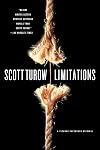
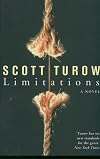
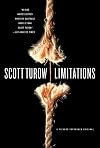
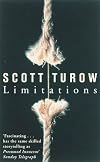
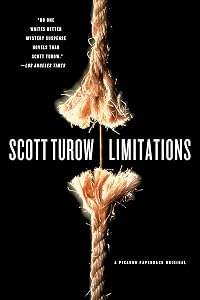
Fiction. Suspense. Thriller. HTML:From the #1 New York Times bestselling author of Presumed Innocent comes a compelling new legal mystery featuring George Mason from Personal Injuries. Originally commissioned and published by The New York Times Magazine, this edition contains additional material.Life would seem to have gone well for George Mason. His days as a criminal defense lawyer are long behind him. At fifty-nine, he has sat as a judge on the Court of Appeals in Kindle County for show more nearly a decade. Yet, when a disturbing rape case is brought before him, the judge begins to question the very nature of the law and his role within it. What is troubling George Mason so deeply? Is it his wife's recent diagnosis? Or the strange and threatening e-mails he has started to receive? And what is it about this horrific case of sexual assault, now on trial in his courtroom, that has led him to question his fitness to judge?
In LIMITATIONS, Scott Turow, the master of the legal thriller, returns to Kindle County with a suspenseful entertainment that asks the biggest questions of all. Ingeniously, and with great economy of style, Turow probes the limitations not only of the law but of human understanding itself.
From the Compact Disc edition.. show less
Tags
Recommendations






Member Reviews
With [Presumed Innocent], Scott Turow perfected the genre of legal-thrillers. Part of Turow’s appeal, which is evident in his novel [Limitations], is his ability to plumb the depths of the soul, to define the outer edges of human capability and motivation.
George Mason, a member of the Court of Appeals, is having difficulty deciding a brutal rape case before him on appeal. Whether the difficulty stems from his wife’s failing health, the threatening emails that he’s receiving, or some dark secret from his past is unclear. What is clear, though, is that George has begun to doubt himself, to doubt his ability and his right to stand in judgment.
[Limitations] is a masterpiece of the mundane. There is little in the way of crime scene show more forensic miracles or thrilling and explosive chases or courtroom high-jinx. Rather, Turow sheds a light on the real work of criminal investigators and judges, who are all focused on the minute, if boring, details of every-day life. What emerges is a beautiful picture of the artificial, if necessary, nature of modern justice.
A favorite for the year!
5 bones!!!!! show less
George Mason, a member of the Court of Appeals, is having difficulty deciding a brutal rape case before him on appeal. Whether the difficulty stems from his wife’s failing health, the threatening emails that he’s receiving, or some dark secret from his past is unclear. What is clear, though, is that George has begun to doubt himself, to doubt his ability and his right to stand in judgment.
[Limitations] is a masterpiece of the mundane. There is little in the way of crime scene show more forensic miracles or thrilling and explosive chases or courtroom high-jinx. Rather, Turow sheds a light on the real work of criminal investigators and judges, who are all focused on the minute, if boring, details of every-day life. What emerges is a beautiful picture of the artificial, if necessary, nature of modern justice.
A favorite for the year!
5 bones!!!!! show less
A very good exploration of a tough subject in a limited context. Appellate Judge George Mason must revisit his own youth after hearing arguments in a case involving an old sexual assault. He and his two colleagues on the appeals court each see the case a bit differently. Although combining any two positions will result in a majority opinion, there is no real consensus, and a split opinion is likely to open many old wounds. Mason must decide how to write an opinion that will not only be supported by the facts and arguments, but will be "just". This gets fairly technical on the legal issues, and it's a little hard for me to judge (sorry) how it will strike the average reader. Having lived with this kind of reasoning for nearly 40 years, I show more absorbed it easily, but I do think Turow did a decent job of making it accessible to the lay reader. Mason has personal and professional stuff going on that complicates his decision. (It wouldn't be much of a novel, otherwise.) Someone is sending him e-mail death threats, and it might be someone very close to him. His wife is under treatment for cancer, and he doesn't want to upset her by bringing THAT crap home, but his security people insist he must have protection. Intrigue and red herrings...the usual stuff well-handled. But the mature judicial male confronting his randy teenage self, and getting his consciousness raised in real time as well, is the best part of this page-turner. show less
I've never been one for Grisham. While I like a fast, exciting legal thriller as much as the next guy, I've never found Grisham to be a writer who could hold my interest. The plots surely make good films, the dramatic lawyerly speeches make for great grandstanding by well-known actors. Just not good books.
What Turow does in "Limitations" is far from Grisham as one can get. This was a thoughtful, well-paced novel about a judge considering the statue of limitations on a criminal case. The idea of limitations in life and in law runs throughout the book, and it illustrates the lives and motivations of each of the characters. At what point do personal or professional limitations begin to impact how you live your life? How you can move beyond show more them? Not the usual legal thriller pabulum, for sure.
While not spare, the prose was precise, making for a relatively short novel (200pgs), but even still the conflicts, resolutions and characters were well-rounded, and inhabited the novel like living things.
Based on my enjoyment of "Limitations" I would certainly explore other Turow books - this is the only one I've read. I remember my father enjoying the hell out of "Presumed Innocent" back in the late 1980's.
"Limitations" is more than a beach read, but finds a balance between "throw-away" fiction (Grisham) and more meaningful "literature" which explores and finds meaning within the lives of its prose and characters. show less
What Turow does in "Limitations" is far from Grisham as one can get. This was a thoughtful, well-paced novel about a judge considering the statue of limitations on a criminal case. The idea of limitations in life and in law runs throughout the book, and it illustrates the lives and motivations of each of the characters. At what point do personal or professional limitations begin to impact how you live your life? How you can move beyond show more them? Not the usual legal thriller pabulum, for sure.
While not spare, the prose was precise, making for a relatively short novel (200pgs), but even still the conflicts, resolutions and characters were well-rounded, and inhabited the novel like living things.
Based on my enjoyment of "Limitations" I would certainly explore other Turow books - this is the only one I've read. I remember my father enjoying the hell out of "Presumed Innocent" back in the late 1980's.
"Limitations" is more than a beach read, but finds a balance between "throw-away" fiction (Grisham) and more meaningful "literature" which explores and finds meaning within the lives of its prose and characters. show less
An intriguing legal conundrum is the subject of “Limitations”, set once again in Kindle County, America, but this time in the Appeal Court. The tension arises form an appeal against a rape conviction in the Superior Court and the fact that the case raises almost forgotten and buried memories for the Chief Judge, George Mason, of events from his own youth. The other judges on the panel are divided in their opinion of the appeal, so it falls to George to make a decision. His thoughts are further occupied by his wife’s current treatment for cancer and a growing threat to his own life from an anonymous source. Turow skillfully interweaves all these threats to make a fascinating and revealing insight into how justice may be reached.
An appellate court judge must decide a case that brings up unpleasant memories from his own past and confuses the matter for him. He's also receiving strange, threatening emails from an unknown source.
I really enjoyed the way this short novel explored the issues of law surrounding the case involved while coupling them with the personal issues of the judge. The suspense-y mystery-y bit about who was sending him the emails was less interesting to me, but it has a really excellent resolution and pay-off in the end. Recommended.
I really enjoyed the way this short novel explored the issues of law surrounding the case involved while coupling them with the personal issues of the judge. The suspense-y mystery-y bit about who was sending him the emails was less interesting to me, but it has a really excellent resolution and pay-off in the end. Recommended.
Limitations is a short novel of Turow's Kindle County series, one that focuses on a legal and moral conundrum. The case is an appeal of three men who have been convicted of a rape that they committed -- and videotaped-- when they were in college. The legal complexity is over whether the statute of limitations has run out, and whether the videotape is admissible. The moral complexity is that Judge George Mason recognizes the crime to be reminiscent of a youthful transgression of his own. Finally, the judge himself apparently is being stalked and threatened -- possibly by a convict that he previously sentenced.
Turow handles this story with his usual skill and sensitivity. The use of present- tense (rather than past tense) gives the show more events immediacy -- a literary device that would not work in the hands of a less skillful writer. The denouement ties things up as well as can be expected... and if the conclusion is less than fully satisfying, it is because the moral and legal complexities admit of no easy solution. I enjoyed this work, and recommend it to those who like legal fiction, a writer of which Scott Turow ranks among the best. show less
Turow handles this story with his usual skill and sensitivity. The use of present- tense (rather than past tense) gives the show more events immediacy -- a literary device that would not work in the hands of a less skillful writer. The denouement ties things up as well as can be expected... and if the conclusion is less than fully satisfying, it is because the moral and legal complexities admit of no easy solution. I enjoyed this work, and recommend it to those who like legal fiction, a writer of which Scott Turow ranks among the best. show less
This is my first book by Scott Turow. An LT friend had reviewed it earlier this month, and it wound up on my library wishlist. A court of appeals judge, George Mason, is sitting on a case involving rape of a 15 year old girl by four high school students. The statute of limitations had passed before she brought it to attention, and the video tape of the whole incident may or may not have been legally shown in court. George is one of three judges who must decide whether the verdict should stand, and he is the deciding vote. He is distracted by his wife's cancer diagnosis, and also by death threats that he has been receiving in email. He also has memory of an incident in his own past during college and this is making him question his show more reasoning in the case. Although classified as a thriller, I wouldn't call it thrilling in the same vein as the book I recently read by Stephen King. It was slower, and maybe more thoughtful. show less
Members
- Recently Added By
Author Information

59+ Works 23,860 Members
Scott Turow is a writer and lawyer. He was born in Chicago, Illinois, on April 12, 1949. He received a B.A. from Amherst College in 1970 and an M.A. from Stanford University in 1974. He graduated from Harvard Law School in 1978. He was an Assistant United States Attorney in Chicago and served as a prosecutor in several corruption cases. Turow show more continues to work as an attorney. He has written numerous novels including Presumed Innocent, The Burden of Proof, Pleading Guilty, The Laws of Our Fathers, Personal Injuries, Ordinary Heroes, Limitations, Innocent, and Identical. His non-fiction works include One L about his experience as a law student and Ultimate Punishment about the death penalty. He has won numerous awards including the Heartland Prize in 2003 for Reversible Errors, the Robert F. Kennedy Book Award in 2004 for Ultimate Punishment, and Time Magazine's Best Work of Fiction, 1999 for Personal Injuries. He will give a keynote speech at the National writer's Congress 2015. (Bowker Author Biography) show less
Series

Common Knowledge
- Original title
- Limitations
- Original publication date
- 2006
- People/Characters
- George Mason
- Important places
- Kindle County, Illinois, USA
Classifications
Statistics
- Members
- 716
- Popularity
- 39,772
- Reviews
- 25
- Rating
- (3.43)
- Languages
- 9 — Czech, Dutch, English, French, German, Italian, Portuguese, Russian, Spanish
- Media
- Paper, Audiobook, Ebook
- ISBNs
- 34
- ASINs
- 5