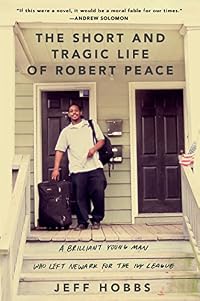
The Short and Tragic Life of Robert Peace: A Brilliant Young Man Who Left Newark for the Ivy League
by Jeff Hobbs
On This Page
Description
A heartfelt, and riveting biography of the short life of a talented young African-American man who escapes the slums of Newark for Yale University only to succumb to the dangers of the streets-and of one's own nature-when he returns home. When author Jeff Hobbs arrived at Yale University, he became fast friends with the man who would be his college roommate for four years, Robert Peace. Robert's life was rough from the beginning in the crime-ridden streets of Newark in the 1980s, with his show more father in jail and his mother earning less than $15, 000 a year. But Robert was a brilliant student, and it was supposed to get easier when he was accepted to Yale, where he studied molecular biochemistry and biophysics. But it didn't get easier. Robert carried with him the difficult dual nature of his existence, "fronting" in Yale, and at home. Through an honest rendering of Robert's relationships-with his struggling mother, with his incarcerated father, with his teachers and friends and fellow drug dealers-The Short and Tragic Life of Robert Peace encompasses the most enduring conflicts in America: race, class, drugs, community, imprisonment, education, family, friendship, and love. It's about the collision of two fiercely insular worlds-the ivy-covered campus of Yale University and Newark, New Jersey, and the difficulty of going from one to the other and then back again. It's about poverty, the challenges of single motherhood, and the struggle to find male role models in a community where a man is more likely to go to prison than to college. It's about reaching one's greatest potential and taking responsibility for your family no matter the cost. It's about trying to live a decent life in America. But most all the story is about the tragic life of one singular brilliant young man. His end, a violent one, is heartbreaking and powerful and unforgettable. show lessTags
Recommendations

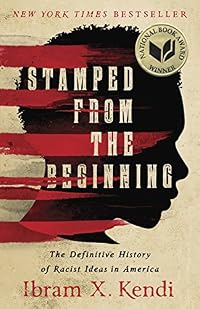
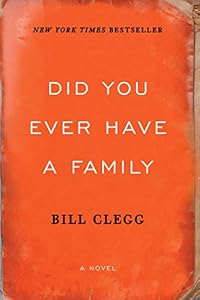
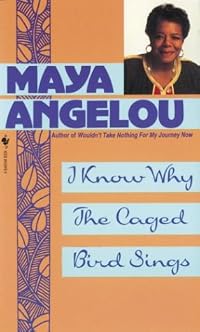
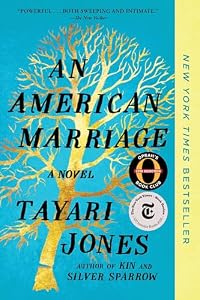

Member Recommendations
Member Reviews
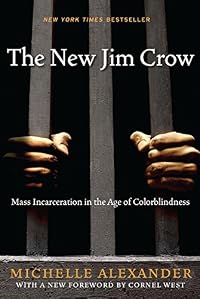
I picked up The Short and Tragic Life of Robert Peace by Jeff Hobbs because I kept running into it and it seemed like it might broaden the perspective I picked up in The New Jim Crow. The book tells the story of Robert Peace, who was born to a single mother in a particularly bleak part of NJ. He may have been born into poverty, but he was also born to a father who loved him and even after he was arrested and given a life sentence for murder, would call and help his son with his homework. His mother was determined to give him every advantage she could, working long hours in order to send him to a private Catholic school, where the teachers were dedicated to helping each student succeed. But what Robert Peace really had going for him was show more a fierce intelligence and a strong work ethic. It got him into Yale, where he met the author of this book, who was his roommate for all four years.
The author was a friend of Robert Peace, although it was only after Peace's death, as he researched the book, that he really got to know him. Previously, it seems as though Hobbs, who was white and from a privileged background, was more an admirer of Peace, who sailed through Yale with an insouciance that allowed him to both deal and consume marijuana while working in a chemistry lab and majoring in one of the most demanding science majors Yale had to offer. It seemed that Peace would succeed at anything he set his mind to.
But Peace was living for the first time in an almost entirely white environment, one in which his peers were generally wealthy and entitled, only to return to another world when school was not in session. He was adept at "facing"; presenting a different personality to each world he encountered, but it took a toll. He would end up being primarily known at Yale as the Black guy from Newark, while in an increasingly dangerous suburb of Newark, he was careful to hide his Ivy League education.
The Short and Tragic Life of Robert Peace is a fascinating book about a complex and interesting person. Hobbs liked Peace a great deal, and the book reflects that friendship, while not glossing over Peace's faults and miscalculations. While I wish that the outcome had been better and don't think that Peace couldn't have made better decisions, there's no question that he was a remarkable individual and his fate is one worth reading about. show less
The author was a friend of Robert Peace, although it was only after Peace's death, as he researched the book, that he really got to know him. Previously, it seems as though Hobbs, who was white and from a privileged background, was more an admirer of Peace, who sailed through Yale with an insouciance that allowed him to both deal and consume marijuana while working in a chemistry lab and majoring in one of the most demanding science majors Yale had to offer. It seemed that Peace would succeed at anything he set his mind to.
But Peace was living for the first time in an almost entirely white environment, one in which his peers were generally wealthy and entitled, only to return to another world when school was not in session. He was adept at "facing"; presenting a different personality to each world he encountered, but it took a toll. He would end up being primarily known at Yale as the Black guy from Newark, while in an increasingly dangerous suburb of Newark, he was careful to hide his Ivy League education.
The Short and Tragic Life of Robert Peace is a fascinating book about a complex and interesting person. Hobbs liked Peace a great deal, and the book reflects that friendship, while not glossing over Peace's faults and miscalculations. While I wish that the outcome had been better and don't think that Peace couldn't have made better decisions, there's no question that he was a remarkable individual and his fate is one worth reading about. show less
You know the ending of the book i.e. that Robert Peace will die, and the denouement clearly leads to that but when it comes, it still catches you by surprise. Because it is so sudden, his death. After all that Peace has gone through, surely he is not going to die in this manner? However, his luck runs out. I like that Jeff Hobbs didn't try to be moralistic and influence how readers may judge Peace. He simply told a story and leaves you to ponder how things went wrong for Peace, whether he could have lived his life any other way, and leaving you to draw out the lessons for yourself, if any.
This biography is a terrific piece of narrative non-fiction that really highlights in so many ways what it means to be a human being. Robert Peace grew up the son of a hardworking single mother and an imprisoned father in Newark, NJ amidst urban blight. Highly intelligent, curious, and driven, he manages to thrive in a religious private school and ultimately is accepted and attends Yale, majoring in molecular biology. Unfortunately, he is never quite able to leave his roots behind, and he continuously deals drugs before, during, and after college. Ultimately, Robert "fails to launch" and is unable to truly extricate himself from his neighborhood and drugs.
The story is told powerfully by his college roommate, Jeff. What makes this book show more special is that it leaves the reader to draw their own conclusion. Is this a story of a man who just makes poor choices and squanders opportunities? Is this the story of a man whose early childhood was so fraught with trauma that it couldn't be overcome despite his intellect? Is this a story about the vagaries of luck and life decisions? Obviously, no one can really infer policy based on one person's story, but this book raises every societal question. It's truly heartbreaking, and I think the author did his best to leave judgement aside.
At the end of the book there is an interview with the author, and one thing he said really struck me. He noted how the children of the upper classes, those who have attended the best private schools and lived in expensive suburbs, really "get" that adult guidance is there for the taking and avail themselves of it frequently and without hesitation. Unfortunately, children in less fortunate circumstance, need these adults more and avail themselves of them less. In my experience, this is true, and I just wonder how those of us who have given every bit of guidance to our own children might extend ourselves further and proactively to children who truly need it. After reading this book, I intend to seek out that opportunity. show less
The story is told powerfully by his college roommate, Jeff. What makes this book show more special is that it leaves the reader to draw their own conclusion. Is this a story of a man who just makes poor choices and squanders opportunities? Is this the story of a man whose early childhood was so fraught with trauma that it couldn't be overcome despite his intellect? Is this a story about the vagaries of luck and life decisions? Obviously, no one can really infer policy based on one person's story, but this book raises every societal question. It's truly heartbreaking, and I think the author did his best to leave judgement aside.
At the end of the book there is an interview with the author, and one thing he said really struck me. He noted how the children of the upper classes, those who have attended the best private schools and lived in expensive suburbs, really "get" that adult guidance is there for the taking and avail themselves of it frequently and without hesitation. Unfortunately, children in less fortunate circumstance, need these adults more and avail themselves of them less. In my experience, this is true, and I just wonder how those of us who have given every bit of guidance to our own children might extend ourselves further and proactively to children who truly need it. After reading this book, I intend to seek out that opportunity. show less
The Short and Tragic Life of Robert Peace is a powerful and valuable contribution to our collective discussion about poverty, race, drug culture, and violence in our society.
It's all too easy to fall into the comforting fallacy that bad things only happen to bad people, that anyone involved in criminal acts must be a thug.
We want to believe that good people don't do bad things.
Robert Peace was a good man—kind, caring, devoted, smart and curious. The decisions he made over the course of his 30 year life were driven by good motives. But still he made some bad decisions that brought him to a bad end.
What The Short and Tragic Life of Robert Peace reveals that things aren't as simple as good or bad. This man's life can't be reduced to any show more sort of pat dichotomy.
Too often when we talk about issues of poverty, race, drug culture, and violence in our society, we forget that real and complicated people lie at the heart of these problems. We argue about these issues in the abstract and don't stop to think about the actual people who choose to do these things, the day-to-day reality of those who have live and cope in the midst of these dangers.
All of these social problems have human faces. They're the consequence of decisions and actions undertaken by individuals within a community. Real people live and die, prosper or fail as a result.
The Short and Tragic Life of Robert Peace is important precisely because it's a human story—the author doesn't allow it to generalize into the worn tropes of standard public debate. It's a story that can't be summed up with easy explanations or obvious answers. This is the story of one person, complex and contradictory and flawed like the rest of us. This is the story of the decisions he made, with the best of intentions but for complex and contradictory and flawed reasons. Ultimately, this is the story of the consequences of those decisions.
His decisions, like anyone else's, were embedded in a time and place that was powerfully influenced by larger cultural, economic, and political forces. But his story reminds us that these forces matter because of how they affect real people in their daily lives.
These are complicated issues—as complicated as humanity itself—and there are no simple explanations for them. It does everyone a disservice when we forget that.
The story of Robert Peace reminds us. show less
It's all too easy to fall into the comforting fallacy that bad things only happen to bad people, that anyone involved in criminal acts must be a thug.
We want to believe that good people don't do bad things.
Robert Peace was a good man—kind, caring, devoted, smart and curious. The decisions he made over the course of his 30 year life were driven by good motives. But still he made some bad decisions that brought him to a bad end.
What The Short and Tragic Life of Robert Peace reveals that things aren't as simple as good or bad. This man's life can't be reduced to any show more sort of pat dichotomy.
Too often when we talk about issues of poverty, race, drug culture, and violence in our society, we forget that real and complicated people lie at the heart of these problems. We argue about these issues in the abstract and don't stop to think about the actual people who choose to do these things, the day-to-day reality of those who have live and cope in the midst of these dangers.
All of these social problems have human faces. They're the consequence of decisions and actions undertaken by individuals within a community. Real people live and die, prosper or fail as a result.
The Short and Tragic Life of Robert Peace is important precisely because it's a human story—the author doesn't allow it to generalize into the worn tropes of standard public debate. It's a story that can't be summed up with easy explanations or obvious answers. This is the story of one person, complex and contradictory and flawed like the rest of us. This is the story of the decisions he made, with the best of intentions but for complex and contradictory and flawed reasons. Ultimately, this is the story of the consequences of those decisions.
His decisions, like anyone else's, were embedded in a time and place that was powerfully influenced by larger cultural, economic, and political forces. But his story reminds us that these forces matter because of how they affect real people in their daily lives.
These are complicated issues—as complicated as humanity itself—and there are no simple explanations for them. It does everyone a disservice when we forget that.
The story of Robert Peace reminds us. show less
When intelligence isn’t enough
The Short and Tragic Life of Robert Peace: A Brilliant Young Man Who Left Newark for the Ivy League by Jeff Hobbs (Scribner, $27).
Jeff Hobbs, a novelist, was Robert Peace’s roommate at Yale, which gave him a front-row seat for a good part of this biography-slash-memoir. The question at the root of Robert Peace’s story is: How did a kid who escaped from a rough place and succeeded by any terms end up back in Newark, eventually murdered by a fellow drug dealer?
In The Short and Tragic Life of Robert Peace: A Brilliant Young Man Who Left Newark for the Ivy League, Hobbs has written a nuanced biography that reserves some of its most scathing criticisms for the class system at Yale, one in which Peace’s show more popularity with fellow students was actually increased by his being the guy from the ghetto who dealt dope.
This biography is nuanced, but it still makes clear that there’s a lot more involved in breaking the cycles of poverty and criminality than just getting an education. Those of us who’ve been—or who teach—first-generation college students from lower socio-economic backgrounds know that there are entire clusters of issues, including the constant pull back to the familiar (and less-demanding) norms of the family and friends who often feel abandoned by a kid who’s trying to climb out of poverty.
And, as this recent Washington Post piece points out, youth from impoverished backgrounds who do everything right still don’t succeed at rates anything like youth from wealthier backgrounds—in fact, well-off youth have to be total screw-ups to do as poorly as the poorer kids who are doing everything right.
While Hobbs doesn’t make excuses for Peace’s bad decisions, he does put them in context, and in the process creates a haunting portrait of a young man who seemed to have it made, only to watch passively while his entire life slipped away.
Reviewed on Lit/Rant: www.litrant.tumblr.com show less
The Short and Tragic Life of Robert Peace: A Brilliant Young Man Who Left Newark for the Ivy League by Jeff Hobbs (Scribner, $27).
Jeff Hobbs, a novelist, was Robert Peace’s roommate at Yale, which gave him a front-row seat for a good part of this biography-slash-memoir. The question at the root of Robert Peace’s story is: How did a kid who escaped from a rough place and succeeded by any terms end up back in Newark, eventually murdered by a fellow drug dealer?
In The Short and Tragic Life of Robert Peace: A Brilliant Young Man Who Left Newark for the Ivy League, Hobbs has written a nuanced biography that reserves some of its most scathing criticisms for the class system at Yale, one in which Peace’s show more popularity with fellow students was actually increased by his being the guy from the ghetto who dealt dope.
This biography is nuanced, but it still makes clear that there’s a lot more involved in breaking the cycles of poverty and criminality than just getting an education. Those of us who’ve been—or who teach—first-generation college students from lower socio-economic backgrounds know that there are entire clusters of issues, including the constant pull back to the familiar (and less-demanding) norms of the family and friends who often feel abandoned by a kid who’s trying to climb out of poverty.
And, as this recent Washington Post piece points out, youth from impoverished backgrounds who do everything right still don’t succeed at rates anything like youth from wealthier backgrounds—in fact, well-off youth have to be total screw-ups to do as poorly as the poorer kids who are doing everything right.
While Hobbs doesn’t make excuses for Peace’s bad decisions, he does put them in context, and in the process creates a haunting portrait of a young man who seemed to have it made, only to watch passively while his entire life slipped away.
Reviewed on Lit/Rant: www.litrant.tumblr.com show less
Robert Peace had *nothing* going for him. Born in a ghetto just outside of Newark, he was raised by a single mother while his father was imprisoned for a double murder. And yet, Robert had innate qualities inside -- drive, intelligence, curiosity, leadership -- that had him destined for something beyond the fate assigned to almost all others in his neighborhood. These qualities ulimately landed him a spot at Yale, with all expenses paid by a generous benefactor.
We know from the book's title that the story doesn't have a happy ending. Written by Peace's former Yale roommate, Jeff Hobbs, this book doesn't answer the "Why?" -- frankly, I don't think anyone will ever know. However, Hobbs paints a picture of a brilliant young man who can't show more find his way in life. He doesn't feel at ease in the rarified world of the elite, and while he wants to leave the ghetto he can't seem to find a way out. Thought provoking and devastating all at once. show less
We know from the book's title that the story doesn't have a happy ending. Written by Peace's former Yale roommate, Jeff Hobbs, this book doesn't answer the "Why?" -- frankly, I don't think anyone will ever know. However, Hobbs paints a picture of a brilliant young man who can't show more find his way in life. He doesn't feel at ease in the rarified world of the elite, and while he wants to leave the ghetto he can't seem to find a way out. Thought provoking and devastating all at once. show less
Tragic is certainly an appropriate word to apply to the story of a young man who had nothing going for him, then everything, and then nothing again. So much potential to be nurtured, so much promise unfulfilled and so much frustration and dead ends to deal with. Robert "Shawn" Peace grew up in a challenging setting, with a loving father ripped from his life in a heartbreaking way, was able to apply his magnificent brains and amazing attitude so well that he seemed to overcome his upbringing, obtaining a scholarship to Yale. Unfortunately, this book seems to be saying "You can take a boy out of the 'hood, but..."
I felt so much for Rob, being only a year younger we confronted the same zeitgeist, but my upbringing, barely half a country show more away from his was so disparate, it could've been too separate worlds. I appreciate Jeff Hobbs, Rob's Yale roommate, so much for introducing us to such an amazing young man, giving others the chance to mourn him, and hopefully motivate us to change things in this country for those who come after. A very moving, poignant, and heartbreaking tribute. show less
I felt so much for Rob, being only a year younger we confronted the same zeitgeist, but my upbringing, barely half a country show more away from his was so disparate, it could've been too separate worlds. I appreciate Jeff Hobbs, Rob's Yale roommate, so much for introducing us to such an amazing young man, giving others the chance to mourn him, and hopefully motivate us to change things in this country for those who come after. A very moving, poignant, and heartbreaking tribute. show less
Members
- Recently Added By
Lists

Books about Gun Violence
54 works; 1 member
Author Information

7 Works 1,149 Members
Awards and Honors
Awards
Distinctions
Common Knowledge
- People/Characters
- Robert Peace
- Important places
- Newark, New Jersey, USA
Classifications
- Genres
- Biography & Memoir, General Nonfiction, Nonfiction, History
- DDC/MDS
- 974.9 — History & geography History of North America Northeastern United States (New England and Middle Atlantic states) New Jersey
- LCC
- E185.97 .P38 .H63 — History of the United States United States Elements in the population Afro-Americans Biography. Genealogy
- BISAC
Statistics
- Members
- 939
- Popularity
- 28,093
- Reviews
- 44
- Rating
- (4.08)
- Languages
- English
- Media
- Paper, Audiobook, Ebook
- ISBNs
- 10
- ASINs
- 10