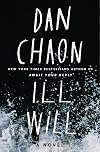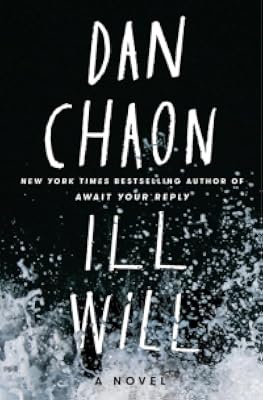
Ill Will
by Dan Chaon 
On This Page
Description
NATIONAL BESTSELLER • Two sensational unsolved crimes—one in the past, another in the present—are linked by one man’s memory and self-deception in this chilling novel of literary suspense from National Book Award finalist Dan Chaon.Includes an exclusive conversation between Dan Chaon and Lynda Barry
NAMED ONE OF THE BEST BOOKS OF THE YEAR BY
The Wall Street Journal • NPR • The New York Times • Los Angeles Times • The Washington Post • Kirkus Reviews • Publishers Weekly
show more “We are always telling a story to ourselves, about ourselves.” This is one of the little mantras Dustin Tillman likes to share with his patients, and it’s meant to be reassuring. But what if that story is a lie?
A psychologist in suburban Cleveland, Dustin is drifting through his forties when he hears the news: His adopted brother, Rusty, is being released from prison. Thirty years ago, Rusty received a life sentence for the massacre of Dustin’s parents, aunt, and uncle. The trial came to epitomize the 1980s hysteria over Satanic cults; despite the lack of physical evidence, the jury believed the outlandish accusations Dustin and his cousin made against Rusty. Now, after DNA analysis has overturned the conviction, Dustin braces for a reckoning.
Meanwhile, one of Dustin’s patients has been plying him with stories of the drowning deaths of a string of drunk college boys. At first Dustin dismisses his patient's suggestions that a serial killer is at work as paranoid thinking, but as the two embark on an amateur investigation, Dustin starts to believe that there’s more to the deaths than coincidence. Soon he becomes obsessed, crossing all professional boundaries—and putting his own family in harm’s way.
From one of today’s most renowned practitioners of literary suspense, Ill Will is an intimate thriller about the failures of memory and the perils of self-deception. In Dan Chaon’s nimble, chilling prose, the past looms over the present, turning each into a haunted place.
“In his haunting, strikingly original new novel, [Dan] Chaon takes formidable risks, dismantling his timeline like a film editor.”—The New York Times Book Review
“The scariest novel of the year . . . ingenious . . . Chaon’s novel walks along a garrote stretched taut between Edgar Allan Poe and Alfred Hitchcock.”—The Washington Post. show less
Tags
Recommendations
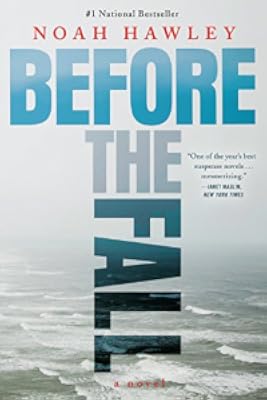
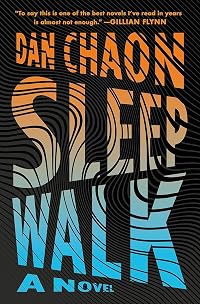
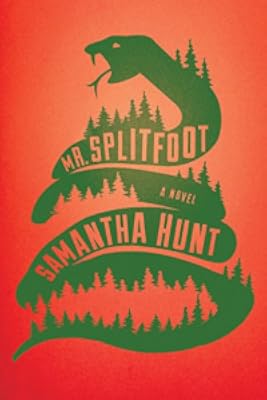
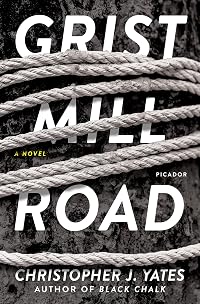
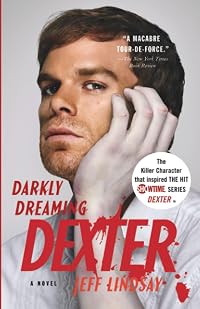

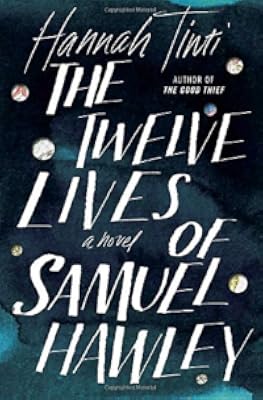
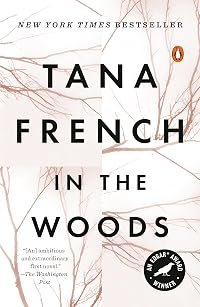
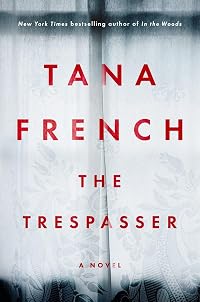
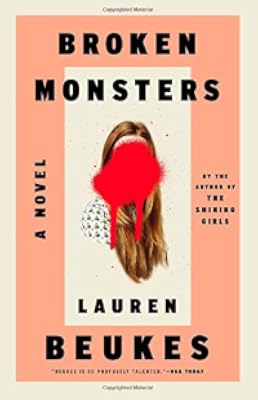
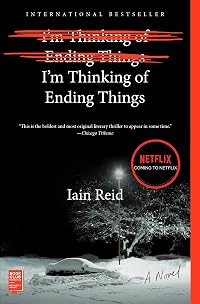
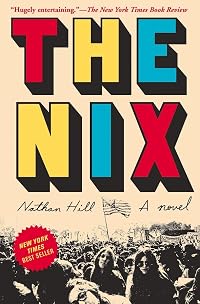
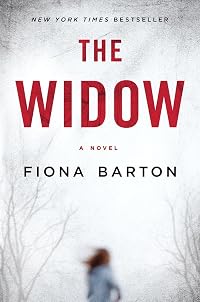

Member Recommendations
sturlington Both books gave me a similar unsettling feeling and both have unreliable narrators.
Member Reviews
4:52 A. M. That’s what time I finished Dan Chaon’s Ill Will and turned out the light to try to sleep. Ill Will is disconcerting, an exploration of memory and its unreliability, family and its unreliability, and narrative and its unreliability. On the surface, it’s the story of Dustin, a psychologist whose parents were murdered thirty years ago. Just as Dustin learns that his older foster brother Rusty, who has served thirty years in prison for murdering their parents, aunt, and uncle, has been freed by The Innocence Project, his wife Jill tells him she is dying. Meanwhile, a patient named Aqil is pushing a conspiracy theory that several area drownings over the past decade are really the work of a serial killer, perhaps even a cult show more of killers.
When his parents were murdered long ago, thirteen year-old Dustin and his cousin, Kate, testified against Rusty. They described satanic rituals he performed, tying him to the Satanic Ritual Panic that engulfed America in the past. Kate’s sister was there that night, too, but did not testify and rejected Dustin and Kate’s narrative. Rusty wants to talk it out, but when Dustin refuses to return his calls, he begins calling Aaron, Dustin’s youngest son. Aaron, reeling at the loss of his mother is sinking into heroin addiction and hanging with some very doubtful characters.
When Jill dies, Dustin finds distraction in Aqil’s conspiracy, joining him in interviewing the family and friends of some of the victims and looking for a missing, suspected next victim. Aqil is quite the unreliable and sketchy character himself, but Dustin’s suspicions and skepticism fade. After all, if he were not investigating this with urgency, then he would be alone and idle and mourning his wife. It is so much easier to seek a satanic cult than face his grief.
Ill Will is going to stay with you for a while if you read it. It does not present a straightforward narrative though most of your questions will be answered. Central questions, though, will remain. What really happened thirty years ago? Did Dustin and Kate lie out of malice or because they believed it was true? Perhaps their narrative was true but the inference based on the narrative was wrong. Who is telling the truth?
Chaon experiments with narrative, not just with telling multiple narrators in the past and present in the first, second, and third person. He’s got unfinished sentences, fragments, disjointed and broken narratives. There’s a section of side by side narratives that start and end, sometimes in mid-sentence, without connecting, but still moving us forward, revealing more and more of the story. We come to know a lot, but with uncertainty.
If you like your mysteries tied up with a neat bow, the dead buried, the killer arrested, and every question answered, Ill Will is going to frustrate you. If uncertainty intrigues and fascinates you, Ill Will will satisfy. No matter what kind of reader you are, Ill Will will keep you up at night.
Ill Will will be released on March 7th. I received an advance e-galley from the publisher through NetGalley.
★★★★
http://tonstantweaderreviews.wordpress.com/2017/02/13/9780345476043/ show less
When his parents were murdered long ago, thirteen year-old Dustin and his cousin, Kate, testified against Rusty. They described satanic rituals he performed, tying him to the Satanic Ritual Panic that engulfed America in the past. Kate’s sister was there that night, too, but did not testify and rejected Dustin and Kate’s narrative. Rusty wants to talk it out, but when Dustin refuses to return his calls, he begins calling Aaron, Dustin’s youngest son. Aaron, reeling at the loss of his mother is sinking into heroin addiction and hanging with some very doubtful characters.
When Jill dies, Dustin finds distraction in Aqil’s conspiracy, joining him in interviewing the family and friends of some of the victims and looking for a missing, suspected next victim. Aqil is quite the unreliable and sketchy character himself, but Dustin’s suspicions and skepticism fade. After all, if he were not investigating this with urgency, then he would be alone and idle and mourning his wife. It is so much easier to seek a satanic cult than face his grief.
Ill Will is going to stay with you for a while if you read it. It does not present a straightforward narrative though most of your questions will be answered. Central questions, though, will remain. What really happened thirty years ago? Did Dustin and Kate lie out of malice or because they believed it was true? Perhaps their narrative was true but the inference based on the narrative was wrong. Who is telling the truth?
Chaon experiments with narrative, not just with telling multiple narrators in the past and present in the first, second, and third person. He’s got unfinished sentences, fragments, disjointed and broken narratives. There’s a section of side by side narratives that start and end, sometimes in mid-sentence, without connecting, but still moving us forward, revealing more and more of the story. We come to know a lot, but with uncertainty.
If you like your mysteries tied up with a neat bow, the dead buried, the killer arrested, and every question answered, Ill Will is going to frustrate you. If uncertainty intrigues and fascinates you, Ill Will will satisfy. No matter what kind of reader you are, Ill Will will keep you up at night.
Ill Will will be released on March 7th. I received an advance e-galley from the publisher through NetGalley.
★★★★
http://tonstantweaderreviews.wordpress.com/2017/02/13/9780345476043/ show less
Wow. I just finished this and absolutely loved it. Why? Well, first of all, the writing style is like nothing I’ve ever seen before. Dan Chaon is not afraid to take risks and you will see it in the fragmented conversations with odd pauses in punctuation and spacing, and also the multiple streams of writing sharing the page in columnar format. As I read, I was so struck by the authors turn of phrase that I was marking passages I wanted to remember, (there were so many!) and this one struck me as particularly relevant.
“ You look up for a moment and you’re not sure which life is real. You’ve split yourself into so many honeycombed parts that they barely notice each other - all of them pacing, concurrently, parallel streams of show more thought, and each one thinks of its self as “me”.
Is it foolish to to think that we selves are all connected? That we are all following the same thread - the tributaries that lead to the people we’ll be in the future, and the trails we followed once in the past”
Without giving too much away, the author expertly weaves a narrative criss-crossing time, (back and forth), with multiple characters POV, in all their complexity and with many twists and turns along the way. Who to believe, and whose life, whose story, is “real”? Its up to you to figure that out. show less
“ You look up for a moment and you’re not sure which life is real. You’ve split yourself into so many honeycombed parts that they barely notice each other - all of them pacing, concurrently, parallel streams of show more thought, and each one thinks of its self as “me”.
Is it foolish to to think that we selves are all connected? That we are all following the same thread - the tributaries that lead to the people we’ll be in the future, and the trails we followed once in the past”
Without giving too much away, the author expertly weaves a narrative criss-crossing time, (back and forth), with multiple characters POV, in all their complexity and with many twists and turns along the way. Who to believe, and whose life, whose story, is “real”? Its up to you to figure that out. show less
Ill Will is a very good unsettling novel that is best served when the reader doesn't know much about it. Dan Chaon is a great writer, so just read the book and read more about it afterwards.
The book involves murders and deaths that might be murder, and characters faced with great interpretive dilemmas - the greatest being how to interpret their own fractured selves. Chaon's prose is full of tricks to indicate the gaps and dissociation of consciousness experienced by his characters. He is also good at swiftly creating characters who differ from each other in personality and the ways they think. People don't all sound the same in Chaon's hands. This is so even though one thing he is exploring is the legacy of violence and damage among show more family members and across generations. show less
The book involves murders and deaths that might be murder, and characters faced with great interpretive dilemmas - the greatest being how to interpret their own fractured selves. Chaon's prose is full of tricks to indicate the gaps and dissociation of consciousness experienced by his characters. He is also good at swiftly creating characters who differ from each other in personality and the ways they think. People don't all sound the same in Chaon's hands. This is so even though one thing he is exploring is the legacy of violence and damage among show more family members and across generations. show less
 This review was written for LibraryThing Early Reviewers.
So I grew up in Minnesota and went to college at the University of Minnesota. Around the time that I was in late high school and about to start college, there were whisperings and rumors about a spate of seemingly accidental drownings of college students across the country. One of these students was a U of MN student named Chris Jenkins, who was last seen drunk and kicked out of a bar, before his drowned body was discovered in the Mississippi River. This drowning has been cited in the “Smiley Face Murder” Conspiracy. It’s a theory that these seemingly random drownings of male white co-eds are actually connected to a killer or killers who target them, and then leave Smiley Faced graffiti near the bodies. So when “Ill Will” was show more coming out and I found out that one aspect of it was this farfetched (but kind of fun) crime theory, I was totally interested. And, even better, the other big theme of this book is the concept of 1980s Satanic Panic. Aka, the conspiracy theory that was red hot in the 80s and speculated that there were millions of Satanists hiding out in America who were sacrificing and abusing children all in the name of the Dark Lord Lucifer. So you get two paranoid and ridiculous conspiracies for the price of one!!!!
“Ill Will” touches on these themes, but it is far more literary and cerebral than I thought it was going to be. We follow the perspectives of a number of people within this damaged family. The first, and foremost, is Dustin, a man who was the star witness against his older, adopted brother Rusty, who was accused of murdering their parents and aunt and uncle in a Satanic rage. Dustin has become a psychologist, who has tried to keep his life together since that horrible night and the trail that followed it. But when his wife is diagnosed with cancer and begins to deteriorate, he becomes fixated on a wild serial killer theory one of his patients presents to him. Next is that of Aaron, the son of Dustin, who, after his mother dies, has found himself left alone with an obsessive and broken father, and he finds solace in drugs and risky behavior. There is Kate, the cousin of Dustin who is feeling guilt for her part in what happened that night and at the trial, and also terrified now that Rusty is out of prison. And then there’s Rusty himself, someone who was a messed up and dangerous teen who then was sent to prison for something he may not have committed. I was expecting a lot of straight forward and linear plot lines, with maybe the two conspiracies coming together. But instead I got an experimental, time and perspective jumping, format changing, meditation on loss, grief, guilt, and mental illness.
Which, in a lot of ways, is a pretty good thing. I think that horror far too often is relegated or expected to fit within straight forward genre fiction. Horror is expected to be mindless, maybe easy, and while not necessarily poorly written (on the contrary, there are lots of horror authors who know how to create wonderful stories and worlds) it is expected to be straight forward and perhaps a bit formulaic. So I like seeing very cerebral and deep works of horror. Chaon unsettles the reader through all of his tricks and devices, from time jumps to strange writing outlines to odd grammatical choices. It was incredibly effective, as the oddness of it all just kind of set me on edge. I think that the problem, however, is that I did sometimes find it a bit confusing, and was more inclined to have to go back and retrace my steps instead of being pulled forward in the story. It’s good to want to have everything straight. But when you have to go back and reread a number of things to totally piece it all together, it can be a bit of a distraction. I found myself vaguely irritated as I jumped back a few times, and while it didn’t stop me from reading it, it definitely felt more like work than leisurely reading.
I think that “Ill Will” is a very thoughtful and detailed read, and I definitely would recommend it to horror fans who like their books intricate and deep. But casual horror fans, you may have a hard time with it. Because I kind of did at times. All that said, I like that it dares to go to those strange and complex places. show less
“Ill Will” touches on these themes, but it is far more literary and cerebral than I thought it was going to be. We follow the perspectives of a number of people within this damaged family. The first, and foremost, is Dustin, a man who was the star witness against his older, adopted brother Rusty, who was accused of murdering their parents and aunt and uncle in a Satanic rage. Dustin has become a psychologist, who has tried to keep his life together since that horrible night and the trail that followed it. But when his wife is diagnosed with cancer and begins to deteriorate, he becomes fixated on a wild serial killer theory one of his patients presents to him. Next is that of Aaron, the son of Dustin, who, after his mother dies, has found himself left alone with an obsessive and broken father, and he finds solace in drugs and risky behavior. There is Kate, the cousin of Dustin who is feeling guilt for her part in what happened that night and at the trial, and also terrified now that Rusty is out of prison. And then there’s Rusty himself, someone who was a messed up and dangerous teen who then was sent to prison for something he may not have committed. I was expecting a lot of straight forward and linear plot lines, with maybe the two conspiracies coming together. But instead I got an experimental, time and perspective jumping, format changing, meditation on loss, grief, guilt, and mental illness.
Which, in a lot of ways, is a pretty good thing. I think that horror far too often is relegated or expected to fit within straight forward genre fiction. Horror is expected to be mindless, maybe easy, and while not necessarily poorly written (on the contrary, there are lots of horror authors who know how to create wonderful stories and worlds) it is expected to be straight forward and perhaps a bit formulaic. So I like seeing very cerebral and deep works of horror. Chaon unsettles the reader through all of his tricks and devices, from time jumps to strange writing outlines to odd grammatical choices. It was incredibly effective, as the oddness of it all just kind of set me on edge. I think that the problem, however, is that I did sometimes find it a bit confusing, and was more inclined to have to go back and retrace my steps instead of being pulled forward in the story. It’s good to want to have everything straight. But when you have to go back and reread a number of things to totally piece it all together, it can be a bit of a distraction. I found myself vaguely irritated as I jumped back a few times, and while it didn’t stop me from reading it, it definitely felt more like work than leisurely reading.
I think that “Ill Will” is a very thoughtful and detailed read, and I definitely would recommend it to horror fans who like their books intricate and deep. But casual horror fans, you may have a hard time with it. Because I kind of did at times. All that said, I like that it dares to go to those strange and complex places. show less
This is the first novel I have read from Dan Chaon. It will be the last. I finished it for only two reasons:
First, since I received it at no cost from LibraryThing in return for an unbiased review, I felt obligated to at least make it to the end.
Second, I really wanted to find out what had really happened 30 years ago...the joke was on me there.
This is a loooooong book and it appears the author is playing around with testing various writing techniques for no particular reason, other than maybe he's bored and knows he doesn't really have a story, so he's just going to drag it out and hope curiosity will bring the reader along. Page after page of presenting the material in 3 or 4 columns for no apparent reason? Really contrived.
I'd say show more a good third of the book is rambling, LSD-like visions -- sometimes the result of a drug habit, sometimes because the character is sober, but basically just nuts.
The family members are all completely estranged from each other -- even those who live in the same house together aren't ever really "together".
The dad, Dustin, is supposed to be a psychologist, but you have to ask how someone so completely out of touch with reality could possibly function in that position. BUT, on the other hand....you only really get to know one of his patients. He develops a personal relationship with this patient, who is trying to investigate the mysterious drowning deaths of several young men. The patient claims to be a former law enforcement officer, but he declines to share any personal info with the psychologist. Dustin muses to himself that this is probably not a good way to conduct a professional relationship and wonders why he has shared the details of his life with this patient, while learning basically nothing of the patient's life. DUH. (Keep in mind that he is sharing traumatic events that he hasn't even told his own college-age sons about!)
Did you see the movie "The Sixth Sense"? As the movie progressed, did you think it was kinda weird and creepy that the psychologist spent soooo much time with the little boy? Did you wonder why the KID was giving marital advice to the DOCTOR? Probably, but the movie was so good you just went with it, and when the end came, it literally took your breath away? (OK, that may have been just me). Then you replayed it in your mind and said Oh yeah, of course!! How could I not see that coming?
Yeah, that's like this book, but without an ending.
Pretty sure Mr. Chaon must have gotten really immersed in his characters' drug-addled mentally ill visions, while thinking up goofy ways to present it on paper (Are these typos? Is it supposed to look like this, and if so, is there a point??) and he suddenly glanced at his watch and said, "Oh shoot--look at the time! Gotta get this manuscript to UPS before 5pm". Yeah, the "ending" is indeed that bad.
I would not recommend this book. show less
First, since I received it at no cost from LibraryThing in return for an unbiased review, I felt obligated to at least make it to the end.
Second, I really wanted to find out what had really happened 30 years ago...the joke was on me there.
This is a loooooong book and it appears the author is playing around with testing various writing techniques for no particular reason, other than maybe he's bored and knows he doesn't really have a story, so he's just going to drag it out and hope curiosity will bring the reader along. Page after page of presenting the material in 3 or 4 columns for no apparent reason? Really contrived.
I'd say show more a good third of the book is rambling, LSD-like visions -- sometimes the result of a drug habit, sometimes because the character is sober, but basically just nuts.
The family members are all completely estranged from each other -- even those who live in the same house together aren't ever really "together".
The dad, Dustin, is supposed to be a psychologist, but you have to ask how someone so completely out of touch with reality could possibly function in that position. BUT, on the other hand....you only really get to know one of his patients. He develops a personal relationship with this patient, who is trying to investigate the mysterious drowning deaths of several young men. The patient claims to be a former law enforcement officer, but he declines to share any personal info with the psychologist. Dustin muses to himself that this is probably not a good way to conduct a professional relationship and wonders why he has shared the details of his life with this patient, while learning basically nothing of the patient's life. DUH. (Keep in mind that he is sharing traumatic events that he hasn't even told his own college-age sons about!)
Did you see the movie "The Sixth Sense"? As the movie progressed, did you think it was kinda weird and creepy that the psychologist spent soooo much time with the little boy? Did you wonder why the KID was giving marital advice to the DOCTOR? Probably, but the movie was so good you just went with it, and when the end came, it literally took your breath away? (OK, that may have been just me). Then you replayed it in your mind and said Oh yeah, of course!! How could I not see that coming?
Yeah, that's like this book, but without an ending.
Pretty sure Mr. Chaon must have gotten really immersed in his characters' drug-addled mentally ill visions, while thinking up goofy ways to present it on paper (Are these typos? Is it supposed to look like this, and if so, is there a point??) and he suddenly glanced at his watch and said, "Oh shoot--look at the time! Gotta get this manuscript to UPS before 5pm". Yeah, the "ending" is indeed that bad.
I would not recommend this book. show less
This review was written for LibraryThing Early Reviewers.This book is crazy, but in a good way. At first when I saw the text messages thrown in and the four-column per page sections, I thought it would be gimmicky, but it wasn’t. It reminds me of Dark Places by Gillian Flynn in a number of ways, but it pushes beyond those hooks and has even more deliberate reader manipulation about it. At first, I thought it was because I have an uncorrected proof. There are dropped sentences, lines that don’t join up and missing punctuation. Then I noticed they were confined to Dustin’s narrative and I thought it was a great way of showing how disconnected he was and how his unraveling was speeding up.
Then I was wondering if Chaon was just going to tar each person with the same shade of crazy, but show more there are some differences. Not a lot, so the wall of crazy is pretty solid and it’s hard to connect with these people. They’re all pretty repulsive, but interesting and that kept me with the story. And at the beginning each timeline is very short and results in a choppy introduction to the situation. On reflection that might have been deliberate to reinforce the overall immersion into this insane world where everyone is so damaged it’s a wonder any of them survived to adulthood. I especially liked Dustin’s appropriated ‘mantras’ that he loved to collect and spout at patients. He’s so un-self-aware that it’s scary.
There isn’t any blatant cruelty or sadistic enjoyment of brutality or anything; it isn’t gory. But it is disturbing in many ways and bleak, jeez is it bleak. Everyone is adrift and basically leading pointless lives. Only Wave seems to have done something positive, but even that is questionable because as Rusty says of himself - he’s the only murderer who was caught before he had a chance to kill anyone. So we can’t feel too sorry for him.
Many reviewers cite the ambiguity of the end as a problem, and at first I did, too, but after thinking about it off and on for a couple days, I realized that what I thought was ambiguous wasn’t. Because Aaron mentions Aqil to other people, I don’t think he was a figment of Dustin’s hyper malleable imagination. After it’s revealed why he chose Dustin in the first place it was easier to smell a set up. Then there was the Lyndhurst connection. Kate’s narrative cemented it - Aqil was leading him and manipulating him just as she did when their parents were killed. But how did Aqil know he would be so susceptible? Whether he really was an ex-cop is questionable, but after his Jack Daniel’s killer theories got weirder and weirder, I wondered if he might be the culprit. And he was. Kind of. His bit about piggybacking onto a series of events makes me think he only did a few. That Aaron was in a sensory deprivation tank and left to die seems true to me. That he went with Dustin to Chicago is also clear and after Dustin’s flight, caught up with him, killed him and dumped him in Nebraska. I couldn’t figure out why Aaron even had a brother in this story and when he popped up in the end, I thought that could have been done by someone else. Kate maybe.
As to Dustin’s final and initial culpability - it’s not a stretch and when you read about him through Kate, Wave and finally Rusty’s eyes. He reminded me of Michael Myers in the Halloween movies...I mean the bits where he’s portrayed as a little kid.
Then I was wondering if Chaon was just going to tar each person with the same shade of crazy, but show more there are some differences. Not a lot, so the wall of crazy is pretty solid and it’s hard to connect with these people. They’re all pretty repulsive, but interesting and that kept me with the story. And at the beginning each timeline is very short and results in a choppy introduction to the situation. On reflection that might have been deliberate to reinforce the overall immersion into this insane world where everyone is so damaged it’s a wonder any of them survived to adulthood. I especially liked Dustin’s appropriated ‘mantras’ that he loved to collect and spout at patients. He’s so un-self-aware that it’s scary.
There isn’t any blatant cruelty or sadistic enjoyment of brutality or anything; it isn’t gory. But it is disturbing in many ways and bleak, jeez is it bleak. Everyone is adrift and basically leading pointless lives. Only Wave seems to have done something positive, but even that is questionable because as Rusty says of himself - he’s the only murderer who was caught before he had a chance to kill anyone. So we can’t feel too sorry for him.
Many reviewers cite the ambiguity of the end as a problem, and at first I did, too, but after thinking about it off and on for a couple days, I realized that what I thought was ambiguous wasn’t. Because Aaron mentions Aqil to other people, I don’t think he was a figment of Dustin’s hyper malleable imagination. After it’s revealed why he chose Dustin in the first place it was easier to smell a set up. Then there was the Lyndhurst connection. Kate’s narrative cemented it - Aqil was leading him and manipulating him just as she did when their parents were killed. But how did Aqil know he would be so susceptible? Whether he really was an ex-cop is questionable, but after his Jack Daniel’s killer theories got weirder and weirder, I wondered if he might be the culprit. And he was. Kind of. His bit about piggybacking onto a series of events makes me think he only did a few. That Aaron was in a sensory deprivation tank and left to die seems true to me. That he went with Dustin to Chicago is also clear and after Dustin’s flight, caught up with him, killed him and dumped him in Nebraska. I couldn’t figure out why Aaron even had a brother in this story and when he popped up in the end, I thought that could have been done by someone else. Kate maybe.
As to Dustin’s final and initial culpability - it’s not a stretch and when you read about him through Kate, Wave and finally Rusty’s eyes. He reminded me of Michael Myers in the Halloween movies...I mean the bits where he’s portrayed as a little kid.
This review was written for LibraryThing Early Reviewers.My first impressions of this book were not great. It seemed like a hot mess, to be honest. Jumping around in time and in point of view, from third person to first, and sometimes even second. And what was it with sentences just ending in the middle like.
But gradually, sneakily, this book got me in its grip and would not let me go. And I absolutely love it when that happens.
This is a hard story to summarize, but let me try. The focal character is Dustin Tillman, who's had a hard life. When he was thirteen, his parents and his aunt and uncle were massacred, and his adopted older brother Russell was indicted for the crimes, based largely on Dustin's and his cousin Kate's testimony. Which concerned Satanism (a big thing back in the '80s, if show more you recall). Thirty years later, though, Russell is cleared by the Innocence Project and released. Dustin, now a seemingly successful psychologist, is also dealing with his wife's terminal cancer and his estrangement from his teenage sons, and he's forming an unhealthy relationship with a patient, Aqil. Aqil has uncovered what he thinks is a serial killer (or possibly a cult?) drowning college boys around the area, and he wants Dustin to help him investigate.
It becomes increasingly clear that neither we nor any of these characters have a coherent idea of the truth of any of these events, Dustin least of all. Our memories are untrustworthy, stories we tell ourselves to make sense out of our lives, or "truths" other people implant in our brains. Here is where Chaon's odd stylistic choices begin to work their magic. Looping around in time, skipping from one unreliable narrator to the next, the reader becomes hyper-aware of the unreliability of memory. Ending sentences in the middle--something only Dustin does--demonstrates his fundamental disconnect from the events of his life. At a few points, the text splits into three or four columns, illustrating how multiple perspectives, even contradictory ones, can be true, or perceived to be true, at the same time. As we go deeper down this rabbit hole, we realize that everything we think of as real is fundamentally untrustworthy. Like the characters, how can we even be sure if we are alive or dead?
This story is not for everyone. It is about the ambiguity of reality, so the reader has to be comfortable with an ambiguous story. Chaon lets the readers assemble their own truths out of the component parts he gives us, just as the characters do. While I think there are two characters (minor ones) who are more trustworthy than the rest, even they are just putting theories together. No one knows, so whatever you decide did happen is in fact your truth.
By the end, I had become convinced that Chaon is a master craftsman, and for the last 200 or so pages, I could not put this book down. Chaon has built in so many twists and turns and tunnels, it's like a great funhouse of a book that I'm sure would reveal more of itself with multiple readings. While not a comforting story--or maybe it is?--it was a fascinating trip into the depths of the human experience. show less
But gradually, sneakily, this book got me in its grip and would not let me go. And I absolutely love it when that happens.
This is a hard story to summarize, but let me try. The focal character is Dustin Tillman, who's had a hard life. When he was thirteen, his parents and his aunt and uncle were massacred, and his adopted older brother Russell was indicted for the crimes, based largely on Dustin's and his cousin Kate's testimony. Which concerned Satanism (a big thing back in the '80s, if show more you recall). Thirty years later, though, Russell is cleared by the Innocence Project and released. Dustin, now a seemingly successful psychologist, is also dealing with his wife's terminal cancer and his estrangement from his teenage sons, and he's forming an unhealthy relationship with a patient, Aqil. Aqil has uncovered what he thinks is a serial killer (or possibly a cult?) drowning college boys around the area, and he wants Dustin to help him investigate.
It becomes increasingly clear that neither we nor any of these characters have a coherent idea of the truth of any of these events, Dustin least of all. Our memories are untrustworthy, stories we tell ourselves to make sense out of our lives, or "truths" other people implant in our brains. Here is where Chaon's odd stylistic choices begin to work their magic. Looping around in time, skipping from one unreliable narrator to the next, the reader becomes hyper-aware of the unreliability of memory. Ending sentences in the middle--something only Dustin does--demonstrates his fundamental disconnect from the events of his life. At a few points, the text splits into three or four columns, illustrating how multiple perspectives, even contradictory ones, can be true, or perceived to be true, at the same time. As we go deeper down this rabbit hole, we realize that everything we think of as real is fundamentally untrustworthy. Like the characters, how can we even be sure if we are alive or dead?
This story is not for everyone. It is about the ambiguity of reality, so the reader has to be comfortable with an ambiguous story. Chaon lets the readers assemble their own truths out of the component parts he gives us, just as the characters do. While I think there are two characters (minor ones) who are more trustworthy than the rest, even they are just putting theories together. No one knows, so whatever you decide did happen is in fact your truth.
By the end, I had become convinced that Chaon is a master craftsman, and for the last 200 or so pages, I could not put this book down. Chaon has built in so many twists and turns and tunnels, it's like a great funhouse of a book that I'm sure would reveal more of itself with multiple readings. While not a comforting story--or maybe it is?--it was a fascinating trip into the depths of the human experience. show less
This review was written for LibraryThing Early Reviewers.Members
- Recently Added By
Lists

Rooster Summer Reading Challenge 2017
6 works; 3 members

Best Contemporary Literary Fiction (Around the Last 30 Years)
388 works; 124 members

Best 21st Century Books (So Far)
670 works; 86 members

Unreliable Narrators
170 works; 43 members

Shirley Jackson Award Winners and Shortlist 2007-2020
77 works; 6 members

Best Crime Fiction
262 works; 39 members

Midwest
5 works; 2 members

Fiction: Crime, Detective, Mystery
350 works; 3 members

Books Read in 2017
4,249 works; 130 members

Books Read in 2022
5,166 works; 114 members

USA Road Trip
50 works; 3 members

Gimmicks
56 works; 12 members

Kirkus Starred Fiction Reviews of Books Published in 2017
412 works; 7 members

Books Tagged Cults
14 works; 1 member

Psychological Thrillers
13 works; 3 members

2018 Hugo Eligible Novels
170 works; 16 members

To Read
617 works; 7 members

Top Five Books of 2017
757 works; 231 members

Serial Killer Thrillers
56 works; 6 members

Books We Discovered On LibraryThing
530 works; 130 members
Author Information

14+ Works 4,957 Members
Dan Chaon is an author born and raised in Nebraska. He is a novelist who wrote "Among the Missing" which was a 2001 finalist for the National Book Award and named one of the year's ten best books by the American Library Association. His short stories have appeared in Best American Short Stories, The Pushcart Prize Anthologies and The O. Henry show more Prize Stories. His 2017 novel "Ill Will" was named one of the best books of the year by The New York Times and Publishers Weekly. It was also nominated for a Shirley Jackson Award and International Thriller Writers Award. Chaon began his career as a professor at Oberlin College where he was the Pauline Delaney Professor of Creative Writing. He retired in 2018 to fcous full-time on his writng. His third short story collection, Stay Awake, was a finalist for The Story Prize. (Bowker Author Biography) show less
Dan Chaon is a LibraryThing Author, an author who lists their personal library on LibraryThing.
Some Editions
Awards and Honors
Awards
Common Knowledge
- Canonical title
- Ill Will
- Original publication date
- 2017
- Important places
- Ohio, USA; Nebraska, USA; Chicago, Illinois, USA
- Epigraph
- "We meet our destiny in the road we take to avoid it." -- Jean de La Fontaine
- Dedication
- For Paul
- First words
- Sometime in the first days of November the body of the young man who had disappeared sank to the bottom of the river.
- Quotations
- “Most people seemed to believe that they were experts of their own life story. They had a set of memories that they strung like beads, and this necklace told a sensible tale. But she suspected that most of these stories wou... (show all)ld fall apart under strict examination — that, in fact, we were only peeping through a keyhole of our lives, and the majority of the truth, the reality of what happened to us, was hidden. Memories were no more solid than dreams.”
- Last words
- (Click to show. Warning: May contain spoilers.)About a hundred miles from where his father is waiting to be identified.
Classifications
Statistics
- Members
- 795
- Popularity
- 34,918
- Reviews
- 140
- Rating
- (3.42)
- Languages
- 5 — English, French, German, Italian, Korean
- Media
- Paper, Audiobook, Ebook
- ISBNs
- 13
- ASINs
- 6