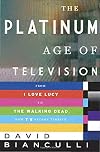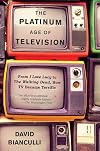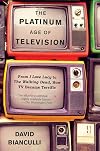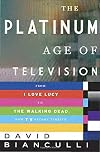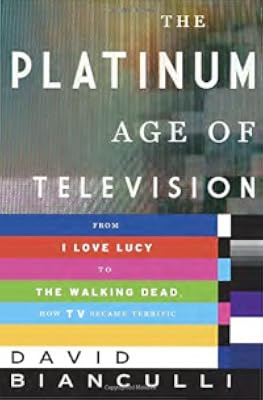
The Platinum Age of Television: From I Love Lucy to The Walking Dead, How TV Became Terrific
by David Bianculli
On This Page
Description
"Television shows have now eclipsed films as the premier form of visual narrative art of our time. This new book by one of our finest critics explains--historically, in depth, and with interviews with the celebrated creators themselves--how the art of must-see/binge-watch television evolved. Darwin had his theory of evolution, and David Bianculli has his. Bianculli's theory has to do with the concept of quality television: what it is and, crucially, how it got that way. In tracing the show more evolutionary history of our progress toward a Platinum Age of Television--our age, the era of The Sopranos and Breaking Bad and Mad Men and The Wire and Homeland and Girls--he focuses on the development of the classic TV genres, among them the sitcom, the crime show, the miniseries, the soap opera, the western, the animated series and the late night talk show. In each genre, he selects five key examples of the form, tracing its continuities and its dramatic departures and drawing on exclusive and in-depth interviews with many of the most famed auteurs in television history. Television has triumphantly come of age artistically; David Bianculli's book is the first to date to examine, in depth and in detail and with a keen critical and historical sense, how this inspiring development came about"-- show lessTags
Recommendations









Member Reviews
For almost forty years, Bianculli has been the television critic for NPR's Fresh Air. In this book, he attempts to trace the history of television, genre by genre, exploring how we got from the so-called "golden age" of the 1950s to today's "quality TV" era, which he calls the platinum age.
Each of his eighteen chapters summarizes the history and development of one TV genre -- crime, workplace sitcoms, spies -- going into more depth on five key shows in that evolution. The landmarks in the spies chapter, for instance, are The Avengers, Mission: Impossible, Alias, Homeland, and The Americans.
Throughout, Bianculli points out important relationships -- writer X got his start on show Y before becoming a star on show Z -- and unexpected show more connections. I never knew that the creators of Scooby-Doo drew inspiration for their four main characters from 60s sitcom The Many Loves of Dobie Gillis, but I'll never again be able to not see them that way.
Scattered between the chapters are about two dozen interviews/profiles of individual TV creators, each one placed after the chapter to which they made the biggest contribution. While it is true that television history (like most history) has, until recently, been overwhelmingly dominated by white men, I still think Bianculli could have more of an effort to diversify his subjects, which include only three women (Carol Burnett, Amy Schumer, and Michelle King in a joint interview with her husband Robert) and one person of color (Larry Wilmore). The interviews also get a bit repetitive. The careers of Bianculli's subjects overlap, and he's not averse to using the same anecdote in multiple chapters (Mel Brooks and Carl Reiner, for instance).
The book was published in 2016, and even in those few years, there are things that would Bianculli would probably update for a new edition. There would not be glowing profiles of Kevin Spacey and Louis C.K., for one thing. (The Cosby Show is included as a touchstone show in the family sitcom chapter, as it should be, and Bianculli does an excellent job of explaining both why the show mattered and why revisiting the show is always going to be uncomfortable.)
An updated book would have to include a chapter on reality TV, a glaring omission in the book even in 2016; I would also have liked chapters on game shows and news programming. To his credit, Bianculli acknowledges in his conclusion that even a book of nearly 600 pages couldn't get to everything, and lists several other genres he had to skip over.
And one can argue with the selected highlight shows; that's half the fun of a book like this. Surely the crime chapter should have highlighted something earlier than Hill Street Blues (Dragnet? The Untouchables?), and by no stretch of the imagination does the six-season Downton Abbey belong in the miniseries chapter.
But these are the quibbles of a mildly obsessive TV fan. On the whole, this is a delightful overview of television history, and Bianculli does a fine job of tracking the trends and shifts that got us from Bullwinkle to South Park, from The Mary Tyler Moore Show to Girls. show less
Each of his eighteen chapters summarizes the history and development of one TV genre -- crime, workplace sitcoms, spies -- going into more depth on five key shows in that evolution. The landmarks in the spies chapter, for instance, are The Avengers, Mission: Impossible, Alias, Homeland, and The Americans.
Throughout, Bianculli points out important relationships -- writer X got his start on show Y before becoming a star on show Z -- and unexpected show more connections. I never knew that the creators of Scooby-Doo drew inspiration for their four main characters from 60s sitcom The Many Loves of Dobie Gillis, but I'll never again be able to not see them that way.
Scattered between the chapters are about two dozen interviews/profiles of individual TV creators, each one placed after the chapter to which they made the biggest contribution. While it is true that television history (like most history) has, until recently, been overwhelmingly dominated by white men, I still think Bianculli could have more of an effort to diversify his subjects, which include only three women (Carol Burnett, Amy Schumer, and Michelle King in a joint interview with her husband Robert) and one person of color (Larry Wilmore). The interviews also get a bit repetitive. The careers of Bianculli's subjects overlap, and he's not averse to using the same anecdote in multiple chapters (Mel Brooks and Carl Reiner, for instance).
The book was published in 2016, and even in those few years, there are things that would Bianculli would probably update for a new edition. There would not be glowing profiles of Kevin Spacey and Louis C.K., for one thing. (The Cosby Show is included as a touchstone show in the family sitcom chapter, as it should be, and Bianculli does an excellent job of explaining both why the show mattered and why revisiting the show is always going to be uncomfortable.)
An updated book would have to include a chapter on reality TV, a glaring omission in the book even in 2016; I would also have liked chapters on game shows and news programming. To his credit, Bianculli acknowledges in his conclusion that even a book of nearly 600 pages couldn't get to everything, and lists several other genres he had to skip over.
And one can argue with the selected highlight shows; that's half the fun of a book like this. Surely the crime chapter should have highlighted something earlier than Hill Street Blues (Dragnet? The Untouchables?), and by no stretch of the imagination does the six-season Downton Abbey belong in the miniseries chapter.
But these are the quibbles of a mildly obsessive TV fan. On the whole, this is a delightful overview of television history, and Bianculli does a fine job of tracking the trends and shifts that got us from Bullwinkle to South Park, from The Mary Tyler Moore Show to Girls. show less
David Bianculli’s latest book, The Platinum Age of Television, provides a comprehensive history of how TV has evolved from its previous “golden age” to what he considers is now its “platinum age.” He tells this evolutionary story by choosing specific genres and then describing how a few shows contributed to the positive progress in this genre while telling about other key shows of the period.
What makes the book special are the in-depth interviews with many of the people who created the best TV shows, starting with people like Mel Brooks and Carol Burnett. The interviews are remarkably personal with stories about how TV influenced them as kids. As a result, there seem to be lots of stories about sugar consumption on Saturday show more mornings. The interviews also reveal the remarkable cross-fertilization between shows.
Another special aspect of the book is the discussion of the final episodes of many of our favorite series. Because he is not writing immediately after the series ended, Bianculli is free to explain the wider impacts of how the creators chose to end their series as well as the thinking that went into the final episodes themselves.
In one of his previous books, Teleliteracy, Bianculli argues that knowing TV shows is essential to be considered culturally literate in today’s world. He argues that more people can name the four bothers from Bonanza than can name the four Brothers Karamazov. For those people, like myself, who have not seen a lot of TV in the past few years, the book is a way to improve their cultural literacy.
Finally, people that are familiar with him from NPR’s Fresh Air or from his TV columns, will be happy to know that David Bianculli’s love of bad puns is not been tamed. This makes for an entertaining read interrupted occasionally with some head-slapping after a few really bad puns. show less
What makes the book special are the in-depth interviews with many of the people who created the best TV shows, starting with people like Mel Brooks and Carol Burnett. The interviews are remarkably personal with stories about how TV influenced them as kids. As a result, there seem to be lots of stories about sugar consumption on Saturday show more mornings. The interviews also reveal the remarkable cross-fertilization between shows.
Another special aspect of the book is the discussion of the final episodes of many of our favorite series. Because he is not writing immediately after the series ended, Bianculli is free to explain the wider impacts of how the creators chose to end their series as well as the thinking that went into the final episodes themselves.
In one of his previous books, Teleliteracy, Bianculli argues that knowing TV shows is essential to be considered culturally literate in today’s world. He argues that more people can name the four bothers from Bonanza than can name the four Brothers Karamazov. For those people, like myself, who have not seen a lot of TV in the past few years, the book is a way to improve their cultural literacy.
Finally, people that are familiar with him from NPR’s Fresh Air or from his TV columns, will be happy to know that David Bianculli’s love of bad puns is not been tamed. This makes for an entertaining read interrupted occasionally with some head-slapping after a few really bad puns. show less
This is detail history of television from its inception through 2017. Thorough as you can get. It is loaded with interviews with the major innovators like Ken Burns, Stephen Bocho, Vince Gilligan, David E. Kelley, Carl Reiner and the list goes on and on. Fun trivia facts about ratings and firsts for controversial subjects pepper this researched to death book. The analysis and impact from “All in the Family” to “Breaking Bad” is astounding.
This is a great overall view of how modern television came to be. All shows and their creators are organized by category and there is a nice diversity of shows that the author covers, with both in depth reviews and smaller segments.
Free review copy.
Free review copy.
Ratings
Members
- Recently Added By
Author Information
5 Works 473 Members
Classifications
- Genres
- Nonfiction, General Nonfiction, History
- DDC/MDS
- 791.450973 — Arts & recreation Recreation, sports, and performing arts Public performances Motion pictures, radio, television, podcasting Television History, geographic treatment, biography North America
- LCC
- PN1992.3 .U5 .B57 — Language and Literature Literature (General) Literature (General) Drama Broadcasting Television broadcasts
- BISAC
Statistics
- Members
- 100
- Popularity
- 323,057
- Reviews
- 4
- Rating
- (4.17)
- Languages
- English
- Media
- Paper, Audiobook, Ebook
- ISBNs
- 5
- ASINs
- 3