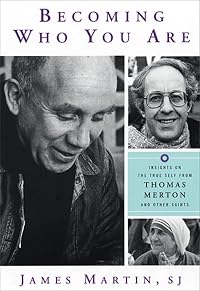
Becoming Who You Are: Insights on the True Self from Thomas Merton and Other Saints (Christian Classics)
by James Martin
On This Page
Description
By meditating on personal examples from the author's life, as well as reflecting on the inspirational life and writings of Thomas Merton, stories from the Gospels, as well as the lives of other holy men and women (among them, Henri Nouwen, Therese of Lisieux and Pope John XXIII) the reader will see how becoming who you are, and becoming the person that God created, is a simple path to happiness, peace of mind and even sanctity.Tags
Recommendations











Member Reviews
Just returned from a Service Trip in Nicaragua & finished this book today. Here's what I wrote to my students & colleagues who were there.
I've so enjoyed looking at the photos of you all in Nicaragua-- holding, carrying, wheelbarrowing, playing with the children of the community.
I've spent some time upon my return from our trip considering my own experience in the community of El Jicarito, especially with my Dice Race-playing 10-year-old friend, Dixon.
How can I feel so attached to that lad, only after a few days/moments/hours in his company? What is the unlikely source of my optimistic yearning for his unknowable future?
In reading "Becoming Who You Are," by James Martin, SJ (one of the assigned Summer Reading books for rising show more sophomores), I came across this 1958 passage from Thomas Merton. In it, he describes his sense standing at a busy intersection in Louisville, Kentucky.
"...I was suddenly overwhelmed with the realization that I loved all those people, that they were mine and I theirs, that we could not be alien to one another even though we were total strangers. It was like awaking from a dream of separateness, of spurious self-isolation in a special world...."
While I'm still thinking and writing about the trip, this passage helped me realize that "they [are] mine and I theirs." show less
I've so enjoyed looking at the photos of you all in Nicaragua-- holding, carrying, wheelbarrowing, playing with the children of the community.
I've spent some time upon my return from our trip considering my own experience in the community of El Jicarito, especially with my Dice Race-playing 10-year-old friend, Dixon.
How can I feel so attached to that lad, only after a few days/moments/hours in his company? What is the unlikely source of my optimistic yearning for his unknowable future?
In reading "Becoming Who You Are," by James Martin, SJ (one of the assigned Summer Reading books for rising show more sophomores), I came across this 1958 passage from Thomas Merton. In it, he describes his sense standing at a busy intersection in Louisville, Kentucky.
"...I was suddenly overwhelmed with the realization that I loved all those people, that they were mine and I theirs, that we could not be alien to one another even though we were total strangers. It was like awaking from a dream of separateness, of spurious self-isolation in a special world...."
While I'm still thinking and writing about the trip, this passage helped me realize that "they [are] mine and I theirs." show less
Just returned from a Service Trip in Nicaragua & finished this book today. Here's what I wrote to my students & colleagues who were there.
I've so enjoyed looking at the photos of you all in Nicaragua-- holding, carrying, wheelbarrowing, playing with the children of the community.
I've spent some time upon my return from our trip considering my own experience in the community of El Jicarito, especially with my Dice Race-playing 10-year-old friend, Dixon.
How can I feel so attached to that lad, only after a few days/moments/hours in his company? What is the unlikely source of my optimistic yearning for his unknowable future?
In reading "Becoming Who You Are," by James Martin, SJ (one of the assigned Summer Reading books for rising show more sophomores), I came across this 1958 passage from Thomas Merton. In it, he describes his sense standing at a busy intersection in Louisville, Kentucky.
"...I was suddenly overwhelmed with the realization that I loved all those people, that they were mine and I theirs, that we could not be alien to one another even though we were total strangers. It was like awaking from a dream of separateness, of spurious self-isolation in a special world...."
While I'm still thinking and writing about the trip, this passage helped me realize that "they [are] mine and I theirs." show less
I've so enjoyed looking at the photos of you all in Nicaragua-- holding, carrying, wheelbarrowing, playing with the children of the community.
I've spent some time upon my return from our trip considering my own experience in the community of El Jicarito, especially with my Dice Race-playing 10-year-old friend, Dixon.
How can I feel so attached to that lad, only after a few days/moments/hours in his company? What is the unlikely source of my optimistic yearning for his unknowable future?
In reading "Becoming Who You Are," by James Martin, SJ (one of the assigned Summer Reading books for rising show more sophomores), I came across this 1958 passage from Thomas Merton. In it, he describes his sense standing at a busy intersection in Louisville, Kentucky.
"...I was suddenly overwhelmed with the realization that I loved all those people, that they were mine and I theirs, that we could not be alien to one another even though we were total strangers. It was like awaking from a dream of separateness, of spurious self-isolation in a special world...."
While I'm still thinking and writing about the trip, this passage helped me realize that "they [are] mine and I theirs." show less
First, I want to thank my mother for "loaning" me the money to buy this book.
For years I have been struggling about becoming a monastic. I take one step forward only to take 2 or sometimes 10 steps backward. I just did not think a zendo or a monastery would take such a "messy" person like me. Then I picked up this book and it affirmed to me that I was not alone. I have made mistakes like Merton and Theresa. It was humbling to know that I am not alone. I recommitted me to pursue a religious life. I want to literally kiss the author for giving me hope once again.
For years I have been struggling about becoming a monastic. I take one step forward only to take 2 or sometimes 10 steps backward. I just did not think a zendo or a monastery would take such a "messy" person like me. Then I picked up this book and it affirmed to me that I was not alone. I have made mistakes like Merton and Theresa. It was humbling to know that I am not alone. I recommitted me to pursue a religious life. I want to literally kiss the author for giving me hope once again.
I picked up this book after reading Fr. Martin’s brilliant book, My Life With the Saints. Having taken a seminar on vocation in college, I thought that this book would serve as an inspirational reminder of the importance of listening to the voice of vocation and following the path that one is meant to tread on. Having been exposed to a Jesuit education from high school through graduate school, I knew instantly that this book would be a meditation on becoming who one is meant to be. “Who am I? What do I want to be? Where to I want to go? Where and how am I true to myself?”
This book inspired and disappointed me. I appreciate Fr. Martin’s style of writing–I have long been a fan of his books and his essays in America Magazine and show more its blog, In All Things. This book is inspiring. Using Merton and Nouwen, Martin shares examples of how both men struggled to find their true selves–who God meant for them to be and what eventually brought them joy, peace, and calm to a restless soul. Martin has a great way of using his own life’s example to demonstrate how Merton and Nouwen helped him on his spiritual/vocational journey. There are a number of sentences and passages in this book that make you stop, think, and reflect on your life.
This book is a book on vocation–not necessarily of the religious kind. But, it is also a book about recognizing God’s love and how that love is manifest in the living of one’s true self. Overall, I enjoyed the book and would recommend it to anyone who is looking for a good and short read on vocation.
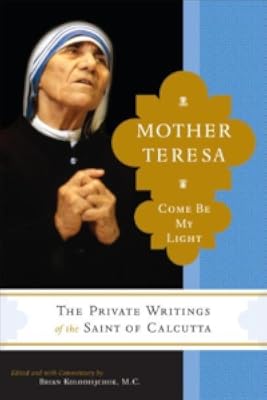
No review is complete, however, without expressing what was disappointing about the book. First of all, an not necessarily important, is the fact that the cover is misleading. Mother Teresa is on the cover and she is only mentioned as Merton and Nouwen are the centerpiece of the book. Second, as one reviewer critiqued, there is a little too much biography of and not enough life principles that one can use. It’s understandable that a bio on Merton and Nouwen be provided, but it may have been too much for such a short book.
Taken from my original blog post: http://throughaglassonion.com/2009/11/04/book-review-becoming-who-you-are-insigh... show less
This book inspired and disappointed me. I appreciate Fr. Martin’s style of writing–I have long been a fan of his books and his essays in America Magazine and show more its blog, In All Things. This book is inspiring. Using Merton and Nouwen, Martin shares examples of how both men struggled to find their true selves–who God meant for them to be and what eventually brought them joy, peace, and calm to a restless soul. Martin has a great way of using his own life’s example to demonstrate how Merton and Nouwen helped him on his spiritual/vocational journey. There are a number of sentences and passages in this book that make you stop, think, and reflect on your life.
This book is a book on vocation–not necessarily of the religious kind. But, it is also a book about recognizing God’s love and how that love is manifest in the living of one’s true self. Overall, I enjoyed the book and would recommend it to anyone who is looking for a good and short read on vocation.
No review is complete, however, without expressing what was disappointing about the book. First of all, an not necessarily important, is the fact that the cover is misleading. Mother Teresa is on the cover and she is only mentioned as Merton and Nouwen are the centerpiece of the book. Second, as one reviewer critiqued, there is a little too much biography of and not enough life principles that one can use. It’s understandable that a bio on Merton and Nouwen be provided, but it may have been too much for such a short book.
Taken from my original blog post: http://throughaglassonion.com/2009/11/04/book-review-becoming-who-you-are-insigh... show less
Another pure delight by Fr. Martin. Inspiring, thoughful and helpful.
Ratings
Members
- Recently Added By
Lists

Books Read in 2016
4,666 works; 199 members

Henri Nouwen, All Inclusive
100 works; 1 member
Author Information

27+ Works 4,800 Members
Rev. James Martin, SJ, is editor at large of America magazine, consultor to the Vatican's Dicastery for Communication, and author of the New York Times bestsellers Jesus: A Pilgrimage and The Jesuit Guide to (Almost) Everything. Father Martin is a frequent media commentator, having appeared on such diverse outlets as The Late Show with Stephen show more Colbert, Fresh Air, the New York Times, and The Wall Street Journal. show less
Common Knowledge
- Original publication date
- 2006
- People/Characters
- Thomas Merton; Henri Nouwen
- Dedication
- Dedicated to
David I. Donovan, SJ
1940-2005
A wise spiritual director, faithful priest, and generous friend
who helped me to become who I am - First words
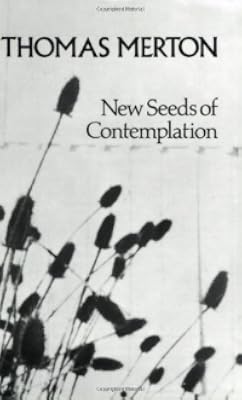
- "For me to be a saint means to be myself," wrote the Trappist monk Thomas Merton in his book New Seeds of Contemplation.
- Last words
- (Click to show. Warning: May contain spoilers.)The invitation to holiness is a lifelong call to draw closer to God, who wants nothing more than to encounter us as the persons we are, our true selves, and as the saints we are meant to be.
Classifications
Statistics
- Members
- 278
- Popularity
- 116,256
- Reviews
- 6
- Rating
- (3.98)
- Languages
- English
- Media
- Paper, Audiobook, Ebook
- ISBNs
- 3
- ASINs
- 3