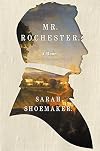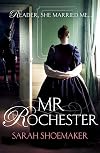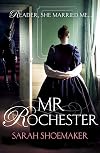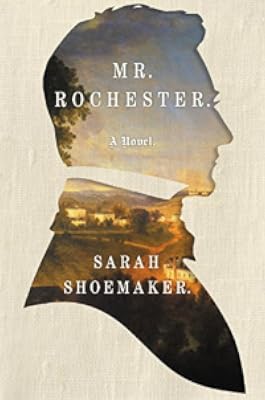
Mr. Rochester
by Sarah Shoemaker
On This Page
Description
A deft and irresistible retelling of Charlotte Brontë's beloved classic Jane Eyre—from the point of view of the dashing, mysterious Mr. Rochester himself."A cracking-good read!" —People, Best New Books
For 170 years, Edward Fairfax Rochester has stood as one of literature's most complex and captivating romantic heroes. Sometimes cruel, sometimes tender, Jane Eyre's mercurial master at Thornfield Hall has mesmerized, beguiled, and, yes, baffled fans of Charlotte Brontë's masterpiece show more for generations. But his own story has never been told.
We first meet this brilliant, tormented hero as a motherless boy roaming Thornfield's lonely corridors. On the morning of Edward's eighth birthday, his father issues a decree: He is to be sent away to get an education, exiled from all he ever loved. Young Edward's journey will take him across working-class England and the decadence of continental Europe before he lands on the warm, languid shores of faraway Jamaica, where his inheritance lies.
That island, however, holds secrets of its own, and Edward soon grows entangled in morally dubious business dealings and a passionate, whirlwind love affair with the town's ravishing heiress, Bertha Antoinetta Mason. Eventually, in the wake of a devastating betrayal, Edward must return to England with his increasingly unstable wife to take over as master of Thornfield. And it is there, on a twilight ride, that he meets the stubborn, plain young governess who will steal his heart and teach him how to love again.
Mr. Rochester is a sweeping coming-of-age story and a stirring tale of adventure, romance, and deceit. Faithful in every particular to Brontë's original yet full of unexpected twists and riveting behind-the-scenes drama, this novel will completely, deliciously, and forever change how we read and remember Jane Eyre.
. show less
Tags
Recommendations



Member Reviews
Sarah Shoemaker's Mr. Rochester is a retelling of Charlotte Brontë's Jane Eyre, and I fell in love with it. The book is told from the point of view of Edward Fairfax Rochester himself, and readers learn about his life from the time he was a motherless boy roaming the lonely corridors of Thornfield Hall to his eventual marriage to Jane Eyre.
Although Charlotte is not my favorite of the Brontë sisters (Anne is), I've always loved her Jane Eyre. I've watched the BBC mini-series starring Zelah Clarke and Timothy Dalton so much that I have vast swathes of the dialogue memorized. I've always wanted to learn more about Rochester, and Shoemaker does a marvelous job of filling in the blanks that both blend in with the original book and make show more for an engrossing story.
Here, Rochester is a boy/man starved for love, starved for someone to call him by his name, and I couldn't help but fall in love with him. His schooling, his fruitless attempts to earn his father's love, the family business, his marriage to Bertha Mason... as he weathers each storm, I became totally invested in his soul-withering journey toward Jane. The icing on the cake was learning just how much he was willing to give up to have a life with her. I kept wanting to hug the poor man!
I found so much to appreciate in Mr. Rochester. How he came to have his dog, Pilot, and his horse, Mesrour. I even learned the origin of one of my husband's favorite expressions, "cloth ears."
Oh... by the way, if you're thinking of reading this book to learn more about Jane, I wouldn't recommend it. Jane shows up two-thirds of the way through the book. She had her own book, her own time in the spotlight. This is Edward Fairfax Rochester's time to shine, and he does. Brilliantly. show less
Although Charlotte is not my favorite of the Brontë sisters (Anne is), I've always loved her Jane Eyre. I've watched the BBC mini-series starring Zelah Clarke and Timothy Dalton so much that I have vast swathes of the dialogue memorized. I've always wanted to learn more about Rochester, and Shoemaker does a marvelous job of filling in the blanks that both blend in with the original book and make show more for an engrossing story.
Here, Rochester is a boy/man starved for love, starved for someone to call him by his name, and I couldn't help but fall in love with him. His schooling, his fruitless attempts to earn his father's love, the family business, his marriage to Bertha Mason... as he weathers each storm, I became totally invested in his soul-withering journey toward Jane. The icing on the cake was learning just how much he was willing to give up to have a life with her. I kept wanting to hug the poor man!
I found so much to appreciate in Mr. Rochester. How he came to have his dog, Pilot, and his horse, Mesrour. I even learned the origin of one of my husband's favorite expressions, "cloth ears."
Oh... by the way, if you're thinking of reading this book to learn more about Jane, I wouldn't recommend it. Jane shows up two-thirds of the way through the book. She had her own book, her own time in the spotlight. This is Edward Fairfax Rochester's time to shine, and he does. Brilliantly. show less
I spent my summer with Mr. Edward Rochester, and it was lovely. I received an eBook copy from the publisher through NetGalley, though I listened to most of it on audio from the library. (Wonderful narration by Simon Shepherd!)
MR. ROCHESTER is an engrossing tale about Jane Eyre’s Gothic hero, a re-imagining from his point of view, but mostly about his life leading up to Jane. The writing is gorgeous, and I feel like it is complementary to the original.
Edward is sent away to school at a young age, away from Thornfield Hall, the home he dearly loves. His father then sends him to Jamaica to take over the family’s business holdings there, where he meets Bertha Mason, his first wife. The story of Bertha’s life and madness, and the show more effect it had on Edward was fascinating. Eventually he returns to England where he meets Jane, and from there we hear his side of their love story.
This is a well-written piece of historical fiction, and I greatly enjoyed the author’s vision of Mr. Rochester, and seeing how his turbulent past shaped the man he became. show less
MR. ROCHESTER is an engrossing tale about Jane Eyre’s Gothic hero, a re-imagining from his point of view, but mostly about his life leading up to Jane. The writing is gorgeous, and I feel like it is complementary to the original.
Edward is sent away to school at a young age, away from Thornfield Hall, the home he dearly loves. His father then sends him to Jamaica to take over the family’s business holdings there, where he meets Bertha Mason, his first wife. The story of Bertha’s life and madness, and the show more effect it had on Edward was fascinating. Eventually he returns to England where he meets Jane, and from there we hear his side of their love story.
This is a well-written piece of historical fiction, and I greatly enjoyed the author’s vision of Mr. Rochester, and seeing how his turbulent past shaped the man he became. show less
For fans of Jane Eyre may have wondered what is Rochester's background and how did he end up with a psychotic wife locked up in his attic, author Sarah Shoemaker provides a plausible and thought-provoking, if somewhat problematic, backstory in this companion novel.
The narrative started strong, and the writing is excellent. It was fun and engaging, and Rochester seemed like a sincere, good-hearted and generally likeable guy thrust via deceit into circumstances not of his choosing. My regard for him was sympathetic until his behavior toward Jane evolved suddenly into something uncomfortable and manipulative. He was literally gaslighting her. Moreover, I was not convinced of either's love for the other with what little interaction was show more presented in the text. Rochester's affections for Jane seem to come abruptly out of nowhere — he concluded they are perfectly suited for one another when they were but barely acquainted, which had me considering that Edward too may have been afflicted with a touch of crazy. It's been several decades since I read Jane Eyre, so perhaps there is a similar lack of buildup and the same criticism would apply. There are a number of red flags when viewed through a 21st-century lens. The one thing Rochester and Jane did have in common was a lifelong lack of a loving family and both were cruelly starved for affection. Readers would normally be rooting for this kind of connection, but their relationship as presented didn't quite sit right with me. show less
The narrative started strong, and the writing is excellent. It was fun and engaging, and Rochester seemed like a sincere, good-hearted and generally likeable guy thrust via deceit into circumstances not of his choosing. My regard for him was sympathetic until his behavior toward Jane evolved suddenly into something uncomfortable and manipulative. He was literally gaslighting her. Moreover, I was not convinced of either's love for the other with what little interaction was show more presented in the text. Rochester's affections for Jane seem to come abruptly out of nowhere — he concluded they are perfectly suited for one another when they were but barely acquainted, which had me considering that Edward too may have been afflicted with a touch of crazy. It's been several decades since I read Jane Eyre, so perhaps there is a similar lack of buildup and the same criticism would apply. There are a number of red flags when viewed through a 21st-century lens. The one thing Rochester and Jane did have in common was a lifelong lack of a loving family and both were cruelly starved for affection. Readers would normally be rooting for this kind of connection, but their relationship as presented didn't quite sit right with me. show less
Thoroughly enjoyable Jane Eyre fan fiction. It is the Jane Eyre story from Mr. Rochester's point of view. Just like Jane Eyre, the book is written as a memoir in the first person, and starts from Edward's earliest memories of feeling lonely as a child. We learn about his education, his time in Jamaica, how he came to be married to a madwoman, and how he ended up with a ward who needed a governess. Naturally, the most fun part of the book is when he retells the events from Jane Eyre. We see his emotional manipulations of Jane from his perspective. It meshes perfectly with what happens in Bronte's book. _Mr. Rochester_ adds a lot of depth to _Jane Eyre_ and makes Edward a very sympathetic character.
I hate Mr. Rochester -- as in the version from Jane Eyre. I've never understood how some readers find him charming, dreamy, whatever. He's an ass. He's a 40-year-old man who keeps his crazy wife in the attic (sure, sure, because of reasons), toys with the emotions of poor teenage Jane (not to mention Blanche Ingram), then tries to marry her without telling her that he's already married. I hate that Jane actually goes back to him. Ew.
Ms. Shoemaker's version of Rochester (Call me Edward!) starts off much more promising. His father seems to have no emotions at all -- basically ignoring little Edward and issuing missives via letter. His brother is an egotistical ass who delights in torturing Edward whenever possible. At age eight, Edward show more is sent off to live with an eccentric scholar who privately educates boys in a very progressive way. This is probably the best thing that ever happens to him. He has friends, who are better than his actual brother. Then, in his teens, through another letter, he is ordered into an apprenticeship with a mill owner in another town. There again, he finds some happiness, as the childless mill owner and his wife are very kind people, but there are tragedies, and his father calls for him. After some formal education, he is shipped off to Jamaica to marry Bertha Antoinette Mason, and things go downhill quickly, then his father and brother die, and he's able to return to his beloved Thornfield, but with a burden with a capital B in tow.
I really liked Book 1, all of Edward's formative years, and found myself rooting for the poor kid. Book 2, the Jamaica years, was also very interesting -- Edward finds himself betrayed over and over again. (This differs from [b:Wide Sargasso Sea|25622780|Wide Sargasso Sea|Jean Rhys|https://images.gr-assets.com/books/1453021061s/25622780.jpg|142647] a lot -- taking place between the end of the slave trade and the end of actual slavery in Jamaica. Also, Jonas and Richard are Bertha's blood relatives.) Even the beginning of Book 3, when Edward first brings Bertha back to Thornfield, with all the adjustments it takes to get her set up, brought new material.
After Jane enters the story, things got a little less interesting. There were a few new additions ( Bertha's secret baby! that helped, but at that point Ms. Shoemaker was stuck with Bronte's original Rochester, and, as they say, "You can't polish a turd."
Excellent novel with lots of historical material that I really enjoyed. I just still don't like Rochester. show less
Ms. Shoemaker's version of Rochester (Call me Edward!) starts off much more promising. His father seems to have no emotions at all -- basically ignoring little Edward and issuing missives via letter. His brother is an egotistical ass who delights in torturing Edward whenever possible. At age eight, Edward show more is sent off to live with an eccentric scholar who privately educates boys in a very progressive way. This is probably the best thing that ever happens to him. He has friends, who are better than his actual brother. Then, in his teens, through another letter, he is ordered into an apprenticeship with a mill owner in another town. There again, he finds some happiness, as the childless mill owner and his wife are very kind people, but there are tragedies, and his father calls for him. After some formal education, he is shipped off to Jamaica to marry Bertha Antoinette Mason, and things go downhill quickly, then his father and brother die, and he's able to return to his beloved Thornfield, but with a burden with a capital B in tow.
I really liked Book 1, all of Edward's formative years, and found myself rooting for the poor kid. Book 2, the Jamaica years, was also very interesting -- Edward finds himself betrayed over and over again. (This differs from [b:Wide Sargasso Sea|25622780|Wide Sargasso Sea|Jean Rhys|https://images.gr-assets.com/books/1453021061s/25622780.jpg|142647] a lot -- taking place between the end of the slave trade and the end of actual slavery in Jamaica. Also, Jonas and Richard are Bertha's blood relatives.) Even the beginning of Book 3, when Edward first brings Bertha back to Thornfield, with all the adjustments it takes to get her set up, brought new material.
After Jane enters the story, things got a little less interesting. There were a few new additions (
Excellent novel with lots of historical material that I really enjoyed. I just still don't like Rochester. show less
I enjoyed this book. I thought Ms. Shoemaker wrote well, and maintained a writing voice complementary to that found in Jane Eyre. She developed the character of Edward Rochester very well, and told his story from childhood. I did find the machinations of Edward's father too Machiavellian to be believable -- maybe a bit more on Rochester Senior's motivations might have helped. And, I still don't understand what Jane saw in Edward??? Still an enjoyable way to add depth to my beloved Jane Eyre.
3.5 stars
I’m a Jane Eyre fan. Of course I am. Classic, moody, romantic – what’s not to like? Well, with all the film and television adaptions of the story, I confess to yawning through most of little Jane’s trials and tribulations at the Lowood School in favor of the far-more interesting gothic tale of mysterious mansion with its secrets and moody master.
So I was drawn to this book. Of course I was. Sarah Shoemaker concentrates on young Edward’s life and education, pieced together from bits and bobs in Brontë’s original. She blends her historian / researcher’s experience with a keen understanding of the psychology of a lonely and abandoned child, and wraps it all up with a strong period style in the writing.
Roughly show more two-thirds of the book are all that, only bringing in Jane much later. That works in this book because, as in the original, Jane is by far the more interesting character. Shoemaker’s Edward Fairfax Rochester is smart and curious, but painfully naïve and overly optimistic, even in the face of one betrayal after another.
We always knew that gruff, barking exterior was a mask, but he’s really rather stupidly naïve and quite irritatingly desperate for love. Okay, I can see how that works – and Shoemaker does a credible job of creating a highly detailed backstory to support that. But despite his attractive intelligence, he’s more than a bit annoying.
[Sidebar: I can go on for a while if I start to compare the pluses and minuses of all the various screen versions of Rochester. None are perfectly balanced: too gruff, too gentle, too brooding, too emo… but I digress.]
Reviewers here comment they don't like the obvious research in the first part of the book (how the mill works, details of the schoolroom) but I enjoyed those bits. Shoemaker’s quite impressive in this facet of her novel. Others comment that the book falls apart once Jane comes into the story, but again, I feel Shoemaker made good choices not to dwell on what Brontë covered in detail - and from Jane’s point of view. Here, we get Rochester’s version of the iconic scenes and the author doesn’t fall into the trap of including his observations of something he wouldn’t have witnessed or known about.
I enjoyed the book. It’s a nice companion to the original Jane Eyre. show less
I’m a Jane Eyre fan. Of course I am. Classic, moody, romantic – what’s not to like? Well, with all the film and television adaptions of the story, I confess to yawning through most of little Jane’s trials and tribulations at the Lowood School in favor of the far-more interesting gothic tale of mysterious mansion with its secrets and moody master.
So I was drawn to this book. Of course I was. Sarah Shoemaker concentrates on young Edward’s life and education, pieced together from bits and bobs in Brontë’s original. She blends her historian / researcher’s experience with a keen understanding of the psychology of a lonely and abandoned child, and wraps it all up with a strong period style in the writing.
Roughly show more two-thirds of the book are all that, only bringing in Jane much later. That works in this book because, as in the original, Jane is by far the more interesting character. Shoemaker’s Edward Fairfax Rochester is smart and curious, but painfully naïve and overly optimistic, even in the face of one betrayal after another.
We always knew that gruff, barking exterior was a mask, but he’s really rather stupidly naïve and quite irritatingly desperate for love. Okay, I can see how that works – and Shoemaker does a credible job of creating a highly detailed backstory to support that. But despite his attractive intelligence, he’s more than a bit annoying.
[Sidebar: I can go on for a while if I start to compare the pluses and minuses of all the various screen versions of Rochester. None are perfectly balanced: too gruff, too gentle, too brooding, too emo… but I digress.]
Reviewers here comment they don't like the obvious research in the first part of the book (how the mill works, details of the schoolroom) but I enjoyed those bits. Shoemaker’s quite impressive in this facet of her novel. Others comment that the book falls apart once Jane comes into the story, but again, I feel Shoemaker made good choices not to dwell on what Brontë covered in detail - and from Jane’s point of view. Here, we get Rochester’s version of the iconic scenes and the author doesn’t fall into the trap of including his observations of something he wouldn’t have witnessed or known about.
I enjoyed the book. It’s a nice companion to the original Jane Eyre. show less
Members
- Recently Added By
Lists

Books Read in 2017
4,249 works; 129 members

al.vick-wishlist-historical fiction
128 works; 1 member

Books Read in 2018
4,360 works; 110 members
Author Information
5 Works 306 Members
Common Knowledge
- Original publication date
- 2017-05-09
- People/Characters
- Jane Eyre; Edward Fairfax Rochester; Bertha Mason
- Epigraph
- ...without esteem true love cannot exist.
—Charlotte Brontë
Shirley - Dedication
- For Kent, who has lived graciously these past few years with my fascination for another man.
- First words
- I know little of my birth, for my mother died long before she could tell me—before I ever heard her voice or gazed at her face—and my father banished the woman who helped deliver me, blaming her for my mother's death.
- Last words
- (Click to show. Warning: May contain spoilers.)And there is Jane, my dearest heart, who walks with me and reads to me and talks and laughs with me and teases, and sometimes slides down the banister when no one is about, and who calls my "Edward" every day of my life.
- Blurbers
- George, Margaret; Conklin, Tara; Sharratt, Mary
Classifications
Statistics
- Members
- 269
- Popularity
- 120,058
- Reviews
- 22
- Rating
- (3.89)
- Languages
- English
- Media
- Paper, Audiobook, Ebook
- ISBNs
- 9
- ASINs
- 3