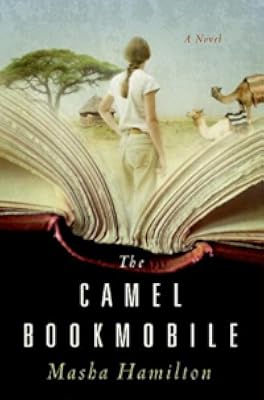
The Camel Bookmobile
by Masha Hamilton 
On This Page
Description
Fiona Sweeney wants to do something that matters, and she chooses to make her mark in the arid bush of northeastern Kenya. By helping to start a traveling library, she hopes to bring the words of Homer, Hemingway, and Dr. Seuss to far-flung tiny communities where people live daily with drought, hunger, and disease. Her intentions are honorable, and her rules are firm: due to the limited number of donated books, if any one of them is not returned, the bookmobile will not return. But, show more encumbered by her Western values, Fi does not understand the people she seeks to help. And in the impoverished small community of Mididima, she finds herself caught in the middle of a volatile local struggle when the bookmobile's presence sparks a dangerous feud between the proponents of modernization and those who fear the loss of traditional ways. Literature. Fiction. show lessTags
Recommendations




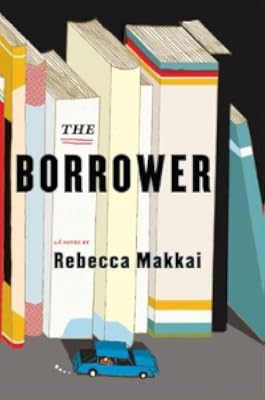



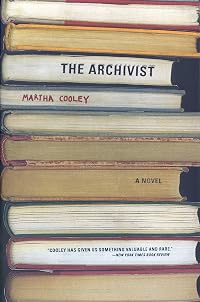




















Member Reviews
“I realized right away that books could take us out of ourselves, and make us larger. Even provide us with human connections we wouldn’t otherwise have.”
Fiona Sweeney has a passion for books. She works as a librarian but as she reaches her late thirties she feels like her life is in a rut and that she wants to do something with her life that will make a difference in the world.
She embarks on a six-month placement with a traveling library that brings books to the people of scattered communities using camels in the north eastern part of Kenya. These tiny settlements have no roads or schools and the people live their lives fighting hunger, disease, and drought. The library has one strict rule, anyone not returning books will cause show more the bookmobile to stop visiting their settlement.
At the nomadic village of Mididima Fi meets Kanika, a young girl living with her grandmother Neema. Neema can read herself and believes that children need the books to educate them so that they can move on in life. Fi meets the school teacher Matani and his wife Jwahir. Jwahir sees the bookmobile as a threat to their old world customs, and tries to get her husband to make the bookmobile leave. Fi meets Abayomi, the drum maker and the father of two young boys Taban - or Scar Boy, (so called after he was attacked by a hyena as a toddler)- and Badru.
Fi is passionate about the project but she is soon surprised to discover that it divides friends and neighbours. To Kanika, who reads every book she can lay her hands on, the Camel Bookmobile brings hope of escape and a brighter future. But others fear the loss of their traditions and that the bookmobile represents the inevitable destruction of their fragile way of life. Tension escalate when Scar Boy fails to return his books, threatening future visits. Fiona returns to Mididima alone to try and recover Scar Boy's books for the library.
Fiona spends five days this tiny African settlement and during her time there she comes to realise that it shared many similarities as the outside world. Some people want to leave to better themselves, others think they would be happier with someone else, and others do not want and fear change. When Fiona tries to recover the books from Scar Boy she discovers that she could fundamentally change his and some of the settlement's inhabitants' lives forever.
'The Camel Bookmobile' is on the face of it a heart-warming story of people reaching out to help others. However, it also asks some pretty tough questions. Is the West right to interfere in these poorer nations and their inhabitants? Would the benefits of learning to read outweigh the loss of knowledge of the land that these nomadic tribes lived on, knowledge passed down verbally through many generations? Would an education simply mean that the young migrate to the cities where they would live with the threat of crime, destitution and prostitution or would it actually open doors to a better life?
Personally I thoroughly enjoyed the first half to two thirds of this book as it discussed the pros and cons of the project even if Fi came across as evangelising at times. However, the latter section rather slipped into romantic melodrama I felt which let the overall down somewhat. On the plus side it is a quick read, the characters were generally well drawn and it did make me realise it is based on an actual organisation that I look forward to learning more about, now that can be no bad thing. show less
Fiona Sweeney has a passion for books. She works as a librarian but as she reaches her late thirties she feels like her life is in a rut and that she wants to do something with her life that will make a difference in the world.
She embarks on a six-month placement with a traveling library that brings books to the people of scattered communities using camels in the north eastern part of Kenya. These tiny settlements have no roads or schools and the people live their lives fighting hunger, disease, and drought. The library has one strict rule, anyone not returning books will cause show more the bookmobile to stop visiting their settlement.
At the nomadic village of Mididima Fi meets Kanika, a young girl living with her grandmother Neema. Neema can read herself and believes that children need the books to educate them so that they can move on in life. Fi meets the school teacher Matani and his wife Jwahir. Jwahir sees the bookmobile as a threat to their old world customs, and tries to get her husband to make the bookmobile leave. Fi meets Abayomi, the drum maker and the father of two young boys Taban - or Scar Boy, (so called after he was attacked by a hyena as a toddler)- and Badru.
Fi is passionate about the project but she is soon surprised to discover that it divides friends and neighbours. To Kanika, who reads every book she can lay her hands on, the Camel Bookmobile brings hope of escape and a brighter future. But others fear the loss of their traditions and that the bookmobile represents the inevitable destruction of their fragile way of life. Tension escalate when Scar Boy fails to return his books, threatening future visits. Fiona returns to Mididima alone to try and recover Scar Boy's books for the library.
Fiona spends five days this tiny African settlement and during her time there she comes to realise that it shared many similarities as the outside world. Some people want to leave to better themselves, others think they would be happier with someone else, and others do not want and fear change. When Fiona tries to recover the books from Scar Boy she discovers that she could fundamentally change his and some of the settlement's inhabitants' lives forever.
'The Camel Bookmobile' is on the face of it a heart-warming story of people reaching out to help others. However, it also asks some pretty tough questions. Is the West right to interfere in these poorer nations and their inhabitants? Would the benefits of learning to read outweigh the loss of knowledge of the land that these nomadic tribes lived on, knowledge passed down verbally through many generations? Would an education simply mean that the young migrate to the cities where they would live with the threat of crime, destitution and prostitution or would it actually open doors to a better life?
Personally I thoroughly enjoyed the first half to two thirds of this book as it discussed the pros and cons of the project even if Fi came across as evangelising at times. However, the latter section rather slipped into romantic melodrama I felt which let the overall down somewhat. On the plus side it is a quick read, the characters were generally well drawn and it did make me realise it is based on an actual organisation that I look forward to learning more about, now that can be no bad thing. show less
[This is a review I wrote in 2009]
**A touching and inspiring novel**
I thoroughly enjoyed this story of books being introduced to a rural nomadic village settlement in northern Kenya for the very first time. Some residents have never even held a book in their hands before.
Fi Sweeney is thirty-six and is a librarian in Brooklyn. She feels the need to do something worthwhile and needs a change of scene, so applies for a project taking literacy to the African bush - with the Camel Bookmobile. One particular place that she visits quickly becomes a favourite with Fi. Every fortnight the camels are loaded (under much duress!) and she and her opinionated boss, Mr. Abasi take the library to a small far-away settlement called Mididima. The show more library event becomes an exciting occasion in Mididima even for those who haven't yet the ability to read the books. For a few of the residents it's hoped that the bookmobile might eventually become the route into another world, a life in a bigger town, city, or even Nairobi. With the early signs of drought becoming apparent around the village a way into a different, even better, life becomes an attractive option.
There's one condition to the fortnightly arrival of the Bookmobile, and that is that every book taken out must be returned at each visit... otherwise the visits will cease altogether.... Can anyone persuade Scar Boy to give up the books that he has borrowed....?
A story touched with insight and humanity, together with a real appreciation of customs and everday life of rural Africa, not to mention humour (some of the book titles delivered to Mididima are sadly, but hilariously, unsuited to the African bush!). The experience of the Bookmobile proves something of a spiritual journey for Fi, a coming-of-age journey for a couple of Mididima's young residents, a levelling and humanising experience for Mr Abasi, and comes to take on a different meaning for many of the people of Mididima. Recommended. show less
**A touching and inspiring novel**
I thoroughly enjoyed this story of books being introduced to a rural nomadic village settlement in northern Kenya for the very first time. Some residents have never even held a book in their hands before.
Fi Sweeney is thirty-six and is a librarian in Brooklyn. She feels the need to do something worthwhile and needs a change of scene, so applies for a project taking literacy to the African bush - with the Camel Bookmobile. One particular place that she visits quickly becomes a favourite with Fi. Every fortnight the camels are loaded (under much duress!) and she and her opinionated boss, Mr. Abasi take the library to a small far-away settlement called Mididima. The show more library event becomes an exciting occasion in Mididima even for those who haven't yet the ability to read the books. For a few of the residents it's hoped that the bookmobile might eventually become the route into another world, a life in a bigger town, city, or even Nairobi. With the early signs of drought becoming apparent around the village a way into a different, even better, life becomes an attractive option.
There's one condition to the fortnightly arrival of the Bookmobile, and that is that every book taken out must be returned at each visit... otherwise the visits will cease altogether.... Can anyone persuade Scar Boy to give up the books that he has borrowed....?
A story touched with insight and humanity, together with a real appreciation of customs and everday life of rural Africa, not to mention humour (some of the book titles delivered to Mididima are sadly, but hilariously, unsuited to the African bush!). The experience of the Bookmobile proves something of a spiritual journey for Fi, a coming-of-age journey for a couple of Mididima's young residents, a levelling and humanising experience for Mr Abasi, and comes to take on a different meaning for many of the people of Mididima. Recommended. show less
Fiona Sweeney is an American librarian with a desire to do something with her life, something that matters. Her family has always been rooted in the same New York neighborhood, but Fi isn't content to stay rooted. Instead, she decides to take a job in Kenya, helping to start a traveling library. The library takes books, by camel, to different tribes of people throughout the bush of northeastern Kenya.
The people of Mididima have differing feelings about the traveling books. Matani was sent away by his father to be educated in Nairobi, and he returned to teach the children of Mididima. However, most of the people of Mididima do not share his values or appreciation for books and learning. They believe that by learning to read the stories show more are lost because people do not make an effort to keep them in their brains to retell them orally. The elders know that the paper can be destroyed, but if the story is in one's brain, it cannot go away, it cannot be lost.
Many of the people of Mididima want the library to stop coming altogether. And when Taban, a.k.a. Scar Boy, does not return his library books, an action that is strictly forbidden, chaos erupts in the community.
I fell in love with The Camel Bookmobile on page one, paragraph one.
One of the strengths of this novel is Hamilton's efforts to take the reader inside the minds of the characters, all of the characters. The point of view changes by chapter, alternating between Fi, various people of Mididima, and the Kenyan librarian. The reader is able to experience the plot from different age perspectives, different cultural perspectives, different gender perspectives. The mesh of these perspectives illustrates the mammoth complexity of cultural change.
Fi travels to Kenya with the best of intentions, but what Fi doesn't realize is that she is seeing everything through the eyes of Western culture. And likewise, the people of Mididima who are dead set against literacy see things through the eyes of their own culture. And when Nature begins to tell them that their way of life cannot be sustained much longer, their response is not to learn a new way of living but rather to move to another geographic location that will support their present way of life.
The novel is almost a tennis match, volleying back and forth between the two cultures. But then there are times when the cultures mesh and the similarities between fellow members of the human race emerge.
The themes of this novel are powerful, and they raise questions that don't have right or wrong answers. Themes of this magnitude demand three-dimensional characters with strengths and flaws; characters who are forever and realistically altered by the events they experience. Hamilton doesn't disappoint on this front. The silent and most powerful character is Nature. Hamilton manages to brilliantly blend the setting into character in this novel. The beautiful Kenyan bush is also a remorseless killer and it plays as much a role in the community as any of the human characters do.
I can't imagine reading this book and not being more aware of how we view cultures that differ from our own. The Camel Bookmobile is a stunning multi-layered, multi-perspective novel about tolerance, about humanity, about change. I highly recommend it. show less
The people of Mididima have differing feelings about the traveling books. Matani was sent away by his father to be educated in Nairobi, and he returned to teach the children of Mididima. However, most of the people of Mididima do not share his values or appreciation for books and learning. They believe that by learning to read the stories show more are lost because people do not make an effort to keep them in their brains to retell them orally. The elders know that the paper can be destroyed, but if the story is in one's brain, it cannot go away, it cannot be lost.
Many of the people of Mididima want the library to stop coming altogether. And when Taban, a.k.a. Scar Boy, does not return his library books, an action that is strictly forbidden, chaos erupts in the community.
I fell in love with The Camel Bookmobile on page one, paragraph one.
One of the strengths of this novel is Hamilton's efforts to take the reader inside the minds of the characters, all of the characters. The point of view changes by chapter, alternating between Fi, various people of Mididima, and the Kenyan librarian. The reader is able to experience the plot from different age perspectives, different cultural perspectives, different gender perspectives. The mesh of these perspectives illustrates the mammoth complexity of cultural change.
Fi travels to Kenya with the best of intentions, but what Fi doesn't realize is that she is seeing everything through the eyes of Western culture. And likewise, the people of Mididima who are dead set against literacy see things through the eyes of their own culture. And when Nature begins to tell them that their way of life cannot be sustained much longer, their response is not to learn a new way of living but rather to move to another geographic location that will support their present way of life.
The novel is almost a tennis match, volleying back and forth between the two cultures. But then there are times when the cultures mesh and the similarities between fellow members of the human race emerge.
The themes of this novel are powerful, and they raise questions that don't have right or wrong answers. Themes of this magnitude demand three-dimensional characters with strengths and flaws; characters who are forever and realistically altered by the events they experience. Hamilton doesn't disappoint on this front. The silent and most powerful character is Nature. Hamilton manages to brilliantly blend the setting into character in this novel. The beautiful Kenyan bush is also a remorseless killer and it plays as much a role in the community as any of the human characters do.
I can't imagine reading this book and not being more aware of how we view cultures that differ from our own. The Camel Bookmobile is a stunning multi-layered, multi-perspective novel about tolerance, about humanity, about change. I highly recommend it. show less
"The Camel Bookmobile" starts with an idealistic young American woman who wants to bring English and literacy to the Kenyan bush. One village in particular catches her fancy, with its English-speaking teacher, and enthusiastic denizens. She brings her camels from the city each month and feels she is making progress, but behind the happy exterior, events begin to take place which will change everyone's life.
This is a novel about the sometimes arrogant beliefs of educated Westerners about the benefits of the modern world, and how those beliefs clash with age-old African nomadic ways. Fi Sweeney, our determined American, finds encouragement from some quarters in this out-of-the-way place, but fierce resistance in others. Certain of the show more villagers strive to take the necessary steps to keep up with the modern world, but prejudices against the 21st Century run deep.
One telling image, mentioned in passing mid-story and brought up again at the end, is that of the bereft zebra who, having lost its mate, or some other family member, joined a group of giraffes, thinking it could find the fulfillment it sought. Such it is with the characters here. Fi considers staying in the bush in Kenya, having found what she thought was love. Various villagers want to leave and live in the distant city and join the modern world. In the end, this is a book about not belonging, in spite of what your heart may tell you.
As this book started, I thought it would be a rather light weight. As I progressed through it, it grew strongly on me, until its impressive insights, and the subtle way in which Ms. Hamilton propounds them, made their lasting mark on me. This is a fine book, well worthy of your time, full of human striving and the inevitability of ancient natural imperatives.
http://bassoprofundo1.blogspot.com/2010/07/camel-bookmobile-by-masha-hamilton.ht... show less
This is a novel about the sometimes arrogant beliefs of educated Westerners about the benefits of the modern world, and how those beliefs clash with age-old African nomadic ways. Fi Sweeney, our determined American, finds encouragement from some quarters in this out-of-the-way place, but fierce resistance in others. Certain of the show more villagers strive to take the necessary steps to keep up with the modern world, but prejudices against the 21st Century run deep.
One telling image, mentioned in passing mid-story and brought up again at the end, is that of the bereft zebra who, having lost its mate, or some other family member, joined a group of giraffes, thinking it could find the fulfillment it sought. Such it is with the characters here. Fi considers staying in the bush in Kenya, having found what she thought was love. Various villagers want to leave and live in the distant city and join the modern world. In the end, this is a book about not belonging, in spite of what your heart may tell you.
As this book started, I thought it would be a rather light weight. As I progressed through it, it grew strongly on me, until its impressive insights, and the subtle way in which Ms. Hamilton propounds them, made their lasting mark on me. This is a fine book, well worthy of your time, full of human striving and the inevitability of ancient natural imperatives.
http://bassoprofundo1.blogspot.com/2010/07/camel-bookmobile-by-masha-hamilton.ht... show less
Fiona Sweeney, a 36-year-old librarian looking for meaning in life, leaves the Bronx for Kenya to establish a mobile library serving remote desert villages like Mididima. She finds eager patrons in Kanika, a brave girl raised by her steely grandmother who harbors a secret desire to become a teacher, and Matani, the mild-mannered teacher who supports Fi’s mission. However, Matani’s wife and other community members oppose Western “knowledge” as a threat to traditional wisdom. Tensions flare when Scar Boy, a youth shunned for his deformities, refuses to return his library books. The future of the camel bookmobile and Mididima itself are at risk. Hamilton captures the quiet beauty and underlying danger of the African desert while show more exploring her story through the unique views of each character. show less
I'm not quite sure how to feel about them. I was intrigued by the concept of a mobile library and its impacts but it wasn't quite what I was hoping for. I think a large part of this was the inclusion of the American librarian since it gave a bit of a white saviour feel to the book, which I didn't enjoy all that much. I think it would maybe have been stronger had it been written by a local about a local librarian running such a project. There were maybe also a few too many perspectives for the length of the book, meaning the characters could have been more fleshed out.
This was a title I spotted and just couldn't resist. tells of a mobile library in Kenya that sets out to bring books to the remote tribes, to increase their literacy rates and educate them. Fi is the very white new yorker who is on sabatical to lead the mission and she is full if idealist zeal.
Told a chapter at a time by the main protagonists, she meets the teacher, who has been away to the city but returned to the village, a promising student who wishes to leave to become a teacher, her grandmother who wants to see her grand daughter's life turn out differently from her own, and a boy who is hidden from the rest of the village by virtue of terrible scars inflicted in a hyena attack as a toddler. They have different reasons to embrace show more and fear the coming of the books. the elders think that the books will destroy the tribes traditions and heritage - the young will learn from books and not from their heritage. some of the young think that leaving the tribe would be a good thing, and that traditions should be challenged. there are as many views, for an against, as there are people involved - and they all have a different set of reasons. It wasn't entirely the light and fluffy story that the title might lead you to believe, but it was a fun read. The ending took me entirely by surprise. show less
Told a chapter at a time by the main protagonists, she meets the teacher, who has been away to the city but returned to the village, a promising student who wishes to leave to become a teacher, her grandmother who wants to see her grand daughter's life turn out differently from her own, and a boy who is hidden from the rest of the village by virtue of terrible scars inflicted in a hyena attack as a toddler. They have different reasons to embrace show more and fear the coming of the books. the elders think that the books will destroy the tribes traditions and heritage - the young will learn from books and not from their heritage. some of the young think that leaving the tribe would be a good thing, and that traditions should be challenged. there are as many views, for an against, as there are people involved - and they all have a different set of reasons. It wasn't entirely the light and fluffy story that the title might lead you to believe, but it was a fun read. The ending took me entirely by surprise. show less
Members
- Recently Added By
Lists

novels in or about bookshops (or libraries)
59 works; 21 members

Pleasant Surprises
18 works; 1 member
Author Information

5+ Works 1,199 Members
Masha Hamilton is a LibraryThing Author, an author who lists their personal library on LibraryThing.
Awards and Honors
Awards
Distinctions
Common Knowledge
- Original title
- The Camel Bookmobile
- Original publication date
- 2007
- People/Characters
- Fiona Sweeney; Taban ("Scar Boy"); Kanika; Neema; Matani; Jwahir (show all 9); Mr. Abasi; Badru; Abayomi
- Important places
- Africa; East Africa; Kenya; Mididima, Kenya
- Dedication
- For the inspiring librarians who help keep the real camel bookmobile running into the African bush, and who are dedicated to decreasing an illiteracy rate of more than eighty percent: Rashid M. Farrah, Nimo Isaack, Kaltuma Ba... (show all)naya, and Joseph Otieno. Thank you for the time my daughter and I shared with you.
- First words
- The child, wide-legged on the ground, licked dust off his fist and tried to pretend he was tasting camel milk.
- Last words
- (Click to show. Warning: May contain spoilers.)And then she couldn't speak for a moment; her throat constricted as Matani's fresh waterdampened her cheeks before evaporating in the merciless, thirsty air.
Classifications
Statistics
- Members
- 860
- Popularity
- 31,705
- Reviews
- 58
- Rating
- (3.40)
- Languages
- Chinese, Dutch, English, Italian
- Media
- Paper, Audiobook, Ebook
- ISBNs
- 18
- ASINs
- 6