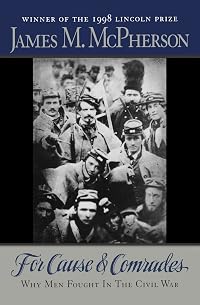
For Cause and Comrades: Why Men Fought in the Civil War
by James M. McPherson
On This Page
Description
General John A. Wickham, commander of the famous 101st Airborne Division in the 1970s and subsequently Army Chief of Staff, once visited Antietam battlefield. Gazing at Bloody Lane where, in 1862, several Union assaults were brutally repulsed before they finally broke through, he marveled, "You couldn't get American soldiers today to make an attack like that." Why did those men risk certain death, through countless bloody battles and four long, awful years? Why did the conventional show more wisdom-that soldiers become increasingly cynical and disillusioned as war progresses-not hold true in the Civil War? It is to this question-why did they fight-that James McPherson now turns his attention. He shows that, contrary to what many scholars believe, the soldiers of the Civil War remained powerfully convinced of the ideals for which they fought throughout the conflict. Motivated by duty and honor, and often by religious faith, these men wrote frequently of their firm belief in the cause for which they fought: the principles of liberty, freedom, justice, and patriotism. McPherson draws on more than 25,000 letters and nearly 250 private diaries from men on both sides. For Cause and Comrades lets these soldiers tell their own stories in their own words to create an account that is both deeply moving and far truer than most books on war. show lessTags
Recommendations












Member Reviews
If you wish to know how the soldiers viewed the war, the issues, their life in the conflict and how those views changed as their situation changed, this is a wonderful source. McPherson presents the letters from both sides of the conflict discussing the same issue so you can see how the soldiers' opinions may be based on the background or personal history. While at times repetitive, this was completing reading and it often made me feel the soldiers' loneliness because they were away from home for years. We also get a sense of what life was for their families without the main bread winner there to do the work.
This slim book is a distillation of 25,000 soldiers; letters and 20 diaries, and analyzes the variety of reasons Civil War soldiers fought --emphasize fought --McPherson focused chiefly on soldiers who did front line fighting (and in any cases died in battle); he did his best to mirror the percentages of soldiers from the different states in each army and the branches of service (infantry, cavalry, artillery) . He admits that he has a disproportionately number of officers (especially on the Confederate side) and a disproportionately small number of black soldiers responses (because 70% of black soldiers were illiterate, while 90% of Union troops overall were literate, and 80% of Confederates). Numerous soldiers wrote home, and there was show more no censorship, so they gave very frank opinions about themselves. their fellow soldiers and officers, and how they felt about the war. While there were some honest cowards who said they were glad not to be where the bullets were flying, a remarkable number were determined to do their duty and die if necessary, even in the face of conditions of appalling danger. show less
Reviewed Dec. 2006 My first Civil War book of the season it surly won’t be the last. McPherson uses over 1000 letters and diaries of Union and Southern soldiers to answer the questions: Why did you enlist...”duty, patriotism, honor and ideology.” How did they sustain motivation to fight...”impulses of courage, self-respect and group cohesion.” Both sides used the “founding fathers” and the energy of “1776” to fuel their opinion of being on the “right side.” Confederates “fought for independence, for a way of life, for their homes, for their very survival as a nation.” Northerners fought because they “believed that they would no longer have a country worthy of the name.” Confederates “professed to fight show more for liberty and independence from a tyrannical government.” “Unionists said they fought to preserve the nation conceived in liberty from dismemberment and destruction.” Both speak to the American Revolution. The Union soldiers did not in the beginning fight to free slaves but as the war progressed and they saw the cruelty and backwardness of the South they began to become convinced that saving the Union would be impossible without “striking against slavery.” “As long as slavery exists...there will be no permanent peace for America.” 28-2006 show less
McPherson wrote a shorter version of this called WHAT THEY FOUGHT FOR. I liked that so much that I read this later, longer version. It is an excellent explanation of why men fought in the Civil War. He covers northern and southern motivations and differentiates between reasons to enlist and motivations for going into battle. McPherson is also clear about the statistics, letting the reader know which groups are over- or under-represented in his sampling and how that might effect the outcomes.
This book analyzed hundreds of letters written by soldiers during the Civil War and uses these letters to give reasons why men went to combat. This book not only applies to the Civil War but gives reasons why soldiers fought in later wars as well. This novel can be read by all students. It can be used in a lesson for giving the motivations for men to fight in the Civil War, on both sides of the conflict.
Really great insight into the reason why soldiers fought in the Civil War. Great read!
Lincoln Prize Winner: 1998
Members
- Recently Added By
Lists

Tagged Civil War
16 works; 4 members
Author Information

67+ Works 16,526 Members
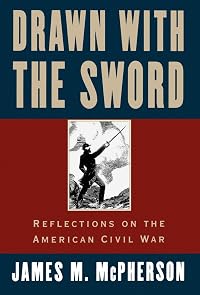
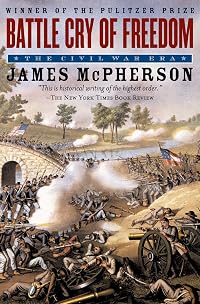
James M. McPherson is the author of Battle Cry of Freedom: The Civil War Era, which won a Pulitzer Prize in history, and For Cause and Comrades: Why Men Fought in the Civil War, a Lincoln Prize winner. He is the George Henry Davis Professor of American History at Princeton University in New Jersey, where he also lives. His newest book, entitled show more Abraham Lincoln, celebrates the 200th anniversary of Lincoln's birth with a short, but detailed look at this president's life. (Bowker Author Biography) James M. McPherson, McPherson was born in 1936 and received a Ph.D. from Johns Hopkins University in 1963. He began teaching at Princeton University in the mid 1960's and is the author of several articles, reviews and essays on the Civil War, specifically focusing on the role of slaves in their own liberation and the activities of the abolitionists. His earliest work, "The Struggle for Equality," studied the activities of the Abolitionist movement following the Emancipation Proclamation. "Battle Cry of Freedom" won the Pulitzer Prize for History in 1989. "Drawn With the Sword" (1996) is a collection of essays, with one entitled "The War that Never Goes Away," that is introduced by a passage from Abraham Lincoln's second inaugural address on March 4, 1865 from which its title came: "Fondly do we hope - and fervently do we pray - that this mighty scourge of war may speedily pass away. Yet, if God wills that it continue, until all the wealth piled by the bond-man's two hundred and fifty years of unrequited toil shall be sunk, and until every drop of blood drawn with the lash, shall be paid by another drawn with the sword, as was said three thousand years ago, so still it must be said, 'the judgments of the Lord, are true and righteous altogether.'" "From Limited to Total War: 1861-1865" shows the depth of the political and social transformation brought about during the Civil War. It told how the human cost of the Civil War exceeded that of any country during World War I and explains the background to Lincoln's announcement of the Emancipation Proclamation, in 1862. The book also recounts the exploits of the Fifty-fourth Massachusetts Volunteer Infantry, one of the first black regiments organized in the Civil War, and their attack on Fort Wagner in July 1863. It pays tribute to Robert Gould Shaw, the white commanding officer of the regiment, who died in the attack and was buried in a mass grave with many of his men. Professor McPherson's writings are not just about the middle decades of the nineteenth century but are also about the last decades of the twentieth century. The political turmoil prior to the Civil War, the violence of the war, Lincoln's legacy and the impeachment of Andrew Johnson shed some light on contemporary events. (Bowker Author Biography) show less
Some Editions
Awards and Honors
Awards
Common Knowledge
- Canonical title
- For Cause and Comrades: Why Men Fought in the Civil War
- Original publication date
- 1997-01-01
- Important events
- American Civil War (1861 | 1865)
- Dedication
- To
Luther Osborn
Private, Corporal,
and Sergeant, Co.
B, 93rd New York
Volunteer Infantry,
1862-63
and
Lieutenant, Co. G
Captain, Co. H
22nd U.S. Colored
Infantry, 1863-65
and to
Private, Co. E
112th New York
Volunteer Infantry,
1862-65 - First words
- Harriet Beecher Stowe insisted that she did not write Uncle Tom's Cabin; God did.
- Last words
- (Click to show. Warning: May contain spoilers.)Civil War soldiers willingly made extraordinary sacrifices, even of life itself, for the principles they perceived to be at stake in the war. Whether Americans today would be willing to make similar wartime sacrifices is unanswerable. One hopes that it will remain unanswered.
- Blurbers
- Cooper, William J.; Gallagher, Gary W.; Woodward, C. Vann
- Original language
- English
Classifications
Statistics
- Members
- 926
- Popularity
- 28,824
- Reviews
- 7
- Rating
- (3.94)
- Languages
- English
- Media
- Paper, Audiobook, Ebook
- ISBNs
- 6
- ASINs
- 6