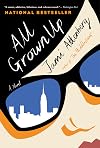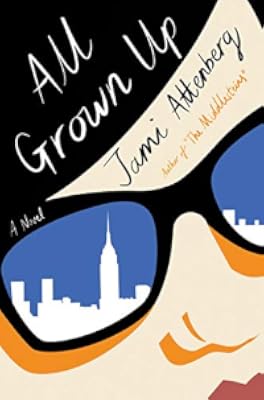
All Grown Up
by Jami Attenberg
On This Page
Description
Hiding the truth about her unhappiness and struggles with anxiety from everyone including her family, best friend, and therapist, Andrea Bern joins her loved ones in a reevaluation of family strength in the wake of her newborn niece's heartbreaking ailment.Tags
Recommendations




Member Reviews
Told in a series of short stories/vignettes, All Grown Up gives us a portrait of disaffected, self-absorbed New Yorker Andrea who is a failed-but-never-really-tried artist, hates her job, fires her therapist, fights with her mother, sleeps around, drinks too much, and thinks too much. Andrea is annoying and self-centered, afraid to make real connections with people, but so adrift in her own life, she can't see the source of her own unhappiness. It would be easy to hate Andrea, and I kind of did - but I also liked her and felt for her, and I think it's a credit to Attenberg's skill that she could successfully draw such a character.
I almost feel like I shouldn't have liked this book. It focuses on the life of an art school dropout who works for an advertising firm in New York City, drinks too much, navel-gazes a lot, sleep a with a lot of completely unsuitable men, and feels generally unfulfilled with her life and her single status. Not the sort of person I generally find interesting or easy to empathize with in a novel. But, damn it, Jami Attenberg makes me care about her, and relate to her, and feel for her. It's something in the writing, I think. The writing is terrific. It's a very clean style, nothing that feels fancy, but the words are all perfectly chosen and it's a delight to read. Which seems a bit odd to say, because the protagonist's life, in general, show more is not a happy one. But it is, anyway. And, in the end, it left me with a beautiful, painful knot of emotion in my stomach, which was unexpected and impressive.
The structure is odd, because each chapter reads like its own tiny short story, with facts we already knew about from past chapters re-explained or characters re-introduced as if we might never have seen them before. It sounds as if it should be annoying, but it works. It doesn't feel repetitive, but rather as if we're seeing aspects of the main character's life in a relevant new context each time. And the end result very much does feel like it adds up to a novel.
I doubt I would ever have picked this one up on my own initiative -- I got it from a book subscription service -- but I'm really, really glad I read it. show less
The structure is odd, because each chapter reads like its own tiny short story, with facts we already knew about from past chapters re-explained or characters re-introduced as if we might never have seen them before. It sounds as if it should be annoying, but it works. It doesn't feel repetitive, but rather as if we're seeing aspects of the main character's life in a relevant new context each time. And the end result very much does feel like it adds up to a novel.
I doubt I would ever have picked this one up on my own initiative -- I got it from a book subscription service -- but I'm really, really glad I read it. show less
What does it mean to be a grown up? Is it having a job and your own apartment? Is it being in a stable relationship? Is it getting married and having kids? Or is is something less tangible like having a plan, liking yourself, being emotionally content? Do you get to measure it yourself or must you rely on others' judgment that you are, in fact, all grown up? As my children reach legal adulthood and venture out in the world, these are questions I ask more and more. Jami Attenberg's short novel, All Grown Up, also asks and attempts to answer just these questions.
Andrea is turning 40. That's certainly old enough to be considered "all grown up," but is she? She has a decent job that she hates, still mourning the loss of her dream of an art show more career. Her romantic relationships are awful, often one-offs, casual, and disengaged. She's emotionally unavailable to friends and family. She drinks too much, dabbles with drugs, is pretty insufferable and self-centered, and is definitely still trying to figure out who she is and what she wants from life. All she knows is that she doesn't want the life others have settled into and so she can be dismissive of other's choices and their definitions of being an adult. Andrea lives in an apartment with a good view, at least until another building goes up and blocks the view entirely, leaving her trapped in a formerly good apartment, much as she's trapped in a disappointing life.
This is a novel in vignettes, a character study of Andrea. It is non-chronological, jumping around from her teen years to the present to build a picture of why Andrea is the way that she is. What she is is deeply dysfunctional and only starting to figure things out at the end of the novel as she holds the tiny, cold hand of her terminally ill niece. There isn't much of a plot and the story is tenuously held together, perhaps because of the narrative structure. And while this is billed as a book about a woman who is single and childless by choice, it comes off rather as if these things happened to her out of apathy rather than active decision making on her part. In the end, maybe being a grown up is changing the things about life that make you unhappy, making choices that will lead you toward the existence you've been moaning about not having, and being emotionally forgiving and available to your loved one, friends, and family. Has Andrea learned this? Hard to say. Long before the end of the novel and any potential, hinted at change, I was tired of Andrea and her one note life. It would have been better if I had been able to feel sorry for her. Instead, I just didn't care about her at all. This book seems to be pretty polarizing though so perhaps you'll be one of the people who loves it. show less
Andrea is turning 40. That's certainly old enough to be considered "all grown up," but is she? She has a decent job that she hates, still mourning the loss of her dream of an art show more career. Her romantic relationships are awful, often one-offs, casual, and disengaged. She's emotionally unavailable to friends and family. She drinks too much, dabbles with drugs, is pretty insufferable and self-centered, and is definitely still trying to figure out who she is and what she wants from life. All she knows is that she doesn't want the life others have settled into and so she can be dismissive of other's choices and their definitions of being an adult. Andrea lives in an apartment with a good view, at least until another building goes up and blocks the view entirely, leaving her trapped in a formerly good apartment, much as she's trapped in a disappointing life.
This is a novel in vignettes, a character study of Andrea. It is non-chronological, jumping around from her teen years to the present to build a picture of why Andrea is the way that she is. What she is is deeply dysfunctional and only starting to figure things out at the end of the novel as she holds the tiny, cold hand of her terminally ill niece. There isn't much of a plot and the story is tenuously held together, perhaps because of the narrative structure. And while this is billed as a book about a woman who is single and childless by choice, it comes off rather as if these things happened to her out of apathy rather than active decision making on her part. In the end, maybe being a grown up is changing the things about life that make you unhappy, making choices that will lead you toward the existence you've been moaning about not having, and being emotionally forgiving and available to your loved one, friends, and family. Has Andrea learned this? Hard to say. Long before the end of the novel and any potential, hinted at change, I was tired of Andrea and her one note life. It would have been better if I had been able to feel sorry for her. Instead, I just didn't care about her at all. This book seems to be pretty polarizing though so perhaps you'll be one of the people who loves it. show less
This was not my favorite. For me, this was one of those books where I keep rooting for the main character in the hopes that at some point they will finally come to their senses, grow up, and stop making poor decisions. That never happened with the protagonist here. Despite being all grown up (literally, in her forties) she still drinks, takes drugs, and sleeps around like she's in college, to her detriment. I'm not judging the drinking, drugs, and sex. If that works for you and makes you happy, go for it! But it doesn't work for her. It hurts her, and keeps her stuck in the flow of misery, self-deprecation, and total apathy. What did I learn from reading this book? Be more pro-active about your life. If there's something you want to show more change about it, just go and change it. Stop sitting in the back seat, take the wheel and go where you want to go. This book is not about growing up. It's about being a grown-up who's not yet grown up. Thankfully, it was short and a quick read. show less
In these clever, savvy linked stories within the shroud of family illness, Jami Attenberg does a fine job of inserting us into the life of Andrea Bern. Frustrated painter, advertising whiz, conflicted daughter, Andrea never quite recovers from the overdose death of her father. A day spent with him playing hooky from school solidifies his charismatic hold on her. Her always tenuous relationship with her mother, who had to take drastic measures to support the family, is also a constant, amusing challenge. And, as will all young people in the throes of a NY/Brooklyn life, Andrea takes and discards lovers and friends, and is taken and discarded herself. So well told, and so rewarding when the disparate threads weave towards the end of a show more life and of the stories. Highly recommended. show less
Die fast 40jährige Andrea lebt als Single in New York und erlebt, wie um sie herum Familien gegründet und Kinder geboren werden – etwas, mit dem sie überhaupt nichts anfangen kann und will. Doch mit ihrem Singleleben ist sie ebenso wenig zufrieden wie mit ihrem Job, ohne jedoch konkret zu wissen, was sie tatsächlich möchte. Eine Entscheidung für oder gegen etwas zu treffen vermeidet sie und so vergehen die Tage ohne Sinn und Ziel und mit einem zunehmenden Gefühl der Verlassenheit.
Eigentlich ist es ein trostloses Buch, denn das Leben von Andrea zeigt tatsächlich wenig Erbauliches und sie selbst bietet zudem nur wenig Anreiz, sie sympathisch zu finden. Dennoch lohnt es sich zu lesen, denn die Art und Weise, wie die Autorin uns show more an Andreas Gedanken und ihrem Leben teilhaben lässt, wirkt derart authentisch und realitätsnah, dass zumindest ich Vieles mit ihr fühlen, wenn auch nicht wirklich Alles nachvollziehen konnte. Haben nicht viele Menschen Zeiten, in denen sie sich unfähig fühlen, Entscheidungen zu treffen und/oder Verantwortung zu übernehmen oder das Leid anderer zu ertragen? Doch darüber redet man nicht, denn es ist ein Zeichen von Schwäche und wer gibt die schon gern zu? Bei Andrea tauchen diese ‚Mängel‘ in geballter Form auf, aber was für sie spricht, dass sie sie klar benennt, zumindest sich selbst gegenüber. Somit mag Jede und Jeder sich in etwas wiederfinden, wenn auch vermutlich nicht in dieser Extremform wie bei Andrea.
Trotz des eher trostlosen Themas gibt es ein versöhnliches Ende, das jedoch sehr unterschiedliche Lesarten zulässt. Und so mag sich Jede und Jeder seine eigenen Gedanken dazu machen, wie es mit Andrea weitergeht. show less
Eigentlich ist es ein trostloses Buch, denn das Leben von Andrea zeigt tatsächlich wenig Erbauliches und sie selbst bietet zudem nur wenig Anreiz, sie sympathisch zu finden. Dennoch lohnt es sich zu lesen, denn die Art und Weise, wie die Autorin uns show more an Andreas Gedanken und ihrem Leben teilhaben lässt, wirkt derart authentisch und realitätsnah, dass zumindest ich Vieles mit ihr fühlen, wenn auch nicht wirklich Alles nachvollziehen konnte. Haben nicht viele Menschen Zeiten, in denen sie sich unfähig fühlen, Entscheidungen zu treffen und/oder Verantwortung zu übernehmen oder das Leid anderer zu ertragen? Doch darüber redet man nicht, denn es ist ein Zeichen von Schwäche und wer gibt die schon gern zu? Bei Andrea tauchen diese ‚Mängel‘ in geballter Form auf, aber was für sie spricht, dass sie sie klar benennt, zumindest sich selbst gegenüber. Somit mag Jede und Jeder sich in etwas wiederfinden, wenn auch vermutlich nicht in dieser Extremform wie bei Andrea.
Trotz des eher trostlosen Themas gibt es ein versöhnliches Ende, das jedoch sehr unterschiedliche Lesarten zulässt. Und so mag sich Jede und Jeder seine eigenen Gedanken dazu machen, wie es mit Andrea weitergeht. show less
Living the Imperfect Life
If you are an artist, but you can’t create art. If you have sex but can’t get into love and commitment. If you have a family but you can’t acknowledge you love them and wish to be part of their lives. If you know from experience and from your childhood that alcohol and drugs will hurt you but you use them anyway. If you get a good paying job as a designer in advertising and you hate but keep it just because it pays. If you do all these things (and, really, who doesn’t do a few of them?), aren’t you just passing through life? And, if you are anything like Andrea Bern, Jami Attenberg’s sharp witted protagonist, you obsess on these things, on your meandering and stumbling journey to age forty.
It will show more probably come as no surprise to anybody that the vast majority of reviewers, professional and avid reader types, are women. But this doesn’t mean that All Grown Up is what the trade calls Chic Lit. Readers will not find the typical wacky, iconoclastic woman here (though Andrea certainly seems that way, at first), but rather, someone trying to sort out her life, without much success. She claims to know what’s wrong, but does she? If she does, why doesn’t she fix the wrongs? There is no neat, tied-with-a-bow ending here.
Nor does it mean that it’s a novel men won’t enjoy and maybe learn from. Men, generally, even male novelists, don’t do a lot of baring of the soul of the type you’ll find in this novel (though sometimes they do, as in Chris Bachelder’s very good The Throwback Special), and usually aren’t comfortable with the level of introspection and self-knowledge on exhibition in Andrea. You know, maybe they should be. Maybe reading Attenberg’s novel would be a good experience a type of emotional liberation. And it helps that Attenberg is a terrific writer, terrific with The Middlesteins, and as terrific here with a novel about a woman who knows and doesn’t know herself. show less
If you are an artist, but you can’t create art. If you have sex but can’t get into love and commitment. If you have a family but you can’t acknowledge you love them and wish to be part of their lives. If you know from experience and from your childhood that alcohol and drugs will hurt you but you use them anyway. If you get a good paying job as a designer in advertising and you hate but keep it just because it pays. If you do all these things (and, really, who doesn’t do a few of them?), aren’t you just passing through life? And, if you are anything like Andrea Bern, Jami Attenberg’s sharp witted protagonist, you obsess on these things, on your meandering and stumbling journey to age forty.
It will show more probably come as no surprise to anybody that the vast majority of reviewers, professional and avid reader types, are women. But this doesn’t mean that All Grown Up is what the trade calls Chic Lit. Readers will not find the typical wacky, iconoclastic woman here (though Andrea certainly seems that way, at first), but rather, someone trying to sort out her life, without much success. She claims to know what’s wrong, but does she? If she does, why doesn’t she fix the wrongs? There is no neat, tied-with-a-bow ending here.
Nor does it mean that it’s a novel men won’t enjoy and maybe learn from. Men, generally, even male novelists, don’t do a lot of baring of the soul of the type you’ll find in this novel (though sometimes they do, as in Chris Bachelder’s very good The Throwback Special), and usually aren’t comfortable with the level of introspection and self-knowledge on exhibition in Andrea. You know, maybe they should be. Maybe reading Attenberg’s novel would be a good experience a type of emotional liberation. And it helps that Attenberg is a terrific writer, terrific with The Middlesteins, and as terrific here with a novel about a woman who knows and doesn’t know herself. show less
Members
- Recently Added By
Lists

Vulture's 100 Best Books of the 21st Century (So Far)
98 works; 9 members

Contemporary Fiction
109 works; 7 members

Kirkus Starred Fiction Reviews of Books Published in 2017
412 works; 7 members

To Read
617 works; 7 members
Author Information

13+ Works 3,258 Members
Awards and Honors
Distinctions
Notable Lists
Common Knowledge
- Canonical title
- All Grown Up
- Original publication date
- 2017-03-07
- People/Characters
- Andrea Bern; Indigo; Evelyn Bern; David Bern; Greta Johannson Bern; Sigrid Bern (show all 10); Matthew; Kevin; Nina; Arthur Bern
- Important places
- Brooklyn, New York, New York, USA; New Hampshire, USA; Chicago, Illinois, USA
- First words
- You're in art school, you hate it, you drop out, you move to New York City.
- Quotations
- To be an artist means a lifetime of being told no, with the occasional yes showing up just to give you enough hope to carry on.
"...Why are we supposed to feel bad for wanting to feel good?" - Last words
- (Click to show. Warning: May contain spoilers.)I begin to count.
- Blurbers
- Sweeney, Cynthia D'Aprix; Semple, Maria; Chee, Alexander; Myles, Eileen; Broder, Melissa; Ellis, Helen (show all 7); Gould, Emily
Classifications
Statistics
- Members
- 558
- Popularity
- 53,163
- Reviews
- 29
- Rating
- (3.63)
- Languages
- 6 — Dutch, English, French, German, Italian, Portuguese
- Media
- Paper, Audiobook, Ebook
- ISBNs
- 18
- ASINs
- 7