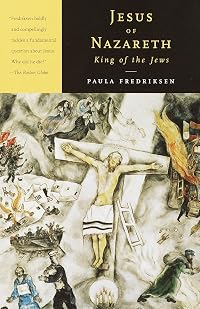
Jesus of Nazareth, King of the Jews: A Jewish Life and the Emergence of Christianity
by Paula Fredriksen
On This Page
Description
Paula Fredriksen, renowned historian and author of From Christ to Jesus, begins this inquiry into the historic Jesus with a fact that may be the only undisputed thing we know about him: his crucifixion. Rome reserved this means of execution particularly for political insurrectionists; and the Roman charge posted at the head of the cross indicted Jesus for claiming to be King of the Jews. To reconstruct the Jesus who provoked this punishment, Fredriksen takes us into the religious worlds, show more Jewish and pagan, of Mediterranean antiquity, through the labyrinth of Galilean and Judean politics, and on into the ancient narratives of Paul's letters, the gospels, the Dead Sea Scrolls, and Josephus' histories. The result is a profound contribution both to our understanding of the social and religious contexts within which Jesus of Nazareth moved, and to our appreciation of the mission and message that ended in the proclamation of Jesus as Messiah. show lessTags
Recommendations













Member Reviews
Jesus of Nazareth, King of the Jews by Paula Fredriksen is an excellent well-researched book attempting to account for the mission and death of Jesus. It is very well argued but is written compactly, entrusting the reader to pay close attention at times to threads of argument and counter-argument, a dialectic necessary for disentangling such historical confusion on the subject. No words are wasted.
The blurb (above) is rather misleading by suggesting the the author begins with the crucifixion, because it is towards that decisive incident primarily that the text leads. The event is not reliably explained without an understanding of Jesus' society, its religious beliefs, practices and history, and the existing power structures in the show more region. The author examines the Biblical text itself, non-biblical accounts such as those of Josephus, and addresses the major theories of historians and clerics, some of whom have failed to take fully into account the situation on the ground during Jesus' time but rather assumed an unsound modern perspective. Here, briefly, is the author's persuasive claim:
By careful comparisons of the Synoptic Gospels (Matthew, Mark and Luke) among themselves, with the book of John, the existing letters of Paul (written before the Gospels), and other contemporary written accounts, and by knowing their historical and social context, it is possible to discern why the accounts differ considerably; that is, to identify the motives of the writers and also to recognize their possible sources and dependencies on one another. The motives themselves are informative, and properly assessing motivic portions of text as unhistorical enables a finer focus on what is historically reliable. This is the usual method of analysis (exegesis).
Based on Old Testament prophesies, many in the Jewish community in which Jesus lived were expecting (and their forebears had been expecting for centuries) a day of judgement (the apocalypse), and a messiah. They had suffered savage depopulation of the north by the Assyrians in the 8th century BC, depopulation and captivity by the Babylonians in the 6th century, other rebellions and outrages through the years, and were now chafing under the rule of Rome and her puppet rulers. There were other men before (and after) Jesus who were acclaimed here or there as a messiah, but no judgement day had yet transpired.
Jesus was the foremost teacher, healer and leader among several, and they and most other able Jews journeyed annually to Jerusalem for Passover. It was always the largest Jewish gathering of the year, and Roman soldiers always were brought in so as to keep a rebellion from breaking out, as indeed one did break out in 69 AD whereafter the Romans famously demolished the temple. But the soldiers always were vastly outnumbered and so acted proactively when possible. In Jesus' last year, the expectation emerged throughout the Passover throng that Jesus was the messiah and that the end was near. It is likely that, although Jesus' teaching foretold a future messianic apocalypse, he did not make any such claim for himself or declare that the end was imminent. But the situation developed beyond his control.
The Romans and the high priests long knew of Jesus and had found no reason for apprehension, but this turn was new and alarming for both parties, because Roman policy was to hold the high priests accountable for any Jewish attempt at insurrection, and insurrection now appeared possible. There was just one workable solution. Most safe and effective would have been for soldiers quietly to remove Jesus in the evening and crucify him out of sight of the temple complex, to be sought and found dead on the cross the next morning, a clear warning in classic Roman style. It is significant that none of Jesus' disciples were executed: when the Romans recognized a seditious plot, they routinely crucified every suspected conspirator.
Worshipers were astonished to awaken to Jesus on a cross, and soon began the various attempts to make sense of, and to find or create, meaning in his death. Some still believed that Jesus was the messiah, but this ending was unacceptable; it was later said to be better accomplished after Jesus returned three days later in either Galilee (Matthew and Mark), on the road to Emmaus (Luke) or in Jerusalem (John) and then rose to heaven. By the way, the earliest writer who addressed Jesus' return was Paul, who knew several of the 12 original apostles. He explicitly stated that Jesus had returned to earth in spirit but not in flesh and blood.
Endeavors by Paul and (the anonymous writers of circulating manuscripts called) Mark around 50-65 AD, Matthew and Luke around 85-90 AD, and John around 90-110 AD, and by subsequent commentators, to find meaning in Jesus' life and death, leaned heavily on old testament prophesies, attaching them to Jesus. Likewise, some compositions recorded after the destruction of the temple ascribe a prophesy of its destruction to him. "Prophesying" an event that had already happened was not uncommon in Old Testament writings intentionally imputed as composed before its occurrence.
Throughout the ensuing ages, some Christians continued to preach and to expect the impending arrival of the last judgement, including not a few at the end of 1999. Another such prediction was for October 22, 1844, thereafter called the "Great Disappointment" and figuring large in the founding of the Seventh-day Adventist Church.
The book is well-written and annotated but would have read more easily with a few more subdivisions, each with a setup sentence to guide the reader between argument and counter-argument. This is a quibble. Anyone seriously interested in the historical Jesus will want to read this. show less
The blurb (above) is rather misleading by suggesting the the author begins with the crucifixion, because it is towards that decisive incident primarily that the text leads. The event is not reliably explained without an understanding of Jesus' society, its religious beliefs, practices and history, and the existing power structures in the show more region. The author examines the Biblical text itself, non-biblical accounts such as those of Josephus, and addresses the major theories of historians and clerics, some of whom have failed to take fully into account the situation on the ground during Jesus' time but rather assumed an unsound modern perspective. Here, briefly, is the author's persuasive claim:
By careful comparisons of the Synoptic Gospels (Matthew, Mark and Luke) among themselves, with the book of John, the existing letters of Paul (written before the Gospels), and other contemporary written accounts, and by knowing their historical and social context, it is possible to discern why the accounts differ considerably; that is, to identify the motives of the writers and also to recognize their possible sources and dependencies on one another. The motives themselves are informative, and properly assessing motivic portions of text as unhistorical enables a finer focus on what is historically reliable. This is the usual method of analysis (exegesis).
Based on Old Testament prophesies, many in the Jewish community in which Jesus lived were expecting (and their forebears had been expecting for centuries) a day of judgement (the apocalypse), and a messiah. They had suffered savage depopulation of the north by the Assyrians in the 8th century BC, depopulation and captivity by the Babylonians in the 6th century, other rebellions and outrages through the years, and were now chafing under the rule of Rome and her puppet rulers. There were other men before (and after) Jesus who were acclaimed here or there as a messiah, but no judgement day had yet transpired.
Jesus was the foremost teacher, healer and leader among several, and they and most other able Jews journeyed annually to Jerusalem for Passover. It was always the largest Jewish gathering of the year, and Roman soldiers always were brought in so as to keep a rebellion from breaking out, as indeed one did break out in 69 AD whereafter the Romans famously demolished the temple. But the soldiers always were vastly outnumbered and so acted proactively when possible. In Jesus' last year, the expectation emerged throughout the Passover throng that Jesus was the messiah and that the end was near. It is likely that, although Jesus' teaching foretold a future messianic apocalypse, he did not make any such claim for himself or declare that the end was imminent. But the situation developed beyond his control.
The Romans and the high priests long knew of Jesus and had found no reason for apprehension, but this turn was new and alarming for both parties, because Roman policy was to hold the high priests accountable for any Jewish attempt at insurrection, and insurrection now appeared possible. There was just one workable solution. Most safe and effective would have been for soldiers quietly to remove Jesus in the evening and crucify him out of sight of the temple complex, to be sought and found dead on the cross the next morning, a clear warning in classic Roman style. It is significant that none of Jesus' disciples were executed: when the Romans recognized a seditious plot, they routinely crucified every suspected conspirator.
Worshipers were astonished to awaken to Jesus on a cross, and soon began the various attempts to make sense of, and to find or create, meaning in his death. Some still believed that Jesus was the messiah, but this ending was unacceptable; it was later said to be better accomplished after Jesus returned three days later in either Galilee (Matthew and Mark), on the road to Emmaus (Luke) or in Jerusalem (John) and then rose to heaven. By the way, the earliest writer who addressed Jesus' return was Paul, who knew several of the 12 original apostles. He explicitly stated that Jesus had returned to earth in spirit but not in flesh and blood.
Endeavors by Paul and (the anonymous writers of circulating manuscripts called) Mark around 50-65 AD, Matthew and Luke around 85-90 AD, and John around 90-110 AD, and by subsequent commentators, to find meaning in Jesus' life and death, leaned heavily on old testament prophesies, attaching them to Jesus. Likewise, some compositions recorded after the destruction of the temple ascribe a prophesy of its destruction to him. "Prophesying" an event that had already happened was not uncommon in Old Testament writings intentionally imputed as composed before its occurrence.
Throughout the ensuing ages, some Christians continued to preach and to expect the impending arrival of the last judgement, including not a few at the end of 1999. Another such prediction was for October 22, 1844, thereafter called the "Great Disappointment" and figuring large in the founding of the Seventh-day Adventist Church.
The book is well-written and annotated but would have read more easily with a few more subdivisions, each with a setup sentence to guide the reader between argument and counter-argument. This is a quibble. Anyone seriously interested in the historical Jesus will want to read this. show less
Paula Fredriksen presents an in depth analysis of the life and times of Jesus, focused on the time line of historic events just prior to his birth and the century after his crucifixion. She addresses the ancient customs, rituals, and laws of Judaism - politics, economics, and social reform in Galilee and Judea (Jerusalem), delving into the circumstances that led to the belief that Jesus was indeed the Messiah and the cause of his crucifixion. Comparing all the writings of the Apostles she traces the steps of Jesus, describes his actions, what he said and to whom he spoke.
It is an illuminating discovery that to this day religious scholars have various opinions of Bible interpretations believing hearsay, misinterpretations, and possible show more embellishments may interfere with true facts. Fredriksen shares in great detail a comparison of the writings of the Apostles, which overlap, vary, and even present vague contradictions. The one thing they all have in common is the crucifixion. It is clearly stated that the Gospels are interpretations of the life of Jesus - not actual reports. She questions some traditional assumptions about the activities of Jesus. She adds information from the Dead Sea Scrolls, letters written by Paul, and quotes from the Apocrypha.
Some scholars suggest Jesus believed in the Jewish law, but not the traditions. Yet, right up until his crucifixion Jesus followed the tradition of attending the Passover dinner - his Last Supper.
There are so many interesting facts - just one example; most Christians may not realize that the “Baptism” ritual was not new to the Jewish population. Jewish people throughout their history have taken “immersions of purification” called a Mikvah. Also, Jewish people throughout history have set aside 1 day a year specifically to repent and atone for their sins: Atonement Day - Yom Kipper. So one could say, John the Baptist, who was Jewish, was creating a variation of the Mikvah, simply opening the door to pagan worshipers and showing them a pathway to the Jewish God. And John did preach that until repentance occurred the purification meant nothing. So in essence many of the Christian traditions were not really new - just variations of Jewish law.
Another fact - “Son of God” was an ancient phrase preceding the birth of Jesus. The entire male Jewish population of Israel were referred to as “sons of God”. Thus, even thought Jesus had prophetic knowledge, someone using that phrase in the Bible does not necessarily mean they were referring to Jesus as the Messiah. It is just one example of how the most detailed interpretations have been studied and analyzed by theologians.
Paula Fredriksen studied ancient Christianity at several colleges, taught at Stanford, Berkley, and the Hebrew University in Jerusalem. She has several other books published of religious content. The book includes 36 pages of notes, a glossary, and Bibliography.
After reading numerous books on the subject, I found Fredriksen’s presentation informative and
thought provoking. She has spent a lifetime studying - unraveling the mystery of the life and times of Jesus. She doesn’t make assumptions, or give personal opinions. She simply states the facts.
Rated 5 Stars January 2026 show less
It is an illuminating discovery that to this day religious scholars have various opinions of Bible interpretations believing hearsay, misinterpretations, and possible show more embellishments may interfere with true facts. Fredriksen shares in great detail a comparison of the writings of the Apostles, which overlap, vary, and even present vague contradictions. The one thing they all have in common is the crucifixion. It is clearly stated that the Gospels are interpretations of the life of Jesus - not actual reports. She questions some traditional assumptions about the activities of Jesus. She adds information from the Dead Sea Scrolls, letters written by Paul, and quotes from the Apocrypha.
Some scholars suggest Jesus believed in the Jewish law, but not the traditions. Yet, right up until his crucifixion Jesus followed the tradition of attending the Passover dinner - his Last Supper.
There are so many interesting facts - just one example; most Christians may not realize that the “Baptism” ritual was not new to the Jewish population. Jewish people throughout their history have taken “immersions of purification” called a Mikvah. Also, Jewish people throughout history have set aside 1 day a year specifically to repent and atone for their sins: Atonement Day - Yom Kipper. So one could say, John the Baptist, who was Jewish, was creating a variation of the Mikvah, simply opening the door to pagan worshipers and showing them a pathway to the Jewish God. And John did preach that until repentance occurred the purification meant nothing. So in essence many of the Christian traditions were not really new - just variations of Jewish law.
Another fact - “Son of God” was an ancient phrase preceding the birth of Jesus. The entire male Jewish population of Israel were referred to as “sons of God”. Thus, even thought Jesus had prophetic knowledge, someone using that phrase in the Bible does not necessarily mean they were referring to Jesus as the Messiah. It is just one example of how the most detailed interpretations have been studied and analyzed by theologians.
Paula Fredriksen studied ancient Christianity at several colleges, taught at Stanford, Berkley, and the Hebrew University in Jerusalem. She has several other books published of religious content. The book includes 36 pages of notes, a glossary, and Bibliography.
After reading numerous books on the subject, I found Fredriksen’s presentation informative and
thought provoking. She has spent a lifetime studying - unraveling the mystery of the life and times of Jesus. She doesn’t make assumptions, or give personal opinions. She simply states the facts.
Rated 5 Stars January 2026 show less
From the Afterword:
"The Jesus encountered in the present reconstruction is a prophet who preached the coming apocalyptic Kingdom of God. His message coheres both with that of his predecessor and mentor, John the Baptizer, and with that of the movement that sprang up in his name. This Jesus thus is not primarily a social reformer with a revolutionary message; nor is he a religious innovator radically redefining the traditional ideas and practices of his native religion."
Which is a pretty fair description of the themes explored. I found the author's lack of belief annoying: for example, she chose to assume that all early references to the messiah could not have applied to Jesus specifically because they were prophecy, and therefore show more either fiction or deception. But everyone has an agenda, and Fredricksen is clear about hers. Her description of life under Roman rule in the first century was fascinating, and more than made up for other issues of faith (or lack of faith). show less
"The Jesus encountered in the present reconstruction is a prophet who preached the coming apocalyptic Kingdom of God. His message coheres both with that of his predecessor and mentor, John the Baptizer, and with that of the movement that sprang up in his name. This Jesus thus is not primarily a social reformer with a revolutionary message; nor is he a religious innovator radically redefining the traditional ideas and practices of his native religion."
Which is a pretty fair description of the themes explored. I found the author's lack of belief annoying: for example, she chose to assume that all early references to the messiah could not have applied to Jesus specifically because they were prophecy, and therefore show more either fiction or deception. But everyone has an agenda, and Fredricksen is clear about hers. Her description of life under Roman rule in the first century was fascinating, and more than made up for other issues of faith (or lack of faith). show less
The author of this book focuses on two indisputable facts: Jesus of Nazareth was crucified by Rome, killed as a political insurrectionist, but none of his immediate followers were harmed or even arrested. The public execution, he argues, implies that Pilate saw Jesus as spearheading some type of dangerous political movement. The public execution may have been to discourage whatever political hopes Jesus may have inspired. Yet the fact that Pilate rounded up and executed none of Jesus' followers suggests that he knew perfectly well that Jesus posed no such threat. So why the crucificixion? Focusing on these facts, the author re-evaluates the historical worth of traditions in John's Gospel that may have been discounted or overlooked.
Ratings
Members
- Recently Added By
Author Information

18+ Works 1,783 Members
Paula Fredriksen, Aurelio Professor of Scripture emerita at Boston University, is Distinguished Visiting Professor of Comparative Religion at the Hebrew University of Jerusalem.
Awards and Honors
Classifications
- Genres
- Religion & Spirituality, Nonfiction, History, General Nonfiction, Biography & Memoir
- DDC/MDS
- 232.9 — Religion Christianity Jesus Christ and his family Family and life of Jesus
- LCC
- BT301.2 .F74 — Philosophy, Psychology and Religion Doctrinal Theology Doctrinal Theology Christology Life of Christ
- BISAC
Statistics
- Members
- 367
- Popularity
- 85,515
- Reviews
- 4
- Rating
- (4.05)
- Languages
- English
- Media
- Paper, Ebook
- ISBNs
- 6
- ASINs
- 3