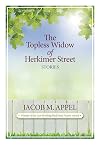
The Topless Widow of Herkimer Street
by Jacob M. Appel 
On This Page
Description
With compassion, wit, humor, and intelligence, these stories explore the gray areas of our lives. Echoes of myth, fairy tale, and fable flavor them, underscoring the eternal nature of both the human condition and storytelling itself.Tags
Recommendations












Member Reviews
This is a wonderful collection of very inventive, imaginative, funny and engaging stories, the first collection I've read of this author. The characters are larger than life and yet very believable, such as Uncle Rex in "Lessons in Platygaenism," the eponymous widow of Herkimer Street, and the veterinarian in "One Wish."
The stories have a fable-istic quality to them, even the ones without supernatural elements to them (of which there is only really one). If there is a theme here, it is ordinary people in extraordinary situations. Some of the events stretch credulity, as in the house switcheroo situation in "The Current Occupant," or the courtship in "Rendezvous in Wikiternity," but the reader becomes so involved in the conflicts posed show more to the protagonists in these interesting circumstances, one easily surrenders disbelief in exchange for the great ride.
Several of the stories feature middle-aged characters faced with momentous choices, and the depth of character analysis here is as good as any story by Henry James; at other times, Edith Wharton sprang to mind (in particular, in the story "The Topless Widow of Herkimer Street," whose ending turns the story from a humorous look at a quirky mother into a tragic moment in the life of a tragic character. Really socks you in the stomach.) The choices we make, how they define us and how they shape us, is a major theme in the stories.
Thank you to the author and publishers for a free copy of this book. show less
The stories have a fable-istic quality to them, even the ones without supernatural elements to them (of which there is only really one). If there is a theme here, it is ordinary people in extraordinary situations. Some of the events stretch credulity, as in the house switcheroo situation in "The Current Occupant," or the courtship in "Rendezvous in Wikiternity," but the reader becomes so involved in the conflicts posed show more to the protagonists in these interesting circumstances, one easily surrenders disbelief in exchange for the great ride.
Several of the stories feature middle-aged characters faced with momentous choices, and the depth of character analysis here is as good as any story by Henry James; at other times, Edith Wharton sprang to mind (in particular, in the story "The Topless Widow of Herkimer Street," whose ending turns the story from a humorous look at a quirky mother into a tragic moment in the life of a tragic character. Really socks you in the stomach.) The choices we make, how they define us and how they shape us, is a major theme in the stories.
Thank you to the author and publishers for a free copy of this book. show less
Man, oh man- this gentleman is brilliant! I might have guessed an “American author, bioethicist, physician, lawyer and social critic” according to Wikipedia, would produce some stellar writing, but still wasn’t prepared for how fully invested I’d be in each story in Jacob M. Appel’s The Topless Widow of Herkimer Street! The characters are so very developed and the dialogue is beyond reproach, something I fully appreciate since I struggle with it so much in my own writing. Tied together by the thread of hard-earned wisdom from the passage of time, Appel’s collection reminds readers that there is so very much more to a person–their trials and tribulations, their passions, their earth-shattering losses– than what meets the show more eye.
I’ve read short stories that go for the jugular. Kill off a baby, blow up an entire town. Effective, perhaps, but cheap, in most cases. Appel’s stories could not be further from that. Profound in his accuracy of portraying the human condition, Appel delves into ethical, moral, and spiritual arguments in this collection. Whether in the form of a comatose teenager or an elderly exhibitionist, he asks readers to consider a schema outside of their own. Things aren’t always as black and white, right and wrong, as they at first appear.
If you are looking for a smart read, pick up The Topless Widow of Herkimer Street from Howling Bird Press, “the publishing house of Augsburg College’s MFA in Creative Writing, which offers an annual prize that results in book publication, ” per its site. (Current submissions are open for poetry manuscripts and close June 30th!) The stories will certainly inspire much elevated dialogue at your summer barbecue or pool party! Speaking of, I can’t wait to dive into Coulrophobia and Fata Morgana, another of Appel’s superb short story collections.
*- I received a copy of this collection in exchange for an honest review.
bookwormshawn.wordpress.com show less
I’ve read short stories that go for the jugular. Kill off a baby, blow up an entire town. Effective, perhaps, but cheap, in most cases. Appel’s stories could not be further from that. Profound in his accuracy of portraying the human condition, Appel delves into ethical, moral, and spiritual arguments in this collection. Whether in the form of a comatose teenager or an elderly exhibitionist, he asks readers to consider a schema outside of their own. Things aren’t always as black and white, right and wrong, as they at first appear.
If you are looking for a smart read, pick up The Topless Widow of Herkimer Street from Howling Bird Press, “the publishing house of Augsburg College’s MFA in Creative Writing, which offers an annual prize that results in book publication, ” per its site. (Current submissions are open for poetry manuscripts and close June 30th!) The stories will certainly inspire much elevated dialogue at your summer barbecue or pool party! Speaking of, I can’t wait to dive into Coulrophobia and Fata Morgana, another of Appel’s superb short story collections.
*- I received a copy of this collection in exchange for an honest review.
bookwormshawn.wordpress.com show less
This review was written for LibraryThing Member Giveaways.
The eight short stories in this collection by Jacob M. Appel, *The Topless Widow of Herkimer Street*, share a common theme of dislocation. In each, the patterns of the characters' lives are irretrievably disrupted by accident, surprise, misfortune, or death, and much of the narrative takes place in the characters' thoughts and responses to the disruptions. Scenes are meticulously set and landscapes and interiors beautifully described, including details such as objects, smells, and lighting.
The stories are written in the third person, and the author's tone is light and detached. At its best, in “Lessons in Platygaeanism” and “Bioethics for Dunces”, this lightness is devastatingly effective, creating a thin, friable membrane show more between the reader and difficult subjects like end-of-life decisions, abortion, mental illness, death, and infidelity. “Lessons in Platygaeanism” is a real gem of a story, and it alone would be enough for me to recommend the collection, although I enjoyed several of the other stories as well. Unlike the other stories, which are told from adult points of view, it is told from the perspective of a ten-year-old boy, with the particular observations, empathies, and naivities of a child of that age. It also gave the strongest sense of place and surroundings of any of the stories in the collection. I have already read it twice, and expect that I will be returning to it for regular visits, as I do with other favorite literature.
The writing in “Bioethics for Dunces” is also beautiful. Here, the narrator's detachment makes sense: a physician and bioethicist, he is suddenly confronted with his daughter's unsuccessful suicide attempt, which has left her on life support. The narrative moves back and forth between his personal and professional thoughts in a very natural stream-of-consciousness way. One moment he becomes lost in small details, like the shape of his daughter's hands, while in another he judges the bedside manner of the attending physician in the ICU. That duality feels very realistic to me given the situation, and it asks for a personal examination of what life support and the right to die really mean, not just as hypothetical concepts but in the context of those we love.
The light, detached tone is not equally successful in all of the stories. In “The Topless Widow of Herkimer Street” and “Toward Uncharted Waters”, it comes across as mocking or patronizing, and I wished that the author would engage more with characters. Sometimes, as in the title story, I also wished that the characters would engage more fully with each other.
Curiously little information is included about the characters' physical appearance. The personal details that are provided are similar to those that might be included in a medical history, such as age, family and criminal history, religious preference, or a list of medical diagnoses. Details such as hair or eye color are for the most part missing. While these omissions struck me as unusual for fiction, they seemed consistent with character descriptions in a dramatic script, where specific physical details are often left to be filled in by the costumers, make-up artists, or the actors who assume the roles. The sometimes exaggerated metaphors also reminded me of theatrical productions, as did the settings, and I was interested to learn on further investigation that the author is also a playwright. In fact, he also holds advanced degrees in law, psychiatry, bioethics, and public health. His handling of topics in these fields is balanced and thoughtful.
In sum, while some of these stories are stronger than others, there is a lot of food for thought and some really beautiful writing. I look forward to reading more by this author. show less
The stories are written in the third person, and the author's tone is light and detached. At its best, in “Lessons in Platygaeanism” and “Bioethics for Dunces”, this lightness is devastatingly effective, creating a thin, friable membrane show more between the reader and difficult subjects like end-of-life decisions, abortion, mental illness, death, and infidelity. “Lessons in Platygaeanism” is a real gem of a story, and it alone would be enough for me to recommend the collection, although I enjoyed several of the other stories as well. Unlike the other stories, which are told from adult points of view, it is told from the perspective of a ten-year-old boy, with the particular observations, empathies, and naivities of a child of that age. It also gave the strongest sense of place and surroundings of any of the stories in the collection. I have already read it twice, and expect that I will be returning to it for regular visits, as I do with other favorite literature.
The writing in “Bioethics for Dunces” is also beautiful. Here, the narrator's detachment makes sense: a physician and bioethicist, he is suddenly confronted with his daughter's unsuccessful suicide attempt, which has left her on life support. The narrative moves back and forth between his personal and professional thoughts in a very natural stream-of-consciousness way. One moment he becomes lost in small details, like the shape of his daughter's hands, while in another he judges the bedside manner of the attending physician in the ICU. That duality feels very realistic to me given the situation, and it asks for a personal examination of what life support and the right to die really mean, not just as hypothetical concepts but in the context of those we love.
The light, detached tone is not equally successful in all of the stories. In “The Topless Widow of Herkimer Street” and “Toward Uncharted Waters”, it comes across as mocking or patronizing, and I wished that the author would engage more with characters. Sometimes, as in the title story, I also wished that the characters would engage more fully with each other.
Curiously little information is included about the characters' physical appearance. The personal details that are provided are similar to those that might be included in a medical history, such as age, family and criminal history, religious preference, or a list of medical diagnoses. Details such as hair or eye color are for the most part missing. While these omissions struck me as unusual for fiction, they seemed consistent with character descriptions in a dramatic script, where specific physical details are often left to be filled in by the costumers, make-up artists, or the actors who assume the roles. The sometimes exaggerated metaphors also reminded me of theatrical productions, as did the settings, and I was interested to learn on further investigation that the author is also a playwright. In fact, he also holds advanced degrees in law, psychiatry, bioethics, and public health. His handling of topics in these fields is balanced and thoughtful.
In sum, while some of these stories are stronger than others, there is a lot of food for thought and some really beautiful writing. I look forward to reading more by this author. show less
This review was written for LibraryThing Member Giveaways.
5/5 stars
I loved this book. Usually, collections of short stories are hit or miss, with a couple of gems and a few that leave me cold. Every story is this book was funny, poignant, and slightly unsettling. The characters were believable and well-drawn, and the plots had a quirky twist that made them different.
It's hard to pick a favourite but I'm going with The Topless Widow of Herkimer Street, about an woman regaining her self-identity after years of marriage and motherhood, much to her son's dismay, and Lessons in Platygaeanism, a story of boys growing up in Alaska and the unintended consequences of asking questions.
My only criticism, and it's a minor quibble, it is that two of the stories (The Wish and Long Term) have too many show more similarities. Even though they are very different and deal with difficult issues (I actually liked both stories), I felt that they dealt with similar choices and resolutions which was a bit repetitive in such a short collection. In a larger volume, the similarities would be less obvious.
Summary: Highly recommended.
Disclaimer: I received a free copy of this book on LibraryThing, in exchange for a fair review. Cross-posted on GoodReads, LibraryThing and Amazon. show less
I loved this book. Usually, collections of short stories are hit or miss, with a couple of gems and a few that leave me cold. Every story is this book was funny, poignant, and slightly unsettling. The characters were believable and well-drawn, and the plots had a quirky twist that made them different.
It's hard to pick a favourite but I'm going with The Topless Widow of Herkimer Street, about an woman regaining her self-identity after years of marriage and motherhood, much to her son's dismay, and Lessons in Platygaeanism, a story of boys growing up in Alaska and the unintended consequences of asking questions.
My only criticism, and it's a minor quibble, it is that two of the stories (The Wish and Long Term) have too many show more similarities. Even though they are very different and deal with difficult issues (I actually liked both stories), I felt that they dealt with similar choices and resolutions which was a bit repetitive in such a short collection. In a larger volume, the similarities would be less obvious.
Summary: Highly recommended.
Disclaimer: I received a free copy of this book on LibraryThing, in exchange for a fair review. Cross-posted on GoodReads, LibraryThing and Amazon. show less
This review was written for LibraryThing Member Giveaways.
Jacob Appel is a freakin' genius. Said it before and i'll continue to for as long as he writes books. Short stories? In other books there's always one or two that stand out....not with him. Each one i read i thought to myself...well THIS is the one, nope. His stories are so diverse, his imagination swoops and soars!
He takes the quirks and eccentricities of everyday people and makes them relate-able WITH a wicked sense of wit. Intuitive and sensitive with an awesome sense of humor, Appel is definitely a favorite of mine.
He takes the quirks and eccentricities of everyday people and makes them relate-able WITH a wicked sense of wit. Intuitive and sensitive with an awesome sense of humor, Appel is definitely a favorite of mine.
This review was written for LibraryThing Member Giveaways.
I read multiple books at a time; therefore it usually takes me a while to finish a single book. Not this one. It took me only three days (I had to eat and sleep and occasionally work) to finish Jacob Appel’s book. It was that good.
I’m a sucker for short stories and these did not disappoint. They were at turns sad, weird, funny and witty. Most of all, they kept me engrossed and I was left wanting more.
This was the first time I’d read any of Appel’s stories but I am now definitely a fan!
In the interest of full disclosure, I received a copy of this book in return for a fair review.
I’m a sucker for short stories and these did not disappoint. They were at turns sad, weird, funny and witty. Most of all, they kept me engrossed and I was left wanting more.
This was the first time I’d read any of Appel’s stories but I am now definitely a fan!
In the interest of full disclosure, I received a copy of this book in return for a fair review.
This review was written for LibraryThing Member Giveaways.
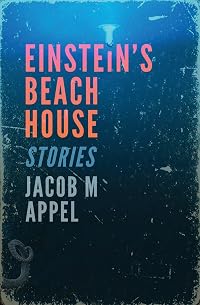
Jacob Appel has quickly become my favorite short story author. Just by his titles alone, he piques my interest and desire to read his collections. Each of his stories is unquestionably unique. His tales stand out from other authors because of his distinctive writing qualities which include his uncanny ability to create characters that we feel like we know and understand. I think Mr. Appel’s experience as a psychiatrist enables him not only to craft his characters, but facilitates his thought-provoking, entertaining, and believable written works. This is my second collection of short stories by Jacob Appel, which I have read. I don’t just read his short stories, I devour them! Every twist, every turn, every revelation, every shock, show more every amazing detail…I devour them. I am not going to give away any details of his short stories; it would be unkind. I will tell you that the stories in this grouping are not as twisted as the stories in “Einstein’s Beach House”, but they are just as captivating!
I was given a copy by the author for me to review. show less
I was given a copy by the author for me to review. show less
This review was written for LibraryThing Member Giveaways.
Members
- Recently Added By
Lists

Kirkus Starred Fiction Reviews of Books Published in 2016
63 works; 3 members
Author Information

27+ Works 2,439 Members
Jacob M. Appel is a LibraryThing Author, an author who lists their personal library on LibraryThing.
Awards and Honors
Awards
Notable Lists
Common Knowledge
- Original publication date
- 2016-11-01
- Dedication
- For Rosie, Ruth & Theia
- First words
- Idiot that he was - and every time Lewinter dozed off, his wife wok him to remind him of his infernal stupidity - he'd bought a house from a mail-order catalog.
- Last words
- (Click to show. Warning: May contain spoilers.)Options had seemed a burden then, not a blessing.
- Publisher's editor
- Berger, Katherine; Fox, Patricia; Lynch, Cynthia Truitt
Classifications
Statistics
- Members
- 72
- Popularity
- 436,807
- Reviews
- 19
- Rating
- (4.57)
- Languages
- English
- Media
- Paper, Ebook
- ISBNs
- 2
- ASINs
- 1