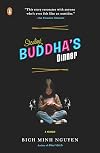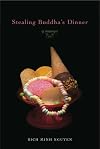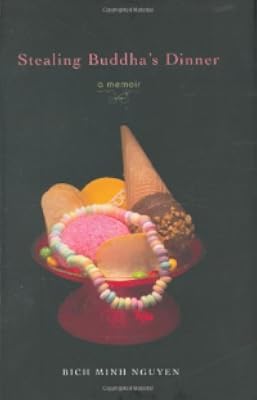
Stealing Buddha's Dinner: A Memoir
by Bich Minh Nguyen
On This Page
Description
Winner of the PEN/Jerard AwardChicago Tribune Best Book of the Year
Kiriyama Notable Book
"[A] perfectly pitched and prodigiously detailed memoir." - Boston Globe
As a Vietnamese girl coming of age in Grand Rapids, Michigan, Nguyen is filled with a rapacious hunger for American identity, and in the pre-PC-era Midwest (where the Jennifers and Tiffanys reign supreme), the desire to belong transmutes into a passion for American food. More exotic- seeming than her Buddhist grandmother's show more traditional specialties, the campy, preservative-filled "delicacies" of mainstream America capture her imagination.
In Stealing Buddha's Dinner, the glossy branded allure of Pringles, Kit Kats, and Toll House Cookies becomes an ingenious metaphor for Nguyen's struggle to become a "real" American, a distinction that brings with it the dream of the perfect school lunch, burgers and Jell- O for dinner, and a visit from the Kool-Aid man. Vivid and viscerally powerful, this remarkable memoir about growing up in the 1980s introduces an original new literary voice and an entirely new spin on the classic assimilation story. show less
Tags
Recommendations
















Member Recommendations
Member Reviews
Insightful yet even poetic metaphor and memory pervades this memoir from a shining light of a debut book. The author's recollection of life in America following feeling Vietnam features references to copious reading and it seems to have improved the author's prose powers. Aside from the writing quality the life itself is fascinating: the difficulties of individuating toward adulthood under a distant stepmom, cruel schoolmates, and the confusing temptations of American consumerism. Nguyen struggles with understanding herself and putting together an identity from her heritage and her home while unknowingly moving toward an unexpected reunion.
Food is an important metaphor for American culture in Bich Minh Nguyen’s memoir, Stealing Buddha’s Dinner. Growing up in Michigan in the 1980s, young Bich adores, even obsesses over, the cultural icons of that decade – from pop music to fast food and candy. She wants to consume it all. In her memoir, the role of the food she sees in commercials (“Hey, Kool-Aid!”) represents the essence of what is truly American.
Her particular family situation is insightful as to why she was so drawn to such convenience foods. While born in Vietnam, her step-mother is Hispanic, and their family lives among neighbors of Dutch descent with their blond hair, blue eyes, and pale skin. To fit in with her friends at school, Bich saw food as the great show more equalizer. Ethnic food proclaims one’s differences, but fast food means they are all part of one culture.
As a child the author, perhaps passively, disassociates herself from her Vietnamese heritage. While trying to blend in with her surroundings, she slowly loses her connection to her cultural community as she stops attending parties, fails to contact childhood friends, and eventually lets her native language go.
It seems young Bich is looking to the adults in the household for help in finding a middle path of incorporating into her life the variety of these cultures. Sadly, the father can’t be trusted to provide a consistent and stable presence; and her mother is too busy to teach her basic social graces. In addition, there are strong family secrets and taboos that cripple everyone’s ability to relate in healthy ways toward one another.
Her one anchor – both to the past and present – through this difficult acculturation process is her grandmother, Noi. Noi grounds Bich in her Vietnamese heritage via delicious hand-prepared food, her Buddhist faith, and nonjudgmental spirit. Still, it is not enough to overcome the yearning that Bich has for cultural acceptance. Even today, the author, through this memoir, recalls the ache of growing up different in America.
(Note: If you enjoy memoirs, this is a recommended read. I'd rate it 7 of 10.) show less
Her particular family situation is insightful as to why she was so drawn to such convenience foods. While born in Vietnam, her step-mother is Hispanic, and their family lives among neighbors of Dutch descent with their blond hair, blue eyes, and pale skin. To fit in with her friends at school, Bich saw food as the great show more equalizer. Ethnic food proclaims one’s differences, but fast food means they are all part of one culture.
As a child the author, perhaps passively, disassociates herself from her Vietnamese heritage. While trying to blend in with her surroundings, she slowly loses her connection to her cultural community as she stops attending parties, fails to contact childhood friends, and eventually lets her native language go.
It seems young Bich is looking to the adults in the household for help in finding a middle path of incorporating into her life the variety of these cultures. Sadly, the father can’t be trusted to provide a consistent and stable presence; and her mother is too busy to teach her basic social graces. In addition, there are strong family secrets and taboos that cripple everyone’s ability to relate in healthy ways toward one another.
Her one anchor – both to the past and present – through this difficult acculturation process is her grandmother, Noi. Noi grounds Bich in her Vietnamese heritage via delicious hand-prepared food, her Buddhist faith, and nonjudgmental spirit. Still, it is not enough to overcome the yearning that Bich has for cultural acceptance. Even today, the author, through this memoir, recalls the ache of growing up different in America.
(Note: If you enjoy memoirs, this is a recommended read. I'd rate it 7 of 10.) show less
Nguyen's memoir of growing up Vietnamese in Michigan after fleeing Saigon in 1975 is somewhat different from similar memoirs, and perhaps shouldn't be understood as an example of the same genre. Many accounts that begin with a similar premise are about not fitting in, about traumatization, about striving for the immigrant's version of the American Dream. While Nguyen certainly enacts and recounts all of these themes, the story in the forefront of this memoir is the allure of a particular form of consumption. Literally, this is a paean to the junk foods of Nguyen's Michigan childhood. Symbolically, it is a tale of incorporation, of gobbling up, of becoming American by ingesting American products. Yes, there are some Amy Tan-like moments show more of admiring the previous generation's culture, but most of the time Nguyen reminds me of the Vietnamese baby Kim from Trudeau's Doonesbury strips of the 1970's. Old people like me remember that long before she married Mike Doonesbury, Kim learned to speak English from television commercials, and her first words were "Big Mac."
Nguyen's America - through - oral - incorporation rings true, and is merely a different spin on the narrative of acculturation. At the same time, it has trouble finding its emotional center, and feels like a small book in some ways. Nguyen's relentless comparisons of herself to others wore me down. I can only assume that she found it exhausting as well. It's a story that's about as far from a Buddhist sensibility as you can get, and might have been more complex had this cultural tension been better articulated and woven into the story over time. show less
Nguyen's America - through - oral - incorporation rings true, and is merely a different spin on the narrative of acculturation. At the same time, it has trouble finding its emotional center, and feels like a small book in some ways. Nguyen's relentless comparisons of herself to others wore me down. I can only assume that she found it exhausting as well. It's a story that's about as far from a Buddhist sensibility as you can get, and might have been more complex had this cultural tension been better articulated and woven into the story over time. show less
I really loved this book. but then I admit my immigrant story bent. This was about a girl growing up in MI after fleeing Vietnam as a baby with her father and sister. Since we have the same time period growing up in the midwest I can relate to her life in many ways to my own. The foods she craves, the things she wishes to do, the whole life looking in from the outside. I can relate to all of that myself. I love how she tried to live her life thru books and wish to inhabit them so completely. I also respect that she was looking back at herself and trying to resolve how her Vietnamese self and her want to be a white girl with blonde hair from a novel.
The only thing I would pick on would be that she jumps around in time and sometimes I show more lost my bearings as to what age she was and what yr it was. But in reality the story was good enough that I did not care. show less
The only thing I would pick on would be that she jumps around in time and sometimes I show more lost my bearings as to what age she was and what yr it was. But in reality the story was good enough that I did not care. show less
I picked this up through Bookmooch because it sounded interesting. Frankly, anything involving food is interesting to me. I read cookbooks for fun.
This is a memoir, an account of Nguyen's escape from Saigon to Grand Rapids, Michigan. Her dad made the decision to flee, in order to allow his 2 daughters a future that didn't involve bombings and war. They ended up in Michigan with grandma Noi and eventually, a stepmother Rosa and step sister Crissy. This is Nguyen's story - told through the lens of the 80's and the food of 3 cultures: her Vietnamese heritage kept alive by her grandma, her desire to be fully American and eat at McDonalds, and her stepmothers Mexican heritage, complete with tamales and sopa.
The 80's were an embarrassing show more decade, I know, I grew up in it. And I got a little secondhand embarrassment from reading this book. If only because I pretty much did the same things and tried to wear the neon and poof my hair up to the sky as well.
Nguyen was shy and "not pretty" so she kept to books. I related well, my best books were the Little House books and the descriptions of food from Ingalls kept me entranced as much as it did Nguyen.
Nguyen reconciles her childhood, understanding now all of the things that she couldn't grasp back then, like most people do when they grow up. It's a fairly quick read but satisfying...like McDonalds. show less
This is a memoir, an account of Nguyen's escape from Saigon to Grand Rapids, Michigan. Her dad made the decision to flee, in order to allow his 2 daughters a future that didn't involve bombings and war. They ended up in Michigan with grandma Noi and eventually, a stepmother Rosa and step sister Crissy. This is Nguyen's story - told through the lens of the 80's and the food of 3 cultures: her Vietnamese heritage kept alive by her grandma, her desire to be fully American and eat at McDonalds, and her stepmothers Mexican heritage, complete with tamales and sopa.
The 80's were an embarrassing show more decade, I know, I grew up in it. And I got a little secondhand embarrassment from reading this book. If only because I pretty much did the same things and tried to wear the neon and poof my hair up to the sky as well.
Nguyen was shy and "not pretty" so she kept to books. I related well, my best books were the Little House books and the descriptions of food from Ingalls kept me entranced as much as it did Nguyen.
Nguyen reconciles her childhood, understanding now all of the things that she couldn't grasp back then, like most people do when they grow up. It's a fairly quick read but satisfying...like McDonalds. show less
A meandering, sometimes touching memoir of a young Vietnamese immigrant who arrives after the fall of Saigon in Grand Rapids, Michigan with her father, sister, grandmother and uncles. The adventure expands once her dad marries a woman of Mexican-American ancestry. Take a trip down memory lane as Ms. Nguyen rattles off list after list of American snack foods, fast food, packaged foods, you name it (if it had artificial flavorings, chances are it made her list). More delicious to me than the author's attraction/repulsion to American prefab foods were the brief but nonetheless tasty slices of life she provides...how did new immigrants acclimate themselves? What was it like learning a new language and nearly forgetting your native tongue? show more How awful was it to go to a blonde, Christian friend's house for dinner? (Answer: pretty darn awful!) How did her grandmother cope with this total upheaval in her life (rather well, apparently). Anyone who has felt the outsider can relate to much of this tale. But it's the monotonous listing of food and more food that was hard to digest. Burp. show less
I liked this biography a lot. It was very interesting - the story of a Vietnamese girl who came to the United States as an infant and throughout her childhood never found herself at home with either being Vietnamese or American. She tells the story through food - the chapters are themes about food and how she relates her love of junk food and American food and how it applies to the emptiness she often feels inside.
I wish the chapters had been more chronological. She was generally chronological, but not always, and she skipped around some as she pursued some of her food themes. She was 10, then she was 8, then she was maybe 11, then back to being 10. I would have liked more linear progression. I wish she had talked more about high school show more and college. She wraps up quickly after junior high/middle school. I'm also not sure how old she is now or how she currently feels about her life.
Even with that said, this was a very good picture of life for an immigrant in Grand Rapids in the 1980's and also just life in general in the 1980's. It made me think of my own life in the 70's and what I thought of the food my family ate and what other families ate. show less
I wish the chapters had been more chronological. She was generally chronological, but not always, and she skipped around some as she pursued some of her food themes. She was 10, then she was 8, then she was maybe 11, then back to being 10. I would have liked more linear progression. I wish she had talked more about high school show more and college. She wraps up quickly after junior high/middle school. I'm also not sure how old she is now or how she currently feels about her life.
Even with that said, this was a very good picture of life for an immigrant in Grand Rapids in the 1980's and also just life in general in the 1980's. It made me think of my own life in the 70's and what I thought of the food my family ate and what other families ate. show less
Members
- Recently Added By
Author Information

6+ Works 1,204 Members
Awards and Honors
Awards
Notable Lists
Common Knowledge
- People/Characters
- Bich Minh Nguyen; Jennifer Vander Wal; Rosa; Noi
- Important places
- Grand Rapids, Michigan, USA
- Important events
- Fall of Saigon (1975)
- Dedication
- for my family
- First words
- We arrived in Grand Rapids with five dollars and a knapsack of clothes.
"We arrived in Grand Rapids with five dollars and a knapsack of clothes." - Last words
- (Click to show. Warning: May contain spoilers.)There are those who sit at the lake every days, waiting for the vision to rise from the early morning mist.
- Publisher's editor
- Stern, Molly
- Canonical DDC/MDS
- 977.4'5600495922092
- Canonical LCC
- CT275.N523A3
Classifications
Statistics
- Members
- 569
- Popularity
- 51,770
- Reviews
- 28
- Rating
- (3.47)
- Languages
- English
- Media
- Paper, Audiobook, Ebook
- ISBNs
- 13
- UPCs
- 1
- ASINs
- 4