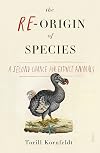
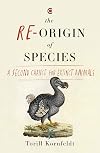
The Re-Origin of Species: a second chance for extinct animals
by Torill Kornfeldt
On This Page
Description
From the Siberian permafrost to balmy California, scientists across the globe are working to resurrect all kinds of extinct animals, from ones that just left us to those that have been gone for many thousands of years. Their tools in this hunt are both fossils and cutting-edge genetic technologies. Some of these scientists are driven by sheer curiosity; others view the lost species as a powerful weapon in the fight to preserve rapidly changing ecosystems. It seems certain that these animals show more will walk the earth again, but what world will that give us? And is any of this a good idea? Science journalist Torill Kornfeldt travelled the world to meet the men and women working to bring these animals back from the dead. Along the way, she has seen the mammoth that has been frozen for 20,000 years, and visited the places where these furry giants will live again. show lessTags
Recommendations













Member Reviews
In The Re-Origin of the Species, science journalist Torill Kornfeldt expertly leads us on a highly accessible world tour of the ongoing efforts to resurrect extinct animal species. In her Introduction, she smartly frames these endeavors with references to the the tale of Prometheus, who defied the gods to bring knowledge to humankind, and Mary Shelley's classic Frankenstein; or, The Modern Prometheus: "...what might happen if human pride and ambition overreached themselves in a bid to emulate God." While recent scientific techniques enable us to envision and attempt the re-creation of long gone species, the resulting questions are inevitable: It it the right thing to do? Is it ethical? Has science gone too far? Will there be unforeseen show more consequences of these best intentions? How would the introduction of a "new" species affect the existing ecosystem as a whole? With a light touch, clear and concise explanations, and painstaking evenhandedness, Kornfeldt explores these efforts by visiting the sites of the cutting-edge scientific studies and interviewing the researchers doing the work. It should be noted that Fiona Graham's English translation from the original Swedish flows effortlessly, and is certainly an integral element in the book's overall appeal. show less
 This review was written for LibraryThing Early Reviewers.
"A Second Chance for Extinct Animals"? What exactly does that mean? Kornfeldt examines the various "de-extinction" projects going on around the world, as well as past attempts at species re-creation (the aurochs). She looks at the ethics of the projects themselves, as well as potential ramifications of success. She does a great job of explaining the projects themselves as well as the people working on them (from trained scientists in top-of-the-line labs to breeders not unlike cat/dog breeders.) As a non-scientist, I found this book to be very well done, with the science explained at a level of detail perfect for me.
What is currently going on? There is cloning (only possible for the Northern White Rhino, which is functionally extinct show more but cells from many individuals are alive but frozen); controlled breeding of close species (the auroch); genentic modification (the American chestnut tree, also functionally extinct, as discussed in Richard Powers' The Overstory; corals); DNA and cell manipulation of related species (wooly mammoth, passenger pigeon, dinosaurs). The science that enabled people in Jurassic Park to create dinosaurs absolutely does not exist right now. (Pet peeve: not until the endnotes does the author acknowledge that Jurassic Park was a book before it was a movie, the entire text refers to the movie.)
She also looks at the ethics with these various projects. Is it ethical to be trying to evolve chickens back into dinosaurs as...pets? Is it ethical to try to recreate the passenger pigeon, that would be released into a very different world (also--no chestnut trees)? Is it a good idea to try to create a coral that can survive higher temperatures, or would it be better to search for such a coral that might occur naturally? Is it worthwhile to try to revolve a new woolly mammoth to help save the permafrost (explained in detail in chapter 15)--or would it be better to simply introduce lots of musk ox and horses to accomplish the same goal faster? How could you clone a Northern White Rhinoceros given that there are no artificial wombs to actually grow the clone? Could a Southern White Rhino be used? They are not exactly lab or domestic animals, is it even feasible?
In addition to the ethics of these projects, Kornfeldt also looks at questions that would arise given success: is a wooly mammoth engineered from an Asian elephant actually a woolly mammoth, or is it a new species or a GMO elephant? Is a reverse-bred auroch an auroch or a new species of cattle? Would passenger pigeons based on band-tailed pigeons be passenger pigeons? Does it matter? Would that passenger pigeon behave like a passenger pigeon or a band-tailed pigeon, which have very very different behaviors? Would any of these creates know how to fill their ancestors' niches, or would they need to be taught, and who could do the teaching? Given the history of invasive species, would releasing any of these projects into the wild be smart or potentially catastrophic? How would the modern world deal with passenger pigeons that acted like passenger pigeons, or how would Europe deal with auroch in all the open land?
There is a lot to think about in this book, and I found it fascinating. The translation (from Swedish) is also very well done, it did not feel awkward at all. show less
What is currently going on? There is cloning (only possible for the Northern White Rhino, which is functionally extinct show more but cells from many individuals are alive but frozen); controlled breeding of close species (the auroch); genentic modification (the American chestnut tree, also functionally extinct, as discussed in Richard Powers' The Overstory; corals); DNA and cell manipulation of related species (wooly mammoth, passenger pigeon, dinosaurs). The science that enabled people in Jurassic Park to create dinosaurs absolutely does not exist right now. (Pet peeve: not until the endnotes does the author acknowledge that Jurassic Park was a book before it was a movie, the entire text refers to the movie.)
She also looks at the ethics with these various projects. Is it ethical to be trying to evolve chickens back into dinosaurs as...pets? Is it ethical to try to recreate the passenger pigeon, that would be released into a very different world (also--no chestnut trees)? Is it a good idea to try to create a coral that can survive higher temperatures, or would it be better to search for such a coral that might occur naturally? Is it worthwhile to try to revolve a new woolly mammoth to help save the permafrost (explained in detail in chapter 15)--or would it be better to simply introduce lots of musk ox and horses to accomplish the same goal faster? How could you clone a Northern White Rhinoceros given that there are no artificial wombs to actually grow the clone? Could a Southern White Rhino be used? They are not exactly lab or domestic animals, is it even feasible?
In addition to the ethics of these projects, Kornfeldt also looks at questions that would arise given success: is a wooly mammoth engineered from an Asian elephant actually a woolly mammoth, or is it a new species or a GMO elephant? Is a reverse-bred auroch an auroch or a new species of cattle? Would passenger pigeons based on band-tailed pigeons be passenger pigeons? Does it matter? Would that passenger pigeon behave like a passenger pigeon or a band-tailed pigeon, which have very very different behaviors? Would any of these creates know how to fill their ancestors' niches, or would they need to be taught, and who could do the teaching? Given the history of invasive species, would releasing any of these projects into the wild be smart or potentially catastrophic? How would the modern world deal with passenger pigeons that acted like passenger pigeons, or how would Europe deal with auroch in all the open land?
There is a lot to think about in this book, and I found it fascinating. The translation (from Swedish) is also very well done, it did not feel awkward at all. show less
This review was written for LibraryThing Early Reviewers.You can't always have the last word.
Extinction has always been the "last word" for the species -- until now. Suddenly, using all sorts of scientific methods, we are seeing people trying to resurrect extinct creatures. Some are trying to breed back; some are trying to reconstruct DNA; some are frankly doing not much more than mumbo-jumbo rituals. This book is an attempt to cover the whole gamut.
Unlike most people involved in this topic, I have never seen "Jurassic Park." I am interested in science fiction; I am interested in fantasy; I have no interest in bad fantasy trying to masquerade as proper science. It just plain bugs me. Give author Kornfeldt credit: She holds off on addressing the "Jurassic Park" scenario for most of the book. show more But she gets there.
And that is, in a way, the problem: there is a lot of research in this book, but it still misses some science. For example, the "Jurassic Park" section looks at a scientist, Jack Horner (yes, his real name), who knows better than to try to get usable DNA from 70 million year old sources (never gonna happen, as Crichton & Co. should have known) -- but who still wants to recreate "dinosaurs." Horner's proposed method (one used by several others in this field as well)? Try to combine the genes of birds to try to get back to the dinosaurs.
Sadly, it's not going to work. Yes, birds are dinosaurs. And there were zillions of species of dinosaurs, and there are zillions of species of birds, and so surely you can get enough genes out of the birds to recreate the dinosaurs, right?
Of course not right.
Birds are dinosaurs, but they are all descendants of a specific group of dinosaurs, the theropods, and probably a very small group of theropods at that. So the thousands of species of birds, even though they have thousands of species' worth of DNA, can have no more dinosaur DNA than whatever was in those ancestral theropods. And they probably won't have all of that; evolution and genetic drift will have irretrievably changed some of it. You might be able to reconstruct 80% of the theropod DNA. And what do you have if you have only 80% of a creature? Answer: You've got nothing. You can't make a theropod out of just 80% of its DNA.
And this point -- which is basic stemmatics -- doesn't come out in the book.
And yet, it's the basic problem of most of the research the book covers. People are hoping to, e.g., recreate mammoths by grafting a few odds and ends of mammoth DNA, or something that seems to act like mammoth DNA, into an elephant. That's more likely to "work" than the attempt to rebuild a dinosaur, in the sense that you can probably get a viable critter out of it -- but it isn't a mammoth, and while it may look and act like what you think a mammoth looked and acted like, you can't know. Personally, I sense the lure of recreating mammoths -- but I don't see the lure of creating fake mammoths.
Mostly, author Kornfeldt gets that. She missed the stemmatic argument, which is vital, but she tried to talk with most of the people trying to recreate species, and describes their attempts -- and does a decent job of describing both the defects and the roadblocks. As well as mentioning the moral qualms some people have, and some of the ecological dangers. Sadly, this doesn't flow very well; although it is well-written (kudos to both author and translator for that), the result is more like a series of essays than a connected book. I never detected an over-arching theme, other than maybe worry. Perhaps that's fair. Maybe there is no over-arching theme in all these attempts. This is a good first book on a topic that will need a lot of discussion. But it definitely isn't the last word. show less
Extinction has always been the "last word" for the species -- until now. Suddenly, using all sorts of scientific methods, we are seeing people trying to resurrect extinct creatures. Some are trying to breed back; some are trying to reconstruct DNA; some are frankly doing not much more than mumbo-jumbo rituals. This book is an attempt to cover the whole gamut.
Unlike most people involved in this topic, I have never seen "Jurassic Park." I am interested in science fiction; I am interested in fantasy; I have no interest in bad fantasy trying to masquerade as proper science. It just plain bugs me. Give author Kornfeldt credit: She holds off on addressing the "Jurassic Park" scenario for most of the book. show more But she gets there.
And that is, in a way, the problem: there is a lot of research in this book, but it still misses some science. For example, the "Jurassic Park" section looks at a scientist, Jack Horner (yes, his real name), who knows better than to try to get usable DNA from 70 million year old sources (never gonna happen, as Crichton & Co. should have known) -- but who still wants to recreate "dinosaurs." Horner's proposed method (one used by several others in this field as well)? Try to combine the genes of birds to try to get back to the dinosaurs.
Sadly, it's not going to work. Yes, birds are dinosaurs. And there were zillions of species of dinosaurs, and there are zillions of species of birds, and so surely you can get enough genes out of the birds to recreate the dinosaurs, right?
Of course not right.
Birds are dinosaurs, but they are all descendants of a specific group of dinosaurs, the theropods, and probably a very small group of theropods at that. So the thousands of species of birds, even though they have thousands of species' worth of DNA, can have no more dinosaur DNA than whatever was in those ancestral theropods. And they probably won't have all of that; evolution and genetic drift will have irretrievably changed some of it. You might be able to reconstruct 80% of the theropod DNA. And what do you have if you have only 80% of a creature? Answer: You've got nothing. You can't make a theropod out of just 80% of its DNA.
And this point -- which is basic stemmatics -- doesn't come out in the book.
And yet, it's the basic problem of most of the research the book covers. People are hoping to, e.g., recreate mammoths by grafting a few odds and ends of mammoth DNA, or something that seems to act like mammoth DNA, into an elephant. That's more likely to "work" than the attempt to rebuild a dinosaur, in the sense that you can probably get a viable critter out of it -- but it isn't a mammoth, and while it may look and act like what you think a mammoth looked and acted like, you can't know. Personally, I sense the lure of recreating mammoths -- but I don't see the lure of creating fake mammoths.
Mostly, author Kornfeldt gets that. She missed the stemmatic argument, which is vital, but she tried to talk with most of the people trying to recreate species, and describes their attempts -- and does a decent job of describing both the defects and the roadblocks. As well as mentioning the moral qualms some people have, and some of the ecological dangers. Sadly, this doesn't flow very well; although it is well-written (kudos to both author and translator for that), the result is more like a series of essays than a connected book. I never detected an over-arching theme, other than maybe worry. Perhaps that's fair. Maybe there is no over-arching theme in all these attempts. This is a good first book on a topic that will need a lot of discussion. But it definitely isn't the last word. show less
This review was written for LibraryThing Early Reviewers.Kornfeldt addresses the interesting and decidedly niche area of research into "de-extinction" - re-creating extinct species, either by cloning from DNA in preserved specimens or by editing genes of closely related surviving species to produce something as close as possible to the vanished species. The researchers she meets with focus on species ranging from the not-technically-extinct (the northern white rhino, with two surviving animals, both female, as well as the American chestnut tree, the only plant described in the book - mostly wiped out by a blight a century ago, it survives as young shoots sprouting from old stumps as well as a few rare, closely guarded, mature trees) to the long-gone (dinosaurs), with the primary focus being show more on species wiped out within the last few hundred years.
If people have heard of de-extinction at all, outside of Jurassic Park, it's likely to be in the context of mammoths; there are extremely well-preserved specimens found in the Siberian permafrost (including anecdotal stories of the finders of some cooking and eating the meat, and describing it as freezer-burned but edible), and the book opens with a visit to the scientists attempting to re-introduce mammoths to Siberia. For the most part, they describe what they're doing in guarded language - "cold-resistant Asian elephants", rather than "mammoths", using an approach not of cloning those frozen mammoth calves but of using the DNA they can get from the calves to tweak elephant DNA in a mammoth direction. They explain this approach allows for a greater genetic diversity than cloning would, which is critical since these scientists are thinking big - they want herds of mammoths wandering the steppes, not a handful in a zoo, the functional equivalent of wooly mammoths if not exactly the same species. The issue of how, exactly, these cold-resistant social animals will learn to navigate the steppes of Siberia from non-cold-resistant parents is unaddressed.
The scientists attempting to re-introduce the passenger pigeon take a similar approach, of extracting DNA from museum specimens and editing the closest living relative (the Band-tailed Pigeon of the western United States) to match. As with the mammoths, the scientists involved talk about the role of the passenger pigeon in the ecosystem, describing the effects that the sky-blackening flocks described by nineteenth-century Americans would have had. This is not a universally held belief, however; some historians (I encountered this argument in Charles Mann's excellent 1491) suggest that the relative absence of passenger pigeon bones from pre-Columbian Native American sites in eastern North America indicates that the species exploded to those astonishing numbers only after European arrival and the near-depopulation of the natives. If flocks of millions of birds were a response to a disturbed ecosystem, attempts to re-introduce them to an even more disturbed ecosystem would surely be disastrous.
The book concludes with a discussion of the ethical arguments for and against de-extinction, including the potential benefits of spinoff technologies (recreating herds of mammoths would require being able to artifically gestate an elephant, for instance, since there aren't enough Asian elephants to keep that species in good condition, far less to serve as surrogate mothers for another) and the common and straightforward argument that conservation dollars are better spent preserving what we have now than on stunts like "cold-resistant Asian elephants". It's a fast and interesting read that assumes no knowledge of the area while treating the readers as intelligent (often a difficult line to walk), and I recommend it. show less
If people have heard of de-extinction at all, outside of Jurassic Park, it's likely to be in the context of mammoths; there are extremely well-preserved specimens found in the Siberian permafrost (including anecdotal stories of the finders of some cooking and eating the meat, and describing it as freezer-burned but edible), and the book opens with a visit to the scientists attempting to re-introduce mammoths to Siberia. For the most part, they describe what they're doing in guarded language - "cold-resistant Asian elephants", rather than "mammoths", using an approach not of cloning those frozen mammoth calves but of using the DNA they can get from the calves to tweak elephant DNA in a mammoth direction. They explain this approach allows for a greater genetic diversity than cloning would, which is critical since these scientists are thinking big - they want herds of mammoths wandering the steppes, not a handful in a zoo, the functional equivalent of wooly mammoths if not exactly the same species. The issue of how, exactly, these cold-resistant social animals will learn to navigate the steppes of Siberia from non-cold-resistant parents is unaddressed.
The scientists attempting to re-introduce the passenger pigeon take a similar approach, of extracting DNA from museum specimens and editing the closest living relative (the Band-tailed Pigeon of the western United States) to match. As with the mammoths, the scientists involved talk about the role of the passenger pigeon in the ecosystem, describing the effects that the sky-blackening flocks described by nineteenth-century Americans would have had. This is not a universally held belief, however; some historians (I encountered this argument in Charles Mann's excellent 1491) suggest that the relative absence of passenger pigeon bones from pre-Columbian Native American sites in eastern North America indicates that the species exploded to those astonishing numbers only after European arrival and the near-depopulation of the natives. If flocks of millions of birds were a response to a disturbed ecosystem, attempts to re-introduce them to an even more disturbed ecosystem would surely be disastrous.
The book concludes with a discussion of the ethical arguments for and against de-extinction, including the potential benefits of spinoff technologies (recreating herds of mammoths would require being able to artifically gestate an elephant, for instance, since there aren't enough Asian elephants to keep that species in good condition, far less to serve as surrogate mothers for another) and the common and straightforward argument that conservation dollars are better spent preserving what we have now than on stunts like "cold-resistant Asian elephants". It's a fast and interesting read that assumes no knowledge of the area while treating the readers as intelligent (often a difficult line to walk), and I recommend it. show less
This review was written for LibraryThing Early Reviewers.I was reading The Re-Origin of Species when He Jiankui announced he had edited the genes of two babies to make them resistant to the AIDS virus. When noted geneticist George Church rushed to his defense, it made sense considering what he had to say in this book. After all, he's trying to create a mammoth. People were surprised by Church's defense of He, but that's because they had not read this book.
The Re-Origin of Species is an around-the-world tour of people working on reviving past species using all sorts of different approaches. Some, like Church, are working on searching for mammoth genes, finding fragments and piecing them together like a jigsaw puzzle in order to create a complete piece of DNA they can use to create some Asian show more elephant and mammoth hybrid that can replace the mammoth in Siberia, restoring the land to good health and perhaps saving the permafrost. Some would rather use what they learn from mammoth genes to alter the Asian elephant so it can live in the colder Siberian steppes since it is losing habitat.
Torill Kornfeldt goes from Siberia to the US to Europe and back to Siberia in her quest to understand the people working on resurrecting extinct species. There are several strategies employed, from trying to recreate the genetic map of the mammoth to trying to cross-breed several living species to create the characteristics of an extinct animal so this new critter could serve the same role in the environment.
There are good reasons to revive lost species or a simulacrum of them. For example, the loss of passenger pigeons may contribute to the massive wildfires in the West. The return of the mammoth could transform the landscape in ways that may save the permafrost and keep it from releasing the carbon and methane that would speed up climate change. Bringing back aurochs, or something like them could create a more diverse ecology in Europe.
I enjoyed The Re-Origin of Species very much. Kornfeldt has the good reporter's ability to explain quickly and with clarity. She also paints the landscape with vivid imagery. She not only explores the various efforts of de-extinction, but also the conflicts, controversies, and ethical dilemmas. You can almost feel her wavering from one side to the other and she makes a good case for conservationists and de-extinctionists to talk more to each other.
I was fascinated by the idea that large herbivores like the auroch and the mammoth could change the environment in ways that would create a healthier, more diverse landscape. This book reminds us of what we have lost but gives us hope that something new may be found. I found myself thinking many of the ideas, some in conflict with each other, made a lot of sense. Kornfeldt even provides a handy list of pros and cons at the end.
One objection to de-extinction seemed very nonpersuasive to me. Susan Clayborn, a psychologist, thinks it would change our relationship with nature because we would feel less humbled by its vastness and variety. She fears that knowing we could bring back a species would reduce the beneficial effect people receive from spending time in nature. It's as though she has never heard of dominion theology or seen mankind's profligate assumption that nature is our servant, one we can exploit without regard for its well-being and health. We have erased many species from the face of the earth, I don't think restoring a few of them will make us feel much differently.
This is a fascinating and timely book. We are already seeing the effects of climate change. The permafrost is melting. Who knew that we might find some way to mitigate that by looking to long-lost species. Should we bring back lost species? This book won't tell you the answer, but it will give you the information you need to answer for yourself.
I received a review copy of The Re-Origin of Species from the publisher.
The Re-Origin of Species: A Second Chance for Extinct Animals at Scribe Publications
Notes and further reading from the author
Torill Kornfeldt author site show less
The Re-Origin of Species is an around-the-world tour of people working on reviving past species using all sorts of different approaches. Some, like Church, are working on searching for mammoth genes, finding fragments and piecing them together like a jigsaw puzzle in order to create a complete piece of DNA they can use to create some Asian show more elephant and mammoth hybrid that can replace the mammoth in Siberia, restoring the land to good health and perhaps saving the permafrost. Some would rather use what they learn from mammoth genes to alter the Asian elephant so it can live in the colder Siberian steppes since it is losing habitat.
Torill Kornfeldt goes from Siberia to the US to Europe and back to Siberia in her quest to understand the people working on resurrecting extinct species. There are several strategies employed, from trying to recreate the genetic map of the mammoth to trying to cross-breed several living species to create the characteristics of an extinct animal so this new critter could serve the same role in the environment.
There are good reasons to revive lost species or a simulacrum of them. For example, the loss of passenger pigeons may contribute to the massive wildfires in the West. The return of the mammoth could transform the landscape in ways that may save the permafrost and keep it from releasing the carbon and methane that would speed up climate change. Bringing back aurochs, or something like them could create a more diverse ecology in Europe.
I enjoyed The Re-Origin of Species very much. Kornfeldt has the good reporter's ability to explain quickly and with clarity. She also paints the landscape with vivid imagery. She not only explores the various efforts of de-extinction, but also the conflicts, controversies, and ethical dilemmas. You can almost feel her wavering from one side to the other and she makes a good case for conservationists and de-extinctionists to talk more to each other.
I was fascinated by the idea that large herbivores like the auroch and the mammoth could change the environment in ways that would create a healthier, more diverse landscape. This book reminds us of what we have lost but gives us hope that something new may be found. I found myself thinking many of the ideas, some in conflict with each other, made a lot of sense. Kornfeldt even provides a handy list of pros and cons at the end.
One objection to de-extinction seemed very nonpersuasive to me. Susan Clayborn, a psychologist, thinks it would change our relationship with nature because we would feel less humbled by its vastness and variety. She fears that knowing we could bring back a species would reduce the beneficial effect people receive from spending time in nature. It's as though she has never heard of dominion theology or seen mankind's profligate assumption that nature is our servant, one we can exploit without regard for its well-being and health. We have erased many species from the face of the earth, I don't think restoring a few of them will make us feel much differently.
This is a fascinating and timely book. We are already seeing the effects of climate change. The permafrost is melting. Who knew that we might find some way to mitigate that by looking to long-lost species. Should we bring back lost species? This book won't tell you the answer, but it will give you the information you need to answer for yourself.
I received a review copy of The Re-Origin of Species from the publisher.
The Re-Origin of Species: A Second Chance for Extinct Animals at Scribe Publications
Notes and further reading from the author
Torill Kornfeldt author site show less
Torill Kornfeldt got interested in efforts to “bring back” extinct species through genetic manipulation and other techniques like cloning. I say”bring back” because what that really means depends on who’s doing the research - for instance, some methods involve adding genes from extinct species to existing animals, while others involve reproducing the whole animal in toto through cloning. All sorts of side issues get raised through this work like questions of how ancient animals fit into today’s environment or can we do harm to ourselves and the world around us by reintroducing extinct species. A thought-provoking and interesting book.
Unfortunately, all I could think of while reading this was “Your scientists were so show more preoccupied with whether they could, they didn't stop to think if they should.” Really, have any of these scientists watched science fiction movies?! show less
Unfortunately, all I could think of while reading this was “Your scientists were so show more preoccupied with whether they could, they didn't stop to think if they should.” Really, have any of these scientists watched science fiction movies?! show less
This review was written for LibraryThing Early Reviewers.There are scientists who, right now, are working on things like resurrecting the mammoth or back-engineering a chicken into something resembling a dinosaur. Some of these de-extinction projects, especially ones focused on recently vanished or still-vanishing animals, involve cloning. In others, it's more a case of altering existing creatures to recreate features of their extinct relatives, such as giving a modern elephant wool and a high tolerance for cold. But this book doesn't focus so much on the how as on the why, and on the question of what you then do with the resulting animals and whether it's a good idea. It turns out that that's a very debatable question, as the ultimate aims of some of these researchers involve re-introducing show more these animals into the wild, and people can and do make some pretty good arguments about why that's either highly desirable or terribly misguided.
It's a really interesting question, and one that we definitely want to be thinking about before we have the technology to make it happen and not after. I will confess, though, I didn't find the book to be quite as fascinating as I'd hoped. I think part of it is that I would have liked a rather deeper dive into the ecological science of the issue. (What Kornfeldt does describe about the possible ecological roles of creatures like mammoths is really interesting.) I also think that the author's presentation of the arguments of the various scientists she's interviewed as they consider the subject is a lot more interesting than her own musings about her mixed feelings on the subject, which aren't bad, but do get a little repetitive. I also can't help but wonder if the writing reads a little better in the original Swedish. There's nothing wrong with it, mind you, but there is so often a slightly unnatural quality to writing in translation, and I think there is a bit of that here, too. (Also, just as a slightly amusing side note, according the the translator's note, a lot of the scientists were originally interviewed in English, but transcripts of the original English interviews weren't available, so they've been re-translated back into English from Swedish. Which has the slightly odd result of making the Americans among them sound like Brits!)
Anyway, the upshot here is that I didn't find it to be one of those page-turnery works of non-fiction, but I did find its explorations of the questions it raises interesting and very much worth considering, and I very much like the way Kornfeldt even-handedly gives us the perspectives of various people who disagree with each other. I've read a bit about these de-extinction projects before, but I think this one offers a perspective on them that my previous exposures to the idea were lacking. show less
It's a really interesting question, and one that we definitely want to be thinking about before we have the technology to make it happen and not after. I will confess, though, I didn't find the book to be quite as fascinating as I'd hoped. I think part of it is that I would have liked a rather deeper dive into the ecological science of the issue. (What Kornfeldt does describe about the possible ecological roles of creatures like mammoths is really interesting.) I also think that the author's presentation of the arguments of the various scientists she's interviewed as they consider the subject is a lot more interesting than her own musings about her mixed feelings on the subject, which aren't bad, but do get a little repetitive. I also can't help but wonder if the writing reads a little better in the original Swedish. There's nothing wrong with it, mind you, but there is so often a slightly unnatural quality to writing in translation, and I think there is a bit of that here, too. (Also, just as a slightly amusing side note, according the the translator's note, a lot of the scientists were originally interviewed in English, but transcripts of the original English interviews weren't available, so they've been re-translated back into English from Swedish. Which has the slightly odd result of making the Americans among them sound like Brits!)
Anyway, the upshot here is that I didn't find it to be one of those page-turnery works of non-fiction, but I did find its explorations of the questions it raises interesting and very much worth considering, and I very much like the way Kornfeldt even-handedly gives us the perspectives of various people who disagree with each other. I've read a bit about these de-extinction projects before, but I think this one offers a perspective on them that my previous exposures to the idea were lacking. show less
This review was written for LibraryThing Early Reviewers.Members
- Recently Added By
Published Reviews
ThingScore 100
[T]here are a surprising number of [...] projects that aim to bring back more recently vanished wild animals, from the woolly mammoth to the Pyrenean ibex. Advances in gene-editing technology promise to make “de‑extinction” a potentially viable enterprise, but what exactly is the point? To answer this question, the Swedish science journalist Torill Kornfeldt has travelled to meet the show more researchers involved for this excellent book, written with a deceptively light touch (in Fiona Graham’s translation), that raises a number of deep questions and paradoxes about our relationship with nature. show less
added by anglemark
Lists

Science: Zoology
107 works; 1 member
Author Information

5 Works 85 Members
Some Editions
Awards and Honors
Distinctions
The Guardian Book of the Day (2018-07-28)
Common Knowledge
- Canonical title*
- Mammutin paluu : Sukupuuttoon kuolleiden lajien uusi tuleminen
- Original title
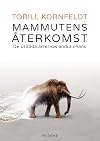
- Mammutens återkomst
- Original publication date
- 2016 (Swedish edition) (Swedish edition); 2018; 2018 (English Translation) (English Translation)
- Dedication
- for
Tobias, Torgny, and Ruth Aimée - First words
- INTRODUCTION
A Whole New World
Greek mythology tells the tale of Prometheus, who defied the gods to bring humankind the knowledge of fire and how to use it. - Last words
- (Click to show. Warning: May contain spoilers.)I discovered that it has more to do with the future, with the present, in which we humans have made ourselves nature's masters -- and with scientists' unbridled desire to discover the new.
- Original language
- Swedish
*Some information comes from Common Knowledge in other languages. Click "Edit" for more information.
Classifications
Statistics
- Members
- 70
- Popularity
- 448,119
- Reviews
- 14
- Rating
- (3.61)
- Languages
- English, Finnish, German, Swedish
- Media
- Paper, Audiobook, Ebook
- ISBNs
- 11
- ASINs
- 2