On This Page
Description
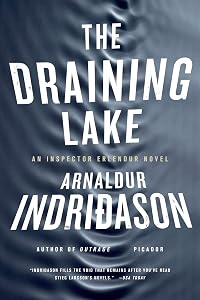
Inspector Erlendur returns in this international Bestseller Following an earthquake, the water level of an Icelandic lake suddenly falls, revealing a skeleton. Inspector Erlendur's investigation takes him back to the Cold War era, when bright, left-wing students in Iceland were sent to study in the "heavenly state" of Communist East Germany. Teeming with spies and informants, though, their "heavenly state" becomes a nightmare of betrayal and murder. Brilliantly weaving international show more espionage and a chilling cold case investigation, The Draining Lake is Arnaldur Indridason at his best. show lessTags
Recommendations





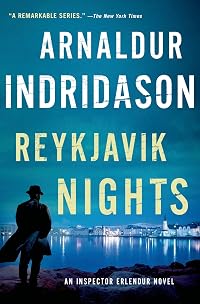

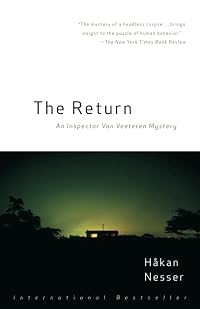
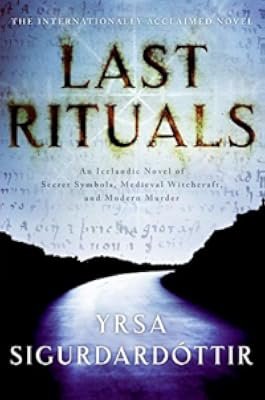

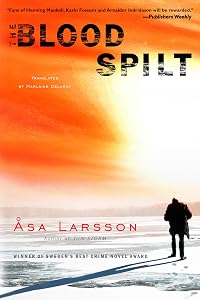

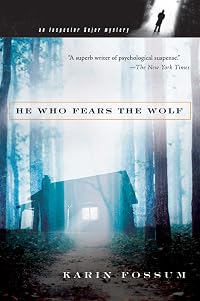


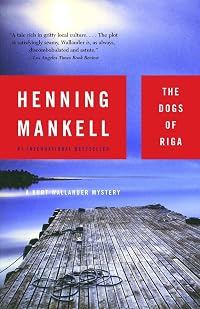


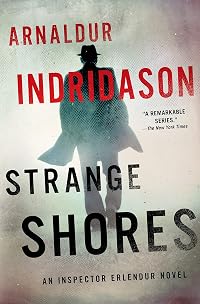

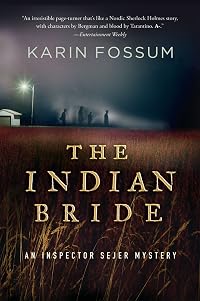














Member Recommendations


Member Reviews
This novel rises above its extremely predictable cover (a skull shock horror). Like Voices, it deals with real issues (in this case, what people did in the Cold War and how accountable they are today for their actions and allegances then) as well as presenting a detective story and an historical thriller. It is the latter which carries most of the dramatic charge and seems to be well-researched and captivating. The detective/police investigation section is (as in his other novels) mundane, often simply procedural bureaucracy and its (non) workings, and is in itself simply dull. Indridason's police officers are people I would avoid socially not because they are coppers but because they are SO BORING. But of course that is which gives his show more better thrillers a textural contrast, between the high drama of real crime and sheer tedium of minutiae, mediocrity, bureaucratic procedure and mundanity which police detective work reduces such dramas to as a 'case'. That contast between subjective levels of engagement of those involved in the original, background historical events and the extremely-belated police investigation is so sharp in this novel that it raised my experience of reading it to a powerful emotional level (OK, so i was in Paris and in poor health too, having bought it at the fabulous Canadian bookshop on rue de la Parcheminerie - go, visit!). show less
Con la scusa di scrivere un (ottimo) noir, Indridason compone, come del resto è consuetudine degli scrittori di noir scandinavi, una eccellente opera sociale sull'influenza di un certo tipo di indottrinamento "comunista" ai tempi della guerra fredda, e parla con notevole competenza, segno di una approfondita ricerca, delle condizioni di vita degli studenti stranieri nella Germania dell'est.
Su tutto ciò si innesta il giallo vero e proprio, condito con interessanti scorci della società islandese, e con il commissario Erlendur, uno dei tanti poliziotti umanamente confusi della prosa scandinava.
Su tutto ciò si innesta il giallo vero e proprio, condito con interessanti scorci della società islandese, e con il commissario Erlendur, uno dei tanti poliziotti umanamente confusi della prosa scandinava.
Ég hef ekki lesið margar bækur eftir Arnald Indriðason en þessi fangaði hug minn algerlega. Hún segir frá beinafundi í Kleifarvatni eftir að vatnsborðið þar lækkar óvænt í kjölfar jarðskjálfta. Í ljós kemur að maður hefur verið myrtur löngu áður og líkinu sökkt með því að binda við það rússneskan hlerunarbúnað.
Sagan gerist síðan á tveimur samhliða tímarásum þar sem annars vegar segir frá rannsókn lögreglunnar og hins vegar segir frá endurminningum manns sem stundaði nám í gamla A.-Þýskalandi, í fyrstu sannfærður sósíalisti en verður síðan æ gagnrýnni á stjórnarfyrirkomulagið þar.
Meginþema sögunnar er þó söknuður og sorg vegna tapaðra ástvina sem hrjáir show more flestar sögupersónurnar með einum eða öðrum hætti. Skemmtileg sakamálasaga með töluverðri persónulegri dýpt sem er nokkuð óvenjulegt í þeim geira. show less
Sagan gerist síðan á tveimur samhliða tímarásum þar sem annars vegar segir frá rannsókn lögreglunnar og hins vegar segir frá endurminningum manns sem stundaði nám í gamla A.-Þýskalandi, í fyrstu sannfærður sósíalisti en verður síðan æ gagnrýnni á stjórnarfyrirkomulagið þar.
Meginþema sögunnar er þó söknuður og sorg vegna tapaðra ástvina sem hrjáir show more flestar sögupersónurnar með einum eða öðrum hætti. Skemmtileg sakamálasaga með töluverðri persónulegri dýpt sem er nokkuð óvenjulegt í þeim geira. show less
Indridasson writes very well in a low-key style which I liked very much, and the characters are very well-drawn.
The translation is excellent. There is no overblown prose or breathless descriptions of implausibly violent events, but the atmosphere and sense of place, both in present-day Iceland and in 1950s East Germany is exceptionally well evoked and truly engrossing - I really enjoyed getting a feel for Iceland in particular. The plot is (thank heavens) both comprehensible and believable and there is mystery and plenty of genuine tension in spite of a total (and to me welcome) absence of sex scenes, explosions and car chases.
In short, this is an intelligent, thoughtful and humane book which is also a really gripping read.
The translation is excellent. There is no overblown prose or breathless descriptions of implausibly violent events, but the atmosphere and sense of place, both in present-day Iceland and in 1950s East Germany is exceptionally well evoked and truly engrossing - I really enjoyed getting a feel for Iceland in particular. The plot is (thank heavens) both comprehensible and believable and there is mystery and plenty of genuine tension in spite of a total (and to me welcome) absence of sex scenes, explosions and car chases.
In short, this is an intelligent, thoughtful and humane book which is also a really gripping read.
In The Draining Lake, Arnaldur took what really happened to Lake Kleifarvatn and made it a springboard for a fascinating mystery. It's not just the searching for the identity of a skeleton discovered because the water level has fallen enough (the phone conversation between the discoverer and the person to whom she tries to report it made me chuckle). The action moves back and forth between the present-day investigation and East Germany in the early 1950s.
I was born in 1954, so I do remember the Cold War, but not, of course, that period. The East Germany chapters are from the viewpoint of an idealistic and naive Icelandic college student. He is a very committed Marxist socialist, one of several who have received funding to study abroad. show more Tomas is able to rationalize the problems with life under Soviet rule for a long time, but his eyes are eventually opened. Of course these flashbacks have something to do with the skeleton. I'm afraid my immediate reaction to the identity of the skeleton and the reason behind his death was very un-Christian: I thought it served him right.
Inspector Erlendur is obsessed with discovering the fate of a man who went missing in 1968. He may or may not have become the skeleton in the lake, but he left behind a fiancée who has never recovered from his disappearance. It doesn't help that the officer involved in the original investigation was/is lazy.
There are conversations between the inspector and his grown children. Erlendur learns that his daughter told his son the story about their uncle who went missing when he and their father were children. Erlendur wants to give up on helping his addicted daughter, but his son says she needs him. There's a development with the unhappily married woman with whom Erlendur has not been having an affair, but has been seeing often enough that his colleagues assume she's his lady.
Erlendur learns useful information from his mentor, whose years as a heavy smoker have caught up with him. The dying man still wants a cigarette. Erlendur won't give him one, but continues smoking himself. (No, his own nicotine addiction does not give the inspector any insight into his daughter's drug addiction. Pity.)
I recommend this book to lovers of good mysteries and social history. George Guidall's narration is engaging. show less
I was born in 1954, so I do remember the Cold War, but not, of course, that period. The East Germany chapters are from the viewpoint of an idealistic and naive Icelandic college student. He is a very committed Marxist socialist, one of several who have received funding to study abroad. show more Tomas is able to rationalize the problems with life under Soviet rule for a long time, but his eyes are eventually opened. Of course these flashbacks have something to do with the skeleton. I'm afraid my immediate reaction to the identity of the skeleton and the reason behind his death was very un-Christian: I thought it served him right.
Inspector Erlendur is obsessed with discovering the fate of a man who went missing in 1968. He may or may not have become the skeleton in the lake, but he left behind a fiancée who has never recovered from his disappearance. It doesn't help that the officer involved in the original investigation was/is lazy.
There are conversations between the inspector and his grown children. Erlendur learns that his daughter told his son the story about their uncle who went missing when he and their father were children. Erlendur wants to give up on helping his addicted daughter, but his son says she needs him. There's a development with the unhappily married woman with whom Erlendur has not been having an affair, but has been seeing often enough that his colleagues assume she's his lady.
Erlendur learns useful information from his mentor, whose years as a heavy smoker have caught up with him. The dying man still wants a cigarette. Erlendur won't give him one, but continues smoking himself. (No, his own nicotine addiction does not give the inspector any insight into his daughter's drug addiction. Pity.)
I recommend this book to lovers of good mysteries and social history. George Guidall's narration is engaging. show less
In 'The Draining Lake', Arnaldur Indridason has produced one of the most captivating multilayered books I have read in years. On its face, the book is a police procedural that is exotic only in the sense of its Icelandic setting. Underneath the murder mystery, Indridason gives the reader a stunning and sobering recreation of the East German surveillance society in the 1950's. Indridason incisively describes what pervasive `interactive surveillance' did to people, outwardly and inwardly. Along the way he powerfully describes the power of love and memory.
The book opens with the discovery of an old skeleton that has been exposed by the slow draining of a lake near Reykjavik. The skeleton is all the more unusual in that it was tied to and show more weighed down by an old Soviet radio transmitter. The kind that might have been used by a spy. It has all lain at the bottom of the lake for some thirty years.
A second narrative describes life for a group of student Icelanders on scholarship at Leipzig in the 1950's. The students all arrive as devoted socialists. They experience a tightly controlled society where everyone is expected to spy on everyone else. The students' reactions to this totalitarian state vary. Some rebel, some are co-opted, some actively collaborate. Tomas falls in love with Ilona, a Hungarian dissident also attending school in East Germany. Their love, its fate, and Tomas's memory of it dominate this second narrative.
Meanwhile, Erlendur Sveinsson and his fellow police detectives begin to slowly unravel the knot and chase the various strands that emerge. (All the while Erlendur deals with his not entirely satisfying personal life.) The strands - and the two narratives - are eventually made to come together. This aspect of the story is a completely satisfying police procedural.
The book contains a murder mystery, a spy tale, and a love story, but it is the haunting description of life in East Germany that lifts the reading experience to higher level. And yet, Indridason's characters do not simplistically equate Stalinist regimes with socialism. Indeed, most have retained their ideals years later. A stupendously good read; intelligent and nuanced. Highest recommendation. show less
The book opens with the discovery of an old skeleton that has been exposed by the slow draining of a lake near Reykjavik. The skeleton is all the more unusual in that it was tied to and show more weighed down by an old Soviet radio transmitter. The kind that might have been used by a spy. It has all lain at the bottom of the lake for some thirty years.
A second narrative describes life for a group of student Icelanders on scholarship at Leipzig in the 1950's. The students all arrive as devoted socialists. They experience a tightly controlled society where everyone is expected to spy on everyone else. The students' reactions to this totalitarian state vary. Some rebel, some are co-opted, some actively collaborate. Tomas falls in love with Ilona, a Hungarian dissident also attending school in East Germany. Their love, its fate, and Tomas's memory of it dominate this second narrative.
Meanwhile, Erlendur Sveinsson and his fellow police detectives begin to slowly unravel the knot and chase the various strands that emerge. (All the while Erlendur deals with his not entirely satisfying personal life.) The strands - and the two narratives - are eventually made to come together. This aspect of the story is a completely satisfying police procedural.
The book contains a murder mystery, a spy tale, and a love story, but it is the haunting description of life in East Germany that lifts the reading experience to higher level. And yet, Indridason's characters do not simplistically equate Stalinist regimes with socialism. Indeed, most have retained their ideals years later. A stupendously good read; intelligent and nuanced. Highest recommendation. show less
Another wonderful ride by this great Icelandic author. Tomas, from Iceland, goes to the University in Leipzig at the turn of the century and becomes a devoted communist until he meets Ilona and she brings doubts into his mind. His story is woven into the ups and downs of Erlendur's investigation of a skeleton uncovered in a lake because of an earthquake. The woes of his children and his girlfriend continue through this book. Wonderful writing with strong character development and yet the story moves faster than the Icelandic landscape.
Members
- Recently Added By
Published Reviews
ThingScore 100
Wat Arnaldur Indriðason eigenlijk vertelt is het grotere verhaal van koloniale uitbuiting en machtsverhoudingen die de Deense heersers en hun vazallen uitoefenden in het IJsland van de achttiende eeuw en de uitwassen en ellende die dit veroorzaakte...
added by Jordaan
Realistically told, emotionally charged, and brimming with compassion, The Draining Lake is likely to challenge the reader’s values system. For this reviewer, at least, Indridason’s latest English-translated novel is one of the highlights of 2007. Although it’s full of pathos, the book also makes clear just how strong the human spirit is, and reminds us that the flip-side of friendship show more is far from pleasant. It can sometimes be hard to distinguish comrade from foe -- a person can be both at the same time....I wait patiently for the next Arnaldur Indridason/Bernard Scudder collaboration to arrive in bookstores. This is crime fiction at its most insightful, poetic and poignant show less
added by vancouverdeb
Indridason's novels are an undiluted pleasure....this series places Indridason at the centre of the best of contemporary crime fiction. He is a master storyteller, and has a real gift for evoking the complex humanity at the heart of the most dour-seeming individuals.
added by vancouverdeb
Lists

Scandinavian Crime Fiction
224 works; 37 members
Nordic Crime Fiction
66 works; 10 members

Books About Murder
313 works; 7 members

Detective Stories
343 works; 5 members

Global Mysteries
90 works; 6 members

Books Read in 2016
4,666 works; 199 members

Reading List - Scandinavian Fiction
134 works; 3 members

Books Read in 2019
4,052 works; 110 members

Books With Water Words in the Title
186 works; 12 members

Books Read in 2012
816 works; 34 members
Author Information

67+ Works 19,966 Members
Arnaldur Indriðason was born in Reykjavík January 28, 1961 and writes crime fiction. He is the son of writer Indriði G. Þorsteinsson. Arnaldur graduated with a degree in history from the University of Iceland in 1996. Arnaldur's first published book, Sons of Dust (Synir duftsins) in 1997, is the first in the Detective Erlendur series. show more Arnaldur's books have been published in twenty-six countries and have been translated into Russian, Polish, German, Greek, Danish, Catalan, English, Italian, Czech, Swedish, Norwegian, Dutch, Finnish, Spanish, Portuguese, Hungarian, Chinese, Croatian, Romanian and French. He won the Crime Writers' Association Gold Dagger Award in 2005 for the novel Silence of the Grave. Arnaldur lives in Reykjavík with his wife and three children. (Bowker Author Biography) show less
Some Editions
Awards and Honors
Awards
Series

Common Knowledge
- Canonical title
- The Draining Lake
- Original title
- Kleifarvatn
- Alternate titles*
- L'Homme du lac
- Original publication date
- 2004; 2006 (English: Scudder) (English: Scudder)
- People/Characters
- Erlendur Sveinsson; Sigurdur Óli; Elínborg; Eva Lind; Marion Briem
- Important places
- Iceland; Leipzig, Saxony, Germany; Reykjavik, Iceland; Kleifarvatn, Iceland
- Important events
- Stasi
- Epigraph*
- Slaap maar, ik ben dol op je (uit een volksliedje)
- First words
- She stood motionless for a long time, staring at the bones as if it should not be possible for them to be there. Any more than for her.
- Last words
- (Click to show. Warning: May contain spoilers.)"Blessed are they that have not seen, and yet have believed," Erlendur whispered, and his word were taken by the northerly wind across the lake.
- Blurbers
- Coben, Harlan; Lescroart, John; Box, C. J.; Connolly, John
- Original language
- Icelandic
*Some information comes from Common Knowledge in other languages. Click "Edit" for more information.
Classifications
- Genres
- Fiction and Literature, Mystery
- DDC/MDS
- 839.6934 — Literature & rhetoric German & related literatures Other Germanic literatures Old Norse, Old Icelandic, Icelandic, Faroese literatures Modern West Scandinavian; Modern Icelandic Modern Icelandic fiction 1900-1999
- LCC
- PT7511 .A67 .K5413 — Language and Literature German, Dutch and Scandinavian literatures Modern Icelandic literature Individual authors or works 19th-20th centuries
- BISAC
Statistics
- Members
- 1,786
- Popularity
- 12,263
- Reviews
- 78
- Rating
- (3.81)
- Languages
- 19 — Catalan, Czech, Danish, Dutch, English, Finnish, French, German, Hungarian, Icelandic, Italian, Norwegian (Bokmål), Norwegian, Polish, Portuguese, Russian, Spanish, Swedish, Turkish
- Media
- Paper, Audiobook, Ebook
- ISBNs
- 75
- ASINs
- 24