On This Page
Description
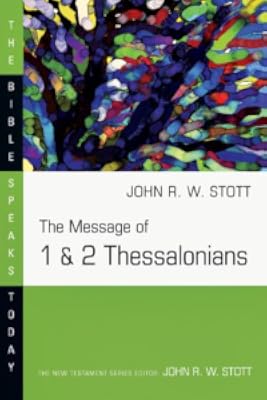
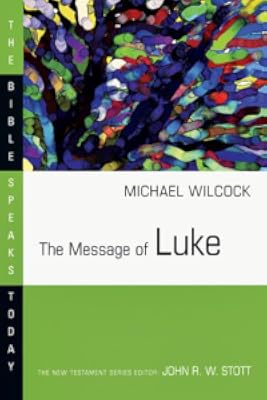
How do two brief letters to a church in first-century Macedonia speak to us today? John Stott demonstrates that Paul's letters to the Christians in Thessalonica offer three key messages to churches at the beginning of the twenty-first century: * a model for ministry, as Paul's self-giving, prayerful love for the church challenges Christian leaders * a vision for the local church, as the apostle touches on evangelism, pastoral care, ethical standards, fellowship, worship, show more obedience and future hope; * an affirmation of our faith, as he repeatedly returns to the foundation facts that 'Christ has died, Christ is risen, and Christ will come again.' Characterised by John Stott's customary clarity and perception, this exposition illuminates aspects of Christian life and service that are at the heart of God's purposes for this people today. show lessTags
Recommendations






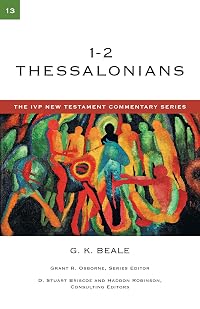
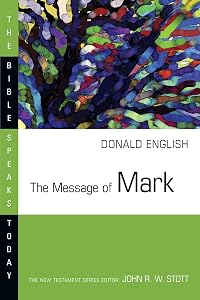
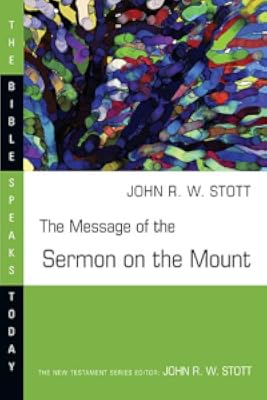

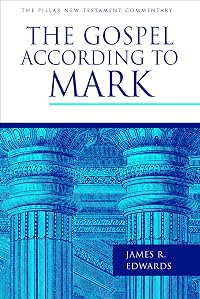


Member Reviews
John Stott is a very good, and level headed, expositor of the Bible, and that is one of the reasons that I was attracted to this commentary, not to mention that the two letters to the Thessalonians deal with the difficult issues of the end times and the Anti-christ, which is why it is good to see what somebody like John Stott has to say about the topic.
As a bit of a background, the two letters to the Thessalonians were written by the Apostle Paul around 57 AD after he left the city where he was hounded out by the judaizers. At the time Nero was emperor and the church was still quite young. As Paul was forced to leave the city, there were a lot of things that he wanted to teach them, and a lot of these things the Thessalonians wanted to show more know, therefore he wrote to them regarding these topics which have been preserved for us to this day.
First thing I wish to discuss is the end-times and the Anti-christ. Stott deals with these topics in a way that is understandable and comforting. In regards to the end-times, they will happen and Jesus will return. Obviously this is something that we rely on faith, however these events will happen and we need to be prepared. 'What about those who have died?' the Thessalonians asked. Paul explained that they have not been left behind, but rather are sleeping, awaiting that day when Jesus returns in his glory to be brought up to be with him, and those of us still alive will be caught up with him as well. However, one of the problems that the Thessalonians faced was that a number of them stopped working in anticipation for the second coming. Obviously this isn't something that we face today because, 2000 years after, we are still waiting, and to many of us the urgency of the second coming is no longer around. Time has ceased to be immediate and has become: it will happen sometime, but not yet. Obviously this is something we need to move away from in the same way that the Thessalonians needed to return to work and continue to work in anticipation. This is another of the many passages which emphasis the importance of work and that those who will not work (as opposed to cannot work) should not participate in the bounties that are produced by other people's hard work. As Paul says - if they do not work they do not eat.
Now for the Anti-christ. There have been many Anti-christs throughout history, and there are many floating around today. What Paul is talking about here is not the small 'a' anti-christ, but the Anti-christ - the man of lawlessness who will lead the great rebellion against God. This anti-christ has not yet been revealed, and it is dangerous to speculate who this person might be. One key indicator is that he will be universally loved, another indicator is that he will perform miracles, but most importantly, he will lead people away from God. Personally, I find it disrespectful to refer to world leaders whom we do no like (such as Obama or George Bush) as the Anti-christ. It is clear that they are not, and throughout history people have pointed at a suitably powerful, and corrupt, individual and said 'he is the Anti-christ'. They said that about the Popes and about Martin Luther.
What we can know is that this individual will arise sometime. It is important to note that it does not seem to be a reference to Nero (who ruled at the time) despite the fact that Nero was a cruel and vicious ruler. One needs to consider that when the Christians underwent the Neronian persecution, the one thought on their mind was likely to be - it's only going to get worse.
Looking at the internet and the references to the coming one world government and the era of global enslavement does not worry me in the sense that these things must happen, and when they do, it is only an indication that the end is coming and that Christ will reveal himself to us soon. show less
As a bit of a background, the two letters to the Thessalonians were written by the Apostle Paul around 57 AD after he left the city where he was hounded out by the judaizers. At the time Nero was emperor and the church was still quite young. As Paul was forced to leave the city, there were a lot of things that he wanted to teach them, and a lot of these things the Thessalonians wanted to show more know, therefore he wrote to them regarding these topics which have been preserved for us to this day.
First thing I wish to discuss is the end-times and the Anti-christ. Stott deals with these topics in a way that is understandable and comforting. In regards to the end-times, they will happen and Jesus will return. Obviously this is something that we rely on faith, however these events will happen and we need to be prepared. 'What about those who have died?' the Thessalonians asked. Paul explained that they have not been left behind, but rather are sleeping, awaiting that day when Jesus returns in his glory to be brought up to be with him, and those of us still alive will be caught up with him as well. However, one of the problems that the Thessalonians faced was that a number of them stopped working in anticipation for the second coming. Obviously this isn't something that we face today because, 2000 years after, we are still waiting, and to many of us the urgency of the second coming is no longer around. Time has ceased to be immediate and has become: it will happen sometime, but not yet. Obviously this is something we need to move away from in the same way that the Thessalonians needed to return to work and continue to work in anticipation. This is another of the many passages which emphasis the importance of work and that those who will not work (as opposed to cannot work) should not participate in the bounties that are produced by other people's hard work. As Paul says - if they do not work they do not eat.
Now for the Anti-christ. There have been many Anti-christs throughout history, and there are many floating around today. What Paul is talking about here is not the small 'a' anti-christ, but the Anti-christ - the man of lawlessness who will lead the great rebellion against God. This anti-christ has not yet been revealed, and it is dangerous to speculate who this person might be. One key indicator is that he will be universally loved, another indicator is that he will perform miracles, but most importantly, he will lead people away from God. Personally, I find it disrespectful to refer to world leaders whom we do no like (such as Obama or George Bush) as the Anti-christ. It is clear that they are not, and throughout history people have pointed at a suitably powerful, and corrupt, individual and said 'he is the Anti-christ'. They said that about the Popes and about Martin Luther.
What we can know is that this individual will arise sometime. It is important to note that it does not seem to be a reference to Nero (who ruled at the time) despite the fact that Nero was a cruel and vicious ruler. One needs to consider that when the Christians underwent the Neronian persecution, the one thought on their mind was likely to be - it's only going to get worse.
Looking at the internet and the references to the coming one world government and the era of global enslavement does not worry me in the sense that these things must happen, and when they do, it is only an indication that the end is coming and that Christ will reveal himself to us soon. show less
The apostle Paul wrote to the Thessalonian church that the gospel began in time, has been proclaimed throughout time and will be fulfilled upon Christ's return at the end of time. He went on to boldly address how the church spreads the gospel. Now a noted evangelist and Christian statesman opens up Paul's letters to readers in a way that will enlighten and uplift.
Logos Library
Members
- Recently Added By
Author Information

372+ Works 46,546 Members
John R. W. Stott (1921-2011) has been known worldwide as a preacher, evangelist, and communicator of Scripture. For many years he served as rector of All Souls Church in London, where he carried out an effective urban pastoral ministry. A leader among evangelicals in Britain, the United States, and around the world, Stott was a principal framer of show more the landmark Lausanne Covenant (1974). Stott's many books, including Basic Christianity and The Cross of Christ, have sold millions of copies. In the Bible Speaks Today series, for which he served as New Testament editor, he wrote eight volumes, including The Message of Acts and The Message of Ephesians. show less
Series

Common Knowledge
- Alternate titles
- First and Second Thessalonians; Living in the end times : 10 studies with commentary for individuals or groups
Classifications
Statistics
- Members
- 1,052
- Popularity
- 24,559
- Reviews
- 4
- Rating
- (3.76)
- Languages
- Chinese, English, Portuguese
- Media
- Paper, Ebook
- ISBNs
- 18
- ASINs
- 10