On This Page
Description
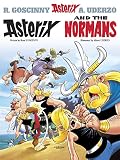
A Norman invasion of the Gaulish village! But only trendy teenager Justforkix, visiting from Lutetia, fears them, for the Gauls have their magic potion. But the Normas themselves want to learn the meaning of fear: can Asterix and his friends teach them? Another secret weapon is brought into play...and at long last the bard Cacofonix wins the appreciation due to him.Tags
Recommendations











Member Reviews
It's a lot of fun and what you expect from Asterix, the Normans come to see what fear is and meet the villagers in the last unconquered gaulish village who have Justforkix as a visitor. Lots of puns and jokes about Norman conquests and a lot of smiting of all sorts, particularly Romans.
This review is written with a GPL 4.0 license and the rights contained therein shall supersede all TOS by any and all websites in regards to copying and sharing without proper authorization and permissions. Crossposted at WordPress, Blogspot, & Librarything by Bookstooge’s Exalted Permission
Title: Asterix and the Normans
Series: Asterix #9
Authors: Goscinny & Uderzo
Rating: 3.5 of 5 Stars
Genre: Comics
Pages: 53
Words: 3K
Synopsis:
From Wikipedia.org
The story begins with Vitalstatistix receiving a missive from his brother Doublehelix in Lutetia (Paris), to ask for the education of Doublehelix's teenage son, Justforkix. Justforkix then arrives in a sports car-like chariot. The village holds a dance in honour of his arrival; but he is show more unimpressed by the traditional way of dancing, snatches Cacofonix's lyre, and sings and plays in the manner of Elvix Preslix (the Rolling Menhirs in the English version). Some of the younger villagers dance to this new form; but Cacofonix tries to show off his own skills, and is struck down by Fulliautomatix. Justforkix thereupon suggests that Cacofonix's talents would be better appreciated in Lutetia.
Meanwhile, a Norman crew arrive in Gaul to discover "the meaning of fear", on grounds that they are fearless to the point of not understanding the concept, but have heard of people "flying in fear", and believe that being afraid will grant them the ability to fly. Most of the Gauls welcome the chance of a fight; but Justforkix is horrified and decides to return home. Viewing Justforkix as an expert in fear, the Normans kidnap him to teach them; but this fails, and he remains their prisoner until Asterix and Obelix come to the rescue. A small Roman patrol is also involved in the resulting fight. At length, Norman chief Timandahaf orders an end to the battle and explains his mission to the Gauls. To teach the Normans fear, Asterix sends Obelix to fetch Cacofonix, while himself remaining as a hostage. When Obelix reaches the village, he finds Cacofonix gone to perform in Lutetia, and pursues him through a series of tell-tale clues.
Meanwhile, Timandahaf becomes impatient and tries to force Justforkix to teach the secret of flight by tossing him off a cliff. Just before this can be carried out, Asterix challenges the Norman warriors; and seeing him surrounded, Justforkix gains the courage to fight as well — albeit to no visible effect. Obelix and Cacofonix stop the fight, and Cacofonix's discordant songs are exhibited to the Normans, which provokes their first real fear, and an immediate retreat to their homeland. When Asterix questions the Normans' interest in fear, Getafix replies that courage is achieved only by having first been afraid, and superseding the fear to the desired effect. Thereafter Justforkix is claimed to have gained courage himself, and the story ends with the customary banquet, but with Cacofonix as guest of honour and Fulliautomatix tied up, with his ears filled with parsley.
My Thoughts:
Goscinny and Uderzo use the “hip young kid who is pretty dumb” trope (I wanted to say “again”, but looking at my other Asterix reviews Justforkix hasn't been in any of them) and they use it well. Justforkix is the absolute epitome of a 60's teenager and to be honest, a teenager from almost any modern era. He's brash, rude, thinks he knows everything and won't listen to his elders.
The Normans were just as amusing as the Gauls. They were trying to find out what “fear” was and as such they were talking about it like it was an artifact. They thought it could make them fly, as they had heard the phrase “fear gives you wings”. It made for some very amusing back and forth conversations.
Sadly, there were several times where I could tell that the characters were making word play jokes but it completely passed over my head. I couldn't tell if it was me being ignorant of a situation, the translators doing a bad job or if it was referencing something from the 1960's that I had no knowledge of. Usually Hock&Bell have done a bang up job of translating the jokes into something a modern reader can understand. And I can't believe I just wrote that. 1967 is not some ancient and hoary mystical time that we don't know about. While I wasn't to be born for another decade, it's part of the modern age. And since this translation was done in 2005, that really negates the “1960's is Ancient Mystical History” idea.
But the important thing is that Asterix and Obelix got to do a lot of biff'ing and bam'ing of somebody new (the poor Romans, they need a break from all that thumping after all) and roast boar was enjoyed. That's pretty much all I really want from these books.
★★★✬☆ show less
Title: Asterix and the Normans
Series: Asterix #9
Authors: Goscinny & Uderzo
Rating: 3.5 of 5 Stars
Genre: Comics
Pages: 53
Words: 3K
Synopsis:
From Wikipedia.org
The story begins with Vitalstatistix receiving a missive from his brother Doublehelix in Lutetia (Paris), to ask for the education of Doublehelix's teenage son, Justforkix. Justforkix then arrives in a sports car-like chariot. The village holds a dance in honour of his arrival; but he is show more unimpressed by the traditional way of dancing, snatches Cacofonix's lyre, and sings and plays in the manner of Elvix Preslix (the Rolling Menhirs in the English version). Some of the younger villagers dance to this new form; but Cacofonix tries to show off his own skills, and is struck down by Fulliautomatix. Justforkix thereupon suggests that Cacofonix's talents would be better appreciated in Lutetia.
Meanwhile, a Norman crew arrive in Gaul to discover "the meaning of fear", on grounds that they are fearless to the point of not understanding the concept, but have heard of people "flying in fear", and believe that being afraid will grant them the ability to fly. Most of the Gauls welcome the chance of a fight; but Justforkix is horrified and decides to return home. Viewing Justforkix as an expert in fear, the Normans kidnap him to teach them; but this fails, and he remains their prisoner until Asterix and Obelix come to the rescue. A small Roman patrol is also involved in the resulting fight. At length, Norman chief Timandahaf orders an end to the battle and explains his mission to the Gauls. To teach the Normans fear, Asterix sends Obelix to fetch Cacofonix, while himself remaining as a hostage. When Obelix reaches the village, he finds Cacofonix gone to perform in Lutetia, and pursues him through a series of tell-tale clues.
Meanwhile, Timandahaf becomes impatient and tries to force Justforkix to teach the secret of flight by tossing him off a cliff. Just before this can be carried out, Asterix challenges the Norman warriors; and seeing him surrounded, Justforkix gains the courage to fight as well — albeit to no visible effect. Obelix and Cacofonix stop the fight, and Cacofonix's discordant songs are exhibited to the Normans, which provokes their first real fear, and an immediate retreat to their homeland. When Asterix questions the Normans' interest in fear, Getafix replies that courage is achieved only by having first been afraid, and superseding the fear to the desired effect. Thereafter Justforkix is claimed to have gained courage himself, and the story ends with the customary banquet, but with Cacofonix as guest of honour and Fulliautomatix tied up, with his ears filled with parsley.
My Thoughts:
Goscinny and Uderzo use the “hip young kid who is pretty dumb” trope (I wanted to say “again”, but looking at my other Asterix reviews Justforkix hasn't been in any of them) and they use it well. Justforkix is the absolute epitome of a 60's teenager and to be honest, a teenager from almost any modern era. He's brash, rude, thinks he knows everything and won't listen to his elders.
The Normans were just as amusing as the Gauls. They were trying to find out what “fear” was and as such they were talking about it like it was an artifact. They thought it could make them fly, as they had heard the phrase “fear gives you wings”. It made for some very amusing back and forth conversations.
Sadly, there were several times where I could tell that the characters were making word play jokes but it completely passed over my head. I couldn't tell if it was me being ignorant of a situation, the translators doing a bad job or if it was referencing something from the 1960's that I had no knowledge of. Usually Hock&Bell have done a bang up job of translating the jokes into something a modern reader can understand. And I can't believe I just wrote that. 1967 is not some ancient and hoary mystical time that we don't know about. While I wasn't to be born for another decade, it's part of the modern age. And since this translation was done in 2005, that really negates the “1960's is Ancient Mystical History” idea.
But the important thing is that Asterix and Obelix got to do a lot of biff'ing and bam'ing of somebody new (the poor Romans, they need a break from all that thumping after all) and roast boar was enjoyed. That's pretty much all I really want from these books.
★★★✬☆ show less
Once again this entire adventure takes place in the little village we know so well. One of Chief Vitalstatistix's nephews has been sent from Lutetia (Paris) out to Amorica to toughen him up, and as it turns out he comes across as one of those young people who do not understand the concept of work. He arrives in a sporty chariot (made in Milan, which made me think of the Ferarri) and in a way brings the idea of the city life out to the country. However, the album is more than this because way up north in Scandanavia the Norsemen, who are the Normans, want to learn the meaning of fear so that they might be able to fly, so they jump in a boat and sail to a random place (which happens to be this little village we know so well) to find out show more all about fear.
There are quite a few jokes about Normans and conquests here, and a part of me when I read this album about ten years ago thought it was wrong. However (and I have not researched this) I suspect that the Normans originally were Vikings that during the period of the Viking invasions, came and settled in the region known now as Normandy. The Vikings actually did that quite a lot. There was a period of English history when the Danes pretty much controlled a large chunk of central England which, at the time, was called the Dane Law. Further, there are a number of jokes about how the Normans were not actually supposed to arrive for a few centuries yet.
Now, I understand that Asterix is not necessarily supposed to be historically accurate, but one thing that it is is satire. As I read this one I came to understand what the whole basis of these albums are supposed to be. As I said, it is not necessarily political or social criticism but rather satire. The idea that I came across is that struggle that exists between the pastoral idealism of the country and the modernising influence of the city. Where the little village we know so well reflects the tranquil idealism of the country, the Romans reflect the modernising influence that is rolling out over our world.
Many of us on the modernising side like to see our ideas as being progress, however being on the intellectual, university trained side we fail to see the pleasant aspects of a rural setting where things do not change and have not changed for years. For instance we have the green grass, the singing birds, the communal feasts, and the general aspect where everybody knows everybody else. However there tends to be a resistance among such places against the modernising influence, as can be represented by Cacofonix the bard. The truth is that it is not that Cacofonix is playing modern music, it is simply that he cannot sing and cannot play music at all. When the Lutetian tells him that he will be a hit in Lutetia, it is not because he is any good, it is more because the variety of tastes that come about in the big city will mean that people will actually come to see that maybe this person that cannot play music for the life of him is simply somebody who is experimenting and trying something new. show less
There are quite a few jokes about Normans and conquests here, and a part of me when I read this album about ten years ago thought it was wrong. However (and I have not researched this) I suspect that the Normans originally were Vikings that during the period of the Viking invasions, came and settled in the region known now as Normandy. The Vikings actually did that quite a lot. There was a period of English history when the Danes pretty much controlled a large chunk of central England which, at the time, was called the Dane Law. Further, there are a number of jokes about how the Normans were not actually supposed to arrive for a few centuries yet.
Now, I understand that Asterix is not necessarily supposed to be historically accurate, but one thing that it is is satire. As I read this one I came to understand what the whole basis of these albums are supposed to be. As I said, it is not necessarily political or social criticism but rather satire. The idea that I came across is that struggle that exists between the pastoral idealism of the country and the modernising influence of the city. Where the little village we know so well reflects the tranquil idealism of the country, the Romans reflect the modernising influence that is rolling out over our world.
Many of us on the modernising side like to see our ideas as being progress, however being on the intellectual, university trained side we fail to see the pleasant aspects of a rural setting where things do not change and have not changed for years. For instance we have the green grass, the singing birds, the communal feasts, and the general aspect where everybody knows everybody else. However there tends to be a resistance among such places against the modernising influence, as can be represented by Cacofonix the bard. The truth is that it is not that Cacofonix is playing modern music, it is simply that he cannot sing and cannot play music at all. When the Lutetian tells him that he will be a hit in Lutetia, it is not because he is any good, it is more because the variety of tastes that come about in the big city will mean that people will actually come to see that maybe this person that cannot play music for the life of him is simply somebody who is experimenting and trying something new. show less
This is another volume that my eldest bought home for me, making it the umpteenth adventure I have read.
This follows the little village as they look after the chief's nephew who has been sent to harden up somewhat - except it conincides with the landing of the Normans, the fearless warriors looking for the meaning of fear. Of all people to save them it is Cacofonix, the Bard, who wins the day and sends them packing.
In true style, the names are priceless;
Norman chief Timandahaf
a Roman soldier, Consensus
and some of the Norman warriors - Pyshopaf, Epitaf, Cenotaf, Nescaf, Autograf, RiffRaf, and my favourites, Firsthaf and Secondhaf!
This is the second volume where Cacofonix is not tied up at the end, and we also see Dogmatix's distress over show more uprooted trees for the first time. show less
This follows the little village as they look after the chief's nephew who has been sent to harden up somewhat - except it conincides with the landing of the Normans, the fearless warriors looking for the meaning of fear. Of all people to save them it is Cacofonix, the Bard, who wins the day and sends them packing.
In true style, the names are priceless;
Norman chief Timandahaf
a Roman soldier, Consensus
and some of the Norman warriors - Pyshopaf, Epitaf, Cenotaf, Nescaf, Autograf, RiffRaf, and my favourites, Firsthaf and Secondhaf!
This is the second volume where Cacofonix is not tied up at the end, and we also see Dogmatix's distress over show more uprooted trees for the first time. show less
The Normans, fierce warriors who know no fear, travel to Gaul to learn about fear. Between their own fighting skills, and their bard, the Gauls teach them fear. A bit more entertaining than the others in the series.
Astérix est ma bande dessinée favori depuis mon enfance. C'est vrai que j'ai aimé Astérix chez les bretons (que j'avais lu récemment) plus, mais c'est probablement parce que, n'étant pas français, je n'ai pas compris autant d'allusions dans celle-ci.
Just love all the puns and the great artwork!
Members
- Recently Added By
Lists

1960s, Best books published therein
254 works; 22 members

Books Read in 2024
4,623 works; 126 members
Author Information


Albert Uderzo was born on April 25, 1927 in Fismes, France as Alberto Aleondro Uderzo. In 1940, when he was just 13, he worked for Paris Publishing Society where he learned the basics for his profession - designing text and letters and editing photos. During World War II he worked on a farm and later as a furniture maker with his father. His show more drawing skills were put aside until 1945 when he entered a comic strip competition and later worked on a cartoon film titled Clic Clac. In the mean time he moved to Paris and worked on the magazine O.K. where he created several comics such as Arys Buck and Belloy. It was then that he met Rene Goscinny and the two worked on new comic book characters like Ompah-pah, Jehan Pistolet and Luc Junior. In 1959 they started a magazine called Pilote aimed at older children. It was the first issue that introduced the character Asterix and it was a big hit. By 1967 the comic became so popular that they decided to devote all their time to the series. Albert Uderzo was the illustator of all thirty Asterix adventures and the writer of the last eight adventures. show less
Some Editions
Series

Belongs to Publisher Series
Work Relationships
Is contained in
Asterix og hans tapre gallere ; Asterix og Kleopatra ; Asterix og vikingene ; Asterix - tvekampen by René Goscinny
Asterix Omnibus 03: Asterix and the Big Fight #7, Asterix in Britain #8, Asterix and the Normans #9 by René Goscinny
Astérix et Cléopâtre Le Combat des chefs Astérix chez les Bretons Astérix et les Normands Astérix légionnaire (Les Aventures d'Astérix .) by René Goscinny
Has the adaptation
Common Knowledge
- Canonical title*
- Astérix. Tome 9 : Astérix et les Normands
- Original title
- Astérix et les Normands
- Alternate titles*
- Astérix : Astérix et les Normands
- Original publication date
- 1966
- People/Characters
- Vitalstatistix; Astérix; Obélix; Idéfix; Jusforkix
- Important places*
- Gallien
- Important events
- Roman Empire
- Related movies*
- Astérix et les Vikings (2006)
- First words*
- Le début d'un jour paisible dans le petit village que nous connaissons bien...
- Last words*
- (Click to show. Warning: May contain spoilers.)Un grand banquet d'adieu lui est offert, banquet auquel Assurancetourix est convié, car c'est tout de même grâce à notre barde que tout est bien qui finit bien. Oh Oui!
- Original language*
- Français
*Some information comes from Common Knowledge in other languages. Click "Edit" for more information.
Classifications
- Genre
- Graphic Novels & Comics
- DDC/MDS
- 741.5 — Arts & recreation Drawing & decorative arts Drawing Comic books, graphic novels, fotonovelas, cartoons, caricatures, comic strips
- LCC
- PN6747 — Language and Literature Literature (General) Literature (General) Collections of general literature Comic books, strips, etc.
- BISAC
Statistics
- Members
- 1,777
- Popularity
- 12,280
- Reviews
- 14
- Rating
- (3.96)
- Languages
- 25 — Bable, Catalan, Czech, Danish, Dutch, English, Esperanto, Estonian, Finnish, French, Germanic (Other), German, Galician, Greek, Hungarian, Italian, Low German, Norwegian (Bokmål), Norwegian, Polish, Portuguese, Croatian, Spanish, Swedish, Turkish
- Media
- Paper, Ebook
- ISBNs
- 98
- ASINs
- 25