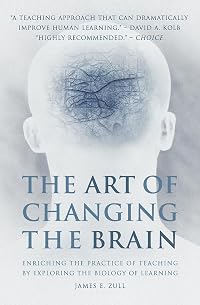
The Art of Changing the Brain: Enriching the Practice of Teaching by Exploring the Biology of Learning
by James E. Zull
On This Page
Description
Neuroscience tells us that the products of the mind--thought, emotions, artistic creation--are the result of the interactions of the biological brain with our senses and the physical world: in short, that thinking and learning are the products of a biological process. This realization, that learning actually alters the brain by changing the number and strength of synapses, offers a powerful foundation for rethinking teaching practice and one's philosophy of teaching. James Zull invites show more teachers in higher education or any other setting to accompany him in his exploration of what scientists can tell us about the brain and to discover how this knowledge can influence the practice of teaching. He describes the brain in clear non-technical language and an engaging conversational tone, highlighting its functions and parts and how they interact, and always relating them to the real world of the classroom and his own evolution as a teacher. "The Art of Changing the Brain" is grounded in the practicalities and challenges of creating effective opportunities for deep and lasting learning, and of dealing with students as unique learners. show lessTags
Recommendations

Member Reviews
Absolutely the best book I've found on teaching adult students, and particularly for understanding the connections between the cognitive neurosciences and education. Zull is a biologist and also leads a university faculty development program, so his insights into neurobiology and pedagogy are well-informed and well-supported by research. Yet Zull manages to do so in clear and direct language, with many excellent examples from his own experiences as a professor. Some in education are wary of rushing to apply basic research in neuroscience in classroom settings. Zull shows just how much we have learned in recent decades, and how it reinforces or augments many current teaching practices.
James Zull takes readers deeply into the learner-centric world in this self-effacing and appealing approach to a highly technical subject, and he offers something for anyone interested in understanding how we learn. Those new to training-teaching-learning will find well written summaries of the elements of successful learning sprinkled throughout the book: knowing how to avoid overwhelming learners with too much information; understanding the importance of building on what learners already know; and helping them retain what is learned through emotional engagement, stories, and opportunities to reflect upon and apply what they have learned. More experienced trainer-teacher-learners will benefit from those summaries and from Zull’s show more explanations of how the human brain functions in the learning process. For those who are familiar with Cliff Atkinson’s "Beyond Bullet Points" and Daniel Pink’s "A Whole New Mind," the insights into how the brain works will deepen their appreciation for those writers’ work and suggest additional ways to incorporate Atkinson’s and Pink’s ideas into successful training-teaching-learning efforts. show less
This book is about current discoveries in biology about how the brain works, how it changes with learning, & what this might mean for teaching. Practice, practice, practice & reflect.
Ratings
Members
- Recently Added By
Lists

Books for Educators
164 works; 6 members
Author Information
3 Works 306 Members
The Author James E. Zull is Professor of Biology, Biochemistry, and Cognitive Science at Case Western Reserve University. He is also Founding Director Emeritus of the University Center for Innovation in Teaching and Education, which remains a highly active center for academic and education discussions on the university campus. Before turning his show more interest to education and the brain, he conducted laboratory research in biochemistry and has over 100 publications in that field. He has lived in Cleveland Heights for nearly fifty years, continues to teach and write at CWRU, and spends his spare time working on his small farm in northeastern Ohio. show less
Classifications
Statistics
- Members
- 227
- Popularity
- 143,576
- Reviews
- 3
- Rating
- (4.64)
- Languages
- English
- Media
- Paper, Ebook
- ISBNs
- 4