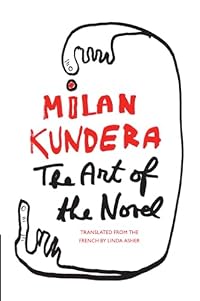
The Art of the Novel
by Milan Kundera
On This Page
Description
Kundera brilliantly examines the work of such important and diverse figures as Rabelais, Cervantes, Sterne, Diderot, Flaubert, Tolstoy, and Musil. He is especially penetrating on Hermann Broch, and his exploration of the world of Kafka's novels vividly reveals the comic terror of Kafka's bureaucratized universe. Kundera's discussion of his own work includes his views on the role of historical events in fiction, the meaning of action, and the creation of character in the post-psychological novel.Tags
Recommendations


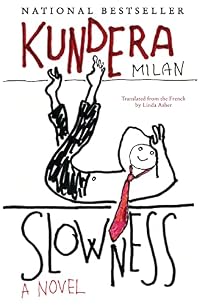
Member Recommendations

Member Reviews
"Mentre Dio andava lentamente abbandonando il posto da cui aveva diretto l'universo e il suo ordine di valori, separato il bene dal male e dato un senso a ogni cosa, Don Chisciotte uscì di casa e non fu più in grado di riconoscere il mondo. Questo, in assenza del Giudice supremo, appare all'improvviso una terribile ambiguità; l'unica Verità divina si scompose in centinaia di verità relative, che gli uomini si spartirono tra loro. Nacque così il mondo dei Tempi moderni, e con esso il romanzo, sua immagine e modello".
Ecco, il nostro romanzo è una cavalcata nell'ambiguità ma senza possedere la "sola certezza" cioè "la saggezza dell'incertezza" che "richiede una forza altrettanto grande". Oggi tutti possiedono un monte di certezze show more che farebbero rabbrividire Cartesio, nel suo splendido libro Kundera ci ricorda che "l'uomo sogna un mondo in cui il bene e il male siano nettamente distinguibili, e questo perché, innato e indomabile, esiste in lui il desiderio di giudicare prima di aver capito. Su questo desiderio sono fondate le religioni e le ideologie". Perfetto. Il problema del nostro tempo, accelerato dall'accesso ai mass media e dalla chat sul nulla ("ciao, come stai?"), fu riassunto in maniera lapidaria da Ennio Flaiano così: "Oggi il cretino è pieno di idee". È questa la crisi della democrazia, la sua naturale involuzione: il cretino oggi ha non sole le idee, si trova nella sala comando e clicca pulsanti che non sa cosa provocano. (cit. Mario Sechi - LIST - 25 settembre 2017) show less
Ecco, il nostro romanzo è una cavalcata nell'ambiguità ma senza possedere la "sola certezza" cioè "la saggezza dell'incertezza" che "richiede una forza altrettanto grande". Oggi tutti possiedono un monte di certezze show more che farebbero rabbrividire Cartesio, nel suo splendido libro Kundera ci ricorda che "l'uomo sogna un mondo in cui il bene e il male siano nettamente distinguibili, e questo perché, innato e indomabile, esiste in lui il desiderio di giudicare prima di aver capito. Su questo desiderio sono fondate le religioni e le ideologie". Perfetto. Il problema del nostro tempo, accelerato dall'accesso ai mass media e dalla chat sul nulla ("ciao, come stai?"), fu riassunto in maniera lapidaria da Ennio Flaiano così: "Oggi il cretino è pieno di idee". È questa la crisi della democrazia, la sua naturale involuzione: il cretino oggi ha non sole le idee, si trova nella sala comando e clicca pulsanti che non sa cosa provocano. (cit. Mario Sechi - LIST - 25 settembre 2017) show less
"Mentre Dio andava lentamente abbandonando il posto da cui aveva diretto l'universo e il suo ordine di valori, separato il bene dal male e dato un senso a ogni cosa, Don Chisciotte uscì di casa e non fu più in grado di riconoscere il mondo. Questo, in assenza del Giudice supremo, appare all'improvviso una terribile ambiguità; l'unica Verità divina si scompose in centinaia di verità relative, che gli uomini si spartirono tra loro. Nacque così il mondo dei Tempi moderni, e con esso il romanzo, sua immagine e modello".
Ecco, il nostro romanzo è una cavalcata nell'ambiguità ma senza possedere la "sola certezza" cioè "la saggezza dell'incertezza" che "richiede una forza altrettanto grande". Oggi tutti possiedono un monte di certezze show more che farebbero rabbrividire Cartesio, nel suo splendido libro Kundera ci ricorda che "l'uomo sogna un mondo in cui il bene e il male siano nettamente distinguibili, e questo perché, innato e indomabile, esiste in lui il desiderio di giudicare prima di aver capito. Su questo desiderio sono fondate le religioni e le ideologie". Perfetto. Il problema del nostro tempo, accelerato dall'accesso ai mass media e dalla chat sul nulla ("ciao, come stai?"), fu riassunto in maniera lapidaria da Ennio Flaiano così: "Oggi il cretino è pieno di idee". È questa la crisi della democrazia, la sua naturale involuzione: il cretino oggi ha non sole le idee, si trova nella sala comando e clicca pulsanti che non sa cosa provocano. (cit. Mario Sechi - LIST - 25 settembre 2017) show less
Ecco, il nostro romanzo è una cavalcata nell'ambiguità ma senza possedere la "sola certezza" cioè "la saggezza dell'incertezza" che "richiede una forza altrettanto grande". Oggi tutti possiedono un monte di certezze show more che farebbero rabbrividire Cartesio, nel suo splendido libro Kundera ci ricorda che "l'uomo sogna un mondo in cui il bene e il male siano nettamente distinguibili, e questo perché, innato e indomabile, esiste in lui il desiderio di giudicare prima di aver capito. Su questo desiderio sono fondate le religioni e le ideologie". Perfetto. Il problema del nostro tempo, accelerato dall'accesso ai mass media e dalla chat sul nulla ("ciao, come stai?"), fu riassunto in maniera lapidaria da Ennio Flaiano così: "Oggi il cretino è pieno di idee". È questa la crisi della democrazia, la sua naturale involuzione: il cretino oggi ha non sole le idee, si trova nella sala comando e clicca pulsanti che non sa cosa provocano. (cit. Mario Sechi - LIST - 25 settembre 2017) show less
Offers great insight into how to understand the intent and meaning of his own novels.
Most of his analysis of other literature is less original, or at least, has been stated by others, in different ways. However, this is not to say it doesn't benefit from being reiterated by someone of his authority.
Most of his analysis of other literature is less original, or at least, has been stated by others, in different ways. However, this is not to say it doesn't benefit from being reiterated by someone of his authority.
This is a compendium of seven pieces that Kundera states "were written, published, or spoken before an audience between 1979 and 1985." "The sole raison d'ètre of a novel," he quotes Hermann Broch, "is to discover what only the novel can discover." Just having completed the first draft of my first completed novel (my drawers are lined with half-finished attempts), I eagerly read in anticipation of discovering the rules of writing The Great Novel. Not surprisingly, the rules are vague and sketchy. One of Kundera's favorite rule-breaking devices is something I am fond of—the rabbit trail, a blatant detour from the action of the story so that the author can indulge an itch to explore some political or psychological or spiritual thought show more that came to mind while a character is brushing his teeth or walking to work or making love. Kundera does not just discuss his own work and what motivates him, but delves also into comparative literature commentary. He looks at Cervantes, Flaubert, Rabelais, Sterne, and Diderot, among others. Kundera's mini course in the history and structure of the novel is engrossing, illuminating and thought-provoking—worth reading a few more times. (March 2009) show less
I now have a new appreciation of Milan Kundera's work - even though I already appreciated it a great deal anyway. This excellent collection of essays on the art of writing and being a writer gives a true insight into the creative act, without preaching a particular way of writing. I wish I was a good enough writer to be able to obey: the use of the novel is in doing what only a novel can do; yet so many of my short stories are trivial and do nothing in the search for enlightenment and the challenge to examine what has previously been unexamined.
Kundera is always worth reading. And this book is no exception. The emphasis on the formal aspects of fiction in ''The Art of the Novel'' is a principle for Kundera that is accompanied by an overt disavowal of any political agenda. A second principle is derived from the first, and it is the rejection of kitsch. Not simply bad or laughable art, kitsch is, in Kundera's definition from ''Sixty-three Words'' (his dictionary of the terms and categories that organize his imagination), ''the need to gaze into the mirror of the beautifying lie and to be moved to tears of gratification at one's own reflection.'' One antidote to kitsch is to write novels according to Kundera's third principle - what he refers to throughout ''The Art of the show more Novel'' as ''novelistic counterpoint'' or ''polyphony.'' ''Counterpoint,'' or ''polyphony,'' is, strictly speaking, the play among different kinds of writing - essay, dream, narrative - in a single text. One can see examples of these principles in Kundera's own novels, but he uses examples from Cervantes to Kafka, Joyce, and Broch to make his case. show less
NOVEL. The great prose form in which an author thoroughly explores, by means of experimental selves (characters), some great themes of existence.
LETTERS. They are getting smaller and smaller in books these days. I imagine the death of literature; bit by bit, without anyone noticing, the type shrinks until it becomes utterly invisible.
The above two quotes convey the richness and creamy depth along with the playfulness a reader will encounter in this book by one of the giants of modern literature, Czech-born Milan Kundera. As a matter of fact, I couldn’t imagine a collection of essays containing more gems of wisdom on each and every page. And since Mr. Kundera consistently composes his works in a seven part structure to accord with his show more own artistic, literary and musical sensibilities, I think it only fair that I list seven quotes, one from each of his seven parts, and make my modest comments accordingly.
Part One – The Depreciated Legacy of Cervantes
“To take, with Cervantes, the world as ambiguity, to be obliged to face not a single absolute truth but a welter of contradictory truths (truths embodied in imaginary selves called characters), to have as one’s only certainty the wisdom of uncertainty, requires no less courage.” ---------- I recall a lecturer on The Platonic Tradition accusing non-Platonists of being nihilistic skeptics and relativists for denying there is a truth as well as thinking how even if there was a truth it couldn’t be known, and even if it could be known, it couldn’t be communicated. Contrary to this accusation, Mr. Kundera outlines with flair and in some detail how the wisdom of the novel transcends the overly simplified binary categories of good/evil, either/or, black/white in dogmatic discourse.
Part Two – Dialogue on the Art of the Novel
“I’m too fearful of the professors for whom art is only a derivative of philosophical and theoretical trends. The novel dealt with the unconscious before Freud, the class struggle before Marx, it practiced phenomenology (the investigation of the essence of human situations) before the phenomenologists.” ---------- Mr. Kundera underscores how his novels and the great novels of other writers are not philosophy per se; rather, any ideas or philosophy arises from the specific existential situation of characters.
Part Three – Notes Inspired by “The Sleepwalkers
“The world is the process of disintegration of values (values handed down from the Middle Ages), a process that stretches over the four centuries of the Modern Era and is their very essence.” ---------- This is a most intriguing section where the author analyzes the historical and cultural context of the various possibilities of freedom we face and how novelist Hermann Broch outlines three such possibilities in his great work.
Part Four – Dialogue on the Art of Composition
“Let me return to the comparison between the novel and music. A part is a movement. The chapters are measures. These measures may be short or long or quite variable in length. Which brings me to the issue of tempo. Each of the parts in my novels could carry a musical indication: moderato, presto, adagio, and so on.” ---------- We are told how the author was drawn more to music than to literature up to the age of twenty-five. Much of this section delves into some detail in comparing the structure of music with the structures of his novels, enough philosophic material here to keep both musicians and non-musicians ruminating for quite some time.
Part Five – Somewhere Behind
“There are periods of modern history when life resembles the novels of Kafka.” ---------- The author relates some of his own experience and stories living in Prague under a totalitarian regime. One story is about a mother of a one-year old baby boy who was unjustly imprisoned by the government. Years go by and the mother is released from prison. Then, some years after her release, the author visits the mother in her apartment. He watches as the mother dissolves in tears, waling and heaving, upset at her now twenty-five-year-old son over some minor matter like oversleeping. The author watches all this in shock; he see how the mother has taken the place of the totalitarian state and the son, like many of Kafka’s characters, accepts his guilt.
Part Six – Sixty-three Words
“IDEAS. My disgust for those who reduce a work to its ideas. My revulsion at being dragged into what they call “discussions of ideas.” My despair at this era befogged with ideas and indifferent to works.” ---------- At another point in the section, he says how novelists who think they are larger than their novels should get another job. Love his frankness!
Part Seven – Jerusalem Address: The Novel and Europe
“No peace is possible between the novelist and the agelaste. Never having heard God’s laughter, the agelasts are convinced the truth is obvious, that all men necessarily think the same thing, and that they themselves are exactly what they think they are.” ---------- The agelaste is a man or woman who does not laugh, who has no sense of humor. You know the type – and they hate literary novels like the ones written by Milan Kundera. show less
Members
- Recently Added By
Author Information

89+ Works 61,132 Members
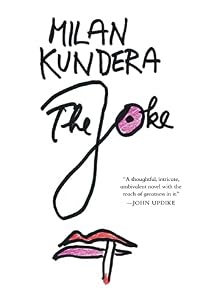
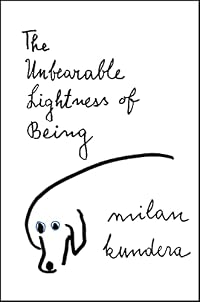
One of the foremost contemporary Czech writers, Kundera is a novelist, poet, and playwright. His play The Keeper of the Keys, produced in Czechoslovakia in 1962, has long been performed in a dozen countries. His first novel, The Joke (1967), is a biting satire on the political atmosphere in Czechoslovakia in the 1950s. It tells the story of a show more young Communist whose life is ruined because of a minor indiscretion: writing a postcard to his girlfriend in which he mocks her political fervor.The Joke has been translated into a dozen languages and was made into a film, which Kundera wrote and directed. His novel Life Is Elsewhere won the 1973 Prix de Medicis for the best foreign novel. Kundera has been living in France since 1975. His books, for a long time suppressed in his native country, are once again published.The Unbearable Lightness of Being (1984), won him international fame and was a successful English-language film. In this work Kundera moves toward more universal and philosophically tinged themes, thus transforming himself from a political dissident into a writer of international significance. (Bowker Author Biography) show less
Some Editions
Awards and Honors
Series
Belongs to Publisher Series
Work Relationships
Is contained in
Common Knowledge
- Canonical title
- The Art of the Novel
- Original title
- L'art du roman
- Original publication date
- 1986; 1987
- First words
- In 1935, three years before his death, Edmund Husserl gave his celebrated lectures in Vienna and Prague on the crisis of European humanity.
- Last words
- (Click to show. Warning: May contain spoilers.)But it is time for me to stop. I was forgetting that God laughs when he sees me thinking.
Classifications
- Genres
- Literature Studies and Criticism, Nonfiction
- DDC/MDS
- 809.3 — Literature & rhetoric Literature, rhetoric & criticism History, description, critical appraisal of more than two literatures Fiction
- LCC
- PN3453 .K8613 — Language and Literature Literature (General) Literature (General) Prose. Prose fiction History
- BISAC
Statistics
- Members
- 1,829
- Popularity
- 11,760
- Reviews
- 24
- Rating
- (3.78)
- Languages
- 20 — Catalan, Chinese, Danish, Dutch, English, Estonian, Finnish, French, German, Hebrew, Hungarian, Italian, Norwegian (Bokmål), Norwegian, Polish, Romanian, Spanish, Swedish, Turkish, Portuguese (Portugal)
- Media
- Paper, Audiobook, Ebook
- ISBNs
- 74
- ASINs
- 10