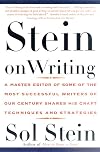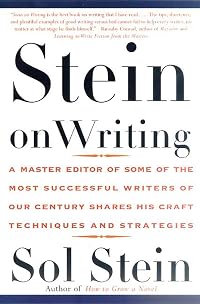
Stein on writing : a master editor of some of the most successful writers of our century shares his craft techniques and strategies
by Sol Stein
On This Page
Description
The master editor of some of the most successful writers of our century shares his craft techniques and strategies, including how to fix writing that is flawed, how to improve writing that is good, and how to create interesting writing in the first place.Tags
Recommendations
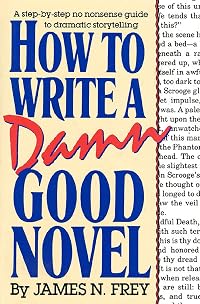
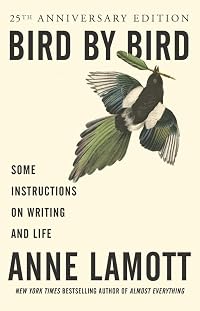
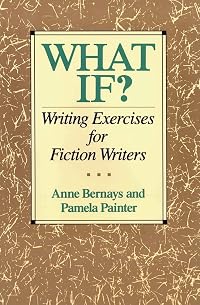
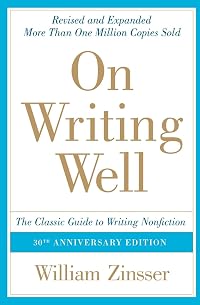
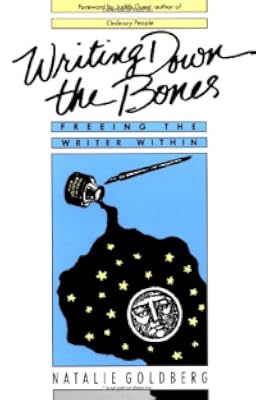
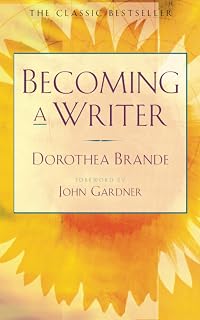
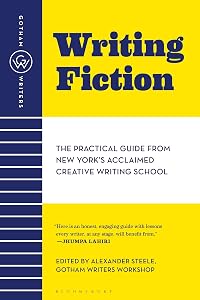
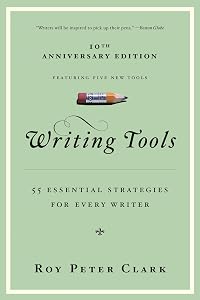
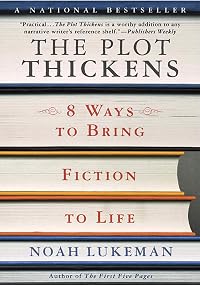
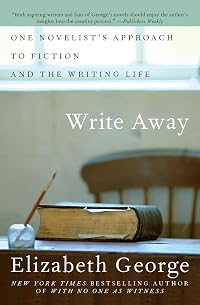
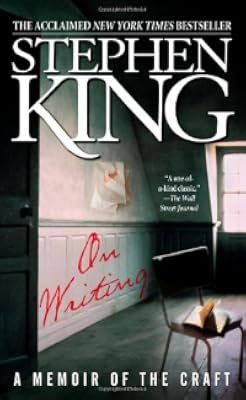
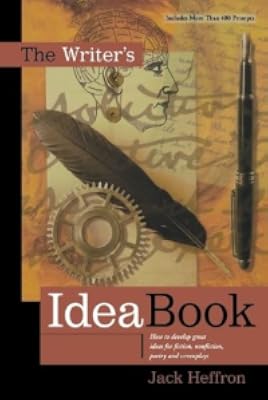

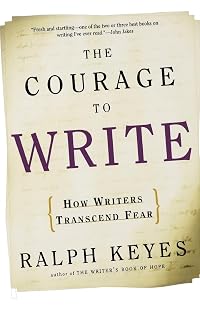
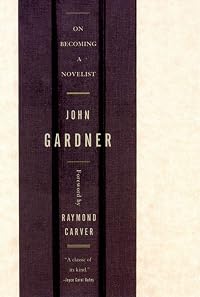
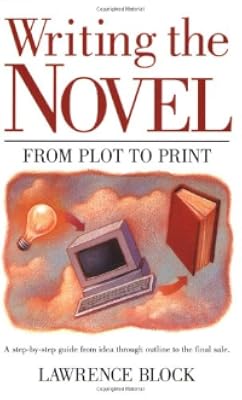
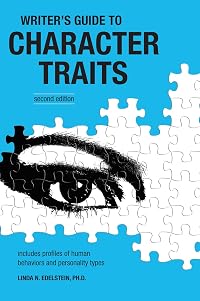
Member Recommendations
mcgilh I use this book over and over again in my writing. It is a wonderful master writing class, chapter by chapter.
Member Reviews
The story of my reading this book is way too simple: it just happened. Actually, I only read it on the second try. What changed? Well, my guess is that this time I read a little bit further than the first time, and this little bit was enough to finally get me hooked. So, yes, the fault lied on me and I’m solely to blame.
To cut even shorter an already short story, what happened is that on the first time around I stumbled on something on the introduction that made me think this was just a superficial self-help you can do it! kind of book that I’m not particularly very fond of. But this was very far from the truth.
To be fair, and before I get lost in adding anything else, let me cut to chase and just state the obvious: this is a great show more book. It doesn’t matter if you are into writing or not. For every single time we open a book we are on the receiving end of the writing process, so we share a not so unimportant part on that process. This means that knowing about the trade will inevitably make you a better and more demanding reader. And, believe me (for I have fallen into to that dark pit of prejudice before), this book will tell you a lot that goes behind the scenes when it finally comes to get that book you love so much onto your hands.
In my case, and on my intentions for reading this work, let me just get it straight and tell you upfront that I’m not harboring any grand desire to become a writer. If anything, and because I’m trying to graduate from college, my sole interest in knowing about the nitty-gritties of writing ends where the production of sensible non-fiction is concerned. And even here I was struck by another pleasant surprise. For even the most committed boring non-fiction writer such as myself will greatly benefit from reading Sol Stein’s advices contained in this work.
Truth is that every chapter, every example, every little particular detail that Sol Stein breaks down to you matters in finally understanding how great writing comes about and how to work your way to it (that is, if you’re really interested in overcoming whatever stands in your way).
This happens because Sol Stein, out of a depth of knowledge that only comes from a long and hard fought experience, gives you an authoritative outlook on the writing trade both as a writer and as an editor. This makes his advices even more pertinent, for these are not the run of mill this is how I’ve done it! kind of shallow biographical accounts, but more akin to a roadmap on how to get across every step of the way throughout the publishing process, and this from the perspective of an experienced and talented insider.
Enough is enough. The book is what you want to read (not this review). Find the time for it and get it done. If you’re into writing, you probably already stumbled upon very similar recommendations (I’m just adding my grain of salt onto that pile). And if you’re just a reader, get it done nonetheless. Next time you’re reading something else, you’ll have a sharper eye and you will be much more critical in your understanding. show less
To cut even shorter an already short story, what happened is that on the first time around I stumbled on something on the introduction that made me think this was just a superficial self-help you can do it! kind of book that I’m not particularly very fond of. But this was very far from the truth.
To be fair, and before I get lost in adding anything else, let me cut to chase and just state the obvious: this is a great show more book. It doesn’t matter if you are into writing or not. For every single time we open a book we are on the receiving end of the writing process, so we share a not so unimportant part on that process. This means that knowing about the trade will inevitably make you a better and more demanding reader. And, believe me (for I have fallen into to that dark pit of prejudice before), this book will tell you a lot that goes behind the scenes when it finally comes to get that book you love so much onto your hands.
In my case, and on my intentions for reading this work, let me just get it straight and tell you upfront that I’m not harboring any grand desire to become a writer. If anything, and because I’m trying to graduate from college, my sole interest in knowing about the nitty-gritties of writing ends where the production of sensible non-fiction is concerned. And even here I was struck by another pleasant surprise. For even the most committed boring non-fiction writer such as myself will greatly benefit from reading Sol Stein’s advices contained in this work.
Truth is that every chapter, every example, every little particular detail that Sol Stein breaks down to you matters in finally understanding how great writing comes about and how to work your way to it (that is, if you’re really interested in overcoming whatever stands in your way).
This happens because Sol Stein, out of a depth of knowledge that only comes from a long and hard fought experience, gives you an authoritative outlook on the writing trade both as a writer and as an editor. This makes his advices even more pertinent, for these are not the run of mill this is how I’ve done it! kind of shallow biographical accounts, but more akin to a roadmap on how to get across every step of the way throughout the publishing process, and this from the perspective of an experienced and talented insider.
Enough is enough. The book is what you want to read (not this review). Find the time for it and get it done. If you’re into writing, you probably already stumbled upon very similar recommendations (I’m just adding my grain of salt onto that pile). And if you’re just a reader, get it done nonetheless. Next time you’re reading something else, you’ll have a sharper eye and you will be much more critical in your understanding. show less
Definitely one of my top 10 writing guides. Comprehensive and detailed with a plethora of examples. Two techniques, which I haven't seen described in this useful and epiphanic way in any other book, stand out:
Particularity
We hear about avoiding clichés and generalities, but here Stein puts forward a positive admonition.
Instead of going through a page-by-page edit, you should fix the major problems first, much like a developmental editor would. I'll be using this revision process going forward.
1) Humanized your characters.
2) Your villains are morally villainous rather than merely badly behaved.
3) Created a credible conflict between your protagonist and antagonist.
4) All your scenes are important and memorable.
5) All actions are clearly motivated.
6) Your first page is compelling enough for the reader to turn to page two.
His occasional self-aggrandizing salesman voice can be irritating, but don't let that get in the way of learning numerous, solid techniques to improve your craft. A must-read book on the craft of wrting! show less
Particularity
We hear about avoiding clichés and generalities, but here Stein puts forward a positive admonition.
"To characterize, particularity is used to show how an individual looks dresses, or speaks without resort to cliches or generalizations."Triage revising
Instead of going through a page-by-page edit, you should fix the major problems first, much like a developmental editor would. I'll be using this revision process going forward.
"Even some of the most experienced authors are not aware of a better way of revising thanshow more
repeatedly starting at page one and going through to the end... the writer, having gone through his entire manuscript, is likely to grow "cold" on his manuscript... What follows is a guide to the triage method of revision, which gives priority to those matters that are the principal causes of rejection by editors."The process is to make sure that you've achieved the following:
1) Humanized your characters.
2) Your villains are morally villainous rather than merely badly behaved.
3) Created a credible conflict between your protagonist and antagonist.
4) All your scenes are important and memorable.
5) All actions are clearly motivated.
6) Your first page is compelling enough for the reader to turn to page two.
His occasional self-aggrandizing salesman voice can be irritating, but don't let that get in the way of learning numerous, solid techniques to improve your craft. A must-read book on the craft of wrting! show less
Stein On Writing has become one of my top 3 books on the subject. I place it some place along the lines of Steering the Craft and On Writing Well as it is full of information for both fiction and non-fiction writers. Unlike On Writing, the book focuses on several aspects of the creative writing process and gives many examples of what works and why it works and why it doesn't. It doesn't get into grammar and the such and instead focuses on making your writing work. Subjects like suspense, tension, opening lines, and showing vs telling are all there in detail. I've read nearly 100 books on the subject and still managed to learn much from this book.
Sol Stein is pompous. If I judge correctly from his writing, he is a curmudgeon with a serious personality defect. His view is very narrow and it is the only right view. I wouldn't want to be his friend, his client, or even his trashman. I was not impressed with Stein.
That being said, Stein does know something (not everything) when it comes to writing. Though there were times during my read of Stein on Writing when I wanted to fling the book across the room, there were more instances where I jotted down helpful notes and immediately followed his advice. The results were amazing. Stein says cut “had” so I cut “had” from my manuscript. He's right! He says get rid of the adverbs, so I did. Over and again, I found Stein's simple show more rules to have a significant effect on my own manuscript. Rarely does he justify his reasoning—he doesn't have to, he's “a master editor of some of the most successful writers of our century”—but he's often right. Sure, you have to listen to his rants about how brilliant he and his students are—really, they're not—but in the end, it's worth it.
If you choose to read this book, it's important you know what you're getting into. First, know that Stein doesn't like you. He's not going to like your book. Your idea isn't original and your voice never was. He doesn't like the way you bake cookies. If you own a cat, he's a dog person. Own a dog and, well, cats aren't so bad after all.
Next, know that Stein feels no need to explain himself and that some of his examples are absurd. Perhaps I shouldn't say this about a “master editor,” but sometimes Stein is just way off. Take a look at the following examples, and please let me know if I'm missing something:
As an example of how to begin a piece of fiction, Stein recommends the story “The Eighty-Yard Run.” Stein writes, “See how much Irwin Shaw accomplished in the first sentence.” He never explains what it is that we're supposed to see in this passage, so it is up to the reader. Let's take a look at the passage: “The pass was high and wide and he jumped for it, feeling it slap flatly against his hands, as he shook his hips to throw off the half-back who was diving at him.” That's it. That's the brilliant opening sentence. What exactly “hooks” us in this sentence? Does Shaw really convey as much as Stein argues? Well, we know that we're entering right in the middle of action—a football game. The focal character is receiving the ball. The quarterback's throw was a little off. We know the receiver has hands, and that they're capable of feeling. We know that another player is diving at him. And that the receiver is trying to shake him off. Most important, we learn the receiver can jump and has hips. I make fun, but do you see my point? I repeat Stein's set-up for this passage: “See how much Irwin Shaw accomplished in the first sentence.” Sorry, Sol, I don't see it.
Stein argues that his examples excite the reader's curiosity, introduce a setting, and lend resonance to the story. They should tell as much as possible in as short a space as possible. He also argues that great opening sentences should be unusual or shocking. I have no problem with Stein's ideas of what makes a great opener. He is right on. But how exactly does this sentence exemplify these principles? It is certainly vivid in its tight space. It's pretty clear what is happening too. Otherwise, in my opinion, it's a dud. It's a football game. The characters are doing what's expected. There is nothing revealing or hooking about this sentence. Unless you're a huge fan of football, I see no reason to continue reading “The Eighty-Yard Run.”
One more, and then I'll get off my soapbox. Stein writes, “A layman might say, 'Ellen looked terrific in her gown.' That's top-of-the-head writing, which can be improved: 'In her gown, Ellen looked like the stamen of a flower made of silk.'” Stein goes on to say that the first sentence “doesn't say anything particular about either Ellen or the gown.” He's right there. It's not the most revealing sentence. “The second is visual,” Stein argues, “and tells us how Ellen and the gown came across in a way that made them both look good.” “Ellen looked like the stamen of a flower made of silk.” Really? First of all, I think the simile is wordy and confusing. Why not just say “the stamen of a silk flower.” Secondly, a “flower made of silk” does not make me think she “looks good.” It makes me think she's fake, pretentious, cheap, etc. And, finally, the stamen of a silk flower? What does this mean? She's slender? She's the representation of a reproductive organ? This is the advice of “a master editor”? A student writing this in undergrad would be torn apart. Hell, published authors would be ridiculed for this line.
(This is where I welcome taunting for my ignorance. If I have really misunderstood the brilliance of these lines, please gently let me know.)
So, my advice is to take Stein on Writing with a grain of salt, but if you're a student of writing, do read it. When Stein makes a point, he makes it well. It is the single most helpful craft book I have read. So much so that I hope someday to reread it. I'll still want to fling it across the room (if I own my own copy, I probably will), but I know I'll be a better writer for having made the small sacrifice. show less
That being said, Stein does know something (not everything) when it comes to writing. Though there were times during my read of Stein on Writing when I wanted to fling the book across the room, there were more instances where I jotted down helpful notes and immediately followed his advice. The results were amazing. Stein says cut “had” so I cut “had” from my manuscript. He's right! He says get rid of the adverbs, so I did. Over and again, I found Stein's simple show more rules to have a significant effect on my own manuscript. Rarely does he justify his reasoning—he doesn't have to, he's “a master editor of some of the most successful writers of our century”—but he's often right. Sure, you have to listen to his rants about how brilliant he and his students are—really, they're not—but in the end, it's worth it.
If you choose to read this book, it's important you know what you're getting into. First, know that Stein doesn't like you. He's not going to like your book. Your idea isn't original and your voice never was. He doesn't like the way you bake cookies. If you own a cat, he's a dog person. Own a dog and, well, cats aren't so bad after all.
Next, know that Stein feels no need to explain himself and that some of his examples are absurd. Perhaps I shouldn't say this about a “master editor,” but sometimes Stein is just way off. Take a look at the following examples, and please let me know if I'm missing something:
As an example of how to begin a piece of fiction, Stein recommends the story “The Eighty-Yard Run.” Stein writes, “See how much Irwin Shaw accomplished in the first sentence.” He never explains what it is that we're supposed to see in this passage, so it is up to the reader. Let's take a look at the passage: “The pass was high and wide and he jumped for it, feeling it slap flatly against his hands, as he shook his hips to throw off the half-back who was diving at him.” That's it. That's the brilliant opening sentence. What exactly “hooks” us in this sentence? Does Shaw really convey as much as Stein argues? Well, we know that we're entering right in the middle of action—a football game. The focal character is receiving the ball. The quarterback's throw was a little off. We know the receiver has hands, and that they're capable of feeling. We know that another player is diving at him. And that the receiver is trying to shake him off. Most important, we learn the receiver can jump and has hips. I make fun, but do you see my point? I repeat Stein's set-up for this passage: “See how much Irwin Shaw accomplished in the first sentence.” Sorry, Sol, I don't see it.
Stein argues that his examples excite the reader's curiosity, introduce a setting, and lend resonance to the story. They should tell as much as possible in as short a space as possible. He also argues that great opening sentences should be unusual or shocking. I have no problem with Stein's ideas of what makes a great opener. He is right on. But how exactly does this sentence exemplify these principles? It is certainly vivid in its tight space. It's pretty clear what is happening too. Otherwise, in my opinion, it's a dud. It's a football game. The characters are doing what's expected. There is nothing revealing or hooking about this sentence. Unless you're a huge fan of football, I see no reason to continue reading “The Eighty-Yard Run.”
One more, and then I'll get off my soapbox. Stein writes, “A layman might say, 'Ellen looked terrific in her gown.' That's top-of-the-head writing, which can be improved: 'In her gown, Ellen looked like the stamen of a flower made of silk.'” Stein goes on to say that the first sentence “doesn't say anything particular about either Ellen or the gown.” He's right there. It's not the most revealing sentence. “The second is visual,” Stein argues, “and tells us how Ellen and the gown came across in a way that made them both look good.” “Ellen looked like the stamen of a flower made of silk.” Really? First of all, I think the simile is wordy and confusing. Why not just say “the stamen of a silk flower.” Secondly, a “flower made of silk” does not make me think she “looks good.” It makes me think she's fake, pretentious, cheap, etc. And, finally, the stamen of a silk flower? What does this mean? She's slender? She's the representation of a reproductive organ? This is the advice of “a master editor”? A student writing this in undergrad would be torn apart. Hell, published authors would be ridiculed for this line.
(This is where I welcome taunting for my ignorance. If I have really misunderstood the brilliance of these lines, please gently let me know.)
So, my advice is to take Stein on Writing with a grain of salt, but if you're a student of writing, do read it. When Stein makes a point, he makes it well. It is the single most helpful craft book I have read. So much so that I hope someday to reread it. I'll still want to fling it across the room (if I own my own copy, I probably will), but I know I'll be a better writer for having made the small sacrifice. show less
Plenty of excellent advice, presented well.
I might note one fault, and it's a fault I see in most books: I want more examples. He has lots, but a few times I wasn't clear on what he meant, and an example would have helped.
Sometimes he presents things with no proof. The worst example is in the chapter on choosing titles. He'll say "This book was extremely successful. It wouldn't have been successful if the author had gone with his original title." But of course, Stein doesn't know that. Marketing and crowd psychology are tricky things.
And the best, and funniest example of this concerns Faulkner's The Sound and the Fury. Stein says, and note that this book was published in 1995, that the original title wouldn't have sold many books. The show more original title? Twilight (a book that sold over 100 million copies). I'm not saying that the books compare in a literary sense, it's just that it's hard to judge how a book will sell based on its title. show less
I might note one fault, and it's a fault I see in most books: I want more examples. He has lots, but a few times I wasn't clear on what he meant, and an example would have helped.
Sometimes he presents things with no proof. The worst example is in the chapter on choosing titles. He'll say "This book was extremely successful. It wouldn't have been successful if the author had gone with his original title." But of course, Stein doesn't know that. Marketing and crowd psychology are tricky things.
And the best, and funniest example of this concerns Faulkner's The Sound and the Fury. Stein says, and note that this book was published in 1995, that the original title wouldn't have sold many books. The show more original title? Twilight (a book that sold over 100 million copies). I'm not saying that the books compare in a literary sense, it's just that it's hard to judge how a book will sell based on its title. show less
I tried and made it through the first one-third of this book before giving up. It’s not a bad book. In fact, Stein had numerous tips that writers can use to improve their work. But it’s information dense and not particularly interesting to read.
Stein’s stated goal of this book was to provide techniques for solving editorial problems. He certainly does that, but the tips and techniques follow one after the other in an information dense format. He provides examples which are of some use, but I doubt anyone can make effective use of the countless suggestions he provides.
An eBook version of this book with a list of all the tips linked to their discussion in the book might be somewhat more useful than this print version. Even better show more would be to use this as a sourcebook in college writing classes. Students having access to an instructor who can evaluate efforts to incorporate the suggestions into their writing would benefit. However, I do not recommend it for sit-at-home readers. show less
Stein’s stated goal of this book was to provide techniques for solving editorial problems. He certainly does that, but the tips and techniques follow one after the other in an information dense format. He provides examples which are of some use, but I doubt anyone can make effective use of the countless suggestions he provides.
An eBook version of this book with a list of all the tips linked to their discussion in the book might be somewhat more useful than this print version. Even better show more would be to use this as a sourcebook in college writing classes. Students having access to an instructor who can evaluate efforts to incorporate the suggestions into their writing would benefit. However, I do not recommend it for sit-at-home readers. show less
Not perfect, and perhaps not as inspirational as Stephen King, but very insightful into the ways to make your work achieve a higher level of craftsmanship.
Stein writes and edits Literary Novels. He defines this as that better class of writing (he may not define it exactly but you pick up on it as you read the book). So not the work of Stephen King.
That part of writing that perhaps is a tenth of what is read in the fiction world. So if you write that and follow these guidelines, you will no doubt become better at your craft. The rest of the writing world will probably be able to glean something of use as well. The commercial writers as he calls the many who fill the shelves with books.
That I think is ultimately what is wrong with this show more guide. It has condescension in it. And it does not strive to help the commercial writer as much as it does the literary writer. The writer who is angst ridden at every word placement in every sentence will love this book for it validates that caring. The writers who are the next John Grisham will find themselves thinking that the man is very wordy trying to get to a point.
That with all the verbage he spends on showing the way for next classic american novel, he missed the point, but he does remember to plug his software which in this day and age remains very pricey. (Can't review that, but I expect it would only delay your novel being ready by half a dozen drafts)
Read this for the concepts. See what to apply in your stories (For me I liked several chapters which would be 5 stars such as advice on conflict in each chapter. Dragging out the story for suspense purposes.) But there are many that if you do not have plans to be a literary novelist, you need not agonize over. show less
Stein writes and edits Literary Novels. He defines this as that better class of writing (he may not define it exactly but you pick up on it as you read the book). So not the work of Stephen King.
That part of writing that perhaps is a tenth of what is read in the fiction world. So if you write that and follow these guidelines, you will no doubt become better at your craft. The rest of the writing world will probably be able to glean something of use as well. The commercial writers as he calls the many who fill the shelves with books.
That I think is ultimately what is wrong with this show more guide. It has condescension in it. And it does not strive to help the commercial writer as much as it does the literary writer. The writer who is angst ridden at every word placement in every sentence will love this book for it validates that caring. The writers who are the next John Grisham will find themselves thinking that the man is very wordy trying to get to a point.
That with all the verbage he spends on showing the way for next classic american novel, he missed the point, but he does remember to plug his software which in this day and age remains very pricey. (Can't review that, but I expect it would only delay your novel being ready by half a dozen drafts)
Read this for the concepts. See what to apply in your stories (For me I liked several chapters which would be 5 stars such as advice on conflict in each chapter. Dragging out the story for suspense purposes.) But there are many that if you do not have plans to be a literary novelist, you need not agonize over. show less
Members
- Recently Added By
Lists

The Great Courses: How to Write Best-Selling Fiction
36 works; 2 members
Author Information
23+ Works 1,517 Members
Sol Stein is a Chicago-born transplant to the Bronx. In the 1950's he was an anti-Communist scriptwriter for the Voice of America, Washington¿s Cold War propaganda radio network, and a leading defender of civil liberties. But he made his lasting mark in publishing. In 1962 he and his wife at the time, Patricia Day, founded the publishing house show more Stein and Day, which had immediate success that year with the director Elia Kazan¿s debut book, America, America. The story of a Greek youth who comes to the United States, the book sold three million copies, and Mr. Kazan turned it into a movie, released the next year. Mr. Stein was Stein and Day¿s editor in chief. In one of the many books Mr. Stein himself wrote, Bankruptcy: A Feast for Lawyers (1989), he exposed the bureaucratic nightmare that had accompanied the financial implosion of Stein and Day after 27 years in business. Solomon Stein was born in Chicago on Oct. 13, 1926, to Louis and Zelda (Zam) Stein, Jewish immigrants who fled Russia. His mother became a translator for the United Nations. His father was a jewelry designer. The family moved to the North Bronx in 1930. Mr. Stein went on to enroll at City College, but his studies there were interrupted when he enlisted in the Army Air Forces in 1944. He voluntarily transferred to the infantry and served in Germany during the post-World War II occupation. After returning from military service, he completed his bachelor of social science degree and earned a master¿s in English and comparative literature at Columbia. Besides working as an anti-Communist scriptwriter for the Voice of America, Mr. Stein was a member of its ideological advisory staff starting in the early 1950s. The journalist Robert Scheer, who was editor of the left-leaning Ramparts magazine in the late 1960s, branded him The Archdeacon of the Cold War. Sol Sttein passed away on September 26, 2019 at the age of 92. (Bowker Author Biography) show less
Common Knowledge
- Canonical title
- Stein on writing : a master editor of some of the most successful writers of our century shares his craft techniques and strategies
- Original publication date
- 1995
Classifications
Statistics
- Members
- 818
- Popularity
- 33,832
- Reviews
- 18
- Rating
- (4.07)
- Languages
- English, German, Russian
- Media
- Paper, Audiobook, Ebook
- ISBNs
- 14
- ASINs
- 6