
Angela Ackerman
Author of The Emotion Thesaurus: A Writer's Guide To Character Expression
About the Author
Image credit: via Amazon.com
Series
Works by Angela Ackerman
The Urban Setting Thesaurus: A Writer's Guide to City Spaces (Writers Helping Writers Series) (2016) 177 copies, 2 reviews
The Rural Setting Thesaurus: A Writer's Guide to Personal and Natural Places (Writers Helping Writers Series) (2016) 177 copies, 2 reviews
The Conflict Thesaurus: A Writer's Guide to Obstacles, Adversaries, and Inner Struggles (Volume 1) (Writers Helping Writers Series) (2021) — Author — 126 copies
The Occupation Thesaurus: A Writer's Guide to Jobs, Vocations, and Careers (Writers Helping Writers Series) (2020) 85 copies, 1 review
The Fear Thesaurus 1 copy
Tagged
Common Knowledge
- Birthdate
- 20th Century
- Gender
- female
- Map Location
- Canada
Members
Reviews
The Emotion Thesaurus: A Writer's Guide to Character Expression (Second Edition) (Writers Helping Writers Series) by Angela Ackerman
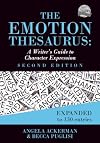
There is some valuable info for writers here. I especially like the introductory pages (power of emotion, character research, dialogue, subtext, etc.), and the "associated power verbs" with every entry are fabulous as a resource.
However, the editor in me wishes the entries were consistently nouns, rather than a mix of nouns, verbs, and adjectives (acceptance, appalled, conflicted . . .). There were some typos and, given that this is a second edition, those should have certainly been caught show more (e.g., giving "backhanding" compliments; and, in a roundabout "away").
For each entry, there is a writer's tip. I wonder why each tip was not paired with the emotion shown on that page when possible (e.g., why is a tip about gratitude on the "pleased" page?). With more effort, many more connections could have been made. And some were simply too obvious (e.g., the reader will notice the difference between a character trudging up the stairs and bounding up, two at a time).
At times, lines were repeated (e.g., in the "pleased" entry under "physical signals," we have "making strong eye contact with others" and then "strong eye contact" three lines down). Where are copyeditors these days? And in the case where copyediting jobs are almost nonexistent at some houses, why didn't the authors catch this?
I was confused when the same emotion was listed under both "may escalate to" and "may de-escalate to" (e.g., "disillusionment" under both categories for the emotion "discouraged"). Yes, emotions can definitely be nuanced and not neatly fit under any one category, but it still felt odd. In addition, there were several instances where I would have moved a word to the opposite category (e.g., I would move "self-loathing" to escalated status under the "flustered" entry. I don't see how self-loathing would be a de-escalation in that case).
There were omissions. Why are the "mental responses" for "longing" only negative? Longing can be positive. Why are the "acute or long-term responses" for "moved" all negative?
And the book ended with "worthlessness." What about "worthiness"?
Speaking of ending on a more upbeat note, I DID learn an awesome new word from this book: SCHADENFREUDE. Love that! Look it up. :-) show less
However, the editor in me wishes the entries were consistently nouns, rather than a mix of nouns, verbs, and adjectives (acceptance, appalled, conflicted . . .). There were some typos and, given that this is a second edition, those should have certainly been caught show more (e.g., giving "backhanding" compliments; and, in a roundabout "away").
For each entry, there is a writer's tip. I wonder why each tip was not paired with the emotion shown on that page when possible (e.g., why is a tip about gratitude on the "pleased" page?). With more effort, many more connections could have been made. And some were simply too obvious (e.g., the reader will notice the difference between a character trudging up the stairs and bounding up, two at a time).
At times, lines were repeated (e.g., in the "pleased" entry under "physical signals," we have "making strong eye contact with others" and then "strong eye contact" three lines down). Where are copyeditors these days? And in the case where copyediting jobs are almost nonexistent at some houses, why didn't the authors catch this?
I was confused when the same emotion was listed under both "may escalate to" and "may de-escalate to" (e.g., "disillusionment" under both categories for the emotion "discouraged"). Yes, emotions can definitely be nuanced and not neatly fit under any one category, but it still felt odd. In addition, there were several instances where I would have moved a word to the opposite category (e.g., I would move "self-loathing" to escalated status under the "flustered" entry. I don't see how self-loathing would be a de-escalation in that case).
There were omissions. Why are the "mental responses" for "longing" only negative? Longing can be positive. Why are the "acute or long-term responses" for "moved" all negative?
And the book ended with "worthlessness." What about "worthiness"?
Speaking of ending on a more upbeat note, I DID learn an awesome new word from this book: SCHADENFREUDE. Love that! Look it up. :-) show less
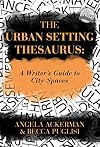
Good riddance to boring, one-dimensional story settings…
Creating compelling, believable settings is one of the most overlooked yet vital components of storytelling. Too little can make your story feel flat; too much can overwhelm and frustrate readers—either can potentially pull them out of the story or cause them to stop turning pages altogether.
The Urban Setting Thesaurus is part reference guide, part writing tool for developing rich city settings that will add depth to both your show more backstory and characters. Using strong settings to reveal these layers helps readers form an emotional bond with your characters—giving them someone to root for—and makes them feel as though they are part of the ride…all the way to “The End.”
As with the other books in the series*, The Urban Setting Thesaurus offers a comprehensive, but easy to understand format and when you open the book, you quickly see that a great deal of thought has gone into the layout, which starts with a common misconception about setting and moves into other discussions, including using setting as a vehicle for characterization and backstory, where to implement setting, utilizing sensory details, pros/cons of choosing real world settings and common setting snags. I recommend reading these sections before proceeding to the thesaurus entries, as they serve as a fantastic springboard for getting you into the setting mindset.
The entries themselves are vast—and I mean VAST—covering a variety of locations you might find in your story’s urban setting:
In the city—construction sites, elevators, fitness centers, parking garages/lots, waiting rooms, etc.
Restaurants—coffeehouses (a writer’s favorite), diners, delis, pubs, etc.
Retail stores—bookstores, convenience stores, shopping malls, pawn shops, etc.
Sports, Entertainment & Art Venues—art galleries, bowling alleys, movie theaters, museums, etc.
Transportation—airplanes, buses, taxis, etc.
If these weren’t enough to get your creative juices flowing, the thesaurus entries are followed by a couple of cool resources: an Emotional Value Tool and a Setting Checklist!
The Urban Setting Thesaurus is another fantastic addition to the Thesaurus collection—which are the only writing craft books I have in BOTH print and .pdf versions! Having said that, if you are looking for books that will enhance and improve your writing—whether you are a student, a newbie writer or a seasoned pro—these books are a must have!
Happy writing!
* The Positive Trait Thesaurus, The Negative Trait Thesaurus, The Emotion Thesaurus, The Rural Setting Thesaurus show less
Creating compelling, believable settings is one of the most overlooked yet vital components of storytelling. Too little can make your story feel flat; too much can overwhelm and frustrate readers—either can potentially pull them out of the story or cause them to stop turning pages altogether.
The Urban Setting Thesaurus is part reference guide, part writing tool for developing rich city settings that will add depth to both your show more backstory and characters. Using strong settings to reveal these layers helps readers form an emotional bond with your characters—giving them someone to root for—and makes them feel as though they are part of the ride…all the way to “The End.”
As with the other books in the series*, The Urban Setting Thesaurus offers a comprehensive, but easy to understand format and when you open the book, you quickly see that a great deal of thought has gone into the layout, which starts with a common misconception about setting and moves into other discussions, including using setting as a vehicle for characterization and backstory, where to implement setting, utilizing sensory details, pros/cons of choosing real world settings and common setting snags. I recommend reading these sections before proceeding to the thesaurus entries, as they serve as a fantastic springboard for getting you into the setting mindset.
The entries themselves are vast—and I mean VAST—covering a variety of locations you might find in your story’s urban setting:
In the city—construction sites, elevators, fitness centers, parking garages/lots, waiting rooms, etc.
Restaurants—coffeehouses (a writer’s favorite), diners, delis, pubs, etc.
Retail stores—bookstores, convenience stores, shopping malls, pawn shops, etc.
Sports, Entertainment & Art Venues—art galleries, bowling alleys, movie theaters, museums, etc.
Transportation—airplanes, buses, taxis, etc.
If these weren’t enough to get your creative juices flowing, the thesaurus entries are followed by a couple of cool resources: an Emotional Value Tool and a Setting Checklist!
The Urban Setting Thesaurus is another fantastic addition to the Thesaurus collection—which are the only writing craft books I have in BOTH print and .pdf versions! Having said that, if you are looking for books that will enhance and improve your writing—whether you are a student, a newbie writer or a seasoned pro—these books are a must have!
Happy writing!
* The Positive Trait Thesaurus, The Negative Trait Thesaurus, The Emotion Thesaurus, The Rural Setting Thesaurus show less
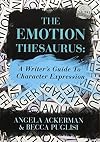
I needed a concise way to look up alternatives to the same old tired:
"Whatever," she shrugged. "Do what you want."
This book gave me:
"Whatever..." She looked past me as though I wasn't even there, her voice as flat and emotionless as a tombstone in winter. "Do what you want."
The first sentence is fine when writing your rough draft, but when you're past-deadline and need to edit that chapter that is otherwise falling a little flat, this book will help you quickly add a little zing without show more going on a word-hunt through an entire library full of classics. show less
"Whatever," she shrugged. "Do what you want."
This book gave me:
"Whatever..." She looked past me as though I wasn't even there, her voice as flat and emotionless as a tombstone in winter. "Do what you want."
The first sentence is fine when writing your rough draft, but when you're past-deadline and need to edit that chapter that is otherwise falling a little flat, this book will help you quickly add a little zing without show more going on a word-hunt through an entire library full of classics. show less
The Positive Trait Thesaurus: A Writer's Guide to Character Attributes (Writers Helping Writers Series) by Angela Ackerman
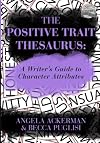
Puglisi and Ackerman have published eight thesauri for use by writers. Each begins with an introduction of 80-100 pages. Abraham Maslow’s Hierarchy of Human Needs, described in the introductory text and appendices, provides the theoretical framework. Aside from this front material, these thesauri are technical references to consult when addressing particular needs. Although I read the introduction (significant portions of each overlap) and reviewed the information provided for randomly show more selected traits, a more meaningful way to evaluate these works is to use them with an actual writing project.
Many emotions are covered, as are signs and signals associated with them. However, the same content appears repeatedly for numerous emotions. That is realistic, of course, because human emotions overlap. For example, we feel some of the same sensations when excited or frightened. Writers will find it necessary to combine various emotions to simulate complex reactions in real life. For example, in a story I am writing, a man feels attracted to a woman but questions the appropriateness of his response and fears a romantic overture would be rejected.
Readers seeking a list of plug-and-play examples will be disappointed. Instead, the thesauri provide valuable hints that stimulate authors’ thinking about their characters. show less
Many emotions are covered, as are signs and signals associated with them. However, the same content appears repeatedly for numerous emotions. That is realistic, of course, because human emotions overlap. For example, we feel some of the same sensations when excited or frightened. Writers will find it necessary to combine various emotions to simulate complex reactions in real life. For example, in a story I am writing, a man feels attracted to a woman but questions the appropriateness of his response and fears a romantic overture would be rejected.
Readers seeking a list of plug-and-play examples will be disappointed. Instead, the thesauri provide valuable hints that stimulate authors’ thinking about their characters. show less
Lists
el (1)
You May Also Like


Associated Authors
Statistics
- Works
- 16
- Members
- 2,360
- Popularity
- #10,873
- Rating
- 4.3
- Reviews
- 37
- ISBNs
- 21
- Favorited
- 3