
Donald Maass
Author of Writing the Breakout Novel
About the Author
Works by Donald Maass
The Emotional Craft of Fiction: How to Write the Story Beneath the Surface (2016) 379 copies, 9 reviews
The Fire in Fiction: Passion, Purpose and Techniques to Make Your Novel Great (2009) 322 copies, 10 reviews
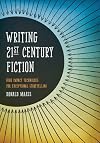
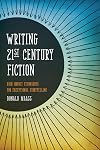
Writing 21st Century Fiction: High Impact Techniques for Exceptional Storytelling (2012) 172 copies, 3 reviews
Associated Works
Author in Progress: A No-Holds-Barred Guide to What It Really Takes to Get Published (2016) — Contributor — 72 copies, 1 review
Tagged
Common Knowledge
- Birthdate
- 20th Century
- Gender
- male
- Occupations
- literary agent
president - Organizations
- Association of Authors' Representatives, Inc.
Donald Maass Literary Agency - Nationality
- USA
- Places of residence
- New York, New York, USA
- Associated Place (for map)
- New York, USA
Members
Reviews
Writing 21st Century Fiction: High Impact Techniques for Exceptional Storytelling: High Impact Techniques for Exceptional Storytelling in Modern Fiction by Donald Maass
Imagine going into an editorial meeting with a literary agent or publisher and discovering that the person across the table is J. Jonah Jameson, the cigar-toting, belligerent, crewcut who made Peter Parker’s life a misery as a freelance photographer for the Daily Bugle. JJ thrusts his clenched cigar at you and shouts, “High Impact!” It doesn’t really matter what advice you are about to receive. If you are doing X, do Y; if you are writing W, write Z; find your character’s key flaw, show more repeat it three times and then explode it; yes, explode it! Because what is wanted is high impact fiction.
Of course I have no idea what Donald Maass looks like or sounds like. I’m probably not the writer he is shouting at. (I don’t respond well to shouting.) But if you do see yourself as that writer, then this book will give you everything you are hoping for.
Not recommended for writers (or readers) like me. show less
Of course I have no idea what Donald Maass looks like or sounds like. I’m probably not the writer he is shouting at. (I don’t respond well to shouting.) But if you do see yourself as that writer, then this book will give you everything you are hoping for.
Not recommended for writers (or readers) like me. show less
While this might not have been my absolute favorite book on writing, it ranks up there with some of the best. I especially appreciated the passion he espoused for simply writing a damn good book above and beyond any other consideration. Sounds simple, no? Well the advice is taken across a wide board of problem areas, be it agents, editors, publishing platforms, and best of all, every writer's worst enemy: themselves. Never get complacent. Don't aim for status. Aim for great storytelling and show more the rest will follow suit.
Simplicity itself. So if I've given away everything that makes this book so valuable, then why should anyone else read it? Because it's pretty damn exhaustive on the big points that make any novel a great novel, and enjoins us to partake of some pretty decent workbook exercises that focus more on connections and character development than things like plot. It was quite useful, and the rest was, for the most part, positive and uplifting if you're trying to be an author that doesn't mind staring the hard facts in the face.
Few punches were pulled.
For this, I was greatly amused. show less
Simplicity itself. So if I've given away everything that makes this book so valuable, then why should anyone else read it? Because it's pretty damn exhaustive on the big points that make any novel a great novel, and enjoins us to partake of some pretty decent workbook exercises that focus more on connections and character development than things like plot. It was quite useful, and the rest was, for the most part, positive and uplifting if you're trying to be an author that doesn't mind staring the hard facts in the face.
Few punches were pulled.
For this, I was greatly amused. show less
Sometimes one more book can be one book to many.
In its favour, in a niche that is often populated my many cookie-cutter help guides, this book does cover new and different territory. Much of what is presented is worth consideration and may prove enlightening and help aspiring writers push their work to a better level.
After Larry Brooks book, I was inspired, clear of mind and purpose. However, after this book, my mind is cluttered and confidence is shot.
While Donald Maas raises some show more interesting points, I felt overall he presents the case for a story, so perfect as to be completely unattainable.
Thus I am torn on this work. Do I feel it helped or hindered? I don't know.
But it is solidly written, presented with little fuss, uses many examples which should be familiar to modern readers and provides a different view from other books in this genre. show less
In its favour, in a niche that is often populated my many cookie-cutter help guides, this book does cover new and different territory. Much of what is presented is worth consideration and may prove enlightening and help aspiring writers push their work to a better level.
After Larry Brooks book, I was inspired, clear of mind and purpose. However, after this book, my mind is cluttered and confidence is shot.
While Donald Maas raises some show more interesting points, I felt overall he presents the case for a story, so perfect as to be completely unattainable.
Thus I am torn on this work. Do I feel it helped or hindered? I don't know.
But it is solidly written, presented with little fuss, uses many examples which should be familiar to modern readers and provides a different view from other books in this genre. show less
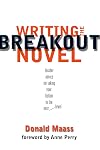
Writing the Breakout Novel: Insider Advice for Taking Your Fiction to the Next Level by Donald Maass
God, this book was irritating. Every time I read a "this is how you write" book by a non-writer I swear I'll never do it again. Then I end up doing it again because someone will swear "oh this one is different." Nope. Not different. Exactly the same, actually. 260 pages of selling (in this case he's selling the phrase "breakout novel") and about 1 or 2 useful ideas. Nothing new, mind you, just useful to be reminded of them. I suppose actually reading a good novel could have reminded me of show more those ideas too. In fact, you know what? The time I spent reading this really annoying guy would have been much better spent reading a good novel.
Don't buy this book. If you really want to learn something about story crafting and you really, really think you can gain something more than you would from just reading and writing and sharing your work, at least read a "this is how you write" book written by a writer who's work you respect. show less
Don't buy this book. If you really want to learn something about story crafting and you really, really think you can gain something more than you would from just reading and writing and sharing your work, at least read a "this is how you write" book written by a writer who's work you respect. show less
Lists
You May Also Like


Associated Authors
Statistics
- Works
- 8
- Also by
- 1
- Members
- 2,239
- Popularity
- #11,457
- Rating
- 4.2
- Reviews
- 70
- ISBNs
- 22