
Larry Brooks (1) (1952–)
Author of Story Engineering
For other authors named Larry Brooks, see the disambiguation page.
About the Author
Image credit: Taken from the author's Goodreads profile
Works by Larry Brooks
Great Stories Don't Write Themselves: Criteria-Driven Strategies for More Effective Fiction (2019) 28 copies, 1 review
101 Slightly Unpredictable Tips for Novelists and Screenwriters: Conventional Writing Wisdom, and Then Some (2009) 5 copies
Three Men and a Manuscript: Three Writing "Gurus" Discussing Craft, a Shifting Market and What it Takes to Create Successful Fiction (2015) 2 copies
The Six Great Epiphanies of Successful Authors: A Storyfix.com Tutorial (Tutorials from Storyfix.com Book 1) (2015) 2 copies
Chasing Bliss: A Layman's Guide to Love, Fulfillment, Damage Control, Repair and Resurrection — Primary author — 2 copies
Bound in Pain 1 copy
Bound in Pleasure 1 copy
Tagged
Common Knowledge
Members
Reviews
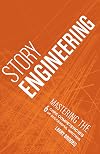
If this book was whittled down to 1/3 of its current size, it would be a useful, entry level book on writing. Instead the book is written like a Mormon housewife blog. You came for a mashed potato recipe, but first there's approximately 2,000 words about grandma's boring crocheting habit which somehow dribbles into a whine about youngest daughter's minor attempt at independence and ends on a gushing story about how the mediocre husband is an excellent provider by simply continuing to breathe show more in the same household, even if he forgot to pick up the f***ing potatoes like you asked. By the end, your appetite for mashed potatoes is gone, along with the curling iron Mormon housewife mom threw out when she found it in youngest daughter's room.
I take that back, that sounds fun, this book bored me. The book is full of fluff, and I mean full. There were entire chapters containing only one, tiny line of instructional information. There are 6 core competencies which are better displayed, even when not numbered, in every other writing book I've read, because the author just presented them as they were, rather than burying them in banter. There's a 4 structure write up, which is literally just Act I, Act II - Part 1, Act II - Part 2, and Act 3, also known as the breakdown discussed in every single other writing book. I'll admit I like the idea of boxing each of these structures because I'm visual but again, I've read it better in other selections.
The same information is repeated again and again in new, duller ways. The same analogies are repeated again and again in newer, duller ways. The organization is poor, in part because the author jams fluff in between pertinent facts, side tracking you away from the information you need to reach for that last statement to make sense. The author toots his own horn and bashes perfectly reasonable writing instruction, while failing to realize he's giving the same instruction, just in a long, drawn out, boring way. Also, let's not forget how much of the book the author spends discussing how his intro-level writing instruction is better than everyone else's. I sure didn't find any evidence of that but optimism is cute.
Beyond disappointed, as I see this book trotted out everywhere as THE writing book and I literally skimmed entire chapters trying to find a hidden gem. In the end, if you've never read a writing book and you enjoy what I think of us white-male-media, here's the book for you. If you've read a variety of writing books and reached an intro level sense of story structure, I don't see how this book will provide anything new. show less
I take that back, that sounds fun, this book bored me. The book is full of fluff, and I mean full. There were entire chapters containing only one, tiny line of instructional information. There are 6 core competencies which are better displayed, even when not numbered, in every other writing book I've read, because the author just presented them as they were, rather than burying them in banter. There's a 4 structure write up, which is literally just Act I, Act II - Part 1, Act II - Part 2, and Act 3, also known as the breakdown discussed in every single other writing book. I'll admit I like the idea of boxing each of these structures because I'm visual but again, I've read it better in other selections.
The same information is repeated again and again in new, duller ways. The same analogies are repeated again and again in newer, duller ways. The organization is poor, in part because the author jams fluff in between pertinent facts, side tracking you away from the information you need to reach for that last statement to make sense. The author toots his own horn and bashes perfectly reasonable writing instruction, while failing to realize he's giving the same instruction, just in a long, drawn out, boring way. Also, let's not forget how much of the book the author spends discussing how his intro-level writing instruction is better than everyone else's. I sure didn't find any evidence of that but optimism is cute.
Beyond disappointed, as I see this book trotted out everywhere as THE writing book and I literally skimmed entire chapters trying to find a hidden gem. In the end, if you've never read a writing book and you enjoy what I think of us white-male-media, here's the book for you. If you've read a variety of writing books and reached an intro level sense of story structure, I don't see how this book will provide anything new. show less
So here's the thing I have learned as a teacher. Part of your job is to explain things repeatedly, in as many different ways as possible, until your audience understands whatever concept you're trying to teach them. This is something I often struggle with, as I tend to understand things intuitively in a "Yeah, you know, it's like...and stuff..." kind of way. My math teachers in grade school used to think I was cheating because I didn't show my work. I did it all in my head. On a professional show more level, I understand my subject and it seems simple and easy to me, so when my students don't get it the first or second time, I often have a really hard time coming up with some other means of explaining.
Not so with Larry Brooks. There are so many analogies in this book that you could make a drinking game out of it. Take a shot for every new metaphor, and you'll be hammered by the end of chapter 3. This is the mark of a great teacher. If you don't "get it" by the time you finish this book, you're brain damaged.
It is a MUST BUY, MUST READ, MUST HAVE for every writer, no matter whether you are a pantser or plotter. It will change your writing life, alter the way you see story (in books, movies, TV, or plays) forever. You can never got back to NOT understanding it because in these 278 pages Brooks lays out the core foundation of good story, without which you don't have a prayer of getting published (unless your Tarantino and sold your soul to the devil).
The book covers (as the title implies) the 6 core competencies. They are:
Concept
Character
Theme
Structure
Scene Execution
Writing Voice
Now I think we all intuitively understand at least SOME of these things on a gut level. Some better than others. We all have different natural strengths. But what this book will do for you is illuminate the dark corners and show you, not only where the weak spots ARE, but how to fix them.
I cannot say enough positive things about this book. Brooks' conception of story structure (which I initially read in a series of posts on Storyfix, then later in a more detailed ebook) literally changed my writing life. I used to have stellar beginnings and kick ass endings and schlumpy middles. I used to refer to it as The Dreaded Valley of the Shadow of the Middle because I was lost. My friends, now I am found. These concepts lit the way so thoroughly that the section of the book I once dreaded now I LOOK FORWARD TO.
Every section of Story Engineering has wisdom to impart. It isn't the kind of inspirational craft book you pick up and breeze through in a day or two. It is, or should be, a slow read, one where you take your time reading through and really think over the content, applying it to your work. Then you'll want to read it again. You'll want your sticky tabs, highlighter, and post it notes handy when you read it. Mine copy is starting to look like a porcupine. But hey, I can attest, the binding is good!
I'll stop waxing poetic here and just end with this: BUY THIS BOOK TODAY. show less
Not so with Larry Brooks. There are so many analogies in this book that you could make a drinking game out of it. Take a shot for every new metaphor, and you'll be hammered by the end of chapter 3. This is the mark of a great teacher. If you don't "get it" by the time you finish this book, you're brain damaged.
It is a MUST BUY, MUST READ, MUST HAVE for every writer, no matter whether you are a pantser or plotter. It will change your writing life, alter the way you see story (in books, movies, TV, or plays) forever. You can never got back to NOT understanding it because in these 278 pages Brooks lays out the core foundation of good story, without which you don't have a prayer of getting published (unless your Tarantino and sold your soul to the devil).
The book covers (as the title implies) the 6 core competencies. They are:
Concept
Character
Theme
Structure
Scene Execution
Writing Voice
Now I think we all intuitively understand at least SOME of these things on a gut level. Some better than others. We all have different natural strengths. But what this book will do for you is illuminate the dark corners and show you, not only where the weak spots ARE, but how to fix them.
I cannot say enough positive things about this book. Brooks' conception of story structure (which I initially read in a series of posts on Storyfix, then later in a more detailed ebook) literally changed my writing life. I used to have stellar beginnings and kick ass endings and schlumpy middles. I used to refer to it as The Dreaded Valley of the Shadow of the Middle because I was lost. My friends, now I am found. These concepts lit the way so thoroughly that the section of the book I once dreaded now I LOOK FORWARD TO.
Every section of Story Engineering has wisdom to impart. It isn't the kind of inspirational craft book you pick up and breeze through in a day or two. It is, or should be, a slow read, one where you take your time reading through and really think over the content, applying it to your work. Then you'll want to read it again. You'll want your sticky tabs, highlighter, and post it notes handy when you read it. Mine copy is starting to look like a porcupine. But hey, I can attest, the binding is good!
I'll stop waxing poetic here and just end with this: BUY THIS BOOK TODAY. show less
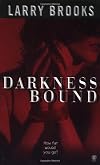
I spent a great deal of time while reading this book agonizing over what I was going to say about it when I was done. I first grabbed it, almost at random, thinking that the cover and the description sounded like a thriller and murder mystery. Going in, after the first thirty pages, I was almost ready to toss it aside as unbearable trash. After another 60 pages or so, I had been hooked and demolished the rest in a single marathon session, save for the last 30 pages or so. Those last 30 pages show more very nearly destroyed the affection I'd developed along the way.
Now, to be fair, the book is well written and an engaging read, once one gets past the initial veneer of fetish romance. Honestly, this section could have been omitted almost entirely and not hurt the final manuscript much. All we need to know about our hero, Dillon Masters, is that he's into things that are a little kinky. There are sections in the middle that get into his twists a little more, explaining them - as much as he or his psychologist are able to, at least - and that would have served. Instead we have to hear about his collapsing marriage - apparently a side effect of his perversions - and his troubles at work, in great detail. Some trimming here would have done wonders, but slogging through it leads us to the actual meat.
Once Dillon and his beautiful "Dark Lady" really get down to the nitty gritty and their "game" turns lethal, things pick up quite a lot. Several judiciously used sections with unreliable narration and all of the characters drawing on their deepest "survival of the fittest" instincts lead to an intricate dance and cat-and-mouse game, and the author keeps us hanging as to who's really playing with who until near the end. He does an admirable job, and all of the characters are well fleshed out and have (if not rational) good reasons for doing what they're doing and how. Several small vignettes featuring one of the characters as a child, laying the groundwork for their later troubles, are well done and paced and the manner in which the author describes them leaves it up to your own discretion as to who he's talking about. The punchline, when revealed, is immensely satisfying.
Then comes the downside. Once the real danger has been dealt with, and all our characters are safely in their designated holding patterns, things have to be spoiled by an entirely too sugar-and-spice ending. This seems to be a common theme... hmm. Regardless, it's entirely possible that it's just my own prejudices - those that say a crime is a crime, and inflicting pain and suffering should result in punishment, not reward, regardless if the individual so rewarded carries the title "protagonist" or not - that spoils this kind of ending for me. But I was not pleased with the "happy ending," nor the manner in which it was executed, though the author did at least acknowledge and create several extenuating circumstances that make for a handy package rather than ambiguity or ruin.
Overall, I'd say it's worth checking out. Beginning and end aside, there's still 340 delicious pages between them, with fast and well-written prose alongside too many double and triple crosses and shifts of character that are actually appropriate to count. show less
Now, to be fair, the book is well written and an engaging read, once one gets past the initial veneer of fetish romance. Honestly, this section could have been omitted almost entirely and not hurt the final manuscript much. All we need to know about our hero, Dillon Masters, is that he's into things that are a little kinky. There are sections in the middle that get into his twists a little more, explaining them - as much as he or his psychologist are able to, at least - and that would have served. Instead we have to hear about his collapsing marriage - apparently a side effect of his perversions - and his troubles at work, in great detail. Some trimming here would have done wonders, but slogging through it leads us to the actual meat.
Once Dillon and his beautiful "Dark Lady" really get down to the nitty gritty and their "game" turns lethal, things pick up quite a lot. Several judiciously used sections with unreliable narration and all of the characters drawing on their deepest "survival of the fittest" instincts lead to an intricate dance and cat-and-mouse game, and the author keeps us hanging as to who's really playing with who until near the end. He does an admirable job, and all of the characters are well fleshed out and have (if not rational) good reasons for doing what they're doing and how. Several small vignettes featuring one of the characters as a child, laying the groundwork for their later troubles, are well done and paced and the manner in which the author describes them leaves it up to your own discretion as to who he's talking about. The punchline, when revealed, is immensely satisfying.
Then comes the downside. Once the real danger has been dealt with, and all our characters are safely in their designated holding patterns, things have to be spoiled by an entirely too sugar-and-spice ending. This seems to be a common theme... hmm. Regardless, it's entirely possible that it's just my own prejudices - those that say a crime is a crime, and inflicting pain and suffering should result in punishment, not reward, regardless if the individual so rewarded carries the title "protagonist" or not - that spoils this kind of ending for me. But I was not pleased with the "happy ending," nor the manner in which it was executed, though the author did at least acknowledge and create several extenuating circumstances that make for a handy package rather than ambiguity or ruin.
Overall, I'd say it's worth checking out. Beginning and end aside, there's still 340 delicious pages between them, with fast and well-written prose alongside too many double and triple crosses and shifts of character that are actually appropriate to count. show less
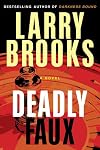
Couldn't put it down. I devoured this book in three sessions within a 24-hour period. Breakneck pace from page one, intricately detailed plot that kept you guessing as much as the MC tried to guess who his true allies and friends were.
The MC, Wolfgang Schmitt, is cocky, good-looking, witty, smart--brain-wise and streetwise--, and just enough of a smartass to get himself into trouble. But under that bad boy facade is a decent guy who risks his neck for the right things ... and if a few show more million bucks drop into his lap on the way to performing his heroic good deeds, then all the better.
The author is a master storyteller and plotter (see his books on story structure and story physics) and it shows. He escalates the stakes page by page until you think the characters have either no more to give or no more to lose.
Great fun, entertaining, and instructive for those of us who are writers trying to understand how to construct compelling stories featuring sympathetic characters. show less
The MC, Wolfgang Schmitt, is cocky, good-looking, witty, smart--brain-wise and streetwise--, and just enough of a smartass to get himself into trouble. But under that bad boy facade is a decent guy who risks his neck for the right things ... and if a few show more million bucks drop into his lap on the way to performing his heroic good deeds, then all the better.
The author is a master storyteller and plotter (see his books on story structure and story physics) and it shows. He escalates the stakes page by page until you think the characters have either no more to give or no more to lose.
Great fun, entertaining, and instructive for those of us who are writers trying to understand how to construct compelling stories featuring sympathetic characters. show less
Lists
Awards


You May Also Like


Statistics
- Works
- 24
- Members
- 995
- Popularity
- #25,893
- Rating
- 3.7
- Reviews
- 37
- ISBNs
- 38