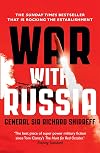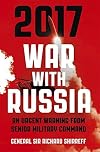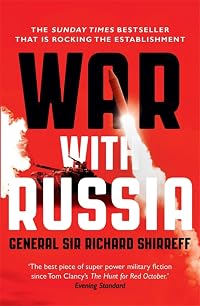
War With Russia: An Urgent Warning from Senior Military Command
by General Sir Richard Shirreff
On This Page
Description
Fiction. Politics. HTML:The rapid rise in Russia's power over the course of the last ten years has been matched by a stunning lack of international diplomacy on the part of its president, Vladimir Putin. One consequence of this, when combined with Europe's rapidly shifting geopolitics, is that the West is on a possible path toward nuclear war. Former deputy commander of NATO General Sir Richard Shirreff speaks out about this very real peril in this call to arms, a novel that is a barely show more disguised version of the truth. In chilling prose, it warns allied powers and the world at large that we risk catastrophic nuclear conflict if we fail to contain Russia's increasingly hostile actions.In a detailed plotline that draws upon Shirreff's years of experience in tactical military strategy, Shirreff lays out the most probable course of action Russia will take to expand its influence, predicting that it will begin with an invasion of the Baltic states. And with GOP presidential candidate Donald Trump recently declaring that he might not come to the aid of these NATO member nations were he to become president, the threat of an all-consuming global conflict is clearer than ever.
This critical, chilling fictional look at our current geopolitical landscape, written by a top NATO commander, is both timely and necessary-a must-read for any fan of realistic military thrillers as well as all concerned citizens. show less
Tags
Recommendations






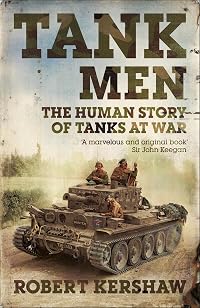


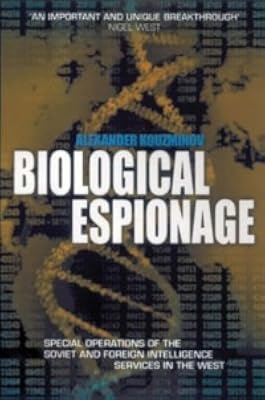
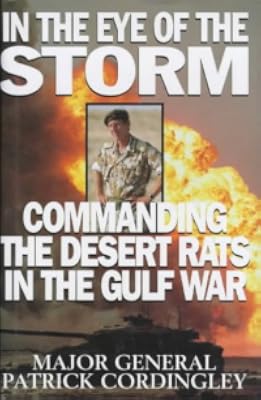
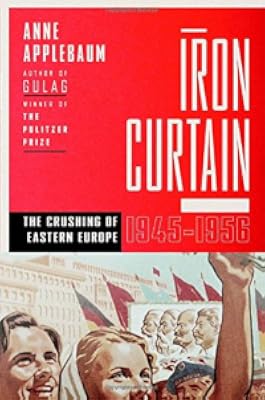
Member Reviews
A recent Future War novel in the great tradition of George Chesney's The Battle of Dorking, where serving or recently retired senior officers criticise their political masters in thinly-disguised fiction. General Sir Richard Shirreff's War with Russia is just the latest in this 150-year old genre. Written in 2015-16 and set in 2017, Russia attacks Ukraine but only as a diversion to the main assault on the Baltics. The Ukrainian army capitulates almost without a shot and Russian armour drives all before it. So much for experts, then.
Most of the action is set in the Baltics, because that's where the author did a lot of his service in various staff posts with NATO. Yet Belarus plays no part, Russian forces are depicted as (mainly) show more effective, and there is no role for mercenaries. The US President is an idealised Hilary Clinton and David Cameron is unmercifully mocked as well as vilified for the 2010 defence cuts, especially the scrapping of the RAF Nimrod fleet. There is no mention of the United Nations save for some passing mention of the Refugee Agency (so no arguments in the Security Council), and the author is completely silent on what happens to the combatant nations' embassies and diplomatic staff in each others' capitals. Brexit never happened, and in any case political processes and diplomacy amongst allies is completely discounted except where it would impact on the plot.
Shirreff does at least acknowledge that NATO expansion eastwards would be a legitimate concern for Russia.
We are taken inside a lot of meeting rooms for briefings and conferences. The Russian position on first use of nuclear weapons is discussed at length, but eventually nuclear Armageddon is avoided through cyberwarfare and a resourceful British squaddie who everyone is shocked to find isn't special forces.
Despite taking advice from a former colleague who also wrote a book (!), the writing is pedestrian. Whenever a new chapter starts, each of the principal characters is re-introduced with their full name (and, in the case of the Russians, patronymic) and their rank. Military terminology is spelt out, explained and then repeated. This must be irritating even for people who know no military terminology when the explanations are repeated again and again; I already knew what an F-16 was, that bergens are rucksacks and stag is standing guard.
Shirriff gives us minimal characterisation, although he doesn't make the mistake of transforming his more central characters into James Bond heroes. The Russian President is a rather different matter; he becomes a James Bond villain with very little embellishment. The whole thing reads like a 400-page briefing or a situation report, which I'm sure the author was very skilled at producing.
In the five years since publication, things have changed: the UK is now working up the F-35 fighters to go on our two supercarriers (even though they remain, in the eyes of many, priority targets); and the maritime observation gap is being filled by Poseidon patrol aircraft.
One thing intrigues me, though. I have to assume that copies of this book found their way to Russia, and probably to upper levels in the hierarchy. Did Shirriff's depiction of the Ukrainian army's almost immediate capitulation encourage the attack on that country? And if so, was this a blind spot for Shirriff as well, or did he know differently? Was this a clever bit of British maskirovka? show less
Most of the action is set in the Baltics, because that's where the author did a lot of his service in various staff posts with NATO. Yet Belarus plays no part, Russian forces are depicted as (mainly) show more effective, and there is no role for mercenaries. The US President is an idealised Hilary Clinton and David Cameron is unmercifully mocked as well as vilified for the 2010 defence cuts, especially the scrapping of the RAF Nimrod fleet. There is no mention of the United Nations save for some passing mention of the Refugee Agency (so no arguments in the Security Council), and the author is completely silent on what happens to the combatant nations' embassies and diplomatic staff in each others' capitals. Brexit never happened, and in any case political processes and diplomacy amongst allies is completely discounted except where it would impact on the plot.
Shirreff does at least acknowledge that NATO expansion eastwards would be a legitimate concern for Russia.
We are taken inside a lot of meeting rooms for briefings and conferences. The Russian position on first use of nuclear weapons is discussed at length, but eventually nuclear Armageddon is avoided through cyberwarfare and a resourceful British squaddie who everyone is shocked to find isn't special forces.
Despite taking advice from a former colleague who also wrote a book (!), the writing is pedestrian. Whenever a new chapter starts, each of the principal characters is re-introduced with their full name (and, in the case of the Russians, patronymic) and their rank. Military terminology is spelt out, explained and then repeated. This must be irritating even for people who know no military terminology when the explanations are repeated again and again; I already knew what an F-16 was, that bergens are rucksacks and stag is standing guard.
Shirriff gives us minimal characterisation, although he doesn't make the mistake of transforming his more central characters into James Bond heroes. The Russian President is a rather different matter; he becomes a James Bond villain with very little embellishment. The whole thing reads like a 400-page briefing or a situation report, which I'm sure the author was very skilled at producing.
In the five years since publication, things have changed: the UK is now working up the F-35 fighters to go on our two supercarriers (even though they remain, in the eyes of many, priority targets); and the maritime observation gap is being filled by Poseidon patrol aircraft.
One thing intrigues me, though. I have to assume that copies of this book found their way to Russia, and probably to upper levels in the hierarchy. Did Shirriff's depiction of the Ukrainian army's almost immediate capitulation encourage the attack on that country? And if so, was this a blind spot for Shirriff as well, or did he know differently? Was this a clever bit of British maskirovka? show less
Despite its literary shortcomings I greatly enjoyed this book. The characterisation is thin at best but the plot convincing and pacy. The author certainly knows his subject matter and the plausibility of similar events transpiring should be enough to worry even the most liberal.
Gratuitously making fun of well known figures and constantly moralising how we need to spend more money on the military. Not sure how to rate this as a book of fiction meant as didactic device aimed at the politicians. As a novel it's awful and I wish the narrator just stayed in the war room and at high altitude over the battlefield instead of introducing individual characters. It's an interesting scenario and doesn't really need the bond novel treatment (although Putin makes a better villain than many seen in fiction).
Ratings
Members
- Recently Added By
Published Reviews
ThingScore 50
At once a literary disaster, a pacy techno-thriller and a clarion call to the west.
added by simon_carr
Lists

Huxley's reading log 2017
45 works; 1 member

My wishlist
85 works; 1 member
Author Information

1 Work 142 Members
Awards and Honors
Distinctions
Common Knowledge
- Canonical title*
- Krig med Ryssland : Baltikum ockuperat, Nato i strid och Sverige oförsvarat!
- Alternate titles
- 2017 War with Russia: An Urgent Warning from Senior Military Command
- People/Characters
- Vladimir Putin
- Important places
- Baltic States; Latvia; Russia
*Some information comes from Common Knowledge in other languages. Click "Edit" for more information.
Classifications
Statistics
- Members
- 142
- Popularity
- 230,600
- Reviews
- 3
- Rating
- (2.79)
- Languages
- English, Estonian, Polish, Swedish
- Media
- Paper, Audiobook, Ebook
- ISBNs
- 10
- ASINs
- 5