
Peter Conradi (1)
Author of The King's Speech
For other authors named Peter Conradi, see the disambiguation page.
Works by Peter Conradi
Hitler's Piano Player: The Rise and Fall of Ernst Hanfstaengl, Confidante of Hitler, Ally of FDR (2004) 52 copies, 3 reviews
Hot Dogs and Cocktails: When FDR Met King George VI at Hyde Park on Hudson (2013) 20 copies, 1 review
Tagged
Common Knowledge
- Gender
- male
- Education
- University of Oxford (Brasenose College)
Ludwig-Maximilian University, Munich, Germany - Occupations
- editor (The Sunday Times)
- Short biography
- Journalist and writer Peter Conradi is a graduate of Brasenose College, Oxford and Ludwig-Maximilian University, Munich. He has worked as a foreign correspondent in Brussels, Zurich and in Moscow, where he covered the fall of Communism. Since 1998 he has worked for The Sunday Times in London. During his time in Russia, he wrote The Red Ripper: Inside the Mind of Russia’s Most Brutal Serial Killer, the story of mass-murderer Andrei Chikatilo, published in 1992, and Mad Vlad: Vladimir Zhirinovsky and The New Russian Nationalism, which appeared two years later. Hitler’s Piano Player: The Rise and Fall of Ernst Hanfstaengl, was published in the US in 2004 and in the UK in 2005. The King’s Speech: How One Man Saved the British Monarchy, published in November 2010 and written jointly with Mark Logue, was a best seller in America, Britain and Canada with over 350,000 copies sold, and translation rights have been sold in more than 20 countries. The Great Survivors: How Monarchy Made It into the Twenty-First Century was published in June 2012. Hot Dogs and Cocktails, the story of when FDR met King George VI at Hyde Park on Hudson, will be published in September 2013.
http://www.andrewnurnberg.com/authors... - Nationality
- UK
- Places of residence
- London, England, UK
Brussels, Belgium
Zurich, Switzerland
Moscow, Russia
Members
Discussions
Who Lost Russia?: How the World Entered a New Cold War, by Peter Conradi JAN 2017 LTER in Reviews of Early Reviewers Books (April 2017)
Reviews
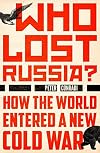
There perhaps could not be a more timely and relevant book to see publication than Who Lost Russia: How the World Entered a New Cold War, by Peter Conradi. As this review is written, friction between the United States and Russia is currently at levels not witnessed since the end of the Cold War and the dissolution of the Soviet Union. The sound of saber-rattling echoes from potential flashpoints across the globe. Russia has annexed Crimea–which resulted in loud condemnation from the West show more as well as crippling economic sanctions–and actively sponsors civil war in Ukraine through its support of two breakaway self-proclaimed republics, much as it has done in Georgia, another former Soviet state, but with greater vigor and less restraint.
President Vladimir Putin has remade his role as an elected official in an emerging democracy into that of an iron-fisted old-style autocrat, and seeks to refashion Russia into a key actor in the global arena once more. Relying on a toolkit that includes political and economic intimidation, misinformation campaigns and election meddling, a newly resurgent Russia is actively reasserting itself with states once part of the Soviet Union, with former allies, and in efforts directed at destabilizing the Western alliance. Russia has intervened in Syria, a traditional Soviet ally, ostensibly to fight ISIL but in fact to prop up the brutal regime of Bashar al-Assad, putting it at direct odds with US interests in a highly unstable region. A new American President won the White House under a cloud of suspicion as it has become increasingly clear not only that Russia intervened in the election, but that it did so to promote Donald Trump. Twin committees in both houses of Congress are currently investigating whether there was active collusion between the Trump campaign and Russia. Trump himself seems struck with a kind of boyhood admiration of Putin and his brand of authoritarianism, which may or may not have been put to the test when he ordered a missile strike on a Syrian airbase. Russia seems unfazed, brandishing its military might, leaving spy ships lingering off the American coast, and buzzing American fighter jets. It’s almost like a flashback to the 1960s.
But, as Peter Conradi reminds us with this insightful and well-written study, it did not start off that way, and perhaps it did not have to come to this. Conradi, foreign editor of the UK’s The Sunday Times, and thus absent the bias that seems to inform the outlook of Americans from all ends of the political spectrum, revisits the collapse of the Soviet Union–which he witnessed first-hand as a foreign correspondent in Moscow–and the heady optimism that came along with it in Europe and the United States. The world marveled at unfolding events then, cheering on first Gorbachev and then Yeltsin, as the fear of nuclear annihilation gave way to the welcoming of Russia to a community of nations predicated upon democracy and a market economy. Few in the West paid much attention as a similar, initial buoyancy within Russia itself rapidly deteriorated into a growing sense of humiliation as shell-shocked citizens came to grips with their new status. No longer a superpower, stripped of vast territories–including Ukraine and the Central Asian republics–that were historically part of Greater Russia, the dawn of democracy and capitalism brought to a much-diminished state political uncertainty and economic chaos, along with crime and corruption. It was this Russia that with a mixture of hope and shame held out its hands to a West that championed its rebirth and rewarded it with … a loan package insufficient to truly stabilize the economy, thunderous encouragement, and very little else.
In a fast-moving, highly articulate narrative that neatly blends the arts of historian and journalist, Conradi recounts events and assigns historical context that is frequently overlooked, with an eye for analysis that is largely unblemished by typical Western bias. The author underscores that it was the USSR–in its manic attempt to create fictional Soviet republics with faux autonomy within the historic Greater Russia–that encouraged secession when the Soviet Union dissolved. Ukraine had been a part of Russia for hundreds of years. So too was Crimea, which was only ceremoniously gifted to Ukraine in 1954, when it had almost no practical significance. Today Russian nationalists look upon these former territories and others as the “near abroad,” and demand to have a say in their respective destinies. These points are not made to justify recent Russian aggression, but to place them in the appropriate context, something often conspicuous in its absence in media coverage.
I noted before the advantage of Conradi as a non-American observer. I am reminded of the distorted perspective in the United States every time a partisan or pundit acclaims Reagan for the collapse of the Soviet Union and the end of the Cold War, which in fact he had little to do with. (Historian Richard Reeves credits Reagan only for insisting, against the advice of his inner circle, that Gorbachev’s reforms were genuine and that he deserved to be reckoned with. While that certainly merits significance, it hardly translates into winning the Cold War.) Conradi’s thesis, which he argues convincingly, is that it was this kind of loud triumphalism in the West, coupled with an aggressive expansion of NATO to the edges of the Russian border, that drove the relationship in the last two and a half decades to its current state of confrontation. He does not speak as an apologist of Putin and his increasing belligerence. Far from it. He recognizes Putin as the amoral autocrat that he is, murdering or jailing rivals and opponents alike, presiding over the dismantling of democratic institutions and–as the emerging agent of realpolitik projecting power over a reasserted Russian sphere of influence–a true threat to the Western community of nations. But he also suggests that it was the various missteps by the West–and the mishandling of the fledgling new Russia that emerged from the ashes of the USSR–that set the stage for someone like Putin to seize power and sustain overwhelming support from the populace.
I am old enough to recall the terror that gripped our home during the Cuban Missile Crisis, “duck-and-cover” drills in elementary school, and the flawed domino theory that led to the tragedy of Vietnam. We all expected that Iron Curtain to define the next century, but then one day it turned out that the Soviet Union was simply one massive Potemkin Village, a fact that had somehow eluded us all along despite billions of dollars spent on intelligence gathering, and only made manifest as it imploded before our wondering eyes. One day, unexpectedly, the USSR simply went out of business.
I watched that happen too, and what followed, through the pages of the New York Times. I recall bemoaning that such momentous historical events–the fall of the Berlin Wall, the reunification of Germany, the rise of new states from the ashes of the old Soviet Union and its dramatic aftermath–unfolded with Oval Office occupants, first George H.W. Bush and then Bill Clinton, who seemed to lack the vision to shape the future that lay ahead. Who Lost Russia appears to underscore my anecdotal observations as the author points to a series of lost opportunities under a succession of American Presidents. He also notes that along with tone-deaf triumphalism there was a consistent, pronounced arrogance that failed to accord proper respect to Russia and its security concerns. This was, of course, evident in the expansion of NATO to include not only former Warsaw Pact allies but also former Soviet Republics in the Baltic states, the unilateral abrogation of the Anti-Ballistic Missile treaty, and the very real possibility that what were once integral parts of Russia–Georgia, Ukraine, and especially the critically strategic Crimean Peninsula–were lining up as NATO candidates that could serve as hosts to missiles pointed at Moscow. It was within this context that Putin acted on the Crimea.
Conradi also reminds us that initially Putin’s Russia objected but largely accepted NATO expansion. That Putin himself offered strategic airspace as support to George W. Bush in the aftermath of 911, and did not balk when the US invaded Afghanistan, a site of the last foreign adventure of the USSR where much blood and treasure was expended. It was only the invasion and occupation of Iraq by the United States that finally cut a deep fault line in Russian-American relations, as Putin branded this a calculated act of foreign aggression. Few outside of the United States would disagree with this characterization.
Conradi goes on to objectively chronicle the failed “reset” efforts by President Obama and his Secretary of State, Hillary Clinton, noting that Obama, like those before him, seemed plainly unaware of what really went to the heart of Russia’s concerns. The author appears to disapprove of Obama’s absence of decisive action in Syria, which no doubt signaled weakness to Putin, yet he neglects to advance an available option that would have avoided exacerbating the multiplicity of competing conflicts on the ground there. Perhaps, I would suggest, doing nothing is better than decisively doing the wrong thing.
It is disconcerting that an unschooled and unpredictable man now sits in the White House as the prospect of nuclear war again looms before us. Conradi’s account of the wrong turns taken by his better qualified predecessors leaves us little room for optimism. Who Lost Russia is a brilliant book that should be required reading for those who have the current President’s ear. Our only opportunity to offset disaster is to carefully review what has once again set us on the brink.
[Note: I read an ARC (Advance Reader’s Copy) of this book as part of an early reviewer’s program, but the book is hot off the press as of April 11, 2017. Buy it and read it!]
My latest review, “Who Lost Russia: How the World Entered a New Cold War,” by Peter Conradi, is live on my book blog: https://regarp.com/2017/04/30/who-lost-russia-how-the-world-entered-a-new-cold-w... show less
President Vladimir Putin has remade his role as an elected official in an emerging democracy into that of an iron-fisted old-style autocrat, and seeks to refashion Russia into a key actor in the global arena once more. Relying on a toolkit that includes political and economic intimidation, misinformation campaigns and election meddling, a newly resurgent Russia is actively reasserting itself with states once part of the Soviet Union, with former allies, and in efforts directed at destabilizing the Western alliance. Russia has intervened in Syria, a traditional Soviet ally, ostensibly to fight ISIL but in fact to prop up the brutal regime of Bashar al-Assad, putting it at direct odds with US interests in a highly unstable region. A new American President won the White House under a cloud of suspicion as it has become increasingly clear not only that Russia intervened in the election, but that it did so to promote Donald Trump. Twin committees in both houses of Congress are currently investigating whether there was active collusion between the Trump campaign and Russia. Trump himself seems struck with a kind of boyhood admiration of Putin and his brand of authoritarianism, which may or may not have been put to the test when he ordered a missile strike on a Syrian airbase. Russia seems unfazed, brandishing its military might, leaving spy ships lingering off the American coast, and buzzing American fighter jets. It’s almost like a flashback to the 1960s.
But, as Peter Conradi reminds us with this insightful and well-written study, it did not start off that way, and perhaps it did not have to come to this. Conradi, foreign editor of the UK’s The Sunday Times, and thus absent the bias that seems to inform the outlook of Americans from all ends of the political spectrum, revisits the collapse of the Soviet Union–which he witnessed first-hand as a foreign correspondent in Moscow–and the heady optimism that came along with it in Europe and the United States. The world marveled at unfolding events then, cheering on first Gorbachev and then Yeltsin, as the fear of nuclear annihilation gave way to the welcoming of Russia to a community of nations predicated upon democracy and a market economy. Few in the West paid much attention as a similar, initial buoyancy within Russia itself rapidly deteriorated into a growing sense of humiliation as shell-shocked citizens came to grips with their new status. No longer a superpower, stripped of vast territories–including Ukraine and the Central Asian republics–that were historically part of Greater Russia, the dawn of democracy and capitalism brought to a much-diminished state political uncertainty and economic chaos, along with crime and corruption. It was this Russia that with a mixture of hope and shame held out its hands to a West that championed its rebirth and rewarded it with … a loan package insufficient to truly stabilize the economy, thunderous encouragement, and very little else.
In a fast-moving, highly articulate narrative that neatly blends the arts of historian and journalist, Conradi recounts events and assigns historical context that is frequently overlooked, with an eye for analysis that is largely unblemished by typical Western bias. The author underscores that it was the USSR–in its manic attempt to create fictional Soviet republics with faux autonomy within the historic Greater Russia–that encouraged secession when the Soviet Union dissolved. Ukraine had been a part of Russia for hundreds of years. So too was Crimea, which was only ceremoniously gifted to Ukraine in 1954, when it had almost no practical significance. Today Russian nationalists look upon these former territories and others as the “near abroad,” and demand to have a say in their respective destinies. These points are not made to justify recent Russian aggression, but to place them in the appropriate context, something often conspicuous in its absence in media coverage.
I noted before the advantage of Conradi as a non-American observer. I am reminded of the distorted perspective in the United States every time a partisan or pundit acclaims Reagan for the collapse of the Soviet Union and the end of the Cold War, which in fact he had little to do with. (Historian Richard Reeves credits Reagan only for insisting, against the advice of his inner circle, that Gorbachev’s reforms were genuine and that he deserved to be reckoned with. While that certainly merits significance, it hardly translates into winning the Cold War.) Conradi’s thesis, which he argues convincingly, is that it was this kind of loud triumphalism in the West, coupled with an aggressive expansion of NATO to the edges of the Russian border, that drove the relationship in the last two and a half decades to its current state of confrontation. He does not speak as an apologist of Putin and his increasing belligerence. Far from it. He recognizes Putin as the amoral autocrat that he is, murdering or jailing rivals and opponents alike, presiding over the dismantling of democratic institutions and–as the emerging agent of realpolitik projecting power over a reasserted Russian sphere of influence–a true threat to the Western community of nations. But he also suggests that it was the various missteps by the West–and the mishandling of the fledgling new Russia that emerged from the ashes of the USSR–that set the stage for someone like Putin to seize power and sustain overwhelming support from the populace.
I am old enough to recall the terror that gripped our home during the Cuban Missile Crisis, “duck-and-cover” drills in elementary school, and the flawed domino theory that led to the tragedy of Vietnam. We all expected that Iron Curtain to define the next century, but then one day it turned out that the Soviet Union was simply one massive Potemkin Village, a fact that had somehow eluded us all along despite billions of dollars spent on intelligence gathering, and only made manifest as it imploded before our wondering eyes. One day, unexpectedly, the USSR simply went out of business.
I watched that happen too, and what followed, through the pages of the New York Times. I recall bemoaning that such momentous historical events–the fall of the Berlin Wall, the reunification of Germany, the rise of new states from the ashes of the old Soviet Union and its dramatic aftermath–unfolded with Oval Office occupants, first George H.W. Bush and then Bill Clinton, who seemed to lack the vision to shape the future that lay ahead. Who Lost Russia appears to underscore my anecdotal observations as the author points to a series of lost opportunities under a succession of American Presidents. He also notes that along with tone-deaf triumphalism there was a consistent, pronounced arrogance that failed to accord proper respect to Russia and its security concerns. This was, of course, evident in the expansion of NATO to include not only former Warsaw Pact allies but also former Soviet Republics in the Baltic states, the unilateral abrogation of the Anti-Ballistic Missile treaty, and the very real possibility that what were once integral parts of Russia–Georgia, Ukraine, and especially the critically strategic Crimean Peninsula–were lining up as NATO candidates that could serve as hosts to missiles pointed at Moscow. It was within this context that Putin acted on the Crimea.
Conradi also reminds us that initially Putin’s Russia objected but largely accepted NATO expansion. That Putin himself offered strategic airspace as support to George W. Bush in the aftermath of 911, and did not balk when the US invaded Afghanistan, a site of the last foreign adventure of the USSR where much blood and treasure was expended. It was only the invasion and occupation of Iraq by the United States that finally cut a deep fault line in Russian-American relations, as Putin branded this a calculated act of foreign aggression. Few outside of the United States would disagree with this characterization.
Conradi goes on to objectively chronicle the failed “reset” efforts by President Obama and his Secretary of State, Hillary Clinton, noting that Obama, like those before him, seemed plainly unaware of what really went to the heart of Russia’s concerns. The author appears to disapprove of Obama’s absence of decisive action in Syria, which no doubt signaled weakness to Putin, yet he neglects to advance an available option that would have avoided exacerbating the multiplicity of competing conflicts on the ground there. Perhaps, I would suggest, doing nothing is better than decisively doing the wrong thing.
It is disconcerting that an unschooled and unpredictable man now sits in the White House as the prospect of nuclear war again looms before us. Conradi’s account of the wrong turns taken by his better qualified predecessors leaves us little room for optimism. Who Lost Russia is a brilliant book that should be required reading for those who have the current President’s ear. Our only opportunity to offset disaster is to carefully review what has once again set us on the brink.
[Note: I read an ARC (Advance Reader’s Copy) of this book as part of an early reviewer’s program, but the book is hot off the press as of April 11, 2017. Buy it and read it!]
My latest review, “Who Lost Russia: How the World Entered a New Cold War,” by Peter Conradi, is live on my book blog: https://regarp.com/2017/04/30/who-lost-russia-how-the-world-entered-a-new-cold-w... show less
 This review was written for LibraryThing Early Reviewers.
Hitler's Piano Player: The Rise and Fall of Ernst Hanfstaengl, Confidante of Hitler, Ally of FDR by Peter Conradi
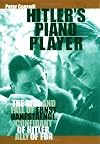
A competent and well written account of a politically naive, rather second-rate bit-player in the Nazi drama. What is interesting here is that an experienced working journalist is looking at the life story of a PR man who just happened to be pals with the biggest gangster in an era of gangsters and who scuttled out of fear and not conviction because he became an increasingly embarrassing buffoon. What is truly fascinating is how nothing changes in terms of the sort of personality attracted show more to power and the techniques employed in media manipulation - should be read by anyone in the PR business or political communications who is under the illusion that they actually matter. There are many better books on the Nazi era but we need such books on the buffone to keep us all grounded. show less
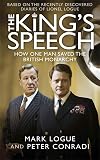
Readers, or listeners, expecting the same story as the movie version starring the inestimable Colin Firth and Geoffrey Rush will be quite surprised. Mark Logue’s The King's Speech goes into much greater detail about the relationship between George VI and Lionel Logue, encompassing the greater part of their acquaintance. This makes The King's Speech, the print version, a much more thorough and fascinating tale than the one told in the movie.
In fact, the movie version and the print version show more are very complimentary to each other versus competing against one another. One can see the movie and enjoy the book, and vice versa. Whereas the movie focuses on George VI’s treatments and ends at the beginning of World War II, the book expands its focus, creating a more comprehensive understanding of the work Lionel did with the king. It brings King George VI and the Queen Mother vividly back to life, while creating an amusing and poignant look at Queen Elizabeth’s relationship with her father. For American readers in particular, hearing about World War II from a purely British perspective is a great counterpoint to all of those school history lessons that only focus on the American involvement in the second World War. The entire narrative is immensely interesting, as it sympathetically portrays a young man struggling to present a brave face in spite of almost paralyzing shyness.
Simon Vance, as expected, does an excellent job narrating this most interesting of stories. He navigates his way through Australian, Scottish, American, and British accents with apparent ease, mimicking but never mocking the historic figures around which so much of the narrative revolves. His delivery is forthright, allowing King George’s and Lionel’s words to speak for themselves without inflecting his own opinions or impressions. Overall, it would be difficult to imagine anyone else narrative this fascinating behind-the-scenes look at one of the most unusual partnerships/friendships in British history.
The King's Speech is mesmerizing because not only does it discuss the Royal Family, it deliberates on a somewhat common albeit still debilitating speech defect that could have cause to embarrass an entire nation. This is a great juxtaposition for readers who only experience electing their leaders and who would never elect someone with a similar speech impediment. Lionel’s intimate acquaintance with the Royal Family is as unique as it is extraordinary, and Mark Logue rightfully lets the deep regard in which both King George and Lionel held each other speak through their actual words. The resulting tale is one that provides readers with a frank and charming portrayal of a king and his speech therapist at an unparalleled historical period. show less
In fact, the movie version and the print version show more are very complimentary to each other versus competing against one another. One can see the movie and enjoy the book, and vice versa. Whereas the movie focuses on George VI’s treatments and ends at the beginning of World War II, the book expands its focus, creating a more comprehensive understanding of the work Lionel did with the king. It brings King George VI and the Queen Mother vividly back to life, while creating an amusing and poignant look at Queen Elizabeth’s relationship with her father. For American readers in particular, hearing about World War II from a purely British perspective is a great counterpoint to all of those school history lessons that only focus on the American involvement in the second World War. The entire narrative is immensely interesting, as it sympathetically portrays a young man struggling to present a brave face in spite of almost paralyzing shyness.
Simon Vance, as expected, does an excellent job narrating this most interesting of stories. He navigates his way through Australian, Scottish, American, and British accents with apparent ease, mimicking but never mocking the historic figures around which so much of the narrative revolves. His delivery is forthright, allowing King George’s and Lionel’s words to speak for themselves without inflecting his own opinions or impressions. Overall, it would be difficult to imagine anyone else narrative this fascinating behind-the-scenes look at one of the most unusual partnerships/friendships in British history.
The King's Speech is mesmerizing because not only does it discuss the Royal Family, it deliberates on a somewhat common albeit still debilitating speech defect that could have cause to embarrass an entire nation. This is a great juxtaposition for readers who only experience electing their leaders and who would never elect someone with a similar speech impediment. Lionel’s intimate acquaintance with the Royal Family is as unique as it is extraordinary, and Mark Logue rightfully lets the deep regard in which both King George and Lionel held each other speak through their actual words. The resulting tale is one that provides readers with a frank and charming portrayal of a king and his speech therapist at an unparalleled historical period. show less
Required reading to understand the context of what is happening in global politics and international relations in the "post-truth" era. This masterpiece of contemporary history explains how rapidly the promising moments of post-9/11 superpower relationship have been squandered. The hard line Russia has drawn in the sands around Ukraine, Georgia and the Baltic States contain the seeds of the next global war.
I think a generation of Americans genuinely believed that they had indeed "won" the show more Cold War, fueled by Reagan's economic policies, defense spending and Star Wars. This book reassesses the emergence of a strong, new Russia waging a different type of economic and electronic war to undermine American and West European democracies.
I found this book incisive, challenging and thought provoking on so many levels. Its a thorough analysis of the geopolitical shifts since the collapse of the Soviet Empire; but, as a bonus, it's part history of contemporary Russia; part biography of Vladimir Putin; part insight into the impact on the US of being unequaled in world power. It provides detail and context both to Putin's surge to power. The chaotic transitions from Clinton to Bush to Obama and even, now, to Trump are captured as a savage indictment of the US's inability to offer any sort of continuity in US-Russia relations.
"The world's problems cannot be solved without Russia". How very true. This is a must-read for the many of us who should be asking ourselves: what's happening to the world we know? A fantastic book.
Disclaimer: I received an advance readers copy in exchange for an impartial review. show less
I think a generation of Americans genuinely believed that they had indeed "won" the show more Cold War, fueled by Reagan's economic policies, defense spending and Star Wars. This book reassesses the emergence of a strong, new Russia waging a different type of economic and electronic war to undermine American and West European democracies.
I found this book incisive, challenging and thought provoking on so many levels. Its a thorough analysis of the geopolitical shifts since the collapse of the Soviet Empire; but, as a bonus, it's part history of contemporary Russia; part biography of Vladimir Putin; part insight into the impact on the US of being unequaled in world power. It provides detail and context both to Putin's surge to power. The chaotic transitions from Clinton to Bush to Obama and even, now, to Trump are captured as a savage indictment of the US's inability to offer any sort of continuity in US-Russia relations.
"The world's problems cannot be solved without Russia". How very true. This is a must-read for the many of us who should be asking ourselves: what's happening to the world we know? A fantastic book.
Disclaimer: I received an advance readers copy in exchange for an impartial review. show less
This review was written for LibraryThing Early Reviewers.Lists
Awards

You May Also Like


Associated Authors
Statistics
- Works
- 8
- Members
- 1,522
- Popularity
- #16,892
- Rating
- 3.8
- Reviews
- 64
- ISBNs
- 93
- Languages
- 12
- Favorited
- 1


