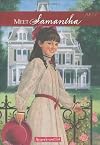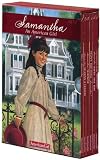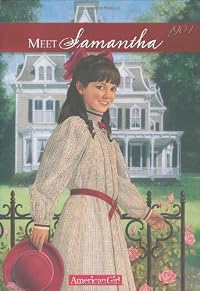
Samantha: An American Girl, 1904
by Susan S. Adler, Maxine Rose Schur, Valerie Tripp
American Girl: Samantha (Collections and Selections — Boxed Set 1-6)
On This Page
Description
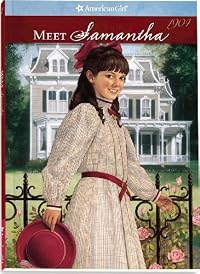
Samantha Parkington is an orphan being raised by her wealthy grandmother at the start of a brand-new century, a time when new ideas and inventions are changing everyone's lives. Samantha's own world is filled with elegance and privilege, but she sees that not everyone's life is changing for the better--especially her friend Nellie, a servant girl who lives next door. Some people consider "mixing with servants" bold and improper. But for Samantha, a person's worth isn't measured by wealth. show more True friendship is what matters most. show lessTags
Recommendations




Member Reviews
Rating is for Book Six, review is for the original six-book Samantha series published in the 1980s
Historical fiction is my all-time favorite genre, and it isn't hard for me to pinpoint when/where my love for the genre started.
At my elementary school library, I discovered chapter books in The American Girls Collection, published by what was once the Pleasant Company. My favorite series in the collection were (in the order of their eras) the ones about:
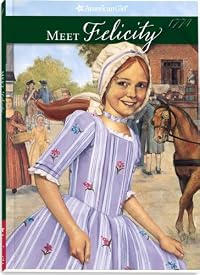
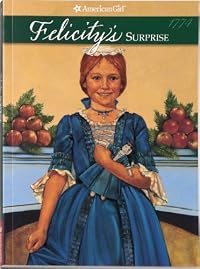
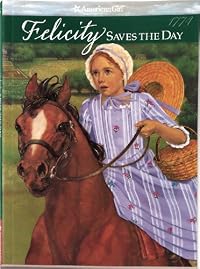
• Felicity (1774)
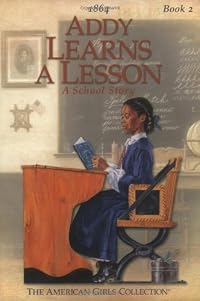
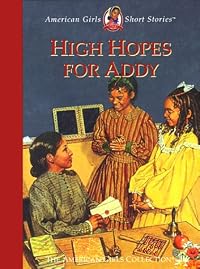
• Addy (1864)
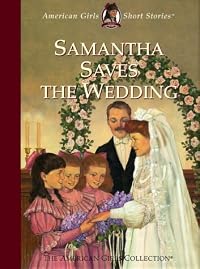
• Samantha (1904)
• Molly (1944)
Well, I recently found out there's an upcoming novel about one of these heroines as an adult. Samantha: The Next Chapter by Fiona Davis. So, I decided to revisit the adventures of nine- then ten-year-old Samantha.
For me as show more a child, it was the turn-of-the-century settings of the stories, combined with the pages of rich and colorful illustrations, that most drew me into the books about Samantha's great times as well as her lessons to learn. History wise, the issue that stood out to me the most in the series was women's suffrage.
Now for me as an adult, I better recognize how much important history the series touches on, and while these relatively short tales don't go deep into character development, I can appreciate Samantha's character a little more.
She's very compassionate, and she's at her most courageous when she's helping others in need. In addition to women's rights, Samantha's stories take a young reader-appropriate but still serious look at issues like race and class. There are also instances of alcohol abuse and thievery, and Samantha begins to learn about the hardships that different families and children face, including cramped and run-down living conditions, child labor, harsh and bleak orphanages, and childhood homelessness.
And even as well-off as Samantha is, she as an orphan herself does have her somber moments when she thinks about the two parents she lost before she would be able to remember them better.
On a different note, features I didn't remember but am glad I've rediscovered about the series are the history sections following the stories, with facts and photographs adding more historical context to the world Samantha lives in—and will live in when she grows up.
Here's hoping my grown-up self will enjoy reading about grown-up Samantha as much as I enjoyed this series, whether the first time I read the books or during my revisit. show less
Historical fiction is my all-time favorite genre, and it isn't hard for me to pinpoint when/where my love for the genre started.
At my elementary school library, I discovered chapter books in The American Girls Collection, published by what was once the Pleasant Company. My favorite series in the collection were (in the order of their eras) the ones about:
• Felicity (1774)
• Addy (1864)
• Samantha (1904)
• Molly (1944)
Well, I recently found out there's an upcoming novel about one of these heroines as an adult. Samantha: The Next Chapter by Fiona Davis. So, I decided to revisit the adventures of nine- then ten-year-old Samantha.
For me as show more a child, it was the turn-of-the-century settings of the stories, combined with the pages of rich and colorful illustrations, that most drew me into the books about Samantha's great times as well as her lessons to learn. History wise, the issue that stood out to me the most in the series was women's suffrage.
Now for me as an adult, I better recognize how much important history the series touches on, and while these relatively short tales don't go deep into character development, I can appreciate Samantha's character a little more.
She's very compassionate, and she's at her most courageous when she's helping others in need. In addition to women's rights, Samantha's stories take a young reader-appropriate but still serious look at issues like race and class. There are also instances of alcohol abuse and thievery, and Samantha begins to learn about the hardships that different families and children face, including cramped and run-down living conditions, child labor, harsh and bleak orphanages, and childhood homelessness.
And even as well-off as Samantha is, she as an orphan herself does have her somber moments when she thinks about the two parents she lost before she would be able to remember them better.
On a different note, features I didn't remember but am glad I've rediscovered about the series are the history sections following the stories, with facts and photographs adding more historical context to the world Samantha lives in—and will live in when she grows up.
Here's hoping my grown-up self will enjoy reading about grown-up Samantha as much as I enjoyed this series, whether the first time I read the books or during my revisit. show less
I have read the books of each AG’s series, well, the first four characters, anyway but Samantha is the one whose story I never forgot.
The AG girl who should have the most sheltered, least realistic life, is the one with the edgiest story, and a “best friend” character who lives a life completely the opposite. They are both lonely orphans, but Samantha is an heiress and Nellie, the next door neighbor’s maid.
Samantha is intellectual and adventurous but also naïve and not used to taking care of herself. This is an interesting contrast to Nellie, who is tough, cynical and maternal. Their relationship is a great look at the affects of privilege and social attitudes of the turn of the century. Interwoven with this story are show more discussions of women’s rights, and the affects of the Industrial Revolution. Aunt Cornelia is a suffragette, and Samantha is asked to write a report on how great factories are, and ends up concluding that they may not be so great after all.
I also find their story quite romantic, to be honest. Their first meetings are conducted hiding in a tunnel of lilac bushes-which is, I think, an image I never forgot. They hide in a boat house and fall asleep there, causing their families to be so shocked that you’d almost think they were doing something else in there. When Nellie is dumped in a classic abusive Victorian orphanage, Samantha risks her life to spring her. It all seems invested in a great deal more passion than other “best friend” relationships from the other AG series. I don't get the same vibe off Felicity and Elizabeth, the jury is still out on Kit and Ruthie, and Emily and Molly are not actually best friends-they were barely *friends* in the (one) book Emily was actually in. show less
The AG girl who should have the most sheltered, least realistic life, is the one with the edgiest story, and a “best friend” character who lives a life completely the opposite. They are both lonely orphans, but Samantha is an heiress and Nellie, the next door neighbor’s maid.
Samantha is intellectual and adventurous but also naïve and not used to taking care of herself. This is an interesting contrast to Nellie, who is tough, cynical and maternal. Their relationship is a great look at the affects of privilege and social attitudes of the turn of the century. Interwoven with this story are show more discussions of women’s rights, and the affects of the Industrial Revolution. Aunt Cornelia is a suffragette, and Samantha is asked to write a report on how great factories are, and ends up concluding that they may not be so great after all.
I also find their story quite romantic, to be honest. Their first meetings are conducted hiding in a tunnel of lilac bushes-which is, I think, an image I never forgot. They hide in a boat house and fall asleep there, causing their families to be so shocked that you’d almost think they were doing something else in there. When Nellie is dumped in a classic abusive Victorian orphanage, Samantha risks her life to spring her. It all seems invested in a great deal more passion than other “best friend” relationships from the other AG series. I don't get the same vibe off Felicity and Elizabeth, the jury is still out on Kit and Ruthie, and Emily and Molly are not actually best friends-they were barely *friends* in the (one) book Emily was actually in. show less
Samantha was my first American girl doll, which I got way back in 1st grade, not long after the American Girls came out. I always loved her books the best esp 'Samantha Saves The Day' and 'Changes for Samantha', both of which I still remember the plots from.
Samantha was my first American girl doll, which I got way back in 1st grade, not long after the American Girls came out. I always loved her books the best esp 'Samantha Saves The Day' and 'Changes for Samantha', both of which I still remember the plots from.
I loved these books in 3rd grade. The whole American Girl series is fantastic for beginning chapter book readers. This series is about Samantha, a girl being raised by her wealthy grandmother in the Victorian era.
Samantha is a little girl in the 1900s. She is raised by her grandmother to be a prim and proper little girl, when she really wants to play and have fun with her friends. She makes friends with servants,which is not heard of at the time.
I have read this collection since I was little and I recently found it for my little girl. I have always liked reading it and I hope my daughter does too.
I would use this book in a classroom setting to show my students how people lived a century ago.
I have read this collection since I was little and I recently found it for my little girl. I have always liked reading it and I hope my daughter does too.
I would use this book in a classroom setting to show my students how people lived a century ago.
Ratings
Members
- Recently Added By
Author Information
12 Works 8,448 Members

35+ Works 3,654 Members

287+ Works 67,789 Members
Valerie Tripp graduated with honors from the first coeducational class at Yale University in 1973. She received a Masters of Education from Harvard University in 1981. From 1974 to 1980, she was a writer for the Addison-Wesley Reading Program. She then became a freelance writer for The Hampton-Brown Company and ELHI Publishers Services creating show more educational materials for major publishers. In 1983, Tripp and Pleasant Rowland decided to write a series of books about girls growing up all over the country during some of the most historical events of the past. Rowland envisioned the books as one of the cornerstones of a new company she had just founded called the Pleasant Co. Tripp's first assignment for Pleasant Co. was writing four of the six books about Samantha, a girl in turn-of-the-century America. Tripp then wrote about Felicity, Molly, and Josephina for the American Girls series. Her other works include the Hopscotch Hill School series. (Bowker Author Biography) show less
Series

American Girl: Samantha (Collections and Selections — Boxed Set 1-6)
Belongs to Publisher Series
American Girl (Samantha Boxed Set 1-6)
Work Relationships
Contains
Common Knowledge
- Canonical title
- Samantha: An American Girl, 1904
- Original title
- #1 Meet Samantha #2 Samantha Learns A Lesson #3 Samantha's Surprise #4 Happy Birthday, Samaha!#5 Samantha Save The Day #6 Changes For Samantha
- Original publication date
- 1986-1998
- People/Characters
- Samantha Parkington; Nellie O'Malley
- Important places
- Mount Bedford, New York, USA; New York, New York, USA
- Related movies
- Samantha: An American Girl Holiday (2004 | IMDb)
- Disambiguation notice
- "Samantha's Story Collection" and "Samantha: An American Girl" are both collections of the 6 primary Samantha stories. However, the "Story Collection" is a single hardbound format that is missing the final "Looking Back" chap... (show all)ters of 5 books, while "Samantha: An American Girl" is a boxed set with 6 individual books. Please do not combine these!
Classifications
Statistics
- Members
- 562
- Popularity
- 52,302
- Reviews
- 6
- Rating
- (4.08)
- Languages
- English
- Media
- Paper, Audiobook
- ISBNs
- 10
- UPCs
- 1
- ASINs
- 9