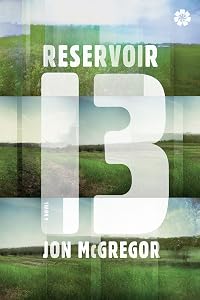
Reservoir 13
by Jon McGregor
On This Page
Description
In midwinter in an English village, a teenage girl has gone missing and everyone is called upon to join the search. The villagers fan out across the moors as the police set up roadblocks, and a crowd of news reporters descends on what is usually a place of peace. Meanwhile, there is work that must still be done: cows milked, fences repaired, stone cut, pints poured, beds made, sermons written, a pantomime rehearsed. As the seasons unfold and the search for the missing girl goes on, there are show more those who leave the village and those who are pulled back; those who come together and those who break apart. There are births and deaths, secrets kept and exposed, livelihoods made and lost, small kindnesses, and unanticipated betrayals. An extraordinary novel of cumulative power and grace, Reservoir 13 explores the rhythms of the natural world and the repeated human gift for violence, unfolding over thirteen years as the aftershocks of a tragedy refuse to subside. show lessTags
Recommendations















Member Recommendations
AdonisGuilfoyle Similar setting and premise - girl goes missing, reservoirs formed from flooded villages - but more of a plot from Dalziel and Pascoe.
Member Reviews
Mesmerizing. His writing is thoughtful and contained, the repetition creates a contemplative rhythm. There's a great subtlety in the exploration of small town community and trauma and change. As I sometimes do, unfairly perhaps because I don't know him at all, I thought to myself, Kiarostami would have liked this book. It's not for everyone, certainly not those who were lead to expect a mystery with a conclusion.
This is the kind of book that probably divides people into love it or hate it camps. But if you love the deliberation of craft and effective, precise writing, you’ll fall into the love it camp. If you need lots of plot, action and things tied up with a bow, you’ll fall in with the haters. It is an engrossing novel, but not an exciting one. It elegantly weaves the lives of English villagers with a tragedy that haunts them. Those are mere components though; tools that work the story forward. The real story is the rhythm and flow of daily life and the large and small changes at its core.
The thing that is most satisfying and impressive about this book is its style and approach. I’ve read two other McGregor novels and let me tell you - show more he varies his language and story-telling technique to serve the story itself. In this case his sentences and phrases are repeated often as the tale goes forward. You will recognize the themes and situations, but they are ever so slightly altered in each year so that there is progress made or a new aspect shown. As an example I’ll repeat the opening lines to each chapter marking the years since Rebecca’s disappearance -
“At midnight when the year turned there were fireworks going up from the towns beyond the valley but they were too far off for the sound to carry and no one came out to watch.”
“At midnight when the year turned there were fireworks going up from towns beyond the valley but they were too far off for the sound to carry to the few who’d come out to watch.”
“At midnight when the year turned there were fireworks going up from all across the village.”
“At midnight when the year turned there were fireworks from the Hunter place.”
“At midnight when the year turned there were fireworks on the television in the pub and dancing in the street outside.”
“At midnight when the year turned there were fireworks going up all across the village but from the hill they looked faint and the sound failed to carry.”
“At midnight when the year turned there were fireworks on the big screen in the village hall and the sound of ‘Auld Lang Syne’ along the street.”
“At midnight when the year turned there were fireworks in the rain, and thunder in the next valley.”
“At midnight when the year turned Rohan found Lyndsey on the dance floor at the village hall and hissed her while ‘Auld Lang Syne’ was sung.”
“At midnight when the year turned there was a fire in the caravan in the Fletcher’s orchard.”
“At midnight when the year turned there fires in three sheds at the allotments, and again they were burnt out before the fire brigade arrived.”
“At midnight when the year turned there were fireworks going up from the towns beyond the valley but no one in the village even lifted their heads to look.”
“At midnight there were fireworks in the next valley and tension in the village and no fires were set.”
All other aspects of village life are related in this repeating cycle. People’s situations and relationships, the state of bridges and well dressing, births, deaths, marriages and affairs. And not just for the humans, but animals, too - wood pigeons, springtails, foxes, badgers and the cycles of the river and reservoirs. Each aspect related is strung together one sentence to the next and not isolated in its own paragraph or section. Even though there are many actual reservoirs in the book, I think that the title refers to the number of chapters and that each one is a reservoir of village life as told over the course of one year. The deliberateness of this adds to the sense of the whole working together as one clockwork. When one thing is out of balance, all things are out of balance. It’s an amazing piece of work and beautifully rendered. show less
The thing that is most satisfying and impressive about this book is its style and approach. I’ve read two other McGregor novels and let me tell you - show more he varies his language and story-telling technique to serve the story itself. In this case his sentences and phrases are repeated often as the tale goes forward. You will recognize the themes and situations, but they are ever so slightly altered in each year so that there is progress made or a new aspect shown. As an example I’ll repeat the opening lines to each chapter marking the years since Rebecca’s disappearance -
“At midnight when the year turned there were fireworks going up from the towns beyond the valley but they were too far off for the sound to carry and no one came out to watch.”
“At midnight when the year turned there were fireworks going up from towns beyond the valley but they were too far off for the sound to carry to the few who’d come out to watch.”
“At midnight when the year turned there were fireworks going up from all across the village.”
“At midnight when the year turned there were fireworks from the Hunter place.”
“At midnight when the year turned there were fireworks on the television in the pub and dancing in the street outside.”
“At midnight when the year turned there were fireworks going up all across the village but from the hill they looked faint and the sound failed to carry.”
“At midnight when the year turned there were fireworks on the big screen in the village hall and the sound of ‘Auld Lang Syne’ along the street.”
“At midnight when the year turned there were fireworks in the rain, and thunder in the next valley.”
“At midnight when the year turned Rohan found Lyndsey on the dance floor at the village hall and hissed her while ‘Auld Lang Syne’ was sung.”
“At midnight when the year turned there was a fire in the caravan in the Fletcher’s orchard.”
“At midnight when the year turned there fires in three sheds at the allotments, and again they were burnt out before the fire brigade arrived.”
“At midnight when the year turned there were fireworks going up from the towns beyond the valley but no one in the village even lifted their heads to look.”
“At midnight there were fireworks in the next valley and tension in the village and no fires were set.”
All other aspects of village life are related in this repeating cycle. People’s situations and relationships, the state of bridges and well dressing, births, deaths, marriages and affairs. And not just for the humans, but animals, too - wood pigeons, springtails, foxes, badgers and the cycles of the river and reservoirs. Each aspect related is strung together one sentence to the next and not isolated in its own paragraph or section. Even though there are many actual reservoirs in the book, I think that the title refers to the number of chapters and that each one is a reservoir of village life as told over the course of one year. The deliberateness of this adds to the sense of the whole working together as one clockwork. When one thing is out of balance, all things are out of balance. It’s an amazing piece of work and beautifully rendered. show less
Reservoir 13 is a chronicle of the after effects on a small town in Derbyshire after a visiting 13 yr. old girl disappears over the Christmas holidays. The girl just vanishes while on a walk through the moors with her parents.
The structure of the book is intriguing: There are thirteen chapters. Each chapter covers a year in the life of the village and contains twelve or thirteen paragraphs. The paragraphs are structured around the happenings in roughly one month time segments that describe events in the natural world (plants and animal behavior) as well as various member of the community. Dialogue punctuation is minimal.
In the descriptions of the people in the village, think of a long episode of Midsommer Murders without the presence show more of DCI Barnaby and PC Jones. Everyone has their secrets, hidden motivations, and private thoughts...which often reflect back to the disappearance of the Rebecca, Becky, Bex.
Perhaps those most affected by the disappearance are four teens who are around the same age as Rebecca Shaw and had known her from an earlier visit the previous summer. For me, their lives were the most interesting to see unfold over the thirteen years. Especially when they leave for college and learn that the missing girl has come to be the one thing that identifies their home town on a national level.
When I first leafed through the book, I suspected that the writing and structure might be a gimmick and was a bit put off. Once I got half way through the second chapter, I was hooked. There are a lot of literary rules broken in this novel, but the author demonstrates that he knows enough about those rules to break them well and create a great piece of literature. show less
The structure of the book is intriguing: There are thirteen chapters. Each chapter covers a year in the life of the village and contains twelve or thirteen paragraphs. The paragraphs are structured around the happenings in roughly one month time segments that describe events in the natural world (plants and animal behavior) as well as various member of the community. Dialogue punctuation is minimal.
In the descriptions of the people in the village, think of a long episode of Midsommer Murders without the presence show more of DCI Barnaby and PC Jones. Everyone has their secrets, hidden motivations, and private thoughts...which often reflect back to the disappearance of the Rebecca, Becky, Bex.
Perhaps those most affected by the disappearance are four teens who are around the same age as Rebecca Shaw and had known her from an earlier visit the previous summer. For me, their lives were the most interesting to see unfold over the thirteen years. Especially when they leave for college and learn that the missing girl has come to be the one thing that identifies their home town on a national level.
When I first leafed through the book, I suspected that the writing and structure might be a gimmick and was a bit put off. Once I got half way through the second chapter, I was hooked. There are a lot of literary rules broken in this novel, but the author demonstrates that he knows enough about those rules to break them well and create a great piece of literature. show less
I found "Reservoir 13" hard to engage with at first. This partly the (I suspect, deliberate) frustration of my expectations and partly the style in which the the people and events are presented.
The blurb describes
"Reservoir 13 tells the story of many lives haunted by one family's loss."
The book opens with a search across the hills of an English National Park, for a teenage girl who has gone missing. My genre-led expectations kicked in and I settled down to a book about crime and guilt and secrets in a small village, with the mystery solved in a few weeks, during which colourful local characters and traditions are scrutinised and set aside as the villain is uncovered. I knew that the book was on the Mann Booker Longlist, so I was show more expecting some trope twisting but I wasn't expecting something that rejects every convention of a crime novel.
I quickly amended my view of what the book was about but still found it difficult to care about because the story is told in an authorial voice that reports what little dialogue there is, rather than using direct speech and describes people and events with all the passion of an academic wildlife study.
I felt that I was being given a pencil sketch sprinkled with small details highlighted in colour for reasons that weren't immediately clear to me.
I recognised that I was being shown the rhythm of rural village life where people's lives are governed by the seasons, personal routines and the politenesses required by long-term propinquity but the rhythms did not provide a narrative thrust.
I felt locked out of the inner thoughts or emotions of the people. The authorial voice seemed to have all the intimacy of a camera drone filming a landscape: all-seeing but from an alien non-human perspective.
About a third of the way through, I finally surrendered myself to the rhythm of the book and let it carry me along. It reminded me of the adjustment in pace that I had to make when I moved to a village in Somerset after living for years in London. I had to slow down to see the place. I had to let it absorb me before I could be part of it.
"Reservoir 13" showa how life is lived in a village. As thirteen years worth of seasons passed, I was given a surface view of all the things that people in a small village know about each other: the gossip, the constant observation of each others acts and the things they don't say or don't ask. I cam to understand how the politeness of being indirect grants dignity and privacy while still offering the possibility of sharing the things you cannot bear alone.
Initially, direct speech was less frequent than descriptions of wildlife or weather but, as the years passed and the context had been established, I was allowed to hear certain conversations and evesdrop on interior monologues.
The people in the the village are following the same tidal flows as the wildlife around them and, just as Il earned about the courtship of badgers in the woods, I was shown that most humn mating rituals are led by women and conducted through body language and eye contact more than words.
Some characters found there way into my affections: the vicar, carrying around everyone's cares and confidences, like heavy stones in her pockets, who brings comfort and compassion wherever she goes; the woman who walks her neighbour's dog every day but still treats each time as if it were something new.
The missing girl is not the centre of the book but rather something that distorts the flow of village life without adding to it, She is ike a water-logged piece of driftwood that only occasionally surfaces but is always there, disturbing the peace of the water.
She has her own leitmotiv that often marks her appearance
"The girl's name was Rebecca or Becky or Beks. She had been looked for and she hadn't been found."
She is a constant reminder of the possibility of loss and perhaps and incentive to hold on to those we love for as long as we can.
"Reservoir 13" has a distinct voice and an unusual structure that did, eventually, imprint the village on my imagination and made me reluctant to leave. The narrative doesn't thrust, it shapes your perception of people and events with gentle persistence, like a stream eroding one bank and building up another. show less
The blurb describes
"Reservoir 13 tells the story of many lives haunted by one family's loss."
The book opens with a search across the hills of an English National Park, for a teenage girl who has gone missing. My genre-led expectations kicked in and I settled down to a book about crime and guilt and secrets in a small village, with the mystery solved in a few weeks, during which colourful local characters and traditions are scrutinised and set aside as the villain is uncovered. I knew that the book was on the Mann Booker Longlist, so I was show more expecting some trope twisting but I wasn't expecting something that rejects every convention of a crime novel.
I quickly amended my view of what the book was about but still found it difficult to care about because the story is told in an authorial voice that reports what little dialogue there is, rather than using direct speech and describes people and events with all the passion of an academic wildlife study.
I felt that I was being given a pencil sketch sprinkled with small details highlighted in colour for reasons that weren't immediately clear to me.
I recognised that I was being shown the rhythm of rural village life where people's lives are governed by the seasons, personal routines and the politenesses required by long-term propinquity but the rhythms did not provide a narrative thrust.
I felt locked out of the inner thoughts or emotions of the people. The authorial voice seemed to have all the intimacy of a camera drone filming a landscape: all-seeing but from an alien non-human perspective.
About a third of the way through, I finally surrendered myself to the rhythm of the book and let it carry me along. It reminded me of the adjustment in pace that I had to make when I moved to a village in Somerset after living for years in London. I had to slow down to see the place. I had to let it absorb me before I could be part of it.
"Reservoir 13" showa how life is lived in a village. As thirteen years worth of seasons passed, I was given a surface view of all the things that people in a small village know about each other: the gossip, the constant observation of each others acts and the things they don't say or don't ask. I cam to understand how the politeness of being indirect grants dignity and privacy while still offering the possibility of sharing the things you cannot bear alone.
Initially, direct speech was less frequent than descriptions of wildlife or weather but, as the years passed and the context had been established, I was allowed to hear certain conversations and evesdrop on interior monologues.
The people in the the village are following the same tidal flows as the wildlife around them and, just as Il earned about the courtship of badgers in the woods, I was shown that most humn mating rituals are led by women and conducted through body language and eye contact more than words.
Some characters found there way into my affections: the vicar, carrying around everyone's cares and confidences, like heavy stones in her pockets, who brings comfort and compassion wherever she goes; the woman who walks her neighbour's dog every day but still treats each time as if it were something new.
The missing girl is not the centre of the book but rather something that distorts the flow of village life without adding to it, She is ike a water-logged piece of driftwood that only occasionally surfaces but is always there, disturbing the peace of the water.
She has her own leitmotiv that often marks her appearance
"The girl's name was Rebecca or Becky or Beks. She had been looked for and she hadn't been found."
She is a constant reminder of the possibility of loss and perhaps and incentive to hold on to those we love for as long as we can.
"Reservoir 13" has a distinct voice and an unusual structure that did, eventually, imprint the village on my imagination and made me reluctant to leave. The narrative doesn't thrust, it shapes your perception of people and events with gentle persistence, like a stream eroding one bank and building up another. show less
Location, location, location
This is set in a farming village, within sight of the lights of a motorway (freeway). It’s remarkably claustrophobic for a story set in the countryside, often outdoors.
Squabbles on the parish council. Cricket rivalry with neighbouring villages. Wariness of tourists and incomers, despite a limited pool of people to hang out with, let alone date. Dances, pantomimes, and festivals in the community hall. Church attendance that is about tradition as much as belief. And the camaraderie of the village pub. It was eerily familiar.
Gossip is the lifeblood of such communities.
“There was talk of nudity, although this was never confirmed.” [About a nearby eco-protest camp]
Everybody knows everything, or thinks they show more do, despite a very British reticence about asking anything personal outright.
“Nobody thought it appropriate to ask questions, and he didn’t volunteer.”
Image: Peak District village (Castleton) with moors beyond, by Archant (Source)
The omniscient narrator could be anyone, everyone, or some mystical overseer like Dead Pappa Toothwort in Max Porter’s Lanny, which has several similarities with this (see my review HERE). Extra distance often comes from the passive voice:
“There were questions that weren’t being asked.”
What happens - and doesn’t
This opens with the shock of a missing child, but it’s not a plot-driven novel and there is no main character except perhaps the village itself. Even the girl’s parents are just part of the ensemble, and Reservoir 13 is just one of the reservoirs.
“The missing girl’s name was Rebecca, or Becky, or Bex. She had been thirteen at the time of her disappearance.”
It’s one of several phrases that recur, sometimes with subtle but significant variations. The story starts immediately after her disappearance and continues for twelve more chapters for each of the subsequent years: thirteen in total.
In many ways, nothing else momentous happens; just regular village life, albeit tainted and scarred.
“There was a guilt in just walking the hills.”
And yet within a few weeks:
“A creeping normality had begun to settle over these press conferences.”
Image: View over Ladybower reservoir from rocks at Bamford Edge (Source)
There’s a constant trickle of little things that either make the reader expect the discovery of a body or else arouse suspicion about what happened and who might know something or even be responsible: reservoirs with leaks and blockages, men with secrets, youngsters with the urge to explore, and children with unspoken fears. Some are a one-off, and some build, only to fade away.
If you want a traditional crime or mystery novel, this is not it. It could almost be described as a series of damp squibs, which is an appropriate metaphor in one way: every subsequent chapter starts “At midnight when the year turned…” and uses the proximity and number of fireworks to reflect the gradual return to how things used to be. However, it’s too derogatory a metaphor for such a well-crafted book.
Lines and circles
The narrative is chronological, starting in the early 2000s, and continuing for a dozen years. People age, pair up, move in, are born, split, move away, and die, bringing changes big and small, some inevitable, others not. All so ordinary. Life goes on. And death happens. But Becky’s state is unknown.
“In June… the sun didn’t set so much as drift into the distance, leaving a trail of midsummer light that seemed to linger until morning.”
Within the linear story are cyclical events and phrases: similar, but rarely exactly the same. Daily routines like milking, and seasonal ones like shearing. A mix of personal, agricultural, and communal, as well as natural events like weather and what’s growing or dying back. The reassuring rhythms of rural life are something to cling to amid unsettling anxiety about the missing girl and the unknown perpetrator (if there was one).
Image: Spillway of Ladybower reservoir (Source)
Alchemical realism
Stream-of-consciousness non-sequiturs flood the pages. For example, a single paragraph on page 70 starts with swallows laying eggs, has the Jackson boys fetching the well-dressing boards from the river, mentions a spate of metal thefts, describes blackbirds catching worms, and ends up with Jones’ sister, who “was understood to be troubled in some way”, waiting for him to come home.
“The metallic smell of coming rain rose up and the air felt charged and tight.”
Unlike Lanny, there’s no suggestion of magic or myth, although it does have strong elemental vibes, often with sinister undercurrents.
There’s water (reservoirs, river, rain); metal (“The reservoirs were a flat metallic grey” and “like beaten pewter”); fire (arson) and sun; soil, stone and clay (farmers’ fields, allotments, quarry, disused mines, a potter), and wood (actual woods and a character of that name).
It takes rare authorial alchemy to make this immersive, believable, and captivating, rather than confusing or irritating.
What if?
Becky’s family were staying in a holiday cottage for new year. If Becky had been a child of the village, this would have been a rather different story. There are many possibilities…
Want more?
Read, The Reservoir Tapes, which I reviewed, HERE. It’s fifteen testimonies shedding light - and plenty of dark - onto what might have happened to Becky.
Quotes
• “The drains were gulping meltwater.”
• “[They] spent their first days in the village slouching about with the sullen expressions of children who’ve grown up in the city and feel threatened by people willing to say hello.”
• “A pale light moved slowly across the moor, catching in the flooded cloughs and ditches and sharpening until the clouds closed overhead.”
• “Their marriage was little understood. There was some speculation but most felt it was no concern of theirs.” And yet, “It was known they had separate bedrooms.”
• “The sun came out and the fields softened.”
• “They looked as though they had something to say and no intention of saying it out loud.” [A furtive teen couple]
• “The reservoirs were a gleaming silver-grey, scuffed by the wind and lapping against the breakwater shores.”
• “He’d not been much seen in the village and it was understood that his quietness might be part of the grieving. There was little known about the family he was said to have lost, and nobody wanted to ask.”
“When he turned out not to be a widower at all… It wasn’t clear how the misunderstanding had started but some people felt cheated.” show less
This is set in a farming village, within sight of the lights of a motorway (freeway). It’s remarkably claustrophobic for a story set in the countryside, often outdoors.
Squabbles on the parish council. Cricket rivalry with neighbouring villages. Wariness of tourists and incomers, despite a limited pool of people to hang out with, let alone date. Dances, pantomimes, and festivals in the community hall. Church attendance that is about tradition as much as belief. And the camaraderie of the village pub. It was eerily familiar.
Gossip is the lifeblood of such communities.
“There was talk of nudity, although this was never confirmed.” [About a nearby eco-protest camp]
Everybody knows everything, or thinks they show more do, despite a very British reticence about asking anything personal outright.
“Nobody thought it appropriate to ask questions, and he didn’t volunteer.”
Image: Peak District village (Castleton) with moors beyond, by Archant (Source)
The omniscient narrator could be anyone, everyone, or some mystical overseer like Dead Pappa Toothwort in Max Porter’s Lanny, which has several similarities with this (see my review HERE). Extra distance often comes from the passive voice:
“There were questions that weren’t being asked.”
What happens - and doesn’t
This opens with the shock of a missing child, but it’s not a plot-driven novel and there is no main character except perhaps the village itself. Even the girl’s parents are just part of the ensemble, and Reservoir 13 is just one of the reservoirs.
“The missing girl’s name was Rebecca, or Becky, or Bex. She had been thirteen at the time of her disappearance.”
It’s one of several phrases that recur, sometimes with subtle but significant variations. The story starts immediately after her disappearance and continues for twelve more chapters for each of the subsequent years: thirteen in total.
In many ways, nothing else momentous happens; just regular village life, albeit tainted and scarred.
“There was a guilt in just walking the hills.”
And yet within a few weeks:
“A creeping normality had begun to settle over these press conferences.”
Image: View over Ladybower reservoir from rocks at Bamford Edge (Source)
There’s a constant trickle of little things that either make the reader expect the discovery of a body or else arouse suspicion about what happened and who might know something or even be responsible: reservoirs with leaks and blockages, men with secrets, youngsters with the urge to explore, and children with unspoken fears. Some are a one-off, and some build, only to fade away.
If you want a traditional crime or mystery novel, this is not it. It could almost be described as a series of damp squibs, which is an appropriate metaphor in one way: every subsequent chapter starts “At midnight when the year turned…” and uses the proximity and number of fireworks to reflect the gradual return to how things used to be. However, it’s too derogatory a metaphor for such a well-crafted book.
Lines and circles
The narrative is chronological, starting in the early 2000s, and continuing for a dozen years. People age, pair up, move in, are born, split, move away, and die, bringing changes big and small, some inevitable, others not. All so ordinary. Life goes on. And death happens. But Becky’s state is unknown.
“In June… the sun didn’t set so much as drift into the distance, leaving a trail of midsummer light that seemed to linger until morning.”
Within the linear story are cyclical events and phrases: similar, but rarely exactly the same. Daily routines like milking, and seasonal ones like shearing. A mix of personal, agricultural, and communal, as well as natural events like weather and what’s growing or dying back. The reassuring rhythms of rural life are something to cling to amid unsettling anxiety about the missing girl and the unknown perpetrator (if there was one).
Image: Spillway of Ladybower reservoir (Source)
Alchemical realism
Stream-of-consciousness non-sequiturs flood the pages. For example, a single paragraph on page 70 starts with swallows laying eggs, has the Jackson boys fetching the well-dressing boards from the river, mentions a spate of metal thefts, describes blackbirds catching worms, and ends up with Jones’ sister, who “was understood to be troubled in some way”, waiting for him to come home.
“The metallic smell of coming rain rose up and the air felt charged and tight.”
Unlike Lanny, there’s no suggestion of magic or myth, although it does have strong elemental vibes, often with sinister undercurrents.
There’s water (reservoirs, river, rain); metal (“The reservoirs were a flat metallic grey” and “like beaten pewter”); fire (arson) and sun; soil, stone and clay (farmers’ fields, allotments, quarry, disused mines, a potter), and wood (actual woods and a character of that name).
It takes rare authorial alchemy to make this immersive, believable, and captivating, rather than confusing or irritating.
What if?
Becky’s family were staying in a holiday cottage for new year. If Becky had been a child of the village, this would have been a rather different story. There are many possibilities…
Want more?
Read, The Reservoir Tapes, which I reviewed, HERE. It’s fifteen testimonies shedding light - and plenty of dark - onto what might have happened to Becky.
Quotes
• “The drains were gulping meltwater.”
• “[They] spent their first days in the village slouching about with the sullen expressions of children who’ve grown up in the city and feel threatened by people willing to say hello.”
• “A pale light moved slowly across the moor, catching in the flooded cloughs and ditches and sharpening until the clouds closed overhead.”
• “Their marriage was little understood. There was some speculation but most felt it was no concern of theirs.” And yet, “It was known they had separate bedrooms.”
• “The sun came out and the fields softened.”
• “They looked as though they had something to say and no intention of saying it out loud.” [A furtive teen couple]
• “The reservoirs were a gleaming silver-grey, scuffed by the wind and lapping against the breakwater shores.”
• “He’d not been much seen in the village and it was understood that his quietness might be part of the grieving. There was little known about the family he was said to have lost, and nobody wanted to ask.”
“When he turned out not to be a widower at all… It wasn’t clear how the misunderstanding had started but some people felt cheated.” show less
In RESERVOIR 13, Jon McGregor teases us by presenting a familiar genre that slowly morphs into something completely different. A 13-year-old girl mysteriously vanishes without a trace while vacationing with her parents in a small village in Britain’s Peaks District. Neil Gaiman, in talking about genre fiction, tells us that “there’s a huge difference between, for example, a novel with spies in it and a spy novel; or a novel with cowboys in it and a cowboy novel.” “(T)here are things that people who like a genre are looking for in their fiction: the things that titillate, the things that satisfy.” In this instance, we need a search to turn up clues—possibly a body, an abundance of likely candidates for the crime, and a show more brilliant detective who eventually solves everything. McGregor plays with these motifs by dropping quite a few clues here and there but in fact has given us a novel with a mysterious disappearance in it, not a crime novel.
If you like genre fiction, RESERVOIR 13 will not be your cup of tea. However, if you appreciate a painterly depiction of a small isolated community dealing with the quotidian issues that people experience in their daily lives, this will be a satisfying reading experience. Much like the pointillist painters, McGregor gives us multiple small distinct daubs of color that illuminate a larger image of village life and the rhythms of its natural environment. These resolve into thirteen coherent portraits, one for each year after the disappearance of Rebecca. One sees how the disappearance dominates for a short time, but quickly recedes into the background leaving only the subtlest of scars that never seem to fully heal.
After observing a search for a missing child, McGregor came to realize “that if you were part of such a search, you’d start off feeling very focused, but sooner or later you’d inevitably let your guard down, start getting distracted by the fact your feet are wet, or that you’ve got to go back and feed the cows.” This thought serves as the basis for his exploration of how people contend with tragic events and manage to go on. The setting is isolated and circumscribed—almost claustrophobic. The omniscient narrator briefly focuses on individuals in the community and events in the natural environment. McGregor evokes the passage of time and familiarity through repetition, embellishing each story slowly in succeeding chapters but rhythmically repeating words, phrases, and events. Each begins with an identical line: “At midnight when the year turned,” In effect, each year serves as a reservoir for these stories, giving the title its meaning. Seasons come and go; people marry and separate; children are born and grow up; some die; some succeed and others fail; some are kind and other are not. Throughout, Rebecca is always a ghostly presence. “Dreams were had about her, still…walking home. Walking beside the motorway, walking across the moor, walking up out of one of the reservoirs.”
Clearly, McGregor is selling something he realizes many people may not ever want to buy—a novel about the dignity of human existence and the passage of time. Thus his marketing strategy is quite clever— to tease us with the need to find out what happened to Rebecca. Indeed, it would spoil the fun to reveal if we ever do learn what happened to Rebecca. show less
If you like genre fiction, RESERVOIR 13 will not be your cup of tea. However, if you appreciate a painterly depiction of a small isolated community dealing with the quotidian issues that people experience in their daily lives, this will be a satisfying reading experience. Much like the pointillist painters, McGregor gives us multiple small distinct daubs of color that illuminate a larger image of village life and the rhythms of its natural environment. These resolve into thirteen coherent portraits, one for each year after the disappearance of Rebecca. One sees how the disappearance dominates for a short time, but quickly recedes into the background leaving only the subtlest of scars that never seem to fully heal.
After observing a search for a missing child, McGregor came to realize “that if you were part of such a search, you’d start off feeling very focused, but sooner or later you’d inevitably let your guard down, start getting distracted by the fact your feet are wet, or that you’ve got to go back and feed the cows.” This thought serves as the basis for his exploration of how people contend with tragic events and manage to go on. The setting is isolated and circumscribed—almost claustrophobic. The omniscient narrator briefly focuses on individuals in the community and events in the natural environment. McGregor evokes the passage of time and familiarity through repetition, embellishing each story slowly in succeeding chapters but rhythmically repeating words, phrases, and events. Each begins with an identical line: “At midnight when the year turned,” In effect, each year serves as a reservoir for these stories, giving the title its meaning. Seasons come and go; people marry and separate; children are born and grow up; some die; some succeed and others fail; some are kind and other are not. Throughout, Rebecca is always a ghostly presence. “Dreams were had about her, still…walking home. Walking beside the motorway, walking across the moor, walking up out of one of the reservoirs.”
Clearly, McGregor is selling something he realizes many people may not ever want to buy—a novel about the dignity of human existence and the passage of time. Thus his marketing strategy is quite clever— to tease us with the need to find out what happened to Rebecca. Indeed, it would spoil the fun to reveal if we ever do learn what happened to Rebecca. show less
I almost dnf around page 50, but I’m glad that I pushed through and finished this. I won’t say I loved it, but it is very well crafted and something unexpected. While the “missing girl” element is important, the story is not really about that and it’s certainly not a mystery.
This is more like Akenfield plus the Up documentaries plus A Dance to the Music of Time, maybe? At first I didn’t really connect to the characters because there were so many of them and I couldn’t keep them straight. But over time, it swelled and built, and by the end I felt downright emotional about how beautifully the author built these simple lives into something so true-feeling. I know this village; I have lived there. But in the end I too would show more just be a few sentences in the long life of the place. show less
This is more like Akenfield plus the Up documentaries plus A Dance to the Music of Time, maybe? At first I didn’t really connect to the characters because there were so many of them and I couldn’t keep them straight. But over time, it swelled and built, and by the end I felt downright emotional about how beautifully the author built these simple lives into something so true-feeling. I know this village; I have lived there. But in the end I too would show more just be a few sentences in the long life of the place. show less
Members
- Recently Added By
Lists

Recommend the 20 best books you've read in the last five years
2,168 works; 606 members

Booker Prize
491 works; 62 members

Top Five Books of 2018
802 works; 265 members
Top Five Books of 2017
757 works; 231 members

Top Five Books of 2019
387 works; 111 members

Books Read in 2023
5,547 works; 145 members

Man Booker Prize Longlist 2017
13 works; 4 members

Review 4
37 works; 3 members

Kirkus Starred Fiction Reviews of Books Published in 2017
412 works; 7 members

Missing Person Books
31 works; 2 members

Vine Reads
60 works; 1 member

Books Set in Small Towns and Villages
278 works; 16 members

Books Read in 2022
5,168 works; 114 members

To Read
617 works; 7 members

Books Read in 2018
4,360 works; 110 members
Author Information

18+ Works 4,343 Members
Awards and Honors
Awards
Distinctions
Series
Belongs to Publisher Series
Gallimard, Folio (6884)
Common Knowledge
- Canonical title
- Reservoir 13
- Original publication date
- 2017
- People/Characters
- Rebecca Shaw
- Epigraph
- The river is moving.
The blackbird must be flying.
— Wallace Stevens - Dedication
- i.m. Alistair McGregor 1945 -2015
- First words
- They gathered at the car park in the hour before dawn and waited to be told what to do.
- Last words
- (Click to show. Warning: May contain spoilers.)All was calm, all was bright.
- Blurbers
- Doyle, Roddy; McBride, Eimear
Classifications
Statistics
- Members
- 1,013
- Popularity
- 25,726
- Reviews
- 55
- Rating
- (3.86)
- Languages
- 10 — Catalan, Dutch, English, French, German, Greek, Italian, Polish, Portuguese, Spanish
- Media
- Paper, Audiobook, Ebook
- ISBNs
- 38
- ASINs
- 8