On This Page
Description
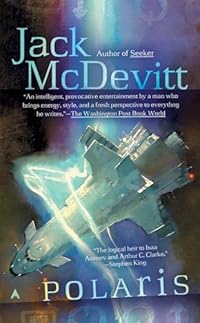
Sixty years after the disappearance of the passengers and crew of the luxury space yacht Polaris, found empty and adrift in space, Alex Benedict sets out to uncover the truth about the Polaris and to reveal the fate of its passengers.Tags
Recommendations
















Member Reviews
The main problem with SF/Mystery crossovers is that you kinda rather need to be a fan of both genres.
Fortunately, I am, and so this book fit like a pretty comfortable glove. And it's not even a traditional mystery, either. Imagine a modern mystery that included a missing crew on an ocean liner from a hundred years in the past. You've got a lot of weird questions and archeology and a lot of research ahead of you, but wait! What if some really weird events keep happening around you, your artifacts, and your friends? What if there's a conspiracy to keep a Big Secret?
Ahhh, so then, keep the smart premise, interesting plot, and weave it in a fully-realized and deep future society with spacecraft, AI's, and lots of settled planets, aliens, show more and a few other layers of mystery. Still sound interesting? Yeah! That's because it is!
These books are all about managing your expectations. Know what you're getting into and then you won't be disappointed if what you really wanted was a bunch of corporals issuing orders and pew-pewing across the spaceways. :)
I think I liked this book more than the previous. You don't have to read them in order, thankfully, but what I liked most was the female narrator. She's cool, or at least she's a lot cooler than Alex Benedict, himself. The guy is relegated to a supporting role. I thought that was funny as hell. :)
The best part of this series is the deeply thoughtful construction of the plot, the worlds, and the explored implications. It's smart and the author's voice is quite strong. I can't say that these are my absolute favorite SF books of all time, but I do appreciate everything they accomplish and how they build a strong foundation for a beautiful change in the genre. :) show less
Fortunately, I am, and so this book fit like a pretty comfortable glove. And it's not even a traditional mystery, either. Imagine a modern mystery that included a missing crew on an ocean liner from a hundred years in the past. You've got a lot of weird questions and archeology and a lot of research ahead of you, but wait! What if some really weird events keep happening around you, your artifacts, and your friends? What if there's a conspiracy to keep a Big Secret?
Ahhh, so then, keep the smart premise, interesting plot, and weave it in a fully-realized and deep future society with spacecraft, AI's, and lots of settled planets, aliens, show more and a few other layers of mystery. Still sound interesting? Yeah! That's because it is!
These books are all about managing your expectations. Know what you're getting into and then you won't be disappointed if what you really wanted was a bunch of corporals issuing orders and pew-pewing across the spaceways. :)
I think I liked this book more than the previous. You don't have to read them in order, thankfully, but what I liked most was the female narrator. She's cool, or at least she's a lot cooler than Alex Benedict, himself. The guy is relegated to a supporting role. I thought that was funny as hell. :)
The best part of this series is the deeply thoughtful construction of the plot, the worlds, and the explored implications. It's smart and the author's voice is quite strong. I can't say that these are my absolute favorite SF books of all time, but I do appreciate everything they accomplish and how they build a strong foundation for a beautiful change in the genre. :) show less
The third book in a loose series featuring Mr. McDevitt's character Alex Benedict, Polaris is told from the viewpoint of Chase Kolpath, Alex's pilot and assistant. Chase doesn't quite Rainbow, Alex's two-person operation that sells archaeological finds, but she is certainly a well-known face to their wealthy clients, and very skilled at cutting through bureaucracy.
The setup behind this vaguely noir/mystery book involves the mysterious ship Polaris whose passengers and crew vanished mysteriously 60 years ago. The ship has captivated the public for years. While the Polaris was hardly the only ship to disappear, the way it's crew of celebrity scientists-- and young, pretty captain Madeline English-- vanished in impossible circumstances is show more an inexplicable, glittering mystery for the ages.
When Chase cuts a deal for Rainbow with Survey (a government exploration and artifact recovery agency) to have first crack at buying Polaris artifacts, the building is bombed by parties unknown, taking out most of the artifacts. The mystery behind the bombing-- and what did happen on the Polaris all those years ago, by the way-- is delightful reading, and difficult to put down. (I read most of the book on a plane, and managed to stay focused despite the bad movie and noisy passengers.)
The books seems to be headed towards a pretty pork-barreled nine-eleven analogy for the first few chapters, but it thankfully drops that quickly. The sense of a complete world is not as great as it could be, but the author does a very good job of painting a universe where human colonies are all-- almost all-- united. (The history of this world is much richer in A Talent for War, the first of the Alex Benedict books. yes, I'm reading them out of order.)
A fun book, with an unexpected ending. This is the first of Jack McDevitt's books that I've read, and I intend to keep reading them as long as they stay good. show less
The setup behind this vaguely noir/mystery book involves the mysterious ship Polaris whose passengers and crew vanished mysteriously 60 years ago. The ship has captivated the public for years. While the Polaris was hardly the only ship to disappear, the way it's crew of celebrity scientists-- and young, pretty captain Madeline English-- vanished in impossible circumstances is show more an inexplicable, glittering mystery for the ages.
When Chase cuts a deal for Rainbow with Survey (a government exploration and artifact recovery agency) to have first crack at buying Polaris artifacts, the building is bombed by parties unknown, taking out most of the artifacts. The mystery behind the bombing-- and what did happen on the Polaris all those years ago, by the way-- is delightful reading, and difficult to put down. (I read most of the book on a plane, and managed to stay focused despite the bad movie and noisy passengers.)
The books seems to be headed towards a pretty pork-barreled nine-eleven analogy for the first few chapters, but it thankfully drops that quickly. The sense of a complete world is not as great as it could be, but the author does a very good job of painting a universe where human colonies are all-- almost all-- united. (The history of this world is much richer in A Talent for War, the first of the Alex Benedict books. yes, I'm reading them out of order.)
A fun book, with an unexpected ending. This is the first of Jack McDevitt's books that I've read, and I intend to keep reading them as long as they stay good. show less
I had mixed feelings reading this book, even though on the whole I enjoyed it and would mostly recommend it.
On the plus side, it was I think a better done adventure story in the present than its predecessor, A Talent for War, which derived its interest almost entirely from the mystery about the past (for me, at least; the adventures there in the present did not seem as compelling). In Polaris, Alex Benedict and Chase Kolpath go investigating another historical anomaly, and *someone* is trying to stop them.
This time the story is told from Chase's point of view. Some reviewers suggested this was an improvement; I did not find that it mattered much. Neither of them, unfortunately, is incredibly interesting as a character. The interest of show more the story does not lie so much with the character but with the mystery, and the adventures. And the adventures were, I thought, more compelling in this story than in the last.
On the minus side, this is basically the *same* story, point by point--even down to the detail to the detail of having a lunatic convention devoted to Polaris, instead of a lunatic convention devoted to the Sims. The author found a winning formula, and basically changed the names and a few details. But because of that, probably, it wasn't too hard for me to see where this was going well before the end. (I sure didn't see where A Talent for War was going until the end.)
Also, a side rant: I have a certain skepticism about any story that relies on some scientific discovery years and years ago that somehow got irretrievably lost, because (at least the way we do science now) that's not going to happen. If one researcher doesn't discover it, another lab is hot on their heels, and at worst there will be only a few years' delay, not centuries. Science is done by a community, not by isolated one-of-a-kind geniuses, and nobody is that far behind anybody else. So that part (in both this story and the last) was hard to stomach.
That's all the bad stuff. But the good part was that even though I was pretty sure what the solution to the mystery was going to be, it was a good read watching it unfold. Though it was following the same formula, it's a pretty good formula. Chase and Alex have to get out of a number of sticky situations, and I thought that was better done in this novel than in the last. show less
On the plus side, it was I think a better done adventure story in the present than its predecessor, A Talent for War, which derived its interest almost entirely from the mystery about the past (for me, at least; the adventures there in the present did not seem as compelling). In Polaris, Alex Benedict and Chase Kolpath go investigating another historical anomaly, and *someone* is trying to stop them.
This time the story is told from Chase's point of view. Some reviewers suggested this was an improvement; I did not find that it mattered much. Neither of them, unfortunately, is incredibly interesting as a character. The interest of show more the story does not lie so much with the character but with the mystery, and the adventures. And the adventures were, I thought, more compelling in this story than in the last.
On the minus side, this is basically the *same* story, point by point--even down to the detail to the detail of having a lunatic convention devoted to Polaris, instead of a lunatic convention devoted to the Sims. The author found a winning formula, and basically changed the names and a few details. But because of that, probably, it wasn't too hard for me to see where this was going well before the end. (I sure didn't see where A Talent for War was going until the end.)
Also, a side rant: I have a certain skepticism about any story that relies on some scientific discovery years and years ago that somehow got irretrievably lost, because (at least the way we do science now) that's not going to happen. If one researcher doesn't discover it, another lab is hot on their heels, and at worst there will be only a few years' delay, not centuries. Science is done by a community, not by isolated one-of-a-kind geniuses, and nobody is that far behind anybody else. So that part (in both this story and the last) was hard to stomach.
That's all the bad stuff. But the good part was that even though I was pretty sure what the solution to the mystery was going to be, it was a good read watching it unfold. Though it was following the same formula, it's a pretty good formula. Chase and Alex have to get out of a number of sticky situations, and I thought that was better done in this novel than in the last. show less
Polaris is another sci-fi mystery novel in the Alex Benedict series. The author sometimes takes a bit of liberty with the idea of a series, as the characters don't seem to learn much from book to book. For example, Alex's house is broken into twice in this book - after being broken into twice in the previous book! You'd think, this far in the future, they'd have better security. The police are also completely inept, which seems strange. The plot also hinges on a definite lack of information in starships systems, which you could argue is plausible if the ship's AI maintains all logs, data and records, but that seems a bit unlikely, especially as there's no backups. There may be some technical flaws, but I still enjoyed the book., though show more I think I enjoyed the others in the series more. show less
In line with A Talent For War, this is a solid sci fi mystery.
While perhaps not as engaging as the previous Alex Benedict story, McDevitt continues to prove his talent in both genres. Polaris tells the story of antique dealers Chase and Alex as they investigate the mysterious disappearance of the crew of the titular Polaris.
The mystery is solid but strangely reminiscent of A Talent for War. It’s difficult to explain without spoiling it, but if you stripped away all the specifics, the plot of this and A Talent for War are the same. Plus the reader will probably have figured out some details before the characters do. Despite the small lack of surprise the mystery stays engaging and has a great ending.
In 50 years nobody is going to be show more talking about McDevitt’s contributions to sci fi like we talk about Asimov or Herbert now, but his sci fi chops are still impressive. The Alex Benedict world is very interesting and the authors use of in-universe references and quotations at the start of every chapter add to the immersion.
It is worth mentioning that the choice of Narrator is a little disappointing. McDevitt tries to cash in on the tried and true mystery format of having the sidekick to the genius narrate. The problem is that the narrator is not all that far behind the Sherlock figure of Alex Benedict. Also Chase’s narrative voice is not all that different from Alex’s in the first book. The narration is fine it just is a little perplexing why McDevitt changed the narrating character at all.
This book (and series)is not the next great sci fi masterpiece but is enjoyable for sci fi and mystery readers alike. show less
While perhaps not as engaging as the previous Alex Benedict story, McDevitt continues to prove his talent in both genres. Polaris tells the story of antique dealers Chase and Alex as they investigate the mysterious disappearance of the crew of the titular Polaris.
The mystery is solid but strangely reminiscent of A Talent for War. It’s difficult to explain without spoiling it, but if you stripped away all the specifics, the plot of this and A Talent for War are the same. Plus the reader will probably have figured out some details before the characters do. Despite the small lack of surprise the mystery stays engaging and has a great ending.
In 50 years nobody is going to be show more talking about McDevitt’s contributions to sci fi like we talk about Asimov or Herbert now, but his sci fi chops are still impressive. The Alex Benedict world is very interesting and the authors use of in-universe references and quotations at the start of every chapter add to the immersion.
It is worth mentioning that the choice of Narrator is a little disappointing. McDevitt tries to cash in on the tried and true mystery format of having the sidekick to the genius narrate. The problem is that the narrator is not all that far behind the Sherlock figure of Alex Benedict. Also Chase’s narrative voice is not all that different from Alex’s in the first book. The narration is fine it just is a little perplexing why McDevitt changed the narrating character at all.
This book (and series)is not the next great sci fi masterpiece but is enjoyable for sci fi and mystery readers alike. show less
The second book featuring Alex Benedict is despite its science fiction trappings of superluminal travel, AIs and eternal life, a mystery more than science fiction.
Narrated by Benedicts assistent Chase Kolpath the selfreferencing and direct adressing of the reader are reminescent of the Scherlock Holmes mysteries while Alex Benedict share his flowergrowing and mercenary characteristics with Nero Wolfe.
Benedict is an antiquities dealer who is willing to go to extreme lenghts to make his deals and Kolpath is his pilot, assistent and chronicler.
Having bought several items from the spaceship Polaris, whose whole crew mysteriously disappeared in a distant solar system while leaving the ship intact, they find themselves and their customers show more beset with mysterious strangers.
Amidst several murder attempts they set out to discover what actually happened on the Polaris, and why this matters 60 years later.
An interesting closed room mystery, whose investigation takes Benedict and Kolpath all over the galaxy, to ancient space stations as well as high profile events. The science fiction element is deftly used to construct an intriguing mystery - more believable than many classical detective plots, although the solution became obvious to the reader a lot sooner than for Kolpath and too early to sustain the suspense for the last quarter of the book.
The author seemed to have fun with the concept of antiquities, history and archeology in a time with such a long past, and his inventive use of these, along with his descriptive abilities made his worldbuilding come alive.
The characters lack distinction - the parts in the info dump conversations are indistiguishable, and makes them stand all the more out as info dumps.
If you expect groundbreaking science fiction - which is easy to do when the endorsement on the cover compares Jack McDevitt to Asimov and Arthur C. Clarke - you will be disappointed, but if you like a wellwritten mystery in a science fiction setting, and don't mind a somewhat weak characterization this is a solid read. show less
Narrated by Benedicts assistent Chase Kolpath the selfreferencing and direct adressing of the reader are reminescent of the Scherlock Holmes mysteries while Alex Benedict share his flowergrowing and mercenary characteristics with Nero Wolfe.
Benedict is an antiquities dealer who is willing to go to extreme lenghts to make his deals and Kolpath is his pilot, assistent and chronicler.
Having bought several items from the spaceship Polaris, whose whole crew mysteriously disappeared in a distant solar system while leaving the ship intact, they find themselves and their customers show more beset with mysterious strangers.
Amidst several murder attempts they set out to discover what actually happened on the Polaris, and why this matters 60 years later.
An interesting closed room mystery, whose investigation takes Benedict and Kolpath all over the galaxy, to ancient space stations as well as high profile events. The science fiction element is deftly used to construct an intriguing mystery - more believable than many classical detective plots, although the solution became obvious to the reader a lot sooner than for Kolpath and too early to sustain the suspense for the last quarter of the book.
The author seemed to have fun with the concept of antiquities, history and archeology in a time with such a long past, and his inventive use of these, along with his descriptive abilities made his worldbuilding come alive.
The characters lack distinction - the parts in the info dump conversations are indistiguishable, and makes them stand all the more out as info dumps.
If you expect groundbreaking science fiction - which is easy to do when the endorsement on the cover compares Jack McDevitt to Asimov and Arthur C. Clarke - you will be disappointed, but if you like a wellwritten mystery in a science fiction setting, and don't mind a somewhat weak characterization this is a solid read. show less
This was a cool Alex Benedict novel, the third I’ve read, though I’m reading them out of sequence. But I digress….
Years ago the Polaris, a starship, was with a group of other starships witnessing the collision of a dwarf star with a planet (Jack McDevitt uses this dwarf star theory further in the novel, Seeker). For some mysterious reason, everyone disappears off the ship. No one can find them. Years, then decades go by. Polaris conventions pop up. Wild theories are proposed. Even a cult following!
But what really happened? And how and why do Alex and his lovely assistant Chase get involved?
Similar to the other Benedict novels I’ve read, we get narrated by Chase, who relates her fears and goals and though supporting her boss, show more is not all that thrilled to get the ship’s mystery solved.
A museum explosion, apparently an assassination attempt on a dictator (who Chase thought charming) wipes out the majority of Polaris artifacts. Alex is suspicious and takes nothing on face value. We the reader and Chase wonder why we’re sent across half the galaxy to find clues as to what happened to the Polaris.
The ending is thought-provoking and ends on a mysterious note in itself.
Our first clue: A scientist discovers the secret to immortality. A group rallies against this as a very bad idea. Part of the group protests were also part of the crew of the Polaris. Yikes!
Love the long-forgotten outposts in space. Love the several murder attempts. Love the science that can mold mens’ minds but cannot always breed out the murder gene.
Exciting, at times tedious, and occasionally drags, McDevitt keeps you going and maintains your interest.
Recommended. show less
Members
- Recently Added By
Lists

hypatian_kat to-read
429 works; 3 members

Paranormal investigators and space detectives
274 works; 9 members
Author Information

124+ Works 20,873 Members
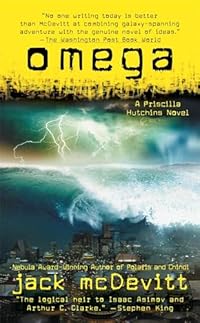
Jack McDevitt (born 1935) is an American science fiction author whose novels frequently deal with attempts to make contact with alien races, and with archaeology or xenoarchaeology. He attended La Salle University, where a short story of his won the annual Freshman Short Story Contest and was published in the school's literary magazine, Four show more Quarters. He received a Master's degree in literature from Wesleyan University in 1971. Before becoming a full-time author, he was an English teacher, naval officer, Philadelphia taxi driver, customs officer and motivational trainer. His first published story was The Emerson Effect in The Twilight Zone Magazine in 1981. Two years later, he published his first novel, The Hercules Text, which won the Philip K. Dick Special Award. He won the 2006 Nebula Award for Best Novel for Seeker, the UPC International Prize for his novella Ships in the Night in 1991, and the John W. Campbell Memorial Award for best SF novel for Omega in 2003. (Bowker Author Biography) show less
Some Editions
Awards and Honors
Awards
Series

Belongs to Publisher Series
Bastei Science Fiction-Special (24349)
Work Relationships
Is contained in
Common Knowledge
- Canonical title
- Polaris
- Original title
- Polaris
- Original publication date
- 2004-06
- People/Characters
- Alex Benedict; Chase Kolpath
- Important places
- Rimway
- Important events
- Disappearance of the Polaris Crew
- Dedication
- For Bob Carson, the world's finest teacher
- First words
- It no longer looked like a sun.
- Last words
- (Click to show. Warning: May contain spoilers.)"Chase, don't forget - these are the same people who disappeared out of the Polaris."
- Publisher's editor
- Buchanan, Ginjer
- Original language*
- Amerikanisch
*Some information comes from Common Knowledge in other languages. Click "Edit" for more information.
Classifications
Statistics
- Members
- 1,261
- Popularity
- 19,356
- Reviews
- 32
- Rating
- (3.69)
- Languages
- 5 — English, German, Hungarian, Polish, Spanish
- Media
- Paper, Audiobook, Ebook
- ISBNs
- 13
- ASINs
- 12