Ensign Flandry
by Poul Anderson
Saga of Dominic Flandry (1), Terran Empire (Collections and Selections — 1.1)
On This Page
Description
An omnibus of three Flandry adventures featuring the sophisticated, tough and charismatic agent of Terran, Dominic Flandry,Tags
Recommendations











Member Reviews
The Terran Empire is "old and fat," and in terminal decline. Nonetheless, despite its many problems, its fall would be worse - heralding a dark age, the "long night." One of the few who would attempt the Sisyphean task of forestalling the Empire's demise is Dominic Flandry - Ensign Flandry serves as a sort of prequel, establishing some of the foundational events and relationships which would forge him into the "Agent of Terra" in future novels.
Without betraying too much of the plot, the bulk of the story takes place on a planet on the border between the Terran Empire and the Merseians, a peer-power which is in something of a cold war with Terra. The planet is divided between two sentient species - the land-dwelling-sea-sailing Tigeries, show more a cat-people which are supported by the Terrans, and Seatrolls, and aquatic species supported by the Merseians. The two Iron-age species are at intermittent war over coastal resources, and are used as proxies as the two space-faring empires vie for control of the planet without resorting to open warfare.
While the story is principally one of adventure, what I appreciate about Anderson is that he does not shy away, or hand-wave the human cost . . . or should I say sentient cost? When powers play the Great Game, people get hurt, and those who get hurt the most are the pawns, the proxies who fight it out while the Great Powers largely avoid bloodshed of their own. By not ignoring this aspect, the actions in the story have serious stakes and consequences, which are not always acknowledged in Adventure Science-Fiction. The way Anderson delves into the cultures of the various species blends a mix of humanity and otherness, giving them depth and a sympathetic perspective - the Merseians even have a few viewpoint chapters which help flesh out their attitudes and reveal how they approach situations in a different manner from that of humanity.
There's a review on this page which states "Space opera that's showing its age." - and I could not feel more differently. Given the attitudes and actions we see on the world stage today, in some ways it feels more relevant than ever. show less
Without betraying too much of the plot, the bulk of the story takes place on a planet on the border between the Terran Empire and the Merseians, a peer-power which is in something of a cold war with Terra. The planet is divided between two sentient species - the land-dwelling-sea-sailing Tigeries, show more a cat-people which are supported by the Terrans, and Seatrolls, and aquatic species supported by the Merseians. The two Iron-age species are at intermittent war over coastal resources, and are used as proxies as the two space-faring empires vie for control of the planet without resorting to open warfare.
While the story is principally one of adventure, what I appreciate about Anderson is that he does not shy away, or hand-wave the human cost . . . or should I say sentient cost? When powers play the Great Game, people get hurt, and those who get hurt the most are the pawns, the proxies who fight it out while the Great Powers largely avoid bloodshed of their own. By not ignoring this aspect, the actions in the story have serious stakes and consequences, which are not always acknowledged in Adventure Science-Fiction. The way Anderson delves into the cultures of the various species blends a mix of humanity and otherness, giving them depth and a sympathetic perspective - the Merseians even have a few viewpoint chapters which help flesh out their attitudes and reveal how they approach situations in a different manner from that of humanity.
There's a review on this page which states "Space opera that's showing its age." - and I could not feel more differently. Given the attitudes and actions we see on the world stage today, in some ways it feels more relevant than ever. show less
I lucked into an Imperial Terra collection, starting with this story, and I'm suitably impressed. Flandry is a pilot in the Terran Navy, serving a tired and decadent empire which has been drawn into a slowly escalating proxy war between two alien species on a distant plant with a medieval level of technology. After being shot down, Flandry is rescued, becomes a trusted advisor to the human aliens, and gets roped into an interstellar escapade to the capital of a rising interstellar power, where he is implicated in a scheme by the local chief of intelligence, Max Abrams, against the diplomat Hauksberg, that has him on the run and then the hero, heading off a plot that could have crippled the Terran fleet.
As always, Anderson has deft touch show more with pacing, handling in 180 pages what might take a lesser author (cough David Weber cough) 600 or more. I'm excited for the rest. show less
As always, Anderson has deft touch show more with pacing, handling in 180 pages what might take a lesser author (cough David Weber cough) 600 or more. I'm excited for the rest. show less
This is excellent book in the vein of old-time adventure story, with thinking hero and people around him who are aware of the world around them and know very well realities of life.
Terran Empire, at its zenith, is fighting proxy war on a remote planet against their nemesis, Mersian Empire, the new super power on the horizon. Nobody knows why exactly are they on this planet, backwater as it is except they know that if their enemy wants to stay there then they need to prevent that from happening. People are drawing parallels with Cold War but this is story as old as people themselves - Rome vs Carthage, Rome vs Parthia, before that Alexander vs Persians, then Alexander's inheritors fighting between themselves, all the way to Dutch vs show more British, British vs French, Britain vs Spain, Great Game between Britain and Tsarist Russia etc etc etc. You get the idea- everybody following that old rule "I have no idea what I am doing here except to prevent you form making the foothold".
So on a remote world where Terran's back the land people and Mersians the inhabitants of the oceans proxy war is waged. And with every day it becomes uglier and uglier, escalating to direct confrontation between Terrans and Mersians. It is obvious something is happening in the background and lord Hauksburg, Terran representative decides to try to broker the peace before things get out of control. Everyone in the field is aware that Mersians are not that much interested in the peace itself (and Terran hawkish politicians are the same) but Hauksburg decides to give his best because alternative is utter destruction.
What happens next is a truly epic space opera - spies, politics, assassinations, theft of top secrets, treason, you name it, it is in this book. Our protagonist Flandry, junior Terran navy officer, attracts the attention of old spymaster Abrams and this puts him into the spotlight, for he will soon become key player in the games orchestrated by others and every wrong step he makes might be the last for the humanity.
Characters are just great - from Flandry, strong-headed, easily impressed nineteen year old junior officer who just inhales all the wanders of the alien civilizations but keeps his mind straight and what is most important (especially these days) he thinks with his head and uses all the lessons given to him by his training and more experienced commanders (does not let his emotions control him). On his journey he meets brave men and women (and women characters here are wonderful characters - from the Tigress leader that is not afraid of cutting a few heads to protect her clan and is fiercely loyal and fond of Flandry for the help he provided to her people to Persis, Hauksburg mistress, not just pretty head but a strong woman who knows what she is and what she can get) and this helps him to grow up (ahead of time, but alas such is his position).
Way that the story told is somewhat strange. On the one hand you have way that characters speak which is all "Arrr, me seamen, arrrrrr" like they all came from the golden age of sail - this was most disconcerting thing for me because in some parts I would be left to, arrrrr, scr'th me head 'bout w'at thee tried to tell me matey, arrrrrr. And on the other hand you have wonderful set piece where cyborg, now fully machine and without anything that relates to its biological self, communicates with the vehicles and weapons, breaks through electronic defenses in a way that gave me Cyberpunk goosebumps, and finally survives in a manner that would not be strange to find in Jon Williams', Neal Asher's or Banks' book. Not to mention space battles with huge ships obliterating each other in missile salvos and direct gunfire that brings memories of Star Wars, Starfishers and (regarding the physics, vulnerability and agility of ships) Expanse. Action is wonderful and keeps you glued to the pages until the very end.
And to complement all of this there is very rich description of both empires, cultural differences, intrigues, spy actions, and people and cultures involved in the war on the barren rock in the middle of nothing. Even the very twist at the end sounds so real - politic is very bad business (unfortunately it is necessary evil, there are some parallels with whoring but cannot remember the correct quotations) and what is one day said to be ideal to sacrifice everything for, tomorrow is so easily dismissed, all victims, all destruction just get pushed under the carpet like it never happened and field of destruction (usually third party) is left devastated and to its own devices, while they get deleted from super power's history and memory. Here similar thing happens but mixed up with pride of the native people that hated each other for millennia and are not easily swayed to actually save the lived of their own men, women and children from the coming disaster.
Book is so contemporary and it shows on every page, every comment related to politics and war. I just wish that dialect used is more modern and not something that is usually heard in old shanty songs.
Highly recommended to fans of space opera, spies and action oriented Foundation-like story. Now that I think of it entire book reminds me of Vorkosigan saga, another beautiful space opera with excellent characters and very live and realistic universe.
I am definitely looking for other books in the series. show less
Terran Empire, at its zenith, is fighting proxy war on a remote planet against their nemesis, Mersian Empire, the new super power on the horizon. Nobody knows why exactly are they on this planet, backwater as it is except they know that if their enemy wants to stay there then they need to prevent that from happening. People are drawing parallels with Cold War but this is story as old as people themselves - Rome vs Carthage, Rome vs Parthia, before that Alexander vs Persians, then Alexander's inheritors fighting between themselves, all the way to Dutch vs show more British, British vs French, Britain vs Spain, Great Game between Britain and Tsarist Russia etc etc etc. You get the idea- everybody following that old rule "I have no idea what I am doing here except to prevent you form making the foothold".
So on a remote world where Terran's back the land people and Mersians the inhabitants of the oceans proxy war is waged. And with every day it becomes uglier and uglier, escalating to direct confrontation between Terrans and Mersians. It is obvious something is happening in the background and lord Hauksburg, Terran representative decides to try to broker the peace before things get out of control. Everyone in the field is aware that Mersians are not that much interested in the peace itself (and Terran hawkish politicians are the same) but Hauksburg decides to give his best because alternative is utter destruction.
What happens next is a truly epic space opera - spies, politics, assassinations, theft of top secrets, treason, you name it, it is in this book. Our protagonist Flandry, junior Terran navy officer, attracts the attention of old spymaster Abrams and this puts him into the spotlight, for he will soon become key player in the games orchestrated by others and every wrong step he makes might be the last for the humanity.
Characters are just great - from Flandry, strong-headed, easily impressed nineteen year old junior officer who just inhales all the wanders of the alien civilizations but keeps his mind straight and what is most important (especially these days) he thinks with his head and uses all the lessons given to him by his training and more experienced commanders (does not let his emotions control him). On his journey he meets brave men and women (and women characters here are wonderful characters - from the Tigress leader that is not afraid of cutting a few heads to protect her clan and is fiercely loyal and fond of Flandry for the help he provided to her people to Persis, Hauksburg mistress, not just pretty head but a strong woman who knows what she is and what she can get) and this helps him to grow up (ahead of time, but alas such is his position).
Way that the story told is somewhat strange. On the one hand you have way that characters speak which is all "Arrr, me seamen, arrrrrr" like they all came from the golden age of sail - this was most disconcerting thing for me because in some parts I would be left to, arrrrr, scr'th me head 'bout w'at thee tried to tell me matey, arrrrrr. And on the other hand you have wonderful set piece where cyborg, now fully machine and without anything that relates to its biological self, communicates with the vehicles and weapons, breaks through electronic defenses in a way that gave me Cyberpunk goosebumps, and finally survives in a manner that would not be strange to find in Jon Williams', Neal Asher's or Banks' book. Not to mention space battles with huge ships obliterating each other in missile salvos and direct gunfire that brings memories of Star Wars, Starfishers and (regarding the physics, vulnerability and agility of ships) Expanse. Action is wonderful and keeps you glued to the pages until the very end.
And to complement all of this there is very rich description of both empires, cultural differences, intrigues, spy actions, and people and cultures involved in the war on the barren rock in the middle of nothing. Even the very twist at the end sounds so real - politic is very bad business (unfortunately it is necessary evil, there are some parallels with whoring but cannot remember the correct quotations) and what is one day said to be ideal to sacrifice everything for, tomorrow is so easily dismissed, all victims, all destruction just get pushed under the carpet like it never happened and field of destruction (usually third party) is left devastated and to its own devices, while they get deleted from super power's history and memory. Here similar thing happens but mixed up with pride of the native people that hated each other for millennia and are not easily swayed to actually save the lived of their own men, women and children from the coming disaster.
Book is so contemporary and it shows on every page, every comment related to politics and war. I just wish that dialect used is more modern and not something that is usually heard in old shanty songs.
Highly recommended to fans of space opera, spies and action oriented Foundation-like story. Now that I think of it entire book reminds me of Vorkosigan saga, another beautiful space opera with excellent characters and very live and realistic universe.
I am definitely looking for other books in the series. show less
Flandry is a character I have enjoyed since I first read, way back in the 70s. The right mix of daring do and introspection, set against a backdrop of a 'Roman Empire' in space. Written with Anderson's gift.
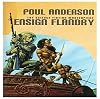
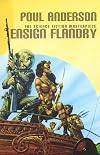
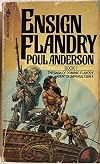
I will add that this must rank as one of the worst covers ever produced. Totally ridiculous, totally irrelevant to the stories inside, and seemingly designed to repeal any reader of sense and taste.
I will add that this must rank as one of the worst covers ever produced. Totally ridiculous, totally irrelevant to the stories inside, and seemingly designed to repeal any reader of sense and taste.
Anderson created two truly memorable recurring characters. Nicolas van Rijn, the hard-nosed Dutch trader of the Technic era, and Dominic Flandry, agent of the Terran Empire. This book is the first in which Flandry appears, and it is a great combination of pulpy action and political maneuvering as Flandry, fresh out of training, deals with superpower politics in a backwater battleground.
Most of the Flandry stories detail the struggle between the Terran Empire and the alien Merseian Empire. Given that the Flandry stories were written in the 1950s and 1960s, many people have interpreted these warring powers in light of the Cold War, and there is some element of that present. Anderson himself said that he was influenced by the struggles show more between the Roman Empire and the Parthian Empire, a struggle which historically exhausted both sides to the point where the conflict probably contributed significantly to their eventual collapse - which is reflected in Anderson' s later collections such as The Long Night.
In this book, the two superpowers have taken opposing sides in the conflict between two warring races that share the same planet. Through various adventures, Flandry discovers the Merseians' true intentions, which are far more nefarious than anyone suspected they were. There's a lot of action and intrigue, a couple of exotic alien women, a couple of daring escapes, and a lot of derring-do, all of which adds up to a very good space opera. show less
Most of the Flandry stories detail the struggle between the Terran Empire and the alien Merseian Empire. Given that the Flandry stories were written in the 1950s and 1960s, many people have interpreted these warring powers in light of the Cold War, and there is some element of that present. Anderson himself said that he was influenced by the struggles show more between the Roman Empire and the Parthian Empire, a struggle which historically exhausted both sides to the point where the conflict probably contributed significantly to their eventual collapse - which is reflected in Anderson' s later collections such as The Long Night.
In this book, the two superpowers have taken opposing sides in the conflict between two warring races that share the same planet. Through various adventures, Flandry discovers the Merseians' true intentions, which are far more nefarious than anyone suspected they were. There's a lot of action and intrigue, a couple of exotic alien women, a couple of daring escapes, and a lot of derring-do, all of which adds up to a very good space opera. show less
His name is Flandry, Ensign Flandry. After being shot down by enemy fire during a routine patro Flandry finds himself in the middle of the interstellar conflict between Terran Empire and Merseian Empire - conflict centered around a back-world planet of Starkad. Although he is facing some very cunning alien opponents can Flandry truly trust his own side?
Flandry is what most people expect from an action hero - strong, highly successful with ladies albeit shy, ready to jump into action whenever and wherever, very intelligent and able to perform very thorough analysis of situation using whatever is at his disposal. So is it surprising that he finds himself very soon working for the intelligence service of Terran Empire :)
Although he is very show more much like James Bond set in some distant future Flandry is by no means dull character - entire novel reads very fast and is very entertaining.
If you are into good old space opera, do not miss it.
Recommended. show less
Flandry is what most people expect from an action hero - strong, highly successful with ladies albeit shy, ready to jump into action whenever and wherever, very intelligent and able to perform very thorough analysis of situation using whatever is at his disposal. So is it surprising that he finds himself very soon working for the intelligence service of Terran Empire :)
Although he is very show more much like James Bond set in some distant future Flandry is by no means dull character - entire novel reads very fast and is very entertaining.
If you are into good old space opera, do not miss it.
Recommended. show less
This is the first in chronological order (not writing order) of the Flandry stories about a dashing agent of a corrupt decaying Terran Empire trying to stave off collapse and more particularly the Merseians, an aggressive reptilian/humanoid feudal but technologically advanced culture. In this book, Flandry is an inexperienced young Ensign in the Terran space navy, originally a pilot, not a spy. He helps the landbased Tigery alien culture of the planet Starkad old off the sea-based "Seatroll" people who are backed by the Merseians, and then is drawn into attempts to negotiate a settlement of the conflict led by Hauksberg, an ambitious high-ranking Terran imperial politician who believes in reconciliation not only on Starkad but with the show more Merseians overall, a view not shared by Flandry or his mentor Abrams, a neoIsraeli Terran intelligence officer. There are echoes of the later Cold War period in which the story was written, but the rival Starkadian cultures are vividly described, as usual for Anderson, and even the Merseian leader is portrayed sympathetically. Ultimately, while on Hauksberg's futile mission to merseia, Flandry is able to retrieve information from a Terran/Merseian double agent and (aided by Hauksberg's concubine Persis d'Io) escape with the data back to Starkad. Anderson later creates ink back to these events in later stories about the older Flandry: the two peoples from Starkad, now transported to Imhotep, appear in The Game of Empire, Persis's son by Flandry appears in a later story, and Flandry finally marries Abrams's daughter. show less
Members
- Recently Added By
Lists

Bibliography for Among Others
159 works; 15 members
Author Information

Poul Anderson, November 25, 1926 - July 31, 2001 Poul Anderson was born on November 25, 1926 in Bristol, Pennsylvania to parents Anton and Astrid. After his father's death, Poul's mother took them first to Denmark and then to Maryland and Minnesota. He earned his degree in Physics from the University of Minnesota, but chose instead to write show more stories for science fiction magazines, such as "Astounding." Anderson is considered a "hard science fiction" writer, meaning that his books have a basis in scientific fact. To attain this high level of scientific realism, Anderson spent many hours researching his topics with scientists and professors. He liked to write about individual liberty and free will, which was a well known theme in many of his books. He also liked to incorporate his love of Norse mythology into his stories, sometimes causing his modern day characters to find themselves in fantastical worlds, such as in "Three Hearts and Three Lions," published in 1961. Anderson has written over a hundred books, his last novel, "Genesis" won the John W. Campbell Award, one of the three major science fiction awards. He is a former president of the Science Fiction and Fantasy Writers of America and won three Nebula awards and nine Hugo Awards. In 1997, Anderson was named a Grandmaster by the Science Fiction and Fantasy Writers of America and was also inducted into the Science Fiction Fantasy Hall of Fame. Poul Anderson died on July 31, 2001 at the age of 74. (Bowker Author Biography) show less
Some Editions
Series


Belongs to Publisher Series
Work Relationships
Common Knowledge
- Canonical title
- Ensign Flandry
- Original title
- Ensign Flandry
- Original publication date
- 1966
- People/Characters
- Dominic Flandry
- Dedication
- To Frank and Beverly Herbert
- First words
- Excerpts (with some expansion of symbols) from Pilot's Manual and Ephemeris, Cis-Betelgeusean Orionis Sector, 53rd ed., Reel III, frame 28:
Evening on Terra -
His Imperial Majesty, High Emperor Georgios Manuel Krishna Muraski, of the Want dynasty the fourth, Supreme Guardian of the Pax, Grand Director of the Stellar Council, Commander-in-Chief. Final Arbiter, ... (show all)acknowledged supreme on more worlds and honorary head of ore organizations than ony one man could remember, had a birthday. - Last words
- (Click to show. Warning: May contain spoilers.)He talked for an hour longer. And Flandry left the office whistling.
- Original language
- English
Classifications
Statistics
- Members
- 807
- Popularity
- 34,460
- Reviews
- 13
- Rating
- (3.53)
- Languages
- English, German, Portuguese, Swedish
- Media
- Paper, Ebook
- ISBNs
- 14
- ASINs
- 19