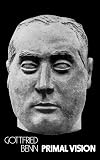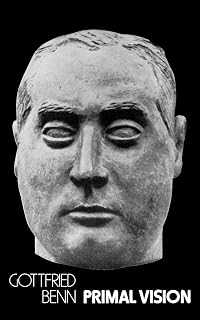
Primal Vision
by Gottfried Benn
On This Page
Description
Gottfried Benn (1886-1957) occupies a position in modern German literature often compared to that of T. S. Eliot and Ezra Pound in English. This volume presents a comprehensive anthology of the author's finest work-poetry (with the German originals en face), short stories, a scene from one of his plays, essays and autobiographical writings, including a unique insight into the German intellectual metamorphosis before, under and after Hitler. And in a long introduction, the editor, E. B. show more Ashton, places Benn in the perspective of recent German history and gives an account of his life - a dramatic and moving story in its own right. By profession a physician, Benn was fascinated by the philosophical aspects of many branches of science, and over the years he wrote a number of extraordinary essays in which the poet's intuitive vision was accorded the utmost imaginative freedom. show lessTags
Recommendations















Member Reviews
If known at all, Benn is notorious for standing too close to the National Socialists (if never joining the party), but that's not even what's most interesting. He spends his essays, his fiction, perhaps even his poetry striving to relay a conviction humanity is decomposing, but despite the fervour and variety of his approaches, it's never clear to me the nature of his claim. It is history against spirit, multiplying protoplasm against creativity, action against ... what? Something in that is what drew Benn to Das Volk, and yet it seems hasty to dismiss him for that failure. It was a failure, to be sure. But it's not clear he was wrong.
Benn's theme of carnality combines clinical observation (Benn was a practicing physician) and show more sexuality. Not sure what to make of it yet: wielded to disturb the reader? -- out of cruelty or just to point out readers' hypocrisy? Or something else in culture? The emphasis is most evident in his poetry, where the effect was to lend revulsion to the scenes described, the people in the poems. This is quite distinct from the essays. There, the effect was to characterise Benn's outlook, not the objects under his scrutiny. Hmmmn.
Another theme: arationality, though he addresses it as Irrationality (following Klaus Mann's use of the term in his letter). Is there a distinction? Does Benn seem to lend credence to it?
Further along in the collection, I think: Benn seems to experience life at the level of the species, not the individual, and attempts to express that species life. It seems his POV is mistaken for the life of the race (Nazis), and perhaps he makes that same mistake in not rejecting the Nazis himself. I'm willing to take his mistake as sincere, and not simply making excuses later. But it's difficult to know for certain. It is so peculiar to feel such a strong quality to the writing, to sense there is a unifying sensibility driving his prose and his verse, his fiction and his essays, for that to be conveyed so distinctly and yet not to really understand what it is!
Post Script: Benn's POV combines science and culture, so the perspective of the species but culturally modulated. This could be distinct from a eugenicist's perspective, but was not (at least, as written in these excerpts). I wonder whether it was distinct in Benn's own conception. Clearly it was not for the National Socialists.
//
Why must a member of the literati / intelligentsia, an intelligent & observant person, somehow also have enlightened views, or morals, or have some perspective on life somehow separate from the unthinking majority? (Klaus Mann quote?) Why could it not be the case, instead, that such a person merely have an accomplished means of communicating, of expressing an outlook and experience shared by many who are unreflective? That is perhaps a useful way to read Benn.
From the selections here, Benn is not connecting to anyone or any culture in his works. He doesn't seem to be writing to give voice to others sharing his outlook. It seems likely then that others may connect to him but for reasons separate from his reasons for writing, connect to his outlook and sensibility while not sharing in that outlook. Not a demonstrable assertion (proving a negative), but it feels right from what I've read in this collection.
//
Coincidentally read a piece of Ligotti short fiction, and some essays on same, at the time I was working through Benn. Clune's LARB essay on Ligotti, especially, suggests the strangeness in Ligotti's fiction has an affinity with Benn's. Interesting to think Benn might be slipping into the vice whereof Ligotti speaks: adapt an arational, asocial perspective as a way of losing himself in it, of running away. But if so, then from what?
https://lareviewofbooks.org/article/loving-the-alien-thomas-ligotti-and-the-psyc... show less
Benn's theme of carnality combines clinical observation (Benn was a practicing physician) and show more sexuality. Not sure what to make of it yet: wielded to disturb the reader? -- out of cruelty or just to point out readers' hypocrisy? Or something else in culture? The emphasis is most evident in his poetry, where the effect was to lend revulsion to the scenes described, the people in the poems. This is quite distinct from the essays. There, the effect was to characterise Benn's outlook, not the objects under his scrutiny. Hmmmn.
Another theme: arationality, though he addresses it as Irrationality (following Klaus Mann's use of the term in his letter). Is there a distinction? Does Benn seem to lend credence to it?
Further along in the collection, I think: Benn seems to experience life at the level of the species, not the individual, and attempts to express that species life. It seems his POV is mistaken for the life of the race (Nazis), and perhaps he makes that same mistake in not rejecting the Nazis himself. I'm willing to take his mistake as sincere, and not simply making excuses later. But it's difficult to know for certain. It is so peculiar to feel such a strong quality to the writing, to sense there is a unifying sensibility driving his prose and his verse, his fiction and his essays, for that to be conveyed so distinctly and yet not to really understand what it is!
Post Script: Benn's POV combines science and culture, so the perspective of the species but culturally modulated. This could be distinct from a eugenicist's perspective, but was not (at least, as written in these excerpts). I wonder whether it was distinct in Benn's own conception. Clearly it was not for the National Socialists.
//
Why must a member of the literati / intelligentsia, an intelligent & observant person, somehow also have enlightened views, or morals, or have some perspective on life somehow separate from the unthinking majority? (Klaus Mann quote?) Why could it not be the case, instead, that such a person merely have an accomplished means of communicating, of expressing an outlook and experience shared by many who are unreflective? That is perhaps a useful way to read Benn.
From the selections here, Benn is not connecting to anyone or any culture in his works. He doesn't seem to be writing to give voice to others sharing his outlook. It seems likely then that others may connect to him but for reasons separate from his reasons for writing, connect to his outlook and sensibility while not sharing in that outlook. Not a demonstrable assertion (proving a negative), but it feels right from what I've read in this collection.
//
Coincidentally read a piece of Ligotti short fiction, and some essays on same, at the time I was working through Benn. Clune's LARB essay on Ligotti, especially, suggests the strangeness in Ligotti's fiction has an affinity with Benn's. Interesting to think Benn might be slipping into the vice whereof Ligotti speaks: adapt an arational, asocial perspective as a way of losing himself in it, of running away. But if so, then from what?
https://lareviewofbooks.org/article/loving-the-alien-thomas-ligotti-and-the-psyc... show less
Ratings
Members
- Recently Added By
Author Information

173+ Works 1,115 Members
The publication of Gottfried Benn's first volume of poems, Morgue, in 1912, established him as a member of the European avant-garde and an enfant terrible of expressionism. A Berlin physician, Benn brought to his early poems a medically based obsession with the phenomena of physical and mental decay and a radical disillusionment with the bourgeois show more world. (Bowker Author Biography) show less
Classifications
Statistics
- Members
- 67
- Popularity
- 467,601
- Reviews
- 1
- Rating
- (3.75)
- Languages
- English, German
- Media
- Paper
- ISBNs
- 3
- ASINs
- 2