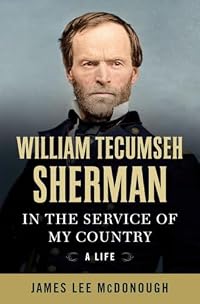
William Tecumseh Sherman: In the Service of My Country: A Life
by James L. McDonough
On This Page
Description
Biography & Autobiography. History. Military. Nonfiction. General Sherman's 1864 burning of Atlanta solidified his legacy as a ruthless leader. Yet Sherman proved far more complex than his legendary military tactics reveal. James Lee McDonough offers fresh insight into a man tormented by the fear that history would pass him by, who was plagued by personal debts, and who lived much of his life separated from his family. As a soldier, Sherman evolved from a spirited student at West Point into show more a general who steered the Civil War's most decisive campaigns, rendered here in graphic detail. Lamenting casualties, Sherman sought the war's swift end by devastating Southern resources in the Carolinas and on his famous March to the Sea. This meticulously researched biography explores Sherman's warm friendship with Ulysses S. Grant, his strained relationship with his wife, Ellen, and his unassuageable grief over the death of his young son, Willy. The result is a remarkable, comprehensive life of an American icon whose legacy resonates to this day. show lessTags
Recommendations
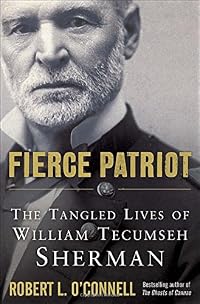
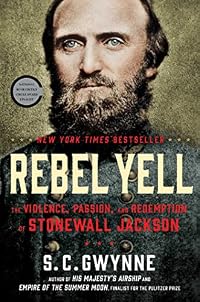
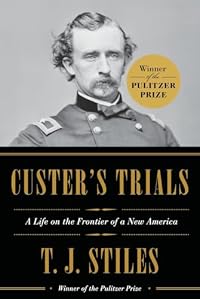








Member Reviews
A truly great biography reveals both the subject and the spirit of the times, and McDonough does both, tracing the tumultuous American adolescence through the life of General Sherman. Sherman was born in the Old Northwest of Ohio, named after the powerful Indian chief Tecumseh, who had lead a failed coalition against the Americans. After his father died, he was adopted into the influential Ewing family, and went to West Point, where he thrived as a cadet and in his early posting to Florida during the Seminole Wars, and California during the Mexican-American Wars. Early military posting across the South and Mississippi convinced him of the importance of the American heartland, and ironically in light of his later career, the basic show more friendship of Southerners. Sherman had a marriage to Ellen Ewing troubled by his wife's staunch Catholicism, and an uncertain career as a banker, when the Civil War broke out, and lifted Sherman to greatness.
Sherman struggled as a commander in the opening phases of the war, but he was never "insane", except in scurrilous newspaper columns, and after the Battle of Shiloh, repeatedly demonstrated his abilities as a strategist and logistician. Sherman excelled in operations along major rivers and railroads to dislocate strongpoints and force Confederate armies back without battle. His campaign to capture Atlanta was a masterpiece of maneuver.
Sherman's name will be forever connected with the March to the Sea, and scorched earth warfare. McDonough justifies the strategy as necessary in a framework of total war, and argues it was carried out as humanely as possible, without mass violence. Georgia howled, as Sherman burned anything with a potential military use, from railroads to cotton bales. In his use of economic warfare against the South and American Indians on the frontier, Sherman prefigured the worst of the 20th century.
Post-war, Sherman served as General-in-chief for over a decade, and took up a whirlwind of social engagements, speeches, and nights at the theater. The Sherman who comes across in his letters is a man of strong opinions: pro-Union, anti-Catholic, opposed to political nonsense and journalistic slander, confident in the superiority of white people, while still able to treat individual blacks and Indians humanely. As McDonough reveals through letters and archival research, Sherman was not above shading his memoirs in his favor, but in general he was scrupulously honest. A great biography of a fascinating man! show less
Sherman struggled as a commander in the opening phases of the war, but he was never "insane", except in scurrilous newspaper columns, and after the Battle of Shiloh, repeatedly demonstrated his abilities as a strategist and logistician. Sherman excelled in operations along major rivers and railroads to dislocate strongpoints and force Confederate armies back without battle. His campaign to capture Atlanta was a masterpiece of maneuver.
Sherman's name will be forever connected with the March to the Sea, and scorched earth warfare. McDonough justifies the strategy as necessary in a framework of total war, and argues it was carried out as humanely as possible, without mass violence. Georgia howled, as Sherman burned anything with a potential military use, from railroads to cotton bales. In his use of economic warfare against the South and American Indians on the frontier, Sherman prefigured the worst of the 20th century.
Post-war, Sherman served as General-in-chief for over a decade, and took up a whirlwind of social engagements, speeches, and nights at the theater. The Sherman who comes across in his letters is a man of strong opinions: pro-Union, anti-Catholic, opposed to political nonsense and journalistic slander, confident in the superiority of white people, while still able to treat individual blacks and Indians humanely. As McDonough reveals through letters and archival research, Sherman was not above shading his memoirs in his favor, but in general he was scrupulously honest. A great biography of a fascinating man! show less
For more reviews and bookish posts visit: https://www.ManOfLaBook.com
William Tecumseh Sherman: In the Service of My Country, A Life by James Lee McDonough is a biography of the famous American Civil War General. Mr. McDonough is an emeritus profess of history at Auburn University.
Like all of us, General Sherman is a complicated man. On one hand, he seemed like a modern general, quotable, of course, but also full of anxiety, depression, not religious (anti-religion is more like it), and a fan of the theater. On the other hand, he’s a man of his time with many of the associations we make with it.
The general was a racist who believed everyone was inferior to the white race (Texans included). Nevertheless, he shook the hands of former show more slaves and conversed with them politely and honestly – something many of his contemporaries wouldn’t even think about.
William Tecumseh Sherman by James L. McDonough of course focuses on “Cump’s” military career. As a witness, strategist, and a major player in the American Civil War there was a lot to write about.
The most interesting aspect for me was that he did not conduct “total war” on his famous march. While not shying from using violence against wealth Confederates, the rural areas of South Carolina and George were mostly left untouched.
Another interesting aspect which the author spends a lot of time on, and rightly so, is Sherman’s informal foster father, Thomas Ewing. Mr. Ewing was a rich politician, US Senator, and the 14th Secretary of the Treasure under President William Henry Harrison, as well as the first Secretary of the Interior under President Zachary Taylor . Growing up in a political household helped the young Sherman understand politics, even though he did not want to partake in them. Having an influential mentor, certainly helped him make important connections in the Army. Sherman even married Ewing’s daughter, Eleanor Boyle Ewing Sherman. Eleanor was super-Catholic and used to the good life, both of which caused friction in the marriage since her husband scoffed at religion, and his Army salary was no where near enough for her expectations.
The book shines when it tells of Sherman’s brilliant campaigns and strategies. While I thought his breathtaking march, more of a political effort than a military one, through the American South deserved more focus, this is a thick book as it is and, let’s face it, no one told it better than Sherman himself. show less
William Tecumseh Sherman: In the Service of My Country, A Life by James Lee McDonough is a biography of the famous American Civil War General. Mr. McDonough is an emeritus profess of history at Auburn University.
Like all of us, General Sherman is a complicated man. On one hand, he seemed like a modern general, quotable, of course, but also full of anxiety, depression, not religious (anti-religion is more like it), and a fan of the theater. On the other hand, he’s a man of his time with many of the associations we make with it.
The general was a racist who believed everyone was inferior to the white race (Texans included). Nevertheless, he shook the hands of former show more slaves and conversed with them politely and honestly – something many of his contemporaries wouldn’t even think about.
William Tecumseh Sherman by James L. McDonough of course focuses on “Cump’s” military career. As a witness, strategist, and a major player in the American Civil War there was a lot to write about.
The most interesting aspect for me was that he did not conduct “total war” on his famous march. While not shying from using violence against wealth Confederates, the rural areas of South Carolina and George were mostly left untouched.
Another interesting aspect which the author spends a lot of time on, and rightly so, is Sherman’s informal foster father, Thomas Ewing. Mr. Ewing was a rich politician, US Senator, and the 14th Secretary of the Treasure under President William Henry Harrison, as well as the first Secretary of the Interior under President Zachary Taylor . Growing up in a political household helped the young Sherman understand politics, even though he did not want to partake in them. Having an influential mentor, certainly helped him make important connections in the Army. Sherman even married Ewing’s daughter, Eleanor Boyle Ewing Sherman. Eleanor was super-Catholic and used to the good life, both of which caused friction in the marriage since her husband scoffed at religion, and his Army salary was no where near enough for her expectations.
The book shines when it tells of Sherman’s brilliant campaigns and strategies. While I thought his breathtaking march, more of a political effort than a military one, through the American South deserved more focus, this is a thick book as it is and, let’s face it, no one told it better than Sherman himself. show less
This is long book. The descriptions of the geography, troop movements, and other battle descriptions needed better maps to really follow along in any meaningful way. As a biography it was a rich, deep view of a complicated man. As a history book it was insightful, well balanced and thorough. The history and the man together, with a vast quoting of Sherman, was fascinating and enlightening expose. It kept me rapt and thinking about war, the military, politics, racism, marriage, economics and more on every page.
A face reader can easily deduce from Sherman's photographs that here was a man who confronted life's challenges on each and every turn and roundly thumped them. The pursed lips, the intense gaze and the fiercely furrowed forehead speak volumes to Sherman's tenacity which outlives him even in death.
And this is what McDonough successfully captures in this Magnum Opus biography of Sherman. The life which William Tecumseh Sherman confronted and triumphed over to become the leader we immortalize today. His failings, his successes and his enigmatic family life posited Sherman on the path to glory through which he engraved a new milestone in military stratagem.
Given the subject, though, it is no surprise that Mcdonough's narrative is show more excessively prolonged with the book's size being enough to put off the lay reader alone.
However, for veteran readers this book will prove a savory triumph given that each chapter is carefully crafted and the prose is meticulous. For tacticians in all walks of life, this book is a must read. show less
And this is what McDonough successfully captures in this Magnum Opus biography of Sherman. The life which William Tecumseh Sherman confronted and triumphed over to become the leader we immortalize today. His failings, his successes and his enigmatic family life posited Sherman on the path to glory through which he engraved a new milestone in military stratagem.
Given the subject, though, it is no surprise that Mcdonough's narrative is show more excessively prolonged with the book's size being enough to put off the lay reader alone.
However, for veteran readers this book will prove a savory triumph given that each chapter is carefully crafted and the prose is meticulous. For tacticians in all walks of life, this book is a must read. show less
I enjoy biographies and I picked this one up because I recently read one on the life of Ulysses S. Grant and became intrigued by some of the references to William Tecumseh Sherman therein.
I found this book to be a well written and researched look at the life of Sherman, particularly as it relates to his actions during the Civil War, where he gained his greatest measure of fame and respect. Since I was well familiar with much of this through the Grant biography (though not the details of the Atlanta campaign), I was more intrigued with the period between Sherman’s initial Army career and his re-entry into the Army upon the commencement of Civil War hostilities, as well as his post-Civil War career. Before the War, he bounced back and show more forth in a succession of jobs and careers, all of which resulted in abysmal failure. Never has a man been better suited for a job, than Sherman in the role of Army commander.
Sherman’s greatest strengths were in the area of logistics, planning, strategy and execution of that strategy. Never was this more apparent than in the Atlanta campaign, in which he provisioned over 100,000 federal troops via a single, strung-out rail line aided by local foraging. He repeatedly flanked the Confederate troops, forcing them to abandon strong defensive positions time after time, executing numerous dangerous river crossings until he reached the outskirts of Atlanta having fired barely a shot. This, at the same time that Grant was sustaining staggering losses in his attempt to batter the Army of Northern Virginia into submission. There would be no Cold Harbor for Sherman.
While reveling in his success and enjoying the power of his position, he was nevertheless perfectly happy to defer to Grant in all things and was loyal to Grant his entire life, serving as Commanding General of the Army in the Grant administration and for many years thereafter. Questions have been raised concerning his mental stability and he clearly suffered some form of nervous breakdown early in the War when assigned responsibility for operations in Kentucky with very little support, however there is no indication that subsequent operations were ever impacted by what could have been a tendency toward depression. Certainly, the family dynamic which he faced (a less than supportive wife) would be troublesome to any man, especially one who faced as many personal financial and business reverses as did Sherman during the decade of the 1850s.
All in all, this is a good biography of a very deserving subject; one that is relatively even handed, though the author tends to support Sherman’s position on most issues. I’ve read more engaging biographies (American Ulysses for one), but can recommend this one nonetheless. show less
I found this book to be a well written and researched look at the life of Sherman, particularly as it relates to his actions during the Civil War, where he gained his greatest measure of fame and respect. Since I was well familiar with much of this through the Grant biography (though not the details of the Atlanta campaign), I was more intrigued with the period between Sherman’s initial Army career and his re-entry into the Army upon the commencement of Civil War hostilities, as well as his post-Civil War career. Before the War, he bounced back and show more forth in a succession of jobs and careers, all of which resulted in abysmal failure. Never has a man been better suited for a job, than Sherman in the role of Army commander.
Sherman’s greatest strengths were in the area of logistics, planning, strategy and execution of that strategy. Never was this more apparent than in the Atlanta campaign, in which he provisioned over 100,000 federal troops via a single, strung-out rail line aided by local foraging. He repeatedly flanked the Confederate troops, forcing them to abandon strong defensive positions time after time, executing numerous dangerous river crossings until he reached the outskirts of Atlanta having fired barely a shot. This, at the same time that Grant was sustaining staggering losses in his attempt to batter the Army of Northern Virginia into submission. There would be no Cold Harbor for Sherman.
While reveling in his success and enjoying the power of his position, he was nevertheless perfectly happy to defer to Grant in all things and was loyal to Grant his entire life, serving as Commanding General of the Army in the Grant administration and for many years thereafter. Questions have been raised concerning his mental stability and he clearly suffered some form of nervous breakdown early in the War when assigned responsibility for operations in Kentucky with very little support, however there is no indication that subsequent operations were ever impacted by what could have been a tendency toward depression. Certainly, the family dynamic which he faced (a less than supportive wife) would be troublesome to any man, especially one who faced as many personal financial and business reverses as did Sherman during the decade of the 1850s.
All in all, this is a good biography of a very deserving subject; one that is relatively even handed, though the author tends to support Sherman’s position on most issues. I’ve read more engaging biographies (American Ulysses for one), but can recommend this one nonetheless. show less
A wonderful book. Lee is more of an admirer of Sherman than other authors, and he makes some excuses for him. The
use of letters by soldiers in the last part is wonderful and he is clearly the only author who had access to or used the vast number of letters left by Sherman. Also, I had not read anywhere about the reason for the success at Missionary Ridge by the union, I am something of a Civil War buff and I visited the battlefield; I have also read the memoirs of Sherman and Grant where they lie about this battle. It does not go into much about the eastern theatre of the War, because Sherman spent most of his career in the West. If you have this book and one about the east you will become an expert.
use of letters by soldiers in the last part is wonderful and he is clearly the only author who had access to or used the vast number of letters left by Sherman. Also, I had not read anywhere about the reason for the success at Missionary Ridge by the union, I am something of a Civil War buff and I visited the battlefield; I have also read the memoirs of Sherman and Grant where they lie about this battle. It does not go into much about the eastern theatre of the War, because Sherman spent most of his career in the West. If you have this book and one about the east you will become an expert.
Finally, after two months I have finally finished the book. The book was very thorough and paints a very comprehensive portrait of Sherman. The reason it took me so long to read was I hit a reading slump (and a lot of terrible books) that made it reading a huge turnoff for a while. But I really wanted to read this because I knew so little about Sherman except for what I learned in American History in high school and that was too many years ago.
Lee is able to twine not just Sherman's life but events and issues that occurred at the same time into a coherent and seamless narrative. Granted, at times I felt I was studying for a history test but that probably had to do with the wealth of information which could be a bit overwhelming at show more times. That is not a criticism of the text. The author is an historian and his expertise shows. This is a book that cannot be read in a few sittings. You need time to savor (and to remember your Civil War history). show less
Lee is able to twine not just Sherman's life but events and issues that occurred at the same time into a coherent and seamless narrative. Granted, at times I felt I was studying for a history test but that probably had to do with the wealth of information which could be a bit overwhelming at show more times. That is not a criticism of the text. The author is an historian and his expertise shows. This is a book that cannot be read in a few sittings. You need time to savor (and to remember your Civil War history). show less
Members
- Recently Added By
Author Information

14 Works 1,050 Members
James Lee McDonough is a Civil War historian and the author of nine books, including Nashville: The Western Confederacy's Final Gamble. He lives in Lewisburg, Tennessee, and Flagler Beach, Florida.
Awards and Honors
Awards
Common Knowledge
- Original publication date
- 2016
- People/Characters
- William Tecumseh Sherman
- Dedication
- To my former students at Lipscomb University, Pepperdine University and Auburn University, who understood and appreciated the significance of history.
- First words
- (Preface) William Tecumseh Sherman is remembered today as a major American historical figure, one whose Civil War career was both highly significant and controversial.
(Prologue) Initially the rain came softly, then gradually intensified until torrents of water pounced the bloodstained earth.
Tecumseh, who was a Shawne warrior, became the most famous Indian leader of his age, widely known among both white settlers west of the Appalachian and Native Americans. - Last words
- (Click to show. Warning: May contain spoilers.)And at last, permanently, the General was in St. Louis, residing close to the great Mississippi River.
- Blurbers
- O'Connell, Robert L.; Davis, William C.
Classifications
- Genres
- History, Nonfiction, Biography & Memoir, General Nonfiction
- DDC/MDS
- 355.0092 — Society, government, & culture Public administration & military science The Military - Land, Air & Sea / Warfare Biography And History Biography
- LCC
- E467.1 .S55 .M348 — History of the United States United States Civil War period, 1861-1865 The Civil War, 1861-1865
- BISAC
Statistics
- Members
- 241
- Popularity
- 134,466
- Reviews
- 9
- Rating
- (4.28)
- Languages
- English
- Media
- Paper, Audiobook, Ebook
- ISBNs
- 7
- ASINs
- 4