
Joseph Wheelan
Author of Jefferson's War: America's First War on Terror 1801-1805
About the Author
Joseph Wheelan is the author of nine previous books, including the highly acclaimed books Terrible Swift Sword and Midnight in the Pacific. Before turning to writing books full-time, Wheelan was a reporter and editor for The Associated Press for twenty-four years. He lives in Cary, North Carolina.
Works by Joseph Wheelan
Mr. Adams's Last Crusade: John Quincy Adams's Extraordinary Post-Presidential Life in Congress (2008) 196 copies, 4 reviews
Midnight in the Pacific: Guadalcanal--The World War II Battle That Turned the Tide of War (2017) 79 copies, 1 review
Libby Prison Breakout: The Daring Escape from the Notorious Civil War Prison (2010) 65 copies, 1 review
Bitter Peleliu: The Forgotten Struggle on the Pacific War's Worst Battlefield (2022) 22 copies, 1 review
Tagged
Common Knowledge
- Birthdate
- 1952
- Gender
- male
- Education
- University of Wyoming
University of Colorado - Occupations
- reporter
editor - Organizations
- Associated Press
- Short biography
- Joseph Wheelan was a reporter and editor for The Associated Press for 24 years in Cheyenne, Wyo.; Denver; Little Rock; and Raleigh, N.C. While news editor in the AP’s Denver and Raleigh bureaus, Wheelan directed team, feature and investigative reporting projects while supervising daily news coverage. He also reviewed books for the AP and, among other things, wrote about the Korean War and the continuing battle by its veterans to obtain government benefits for cold-weather injuries.
Before joining the AP, he was a reporter and state editor for the Casper (Wyo.) Star-Tribune. Wheelan is a graduate of the University of Wyoming and the University of Colorado-Denver.
He and his wife, Pat, a research scientist, have two grown daughters, Sarah and Ann, and live in Cary, N.C.
http://jwheelan.home.mindspring.com/b... - Places of residence
- Cary, North Carolina, USA
Casper, Wyoming, USA - Associated Place (for map)
- USA
Members
Reviews
Mr. Adams’'s Last Crusade: John Quincy Adams’'s Extraordinary Post-Presidential Life in Congress by Joseph Wheelan
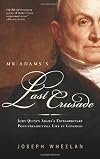
Sometimes people are more successful in some phases of their life than others. John Quincy Adams (hereafter JQA), the 6th US President and the son of John Adams (the 2nd US President), had a remarkable life as a public servant and politician, but this book makes a solid case that he really hit his stride late in life, after leaving the highest office of the still youthful United States. JQA traveled to Europe as a boy along with his father, later served as diplomat and statesman, including show more Massachusetts State Senator, US Senator, Secretary of State, and US President. Unlike most American Presidents, JQA continued his political and public life career after the presidency, this time incarnated as a Massachusetts Congressman, serving his freshman term starting at age 64 and ending at his death in the Capitol at 81 in 1848. In Mr. Adams' Last Crusade, Joseph Wheelan brings us up to speed with JQA rather quickly, summarizing his pre-Social-Security-age life (had Social Security existed then) in a page per year (on average). Wheelan masterfully introduces us to 'Old Man Eloquent' by focusing on these later years in public life, rather than conforming to conventional biographies that hold those presidential four or eight years as the professional and personal pinnacle.
Mr. Adams’s Last Crusade argues that while JQA’s post-presidential congressional career began rather modestly, JQA ultimately became a lightning rod for the rights to free speech and to petition the government, based upon the Declaration of Independence and the Constitution. Further, Wheelan posits that JQA’s ultimately successful arguments against the Gag Rule (which denied congressional debate on and later even introduction of petitions or anything else relevant to slavery) enabled the inevitable vehement national dispute on slavery that climaxed with the Civil War. I would argue based on this book that furthermore, JQA’s congressional career helped guide the United States to maturity by bridging the Revolutionary generation of his father with the Civil War generation. After all, JQA knew many if not all of the Founding Fathers, and served with Congressmen Abraham Lincoln and Andrew Johnson. Wheelan makes much of JQA’s iconic status, and popularity, especially towards the end of his life, but argues successfully that this became much deserved and frequently draws upon the primary accounts of contemporaries, such as Ralph Waldo Emerson and others, to give a broad sense of how JQA was perceived by both allies and enemies.
Some of my more favorite parts of the book are the thunderous arguments JQA made in front of the Supreme Court for the Africans who mutinied aboard the Amistad, and for his rebuttal against censure which ripped his opponents a new one when they were angered by his dogged demand for the right to petition. In both these instances, Wheelan demonstrates JQA’s incredible intellect, perceptiveness, tenacity, and learned pugnacity. Regarding the Amistad, “When Adams’ turn came to address the court, he began by modestly observing that he might well ‘exhibit at once the infirmities of age and the inexperience of youth.’ He then proceeded to demonstrate over the next four and a half hours that he was operating under neither handicap.”
Good story telling also involves showing how characters change and respond to events, and a good biography not only points out influencing factors, but shows evolution and maturation in thinking and action. Wheelan demonstrates this through JQA’s shift on the issue of slavery, from a general disdain, to supporting freedom through the right to petition, to outright abolitionism. This is an important point because while JQA worked with and promoted the cause of several abolitionists, he was not one of them until very late in life.
Ultimately, this is a biography I like and I highly recommend it. It focuses on an interesting portion of an interesting person’s life and reassesses a largely unsung and disregarded early national figure. The reasoning for this selection is stated up front, and Wheelan provides an interesting analysis and synthesis at the end as well, which I appreciate. Too many biographies end with the death and skimp on the analysis and assessing the thesis at the end. Furthermore, the story is told convincingly, with plenty of references to primary resources, especially JQA’s extensive memoirs and diary. There is plenty in this book to learn more about a man too often forgotten, who was in a situation faced by fewer than 50 people, a situation that still has no job description. show less
Mr. Adams’s Last Crusade argues that while JQA’s post-presidential congressional career began rather modestly, JQA ultimately became a lightning rod for the rights to free speech and to petition the government, based upon the Declaration of Independence and the Constitution. Further, Wheelan posits that JQA’s ultimately successful arguments against the Gag Rule (which denied congressional debate on and later even introduction of petitions or anything else relevant to slavery) enabled the inevitable vehement national dispute on slavery that climaxed with the Civil War. I would argue based on this book that furthermore, JQA’s congressional career helped guide the United States to maturity by bridging the Revolutionary generation of his father with the Civil War generation. After all, JQA knew many if not all of the Founding Fathers, and served with Congressmen Abraham Lincoln and Andrew Johnson. Wheelan makes much of JQA’s iconic status, and popularity, especially towards the end of his life, but argues successfully that this became much deserved and frequently draws upon the primary accounts of contemporaries, such as Ralph Waldo Emerson and others, to give a broad sense of how JQA was perceived by both allies and enemies.
Some of my more favorite parts of the book are the thunderous arguments JQA made in front of the Supreme Court for the Africans who mutinied aboard the Amistad, and for his rebuttal against censure which ripped his opponents a new one when they were angered by his dogged demand for the right to petition. In both these instances, Wheelan demonstrates JQA’s incredible intellect, perceptiveness, tenacity, and learned pugnacity. Regarding the Amistad, “When Adams’ turn came to address the court, he began by modestly observing that he might well ‘exhibit at once the infirmities of age and the inexperience of youth.’ He then proceeded to demonstrate over the next four and a half hours that he was operating under neither handicap.”
Good story telling also involves showing how characters change and respond to events, and a good biography not only points out influencing factors, but shows evolution and maturation in thinking and action. Wheelan demonstrates this through JQA’s shift on the issue of slavery, from a general disdain, to supporting freedom through the right to petition, to outright abolitionism. This is an important point because while JQA worked with and promoted the cause of several abolitionists, he was not one of them until very late in life.
Ultimately, this is a biography I like and I highly recommend it. It focuses on an interesting portion of an interesting person’s life and reassesses a largely unsung and disregarded early national figure. The reasoning for this selection is stated up front, and Wheelan provides an interesting analysis and synthesis at the end as well, which I appreciate. Too many biographies end with the death and skimp on the analysis and assessing the thesis at the end. Furthermore, the story is told convincingly, with plenty of references to primary resources, especially JQA’s extensive memoirs and diary. There is plenty in this book to learn more about a man too often forgotten, who was in a situation faced by fewer than 50 people, a situation that still has no job description. show less
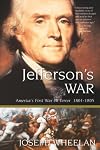
This book is about the "Barbary Wars" that the U.S. fought against several North African countries over paying tribute. This book was originally published only 2 years after the 9/11 attacks. I'm sure it was a very different experience I had reading the book in 2022 than its first readers. The book uncritically describes the U.S.'s past and current dealings with North Africa and the Middle East positively. I don't remember the book taking time to question whether or not the U.S. had the show more right to interfere in those areas, and if they did have the right, whether the U.S. acted in a just and effective manner there.
The information felt thoroughly researched. The story is definitely interesting. Jefferson was a bundle of contradictions and hypocrisies. He said all men are equal and kept slaves. He railed against presidential overreach and then when he became president started a war without congressional approval. The war was carried out horribly. There was an U.S. official actively undermining the war and cutting off funding from the U.S. troops.
Overall, an interesting read, both for the history it is meaning to cover, and for how history was written in the early years after 9/11. show less
The information felt thoroughly researched. The story is definitely interesting. Jefferson was a bundle of contradictions and hypocrisies. He said all men are equal and kept slaves. He railed against presidential overreach and then when he became president started a war without congressional approval. The war was carried out horribly. There was an U.S. official actively undermining the war and cutting off funding from the U.S. troops.
Overall, an interesting read, both for the history it is meaning to cover, and for how history was written in the early years after 9/11. show less
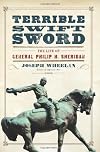
The only reason why I don't give the book a "5" is the lack of discussion about whether Sheridan's "total war" tactics were necessary against the Plains Indians. The book discussed the necessity concerning the Civil War. The book at times verged at times on being a hagiography. Otherwise, the book contained a lot of information about both the General and the times of which I was not aware. The book had a particularly interesting discussion about Role in the early history of Yellowstone show more National Park. I was unaware that he had interests beyond the military.
I would recommend this book highly to any person with a serious interest in history. show less
I would recommend this book highly to any person with a serious interest in history. show less
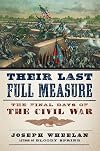
After a lifetime of reading and studying the Civil War that was even more profoundly focused by the sesquicentennial years, I have been ranging around looking for books to put an exclamation mark on the final phases of the war. I had read Jay Winik’s masterful April 1865 some time ago, and more recently the impressive work Richmond Burning: The Last Days of the Confederate Capital, by Nelson Lankford, but in the hopes of locating something with perhaps a wider compass I selected Their Last show more Full Measure: The Final Days of the Civil War, the latest book by Joseph Wheelan. A reporter rather than a historian, Wheelan has built a fine reputation writing narrative histories about Jefferson, the Mexican War, and the Civil War, including last year’s well-received installment about Grant’s famous “Overland Campaign,” Bloody Spring: Forty Days that Sealed the Confederacy’s Fate.
Their Last Full Measure – an engaging, generally well-written but occasionally uneven and by some measures deeply-flawed narrative – surveys the critical events in chronological chapters with titles for each of the final months of the war. This is a welcome technique in that the full sweep of the war is brought to bear in much of its several theaters, the way it might have been viewed by its contemporaries on both sides of the conflict, rather than the more traditional approach that tends to segment events by geography. The only drawback to this approach is that some chapters – such as “April 1865” – will of necessity be substantially longer than others, but this is a quibble.
Following a succinct prologue, in the first chapter, “January 1865,” Wheelan admirably constructs a skeleton of the essentials requisite to bring the reader up to the first days of that calendar and then competently and colorfully puts flesh upon those bones with the events that follow. All eyes may have been on Richmond – or more accurately the besieged Petersburg which was the real gateway to the Confederate capital, and the stalemated forces of Lee and Grant before it – but it was not the only show in town. There was Sherman wreaking havoc in the Carolinas. There was increased pressure by Union forces on the dwindling rebel presence in the west. There was the critical fall of Fort Fisher in North Carolina. The Northern public was growing impatient with Grant, with whom so much faith had been placed the year before, and Richmond still stubbornly held under the auspices of the increasingly delusional Confederate President Jefferson Davis, but the reality was that the Confederacy was on the brink, in tatters on all of its fronts, and it was Grant’s strategic vision that had delivered this outcome.
Wheelan is a talented writer who carries the reader along effortlessly through a great deal of material in multiple arenas with prose that rarely gets bogged down or boring. The exception possibly is in the description of battles, where he switches his narrative gear so drastically that it feels as if another writer has taken his pen: fans of military history will appreciate the careful fine detail, the general reader perhaps less so. This is exacerbated to some degree by the dearth of maps included in the volume, which makes military maneuvers more difficult to follow without resort to outside references.
Sometimes, it should be said, the narrative is heavy with anecdote, some familiar, some less so. Is there anyone who still has not yet learned the story of Wilmer McLean’s luckless move from his house on the Manassas battlefield to Appomattox, where his home hosted the surrender? Perhaps fewer have heard about Confederate Secretary of War John Breckenridge’s ire at Sherman’s alleged stinginess with his whiskey at the less familiar surrender of Joe Johnston’s army. Such stories indeed add color and personality to the drama, and as such are welcome, but what is missing of more value to historians that might have filled these paragraphs instead?
Conspicuous in its absence is any kind of detailed coverage of African-Americans in this critical period of the war’s conclusion, either as slaves, or free, or contraband, or as the proud members of the United States Colored Troops (USCT) that made up a full ten percent of Union forces by 1865 and were pivotal to the end stage of the war effort. This is highly unusual for a Civil War history published in 2015. Blacks are referenced rarely and typically only peripherally, such as in the accusations leveled against Sherman with regard to their treatment. I honestly thought I must have overlooked something, so I later turned to the index for confirmation. There is no listing for “African-Americans” or “USCT;” there are listings for “blacks” and “slaves,” but only with a mere handful of referenced pages. I looked to other recent books on the era to confirm my theory, and in the end it has to be concluded that Wheelan essentially overlooked the vital African-American dimension to the final months of the Civil War. As such, there is an outsize block missing in the narrative that leaves an unfortunate gaping hole that the average reader might stumble past but that the trained historian cannot help but stumble upon.
The greatest weakness to Their Last Full Measure, however, is the “Epilogue” – which to my mind should never have been written. It seems obvious that once his central story was told, Wheelan hoped to write a grand conclusion, not only about end of the war, but about the Civil War itself, about its aftermath, about how it resonates to this day. He is not the first to attempt this, but he may be the latest to fall flat with his effort, which unfortunately – as it is the penultimate chapter – drags the rest of the work down with it, perhaps unfairly. Still, the “Epilogue” is so flawed that it cuts a grove across the entire volume, and it at last betrays the fact that Wheelan after all is not a professional historian, because it becomes increasingly obvious in these final pages that he is largely unfamiliar with the latest scholarly historiography.
In this concluding flourish, Wheelan seems to have fallen victim to many of the incorrect notions of decades past which have been firmly discarded by today’s generation of Civil War historians. For instance, Wheelan asserts that “The Confederacy’s military leaders were superior to the Union’s during the war’s early stages, and so were their troops …” [p338] This anecdotal observation has been thoroughly discredited and even at the time was known to be a fully false assumption. All eyes were indeed on Richmond throughout the war, to Lincoln’s great frustration, but for all the bad generals and lost battles in the east that captivated the public’s eye, the western theater showed a string of Union successes: Fort Donelson, Shiloh, Memphis, New Orleans. The South had bright lights like Lee and Longstreet and Jackson in the east, but they also had dreadful generals like Polk and Bragg in the west and a grand strategic failure in the martyred Albert Sidney Johnston. The Union had such bumblers as Burnside and Hooker in the east, as well as the timid, tentative George McClellan, but they also had Grant and Sherman and Sheridan and Thomas in the west – and some of these later came east and crushed the Confederacy in the end. Noted Civil War historian Gary Gallagher rightly credits Lee as the greatest general in the field on either side, but counters that Grant was the greatest soldier.
Wheelan also recycles the core “Lost Cause Myth” excuse – a central tenet of Lee’s “farewell address” – that “The North’s daunting advantages in manpower and resources … were decisive over the course . . .” of the war, and repeats the misguided assertion – I think it was coined by Shelby Foote – that the Union “… fought the South one-handed.” [p339] While the north did indeed generally enjoy greater resources, this argument has repeatedly been disallowed by modern scholars, who note that the south’s slave property serving as support freed up a greater number of men for military service, and that the Confederacy never needed to conquer the United States, only to avoid being conquered by a weary and divided north in order to maintain their independence. It was, on many occasions, a very close call, and they might very well have prevailed.
There are finally, in the epilogue, grave historical errors. Wheelan claims that the Confederacy’s enactment of the draft, internal taxes, and a focus upon government centralization were all in reaction to similar moves by the Federals. Actually, most of these components were innovations of the ever wary yet determined rebels. Of greater consequence, he insists that Richmond reacted to Washington’s enlistment of black troops by recruiting slaves to the army. In fact, the Union had enrolled African-Americans since 1863 while it was not until the final weeks before Richmond fell that the Confederate Congress, despairing of its crippled manpower, gave in to the pleas of the exalted Robert E. Lee and there were then visible drilling in the streets of the doomed capital the strange anomaly of blacks recruits, men who never actually saw service.
In the end, while there is great value in much of the book its flaws are somewhat fatal. I do not regret reading Their Last Full Measure and I would not discourage readers from it, but there are so many top-notch Civil War histories that I would suggest it belongs more properly to the middle of your list than at the top of it. show less
Their Last Full Measure – an engaging, generally well-written but occasionally uneven and by some measures deeply-flawed narrative – surveys the critical events in chronological chapters with titles for each of the final months of the war. This is a welcome technique in that the full sweep of the war is brought to bear in much of its several theaters, the way it might have been viewed by its contemporaries on both sides of the conflict, rather than the more traditional approach that tends to segment events by geography. The only drawback to this approach is that some chapters – such as “April 1865” – will of necessity be substantially longer than others, but this is a quibble.
Following a succinct prologue, in the first chapter, “January 1865,” Wheelan admirably constructs a skeleton of the essentials requisite to bring the reader up to the first days of that calendar and then competently and colorfully puts flesh upon those bones with the events that follow. All eyes may have been on Richmond – or more accurately the besieged Petersburg which was the real gateway to the Confederate capital, and the stalemated forces of Lee and Grant before it – but it was not the only show in town. There was Sherman wreaking havoc in the Carolinas. There was increased pressure by Union forces on the dwindling rebel presence in the west. There was the critical fall of Fort Fisher in North Carolina. The Northern public was growing impatient with Grant, with whom so much faith had been placed the year before, and Richmond still stubbornly held under the auspices of the increasingly delusional Confederate President Jefferson Davis, but the reality was that the Confederacy was on the brink, in tatters on all of its fronts, and it was Grant’s strategic vision that had delivered this outcome.
Wheelan is a talented writer who carries the reader along effortlessly through a great deal of material in multiple arenas with prose that rarely gets bogged down or boring. The exception possibly is in the description of battles, where he switches his narrative gear so drastically that it feels as if another writer has taken his pen: fans of military history will appreciate the careful fine detail, the general reader perhaps less so. This is exacerbated to some degree by the dearth of maps included in the volume, which makes military maneuvers more difficult to follow without resort to outside references.
Sometimes, it should be said, the narrative is heavy with anecdote, some familiar, some less so. Is there anyone who still has not yet learned the story of Wilmer McLean’s luckless move from his house on the Manassas battlefield to Appomattox, where his home hosted the surrender? Perhaps fewer have heard about Confederate Secretary of War John Breckenridge’s ire at Sherman’s alleged stinginess with his whiskey at the less familiar surrender of Joe Johnston’s army. Such stories indeed add color and personality to the drama, and as such are welcome, but what is missing of more value to historians that might have filled these paragraphs instead?
Conspicuous in its absence is any kind of detailed coverage of African-Americans in this critical period of the war’s conclusion, either as slaves, or free, or contraband, or as the proud members of the United States Colored Troops (USCT) that made up a full ten percent of Union forces by 1865 and were pivotal to the end stage of the war effort. This is highly unusual for a Civil War history published in 2015. Blacks are referenced rarely and typically only peripherally, such as in the accusations leveled against Sherman with regard to their treatment. I honestly thought I must have overlooked something, so I later turned to the index for confirmation. There is no listing for “African-Americans” or “USCT;” there are listings for “blacks” and “slaves,” but only with a mere handful of referenced pages. I looked to other recent books on the era to confirm my theory, and in the end it has to be concluded that Wheelan essentially overlooked the vital African-American dimension to the final months of the Civil War. As such, there is an outsize block missing in the narrative that leaves an unfortunate gaping hole that the average reader might stumble past but that the trained historian cannot help but stumble upon.
The greatest weakness to Their Last Full Measure, however, is the “Epilogue” – which to my mind should never have been written. It seems obvious that once his central story was told, Wheelan hoped to write a grand conclusion, not only about end of the war, but about the Civil War itself, about its aftermath, about how it resonates to this day. He is not the first to attempt this, but he may be the latest to fall flat with his effort, which unfortunately – as it is the penultimate chapter – drags the rest of the work down with it, perhaps unfairly. Still, the “Epilogue” is so flawed that it cuts a grove across the entire volume, and it at last betrays the fact that Wheelan after all is not a professional historian, because it becomes increasingly obvious in these final pages that he is largely unfamiliar with the latest scholarly historiography.
In this concluding flourish, Wheelan seems to have fallen victim to many of the incorrect notions of decades past which have been firmly discarded by today’s generation of Civil War historians. For instance, Wheelan asserts that “The Confederacy’s military leaders were superior to the Union’s during the war’s early stages, and so were their troops …” [p338] This anecdotal observation has been thoroughly discredited and even at the time was known to be a fully false assumption. All eyes were indeed on Richmond throughout the war, to Lincoln’s great frustration, but for all the bad generals and lost battles in the east that captivated the public’s eye, the western theater showed a string of Union successes: Fort Donelson, Shiloh, Memphis, New Orleans. The South had bright lights like Lee and Longstreet and Jackson in the east, but they also had dreadful generals like Polk and Bragg in the west and a grand strategic failure in the martyred Albert Sidney Johnston. The Union had such bumblers as Burnside and Hooker in the east, as well as the timid, tentative George McClellan, but they also had Grant and Sherman and Sheridan and Thomas in the west – and some of these later came east and crushed the Confederacy in the end. Noted Civil War historian Gary Gallagher rightly credits Lee as the greatest general in the field on either side, but counters that Grant was the greatest soldier.
Wheelan also recycles the core “Lost Cause Myth” excuse – a central tenet of Lee’s “farewell address” – that “The North’s daunting advantages in manpower and resources … were decisive over the course . . .” of the war, and repeats the misguided assertion – I think it was coined by Shelby Foote – that the Union “… fought the South one-handed.” [p339] While the north did indeed generally enjoy greater resources, this argument has repeatedly been disallowed by modern scholars, who note that the south’s slave property serving as support freed up a greater number of men for military service, and that the Confederacy never needed to conquer the United States, only to avoid being conquered by a weary and divided north in order to maintain their independence. It was, on many occasions, a very close call, and they might very well have prevailed.
There are finally, in the epilogue, grave historical errors. Wheelan claims that the Confederacy’s enactment of the draft, internal taxes, and a focus upon government centralization were all in reaction to similar moves by the Federals. Actually, most of these components were innovations of the ever wary yet determined rebels. Of greater consequence, he insists that Richmond reacted to Washington’s enlistment of black troops by recruiting slaves to the army. In fact, the Union had enrolled African-Americans since 1863 while it was not until the final weeks before Richmond fell that the Confederate Congress, despairing of its crippled manpower, gave in to the pleas of the exalted Robert E. Lee and there were then visible drilling in the streets of the doomed capital the strange anomaly of blacks recruits, men who never actually saw service.
In the end, while there is great value in much of the book its flaws are somewhat fatal. I do not regret reading Their Last Full Measure and I would not discourage readers from it, but there are so many top-notch Civil War histories that I would suggest it belongs more properly to the middle of your list than at the top of it. show less
Lists
Awards

You May Also Like


Associated Authors
Statistics
- Works
- 12
- Members
- 1,053
- Popularity
- #24,475
- Rating
- 3.9
- Reviews
- 18
- ISBNs
- 66
- Favorited
- 1
