
On This Page
Description
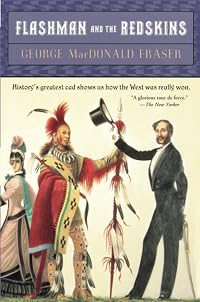
What was Harry Flashman doing at Little Bighorn, caught between the gallant remnant of Custer's 7th Cavalry and the withering attack of Sitting Bull's Braves? He was trying to get out of the line of fire and escape yet again with his life after setting the American West by its ears.Tags
Recommendations



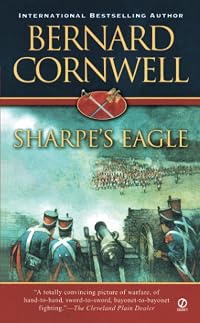
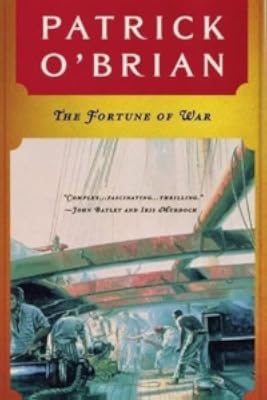
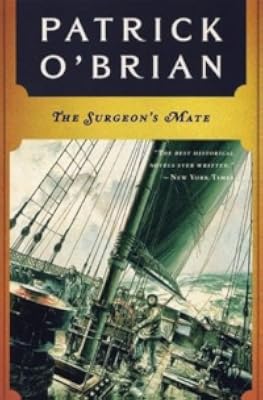
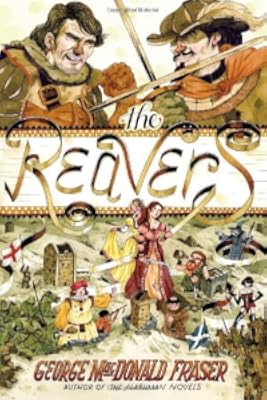



Member Recommendations


Member Reviews
After seven books, what new things can I say about Flashman? Flashman and the Redskins is the same brilliant mix of laugh-out-loud lecherous comedy, rip-roaring adventure, prime historical fiction and just darn good storytelling as the previous six books.
Redskins is not up there with the best of the series, but my love for the books grows with every page; perhaps it's because I know there's only five more to go, or perhaps it's just because Fraser's quality of writing is so consistently high. His writing skill is tested here, as Redskins is, in contrast to previous books, two separate stories set decades apart (think of it, in a way, as two novellas rather than a novel, though the stories are linked). This means there is a bit of a show more disconnect on the reader's part: no sooner has the first part ended (and it does end rather abruptly) than we are thrust into another twenty-odd years later. By this time, Flashman has gained (note I did not say earned) great fame and has the ear of many bigwigs (Lincoln – dead by this time, Ulysses S. Grant, Sheridan, etc.). Unfortunately, we don't know how he earned these American laurels; Fraser never got around to writing Flashman's American Civil War adventures before his death. All we are left with is this tantalising passage from Redskins:
… now, in 1875, I was Sir Harry Flashman, V.C., K.C.B., with all the supposed heroics of the Crimea, [Indian] Mutiny and China behind me, to say nothing of distinguished service to the Union in the Civil War. No one had been too clear what that service was, since it had seen me engaged on both sides, but I'd come out of it with their Medal of Honour and immense, if mysterious, credit, and the only man who knew the whole truth had got a bullet in the back at Ford's Theatre, so he wasn't telling. Neither was I – although I will some day, all about Jeb Stuart, and Libby Prison, and my mission for Lincoln (God rest him for a genial blackmailer), and my renewed bouts with the elfin Mrs Mandeville, among others. But that ain't to the point just now; all that signifies is that I'd gained the acquaintance of such notables as Grant (now President) and Sherman and Sheridan – as well as such lesser lights as young Custer, whom I'd met briefly and informally, and Wild Bill Hickok, whom I'd known well (but the story of my deputy marshal's badge must wait for another day, too)." (pg. 260)
Consequently, we have to take a lot of Flashman's circumstances in this second story on faith. But it is useless pining over what we will never have, and we must be grateful for all the (amazing) Flashman we have. It took me a while to warm to Redskins; it seemed longer (not so much in page length as in prosing) and, as it picks up directly from events of the third book, Flash for Freedom!, to be thrust directly into this one is a bit disorienting. (As a sidenote, the publisher also changed the font from the more engaging and historical-looking one of previous books to a rather bland Times New Roman. A minor point, I know, but it did disappoint me.) But soon enough Flashy is up to his same old tricks - he is at his roguish best here (but I seem to say that about all the books; I think 'shameless rogue' is his default – perhaps his only – mode). Redskins is interesting in that this behaviour actually comes back to bite him; usually he just wins clear. Elspeth's prolonged appearance in the second story is also very welcome; her interactions with dearest Harry are pure gold and I'm starting to think that perhaps she's just as great a comedic creation as Flashman himself.
Fraser's clear enthusiasm for the Western setting also shines through, not only in the adventuring and the borderline misty-eyed descriptions of the Old West (Flashman remarks on how rapid Western expansion was; in passing through by steam train you could still see the ruts your frontier wagon made fifty years before (pg. 75)) but in his historical research. The differences between the Indian tribes – their appearance and their mannerisms, their social customs and their dispositions to the white man – are all accounted for; these are not offensive Hollywood 'Indians' of one indistinguishable Red mass. (For all the false claims of Fraser being bigoted in his Flashman books, he takes great care in crafting fully-realised and often sympathetic personalities out of his dark-skinned – and white-skinned – characters.) His first story is incredibly accurate and detailed about the fledgling frontier (I noted, with some interest, that the scalp-hunter 'Gallantin' that Flashman has the misfortune to meet was the same historical figure that Cormac McCarthy would use for his 'Glanton' character in Blood Meridian just a few years after Fraser), although I confess I did get lost geographically as Flashy flits about the Old West. In the second story, Fraser will not be drawn on his opinions of Little Bighorn (in general, he sides with the majority views on the battle) but he does have a lot to say on the plight of the American Indians in general, and there is certainly a lot to ponder for those readers so inclined. But even for those who aren't, damn your eyes, it is still another great, ripping Flashman yarn to devour." show less
Redskins is not up there with the best of the series, but my love for the books grows with every page; perhaps it's because I know there's only five more to go, or perhaps it's just because Fraser's quality of writing is so consistently high. His writing skill is tested here, as Redskins is, in contrast to previous books, two separate stories set decades apart (think of it, in a way, as two novellas rather than a novel, though the stories are linked). This means there is a bit of a show more disconnect on the reader's part: no sooner has the first part ended (and it does end rather abruptly) than we are thrust into another twenty-odd years later. By this time, Flashman has gained (note I did not say earned) great fame and has the ear of many bigwigs (Lincoln – dead by this time, Ulysses S. Grant, Sheridan, etc.). Unfortunately, we don't know how he earned these American laurels; Fraser never got around to writing Flashman's American Civil War adventures before his death. All we are left with is this tantalising passage from Redskins:
… now, in 1875, I was Sir Harry Flashman, V.C., K.C.B., with all the supposed heroics of the Crimea, [Indian] Mutiny and China behind me, to say nothing of distinguished service to the Union in the Civil War. No one had been too clear what that service was, since it had seen me engaged on both sides, but I'd come out of it with their Medal of Honour and immense, if mysterious, credit, and the only man who knew the whole truth had got a bullet in the back at Ford's Theatre, so he wasn't telling. Neither was I – although I will some day, all about Jeb Stuart, and Libby Prison, and my mission for Lincoln (God rest him for a genial blackmailer), and my renewed bouts with the elfin Mrs Mandeville, among others. But that ain't to the point just now; all that signifies is that I'd gained the acquaintance of such notables as Grant (now President) and Sherman and Sheridan – as well as such lesser lights as young Custer, whom I'd met briefly and informally, and Wild Bill Hickok, whom I'd known well (but the story of my deputy marshal's badge must wait for another day, too)." (pg. 260)
Consequently, we have to take a lot of Flashman's circumstances in this second story on faith. But it is useless pining over what we will never have, and we must be grateful for all the (amazing) Flashman we have. It took me a while to warm to Redskins; it seemed longer (not so much in page length as in prosing) and, as it picks up directly from events of the third book, Flash for Freedom!, to be thrust directly into this one is a bit disorienting. (As a sidenote, the publisher also changed the font from the more engaging and historical-looking one of previous books to a rather bland Times New Roman. A minor point, I know, but it did disappoint me.) But soon enough Flashy is up to his same old tricks - he is at his roguish best here (but I seem to say that about all the books; I think 'shameless rogue' is his default – perhaps his only – mode). Redskins is interesting in that this behaviour actually comes back to bite him; usually he just wins clear. Elspeth's prolonged appearance in the second story is also very welcome; her interactions with dearest Harry are pure gold and I'm starting to think that perhaps she's just as great a comedic creation as Flashman himself.
Fraser's clear enthusiasm for the Western setting also shines through, not only in the adventuring and the borderline misty-eyed descriptions of the Old West (Flashman remarks on how rapid Western expansion was; in passing through by steam train you could still see the ruts your frontier wagon made fifty years before (pg. 75)) but in his historical research. The differences between the Indian tribes – their appearance and their mannerisms, their social customs and their dispositions to the white man – are all accounted for; these are not offensive Hollywood 'Indians' of one indistinguishable Red mass. (For all the false claims of Fraser being bigoted in his Flashman books, he takes great care in crafting fully-realised and often sympathetic personalities out of his dark-skinned – and white-skinned – characters.) His first story is incredibly accurate and detailed about the fledgling frontier (I noted, with some interest, that the scalp-hunter 'Gallantin' that Flashman has the misfortune to meet was the same historical figure that Cormac McCarthy would use for his 'Glanton' character in Blood Meridian just a few years after Fraser), although I confess I did get lost geographically as Flashy flits about the Old West. In the second story, Fraser will not be drawn on his opinions of Little Bighorn (in general, he sides with the majority views on the battle) but he does have a lot to say on the plight of the American Indians in general, and there is certainly a lot to ponder for those readers so inclined. But even for those who aren't, damn your eyes, it is still another great, ripping Flashman yarn to devour." show less
The recent death of George McDonald Fraser has brought a close (maybe permanent, maybe not?) to this delightful series of books. I have had the pleasure of following this series every since the release of the first book back in the sixties. The Flashman novels combine history (including substantial endnotes) with sex, action, adventure and the secret pleasure of enjoying the exploits of one of the most notoriously popular non-politically correct characters of 20th Century literature. Flashman is a womanizer, a coward, a scoundrel and a cheat, but in the novels, which are all narrated by Flashman himself, he is utterly honest with his readers. He is a man not proud of his faults, but certainly unabashed about them.
The Flashman novels show more could be dismissed as sensationalized light reading , but Fraser cleverly tied his character into most of the major events of the last sixty years of the nineteenth century, a Victorian Zelig or Forrest Gump. Flashman casually mentions this minor detail or that simple observation, then Fraser in his assumed role as editor of the Flashman papers meticulously explains in the endnotes how these mentions by Flashman confirm the truth of his narrative, since only if Flashman was there could he have known about this fact or that. Fraser's endnotes also round out the historic details of the narrative, giving background and elaboration to the history-as-I-lived-it tales told by Flashman. It all works wonderfully, even if you somewhat suspect that some details are being outrageously fabricated.
I very strongly recommend these books to anyone who has an interest in history and is willing to keep an open mind towards the womanizing and the language (the n-word appears quite a bit, but completely in character for Flashman). I would suggest the best way to read them is in order of publication. This doesn't follow Flashman's own life chronology, but the books published later often make reference to previous editions of the "Flashman Papers" and so is more fun for the reader to follow. show less
The Flashman novels show more could be dismissed as sensationalized light reading , but Fraser cleverly tied his character into most of the major events of the last sixty years of the nineteenth century, a Victorian Zelig or Forrest Gump. Flashman casually mentions this minor detail or that simple observation, then Fraser in his assumed role as editor of the Flashman papers meticulously explains in the endnotes how these mentions by Flashman confirm the truth of his narrative, since only if Flashman was there could he have known about this fact or that. Fraser's endnotes also round out the historic details of the narrative, giving background and elaboration to the history-as-I-lived-it tales told by Flashman. It all works wonderfully, even if you somewhat suspect that some details are being outrageously fabricated.
I very strongly recommend these books to anyone who has an interest in history and is willing to keep an open mind towards the womanizing and the language (the n-word appears quite a bit, but completely in character for Flashman). I would suggest the best way to read them is in order of publication. This doesn't follow Flashman's own life chronology, but the books published later often make reference to previous editions of the "Flashman Papers" and so is more fun for the reader to follow. show less
The seventh entry in the Flashman series is two books in one. The book picks up where [[ASIN:0452260892 Flash for Freedom! (Flashman)]] ended. It’s 1849 and Flash is in New Orleans, on the run from the law. He reacquaints himself with Susie Wilnick, a local madam who is moving her brothel west to join the flood of Forty Niners heading to California. Flash marries – again – but even at great personal risk he cannot help his roving eyes...and hands and so forth.
He leaves Susie along the west (and in order to take his leave, he commits a deed that is shameful even by Harry Flashman’s standards.) He then begins a wild trip across the Old West, even living with Apaches for awhile (where he weds yet again). Along the way, the reader show more meets many historical characters including Spotted Tail, John Joel Glanton, Mangas Coloradas, Geronimo, and Kit Carson. One of the more interesting historical bits involves Bent’s Fort and its mysterious destruction. Harry was there and resolves the mystery.
As always Fraser deflates the mythology surrounding historical figures. This characteristic debunking is a bit odd because Fraser believed the mythology about his own army and his own war, the Indian 17th Division of the British Army fighting in Burma during the last months of World War Two (See his war memoir [[ASIN:1602391904 Quartered Safe Out Here: A Harrowing Tale of World War II]]).
Flashman manages to escape the Apaches and returns to England. In Part Two, Elspeth, his ‘real’ English wife convinces Harry to return to the States, which introduces us to even more historical figures and eventually lands Harry right in the midst of the Battle of the Little Big Horn. I found the first part more entertaining and the ending was more than a bit of stretch.
Fraser is a marvelous story teller and as he spins out his entertaining tales one also picks up a good deal of history. The reader should exercise caution in accepting Fraser’s history. His version tends to be based on older sources and he eschewed more modern works (and certainly rejected modern viewpoints). Enjoy it for what it is: well-told speculations on historical mysteries. While some will be offended by Flashman’s views on women, Indians, Africans, and other people of color, in fairness, he also did not generally hold other white men in high regard, perhaps because Harry knew what a scoundrel he was himself. show less
He leaves Susie along the west (and in order to take his leave, he commits a deed that is shameful even by Harry Flashman’s standards.) He then begins a wild trip across the Old West, even living with Apaches for awhile (where he weds yet again). Along the way, the reader show more meets many historical characters including Spotted Tail, John Joel Glanton, Mangas Coloradas, Geronimo, and Kit Carson. One of the more interesting historical bits involves Bent’s Fort and its mysterious destruction. Harry was there and resolves the mystery.
As always Fraser deflates the mythology surrounding historical figures. This characteristic debunking is a bit odd because Fraser believed the mythology about his own army and his own war, the Indian 17th Division of the British Army fighting in Burma during the last months of World War Two (See his war memoir [[ASIN:1602391904 Quartered Safe Out Here: A Harrowing Tale of World War II]]).
Flashman manages to escape the Apaches and returns to England. In Part Two, Elspeth, his ‘real’ English wife convinces Harry to return to the States, which introduces us to even more historical figures and eventually lands Harry right in the midst of the Battle of the Little Big Horn. I found the first part more entertaining and the ending was more than a bit of stretch.
Fraser is a marvelous story teller and as he spins out his entertaining tales one also picks up a good deal of history. The reader should exercise caution in accepting Fraser’s history. His version tends to be based on older sources and he eschewed more modern works (and certainly rejected modern viewpoints). Enjoy it for what it is: well-told speculations on historical mysteries. While some will be offended by Flashman’s views on women, Indians, Africans, and other people of color, in fairness, he also did not generally hold other white men in high regard, perhaps because Harry knew what a scoundrel he was himself. show less
Flashman and the Redskins circles back to where Flash for Freedom left off. Harry Flashman is up to his old tricks again. If you think I'm joking just know that sex is mentioned on the very first page. That's Flashy for you! But, in Flashman and the Redskins he takes it a bit further. To get out of yet another jam Flashman is forced to take up with Susie, a madame of a New Orleans brothel (surprise, surprise), but to further complicate things, he ends up marrying her to ensure safe passage across the west to California. It's on this journey that Flashman encounters the "redskins" and ends up marrying an Apache Indian too. Never a dull moment for 28 year old Harry. The multiple marriages set the stage for the rest of Flashman's story show more with a twist at the end.
Fast forward and Flash is back in the States, this time with his real wife, Elspeth. To give you some perspective, the events in Royal Flash happened twenty eight years earlier. Remember Otto von Bismarck? This time Flashman is up against an even craftier opponent...a woman he has wronged (it was bound to happen sometime). show less
Fast forward and Flash is back in the States, this time with his real wife, Elspeth. To give you some perspective, the events in Royal Flash happened twenty eight years earlier. Remember Otto von Bismarck? This time Flashman is up against an even craftier opponent...a woman he has wronged (it was bound to happen sometime). show less
After Flash for Freedom, our disreputable old Flashman just wants to get home to jolly old England and his darling Elspeth. Instead he finds himself still incognito, on the run and married to a Madam who's moving her girls to boom times in 1849 California. Fraser mines early pioneers' accounts for actual events and conditions that Flashman gets to experience for himself. Great, naughty, politically incorrect fun as usual, through many hair raising (literally) adventures.
This starts a bit more slowly than some of the Flashman books, but by the end I couldn't put it down. Our anti-hero rogers his way across the Wild West, meeting well-known real-life characters and ending up as the only survivor of a famous battle where previous history books had suggested there were no survivors. If anything Flashy's treatment of women is even more callous than usual. There is an unexpected twist at the end.
Our intrepid hero, Harry Flashman, is back for volume seven of the Flashman Papers, a narrative of the life and times of one of the most ne’er-do-well wastrels to ever grace the pages of a published autobiography.
The first five Flashman novels were presented in chronological order. This “packet”, like its immediate predecessor, acts to fill in a previous “gap” in the Flashman timeline. From a chronological standpoint, the adventures of this novel immediately follow those contained in Flash For Freedom, wherein we left Flashman in the port of New Orleans awaiting transport to England. Alas, poor Harry is instead destined for adventures in the American West of 1849-50. The story then skips over 25 years and picks up again with show more Flashman attending the wedding of his good friend Philip Sheridan in Chicago. From there, our friend Flash hooks up with General George Custer for a leisurely ride through the Black Hills of Dakota and into Montana.
As in the previous Flashman novels, our Harry is revealed as the premier coward and opportunist of his era; faults which he quite willingly admits and even boasts of. Much as a prior day Forrest Gump, he has a way of finding himself among the most powerful and famous personages of his era, as he takes part in the great events of the period, in this case meeting a young Geronimo on the Santa Fe Trail, traveling with Kit Carson and riding among the American cavalry at Little Big Horn.
Aside from uproarious fun and games, the Flashman series is set against historical events and actually serves as an educational experience. On to volume eight of the Flashman Papers. show less
The first five Flashman novels were presented in chronological order. This “packet”, like its immediate predecessor, acts to fill in a previous “gap” in the Flashman timeline. From a chronological standpoint, the adventures of this novel immediately follow those contained in Flash For Freedom, wherein we left Flashman in the port of New Orleans awaiting transport to England. Alas, poor Harry is instead destined for adventures in the American West of 1849-50. The story then skips over 25 years and picks up again with show more Flashman attending the wedding of his good friend Philip Sheridan in Chicago. From there, our friend Flash hooks up with General George Custer for a leisurely ride through the Black Hills of Dakota and into Montana.
As in the previous Flashman novels, our Harry is revealed as the premier coward and opportunist of his era; faults which he quite willingly admits and even boasts of. Much as a prior day Forrest Gump, he has a way of finding himself among the most powerful and famous personages of his era, as he takes part in the great events of the period, in this case meeting a young Geronimo on the Santa Fe Trail, traveling with Kit Carson and riding among the American cavalry at Little Big Horn.
Aside from uproarious fun and games, the Flashman series is set against historical events and actually serves as an educational experience. On to volume eight of the Flashman Papers. show less
Members
- Recently Added By
Lists

Historical Fiction
889 works; 91 members
Author Information

48+ Works 19,687 Members
Author George MacDonald Fraser was born April 2, 1925 in Carlisle. He was refused entrance to the medical faculty of Glasgow University, so he joined the army in 1943. He served as an infantryman with the 17th Indian Division of the XIVth Army in Burma, a lance corporal and was commissioned in the Gordon Highlanders. After the war, he became a show more sports reporter with the Carlisle Journal; and during this time, he met and married Kathleen Hetherington, a reporter from another paper. He worked as a reporter and sub-editor on the Cumberland News and then moved to Glasgow, in 1953, where he worked at the Glasgow Herald as a features editor and deputy editor. Fraser's first novel was "Flashman" (1969), which was followed by nine sequels, so far, that deal with different venues of the 19th century ranging from Russia, Borneo and China to the Great Plains of the America West. Some of the other titles in the Flashman Papers are "Royal Flash" (1970), "Flashman in the Great Game" (1975), "Flashman and the Redskins" (1982), and "Flashman and the Angel of the Lord" (1994). Some of his non-fiction work includes "The Steel Bonnets" (1971), which is a factual study of the Anglo-Scottish border thieves in the seventeenth century, and "Quartered Safe Out Here" (1992). Fraser has also written a number of screenplays that include "The Three Musketeers" (1973), "Royal Flash" (1975), "Octopussy" (1983), and "Return of the Musketeers" (1989). He has also written a series of short stories about Private McAuslan whose titles include "The General Danced at Dawn" (1970), "McAuslan in the Rough" (1974), and "The Sheik and the Dustbin and other McAuslan Stories" (1988). He died of cancer on January 2, 2008. (Bowker Author Biography) show less
Some Editions
Series

Work Relationships
Is contained in
Common Knowledge
- Original title
- Flashman and the Redskins
- Original publication date
- 1982
- People/Characters
- Harry Paget Flashman; George Armstrong Custer; Spotted Tail; Chico Velasquez; Crazy Horse; "Wild Bill" Hickok (show all 17); Susie Willinck; ohn Charity Spring; Geronimo; Kit Carson; Samuel C. Owens; Cleonie; Frank Grouard; Sitting Bull; Marcus Reno; Frederick William Benteen (1834-1898); George Crook
- Important places
- Little Bighorn, Montana, USA; New Orleans, Louisiana, USA; St. Louis, Missouri, USA; Kansas City, Missouri, USA; Santa Fe Trail
- Important events
- Battle of the Little Bighorn (1876-06-25 | 1876-06-26)
- Dedication
- For Icimanipi-Wihopawin "Travels-Beautiful-Woman" from Bent's and the Santa Fe Trail to the Black Hills
- First words
- A singular feature of the Flashman Papers, the memoirs of the notorious bully of Tom Brown's Schooldays, which were discovered in a Leicestershire saleroom in 1966, is that their author wrote them in self-contained instalme... (show all)nts, describing his background and setting the scene anew each time.
- Last words
- (Click to show. Warning: May contain spoilers.)(The seventh packet of the Flashman Papers ends here, without further comment or elaboration from its author, on August 2, 1876, the day on which Wild Bill Hickok was shot dead in the Number Ten Saloon, Deadwood.)
- Blurbers
- Wodehouse, P. G.; Waugh, Auberon; Snow, C. P.
- Original language
- English UK
Classifications
Statistics
- Members
- 1,046
- Popularity
- 24,564
- Reviews
- 15
- Rating
- (4.03)
- Languages
- English, German, Spanish
- Media
- Paper, Audiobook, Ebook
- ISBNs
- 21
- ASINs
- 6