On This Page
Description
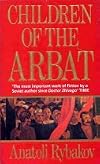
Chilling portrait of Stalin & his terror and its impact on a generation of young friends living in Moscow's Arbat.Tags
Recommendations










Member Reviews
These are the first two volumes in a trilogy (the third is Dust and Ashes). Rybakov is an excellent storyteller. His many characters and intertwining plot(s) sweep you along in mid-1930s USSR, setting out the background to and beginning of Stalin’s Terror. His characters take part in a vividly portrayed Moscow social scene with interspersed scenes—based, I believe, on substantial research—involving Stalin himself and the highest members of the Soviet government. Rybakov is very good at depicting Stalin as a person; the scenes he puts together create an absolutely chilling—and completely believable—account of an extraordinarily, dangerously paranoid person. Virtually all of the people and places that Rybakov depicts (from show more socializing in Moscow to life in exile in Siberia to Stalin strolling near his dacha) are beautifully drawn and he is wonderful at inventing dozens of characters and a wide range of situations. Indeed, having lived through it himself, Rybakov is particularly convincing at showing how ordinary people tried to live their lives under the Terror.
Yet after 1,400 pages, as riveting as Rybakov’s portrayals are, as terrifying as his renderings of everyday life, as successful as his recreation of life and lives, I was disappointed at Rybakov’s failure to address the larger questions that his story so clearly raises. For instance, Rybakov creates an almost spellbinding account of a well-placed (socially) individual who runs afoul of the NKVD. From the tension of merely waiting for the next telephone call to the dread and panic of an interrogation, it’s almost inconceivable that the relationship could be portrayed better. But, as evocative as the writing is, it never seeks serious answers to the great questions.
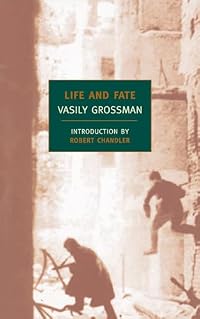
Irving Howe, an American literary critic (active from about 1950-1990) wrote this in 1988: “At no point does he venture beyond prescribed Leninist orthodoxy…. Neither in his own right nor through his characters…does the novelist ask whether the Bolshevik exaltation of 'the party'…smoothed Stalin's rise to power. (In this respect, Vassily Grossman's Life and Fate, another recently translated Soviet novel about Stalinism, is much bolder.) … The criticism I'm making here, a literary criticism, is not that Anatoly Rybakov or his characters fail to provide congenial answers but that they fail to grapple deeply with inescapable questions. Or to put it another way… the subject he has chosen…requires [either the author or his characters or both to engage in] sustained and independent reflection.”
I think Howe is right. The story itself (the characters, the line-by-line writing) is great; it demands deeper thought which Rybakov fails to provide. And so as much as I liked the story, I was disappointed in the work as a whole. show less
Yet after 1,400 pages, as riveting as Rybakov’s portrayals are, as terrifying as his renderings of everyday life, as successful as his recreation of life and lives, I was disappointed at Rybakov’s failure to address the larger questions that his story so clearly raises. For instance, Rybakov creates an almost spellbinding account of a well-placed (socially) individual who runs afoul of the NKVD. From the tension of merely waiting for the next telephone call to the dread and panic of an interrogation, it’s almost inconceivable that the relationship could be portrayed better. But, as evocative as the writing is, it never seeks serious answers to the great questions.
Irving Howe, an American literary critic (active from about 1950-1990) wrote this in 1988: “At no point does he venture beyond prescribed Leninist orthodoxy…. Neither in his own right nor through his characters…does the novelist ask whether the Bolshevik exaltation of 'the party'…smoothed Stalin's rise to power. (In this respect, Vassily Grossman's Life and Fate, another recently translated Soviet novel about Stalinism, is much bolder.) … The criticism I'm making here, a literary criticism, is not that Anatoly Rybakov or his characters fail to provide congenial answers but that they fail to grapple deeply with inescapable questions. Or to put it another way… the subject he has chosen…requires [either the author or his characters or both to engage in] sustained and independent reflection.”
I think Howe is right. The story itself (the characters, the line-by-line writing) is great; it demands deeper thought which Rybakov fails to provide. And so as much as I liked the story, I was disappointed in the work as a whole. show less
This is 1930s Moscow. The Arbat is the intellectual and artistic community of Moscow and Sasha Pankratov, a member of the Young Communist League, has been arrested for alleged subversion. He has been exiled in Siberia for his political activities and the counterrevolutionary conversations he didn't even know he was having. Even his uncle who wields considerable political power as could not alter or commute his sentence of three years. (As an aside, Sasha's mother, Sofya Alexandrovna, broke my heart while she was preparing for Sasha's exile.)
Intertwined with Sasha's story are the other residents of the Arbat. These characters are also affected by the current political climate. For example, the chance of Yuris getting job placements could show more be hindered by the fact he has an older brother in prison. Boys are entering the Red Army to prove themselves to Stalin. The Arbat neighborhood struggles to survive the political games. Children of the Arbat also delves into the psychology of Joseph Stalin's true-life growing paranoia. As history tells us, his was a sickness that went unchecked and as a result, mushroom into a full-blown psychotic break from reality. You could be severely punished for any criticism of Stalin, however small. Just ask his dentist. show less
Intertwined with Sasha's story are the other residents of the Arbat. These characters are also affected by the current political climate. For example, the chance of Yuris getting job placements could show more be hindered by the fact he has an older brother in prison. Boys are entering the Red Army to prove themselves to Stalin. The Arbat neighborhood struggles to survive the political games. Children of the Arbat also delves into the psychology of Joseph Stalin's true-life growing paranoia. As history tells us, his was a sickness that went unchecked and as a result, mushroom into a full-blown psychotic break from reality. You could be severely punished for any criticism of Stalin, however small. Just ask his dentist. show less
A great story capturing the caprice of human nature, the indifference of the Soviet system to the individual in the name of the state, and in the name of Stalin. The depiction of Stalin's paranoia is compelling. I can't wait to read "Fear." I want to know how the story continues as the "Great Patriotic War" approaches. Thanks for the recommendations LibraryThing, this is opening up a new area of reading for me. This all happened on chance; I visited Moscow in June, walked on Arbat St., now a pleasant, if touristy, pedestrian mall near the Foreign Ministry. Even the architectural design of that building, if I understand the history of Moscow's "Seven Sisters" correctly, comes up in this novel (obliquely).
Children of the Arbat was a sensation when it first became available to Soviet readers in 1987. A landmark text of glasnost, it was written between 1966 and 1983 but had been suppressed as anti-Stalinist and was therefore distributed only via very risky underground means known in the USSR as samizdat. But during the Perestroika era the novel was released in serial form in newspapers and its sequels 1935 and Other Years (1989), Fear (1990) and Dust & Ashes (1994) became available too. Children of the Arbat, set in the 1930s, is partly autobiographical: like the central character Sasha Pankratov, Anatoli Rybakov (1911-1998) was himself exiled to Siberia for three years.
There are three strands to the story: Sasha’s arrest for spurious show more reasons and his exile to Siberia; life in Moscow as his girlfriend Varya Ivanova waits for his return; and the depiction of Stalin as he plots to cement his power by eliminating all opposition. The title is instructive: the Arbat today is a tourist precinct, a lively hub of commercial activity in the historic heart of Moscow. (It’s the only place I’ve ever been where you are offered a free vodka (neat!) as soon as you walk into a shop!) Before the Soviet era it was a place for artists, intellectuals and academics, and and today as it becomes gentrified it’s still a desirable place to live. But in the Soviet era it was where high-ranking officials lived, and the title of the book refers to the generation born at the time of the Russian Revolution, and by the 1930s were young adults who had grown up believing in its ideals. They were privileged by comparison with most people in the Soviet Union because they had better access to education and opportunity, they were in a position to see the economic progress being made under rapid industrialisation, and they were forgiving of the human cost because they saw it as an unavoidable aspect of the creation of the Soviet State which they wholeheartedly supported. The novel charts the slow disillusionment of this generation as they begin to see the consequences of rule by terror.
To read the rest of my review please visit https://anzlitlovers.com/2017/02/19/children-of-the-arbat-by-anatoli-rybakov-tra... show less
There are three strands to the story: Sasha’s arrest for spurious show more reasons and his exile to Siberia; life in Moscow as his girlfriend Varya Ivanova waits for his return; and the depiction of Stalin as he plots to cement his power by eliminating all opposition. The title is instructive: the Arbat today is a tourist precinct, a lively hub of commercial activity in the historic heart of Moscow. (It’s the only place I’ve ever been where you are offered a free vodka (neat!) as soon as you walk into a shop!) Before the Soviet era it was a place for artists, intellectuals and academics, and and today as it becomes gentrified it’s still a desirable place to live. But in the Soviet era it was where high-ranking officials lived, and the title of the book refers to the generation born at the time of the Russian Revolution, and by the 1930s were young adults who had grown up believing in its ideals. They were privileged by comparison with most people in the Soviet Union because they had better access to education and opportunity, they were in a position to see the economic progress being made under rapid industrialisation, and they were forgiving of the human cost because they saw it as an unavoidable aspect of the creation of the Soviet State which they wholeheartedly supported. The novel charts the slow disillusionment of this generation as they begin to see the consequences of rule by terror.
To read the rest of my review please visit https://anzlitlovers.com/2017/02/19/children-of-the-arbat-by-anatoli-rybakov-tra... show less
"Children of the Arbat" is in the long Russian tradition of critical (as distinct from socialist) realism. It deals with the teenage and young adult lives of a group of children who grow up in Moscow's Arbat district, beginning in 1934, when Stalin's paranoia was beginning to ripen into political terror.
The novel explores the lives of those exiled by the secret police, and those who reach varying levels of accommodation by a regime which is tightening its grip on Russian society. Among the characters are Stalin himself, and such senior pre-WW2 Soviet figures as Kirov. The portrait of Stalin is remarkably consistent with that in Simon Sebag Montefiore's nonfiction work "The Court of the Red Tsar".
The inclusion of so many viewpoints slows show more down the narrative at times; but the central narrative of "Children of the Arbat" is strongly autobiographical, and it is the scenes involving the exiled Sasha Pankratov, his mother, his relatives, and his friend Varya that are, for me, the strongest. This fine novel is the first in Rybakov's "Arbat trilogy" (the others being "Fear" and "Dust and Ashes"), and I'm now keen to read these and find out how the story of Sasha, Varya and the rest continues. Given how Stalin's story continues, I suspect many tears remain to be shed. show less
The novel explores the lives of those exiled by the secret police, and those who reach varying levels of accommodation by a regime which is tightening its grip on Russian society. Among the characters are Stalin himself, and such senior pre-WW2 Soviet figures as Kirov. The portrait of Stalin is remarkably consistent with that in Simon Sebag Montefiore's nonfiction work "The Court of the Red Tsar".
The inclusion of so many viewpoints slows show more down the narrative at times; but the central narrative of "Children of the Arbat" is strongly autobiographical, and it is the scenes involving the exiled Sasha Pankratov, his mother, his relatives, and his friend Varya that are, for me, the strongest. This fine novel is the first in Rybakov's "Arbat trilogy" (the others being "Fear" and "Dust and Ashes"), and I'm now keen to read these and find out how the story of Sasha, Varya and the rest continues. Given how Stalin's story continues, I suspect many tears remain to be shed. show less
Suppressed by the Soviet Union for over twenty years, Anatoli Rybakov's Children of the Arbat is destined to rank with Boris Pasternak's Doctor Zhivago as a classic of historical fiction. Set in 1934, Children of the Arbat presents a masterful and chilling psychological portrait of Stalin and details the beginning of its reign of terror and its impact on a generation - represented by a circle of young friends living in Moscow's intellectual and artistic centre, the Arbat.
Sasha Pankratov, a young engineering student and loyal member of the Young Communist League, is unjustly accused of subversion, arrested, and subsequently exiled to Siberia. Interwined with the story of Sasha, his family, and his friends, as they struggle against a show more glowing plague of deceit and fear, is a riveting account of Stalin's burgeoning paranoia. Rybakov exposes the roots of Stalin's megalomania and the cold, calculating scheme to assassinate his colleague Kirov, providing the excuse to unleash the Terror. show less
Sasha Pankratov, a young engineering student and loyal member of the Young Communist League, is unjustly accused of subversion, arrested, and subsequently exiled to Siberia. Interwined with the story of Sasha, his family, and his friends, as they struggle against a show more glowing plague of deceit and fear, is a riveting account of Stalin's burgeoning paranoia. Rybakov exposes the roots of Stalin's megalomania and the cold, calculating scheme to assassinate his colleague Kirov, providing the excuse to unleash the Terror. show less
Um retrato arrepiante da Rússia sob Stálin. Tenho que ler o resto da trilogia.
Members
- Recently Added By
Published Reviews
added by doomjesse
Lists

Russian Literature
184 works; 33 members

Novels Published in 1987
81 works; 19 members

Canon de la narrativa universal del s. XX (cicutadry)
499 works; 3 members
Author Information

Some Editions
Awards and Honors
Series

Belongs to Publisher Series
Common Knowledge
- Canonical title
- Children of the Arbat
- Original title
- Дети Арбата
- Alternate titles
- Deti Arbata
- Original publication date
- 1988 (English translation) (English translation); 1987
- People/Characters
- Sasha Pankratov; Varya Ivanova; Joseph Stalin
- Important places
- Soviet Union; Moscow, Russians SSFR, USSR
- First words
- Between Nikolsky and Denezhny streets (today they are called Plotnikov and Vesnin) stood the biggest apartment block in the Arbat---three eight-story buildings, one close behind the other, the front one glazed with a facade o... (show all)f white tiles.
- Last words
- (Click to show. Warning: May contain spoilers.)"Whoever did it, Sasha, I can tell you with utter certainty that there are dark days ahead."
- Blurbers
- Yevgeni Yevtushenko; Zhores Medvedev
- Original language
- Russian
Classifications
- Genres
- General Fiction, Fiction and Literature, Historical Fiction
- DDC/MDS
- 891.7344 — Literature & rhetoric Literatures of other languages East Indo-European and Celtic literatures Russian and East Slavic languages Russian fiction USSR 1917–1991 Late 20th century 1917–1991
- LCC
- PG3476 .R87 .D4813 — Language and Literature Slavic languages and literatures. Baltic languages. Albanian language Slavic. Baltic. Albanian Russian literature Individual authors and works 1917-1960
Statistics
- Members
- 796
- Popularity
- 34,614
- Reviews
- 12
- Rating
- (4.02)
- Languages
- 18 — Czech, Danish, Divehi, Dutch, English, Esperanto, Finnish, French, German, Hungarian, Italian, Norwegian (Bokmål), Polish, Portuguese (Portugal), Russian, Spanish, Swedish, Turkish
- Media
- Paper
- ISBNs
- 67
- ASINs
- 11